August 1914, Second Edition:
Design Notes
by Mike Bennighof, Ph.D.
January 2025
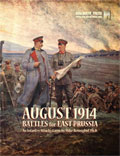
 August 1914 is the game that launched the Infantry Attacks series, and it’s a very suitable topic for that task. The game covers the initial battles in East Prussia between the invading Russian First and Second Armies and the defending German Eighth Army. August 1914 is the game that launched the Infantry Attacks series, and it’s a very suitable topic for that task. The game covers the initial battles in East Prussia between the invading Russian First and Second Armies and the defending German Eighth Army.
At this point in the war, trench warfare had not yet settled in and both sides sought to wage a war of maneuver. Rifle-armed infantry provided the armies’ striking power, backed by field guns and a smattering of machine guns. The Russians sought to secure the exposed province of East Prussia, and then march along the well-kept German roads and rail lines to Berlin, thereby ending the war in a matter of weeks. And at first, it looked like the plan might work. The German command panicked, intending to abandon East Prussia, until a new leadership team took over and sought a counter-offensive making use of that very same road-and-rail network.
Those battles are the basis for Infantry Attacks: August 1914. It’s set at the tactical level (units are companies, batteries, and squadrons), with 40 scenarios from the East Prussian campaign. We brought out a Second Edition a few years back, that revised the artillery procedure and brought some game functions more closely in line with those of Panzer Grenadier’s Fourth Edition.
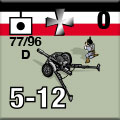
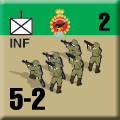 There are two types of artillery in August 1914 and its sister game, Fall of Empires. Field guns are the ones that show up on the map, and they move and shoot just like any other unit. They can’t rumble around like unarmored tanks, so you still have to limber them (which is not automatic), hitch them up to a team of horses, move them to their new location and unlimber them before you can shoot at something. So that’s not going to happen all that often: the guns will try to stand and fight where they are, whenever possible. With no armored vehicles, no mortars and relatively few machine guns, field guns took on an importance on the battlefields of August 1914 that they would never hold again. There are two types of artillery in August 1914 and its sister game, Fall of Empires. Field guns are the ones that show up on the map, and they move and shoot just like any other unit. They can’t rumble around like unarmored tanks, so you still have to limber them (which is not automatic), hitch them up to a team of horses, move them to their new location and unlimber them before you can shoot at something. So that’s not going to happen all that often: the guns will try to stand and fight where they are, whenever possible. With no armored vehicles, no mortars and relatively few machine guns, field guns took on an importance on the battlefields of August 1914 that they would never hold again.
Field guns can only shoot at what they can see, just like infantry companies but with greater range and a few other differences. They’re not capable of indirect fire in the game; while they had this capability in theory (at least the larger guns), that was a laborious exercise requiring more time than an Infantry Attacks scenario allows.
 Heavier artillery (just “artillery” in Infantry Attacks parlance) fires from off the board, at targets they can’t see. Their fire has to be plotted before the game begins, which means friendly troops can wander into their own barrage if a player isn’t careful. It’s a powerful weapon but it’s a pretty blunt instrument. Heavier artillery (just “artillery” in Infantry Attacks parlance) fires from off the board, at targets they can’t see. Their fire has to be plotted before the game begins, which means friendly troops can wander into their own barrage if a player isn’t careful. It’s a powerful weapon but it’s a pretty blunt instrument.
The paperwork’s very limited, as off-board artillery, only appears in some scenarios. Once that’s done before the game begins, you’re done with writing things down. It does mean that you have to really think about what you’re trying to achieve in the game before play starts, since you can’t adjust the big guns in time to make any difference to your efforts.
 For games taking place in 1914, like August 1914, that model works very well. As the war ground on, artillery practice became more sophisticated. Games set in the war’s later years (like Devil Dogs) sport more involved artillery rules, but still within this easy-to-use framework. The games are supposed to be fun and show some history, and overly-involved rules don’t advance either of those causes. For games taking place in 1914, like August 1914, that model works very well. As the war ground on, artillery practice became more sophisticated. Games set in the war’s later years (like Devil Dogs) sport more involved artillery rules, but still within this easy-to-use framework. The games are supposed to be fun and show some history, and overly-involved rules don’t advance either of those causes.
August 1914’s Second Edition set out the model for Infantry Attacks games. They’re all organized in chapters that first describe the action and then wrap up with a battle game that links all of the chapter’s scenarios together with a set of objectives for each player to meet (or in some cases, to deny to the other player).
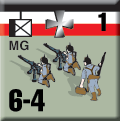 The East Prussian campaign of August 1914 lent itself very conveniently to this structure; the fighting began with a confused series of border actions against the Russian First Army advancing from the east as the German Eighth Army command panicked. Then new leadership arrived, and set out a much more confident plan: first the Germans set upon the Russian Second Army invading from the south and inflicted a major defeat on them, using the East Prussian railway network to give them operational mobility. Then they turned to the north-east and struck the First Army head-on, defeating them as well. They also fought a small series of actions against the resurgent Russian Second Army (which, German propaganda aside, was not wiped out to the last man) and the newly-arrived Russian Tenth Army. The East Prussian campaign of August 1914 lent itself very conveniently to this structure; the fighting began with a confused series of border actions against the Russian First Army advancing from the east as the German Eighth Army command panicked. Then new leadership arrived, and set out a much more confident plan: first the Germans set upon the Russian Second Army invading from the south and inflicted a major defeat on them, using the East Prussian railway network to give them operational mobility. Then they turned to the north-east and struck the First Army head-on, defeating them as well. They also fought a small series of actions against the resurgent Russian Second Army (which, German propaganda aside, was not wiped out to the last man) and the newly-arrived Russian Tenth Army.
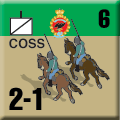 Each of those battles is pretty much self-contained, and that made the story-arc format work very naturally. August 1914 has nine chapters: two from the initial clashes on the province’s eastern border (Stalluponen and Gumbinnen), five from the main event, the Battle of Tannenberg, one from the following First Battle of the Masurian Lakes, and finally one from the return engagement of the supposedly “destroyed” Second Army in September 1914. In each chapter, the scenarios help tell the story, then wrap up with a battle game to link them all together. Each of those battles is pretty much self-contained, and that made the story-arc format work very naturally. August 1914 has nine chapters: two from the initial clashes on the province’s eastern border (Stalluponen and Gumbinnen), five from the main event, the Battle of Tannenberg, one from the following First Battle of the Masurian Lakes, and finally one from the return engagement of the supposedly “destroyed” Second Army in September 1914. In each chapter, the scenarios help tell the story, then wrap up with a battle game to link them all together.
 In these first weeks of war, the armies are at full strength in men, weapons, and leaders, though they show their lack of practical combat experience. They both are trying to use offensive means to gain their objectives; even when on the operational defense, they’re looking to counter-attack. In game terms, that means that both sides are charged with attacking, often both of them at the same time. In these first weeks of war, the armies are at full strength in men, weapons, and leaders, though they show their lack of practical combat experience. They both are trying to use offensive means to gain their objectives; even when on the operational defense, they’re looking to counter-attack. In game terms, that means that both sides are charged with attacking, often both of them at the same time.
August 1914’s Second Edition is exactly the sort of game I want us to publish. So much so that I went and designed three more games on the same model: Fall of Empires (Austria-Hungary vs. Russia, in August 1914), Iron Dice of War (France vs. Germany, in August 1914) and A Contemptible Little Army (Britain vs. Germany, in August 1914). It’s a blend of history and game-play, that uses the wargame format to tell the story of the Tannenberg campaign.
You can order August 1914 right here.
Infantry Attacks Package
August 1914
Fall of Empires
Franz Josef’s Armies
Winter’s Battle
Black Mountain
Retail Price: $266.95
Package Price: $215
Gold Club Price: $172
Experience the Infantry Attacks Package right here.
Sign up for our newsletter right here. Your info will never be sold or transferred; we'll just use it to update you on new games and new offers.
Mike Bennighof is president of Avalanche Press and holds a doctorate in history from Emory University. A Fulbright Scholar and NASA Journalist in Space finalist, he has published a great many books, games and articles on historical subjects; people are saying that some of them are actually good.
He lives in Birmingham, Alabama with his wife and three children. He misses his lizard-hunting Iron Dog, Leopold.
Daily Content includes no AI-generated content or third-party ads. We work hard to keep it that way, and that’s a lot of work. You can help us keep things that way with your gift through this link right here.
|