| Edelweiss: Clean
and Bright
By Mike Bennighof, Ph.D.
November 2014
By the 1980s it
had become firmly established that role-playing
games are sold on what's called the "core-supplement
model." Most role-playing games are built
around a core rulebook, that has all the rules
you need to master sessions, and supplements
that give you the actual adventures to run,
extra cool "crunchy bits," and suchlike
items.
We package our wargames the same way, with boxed games as the "core" and downloads, books and booklets as the "supplements." In theory, the boxed games cover the most popular topics, the books the next most recognizable, and the now-discontinued downloads the odd and obscure.
Panzer Grenadier: Edelweiss was easily the best of the download line and probably the best product out of all the supplements; I'm very happy that we were able to bring it out in a book edition. Edelweiss is a very satisfying product, with a lot of
play value in those 32 scenarios and a strong
historical narrative running through them.
I think you'll like it. Here are the final
dozen scenario summaries:
Phalari Pass
19 September 1943
With Italy bowing out of the war, the Germans
moved to disarm their former allies as quickly
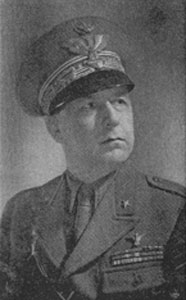
as possible. On Cephalonia, Gen. Antonio Gandin
of the 33rd “Acqui” Division faced
a dilemma. His government issued clear orders
to cease hostilities against the Allies, but
maintain his unit in a state of readiness.
The 11th Army command ordered him to turn
his weapons over to the small German unit
on the island. While Gandin discussed his
options with the island’s coast artillery
and naval commanders, ships carrying a German
battle group drawn from the 1st Mountain Division,
104th Light Division and some independent
units appeared offshore. The Germans opened
fire, the Italians returned it, and bitter
fighting exploded. To get to the island’s
capital, the Germans would have to force their
way through a number of rocky passes.
Note: This scenario uses boards from
Battle of the Bulge and Road to Berlin, and
pieces from Afrika Korps and Eastern
Front.
Conclusion
The German battalion forced its way past the
Italian defenders, inflicting severe casualties
on their former allies. But the Italians fought
resolutely, and caused quite a few German
losses as well. Anger over these combat deaths
would lead to tragic consequences a few days
later, as the fight for Cephalonia grew more
heated.
Design Note: The first of the Cephalonia
triptych. I had some misgivings about
doing these, as they
portray the events leading to a terrible war
crime: the massacre of over 7,000 Italian
prisoners of war by German regular army troops
in September 1943. I finally decided it was
important to keep these in the set: these
crimes cannot be blamed on the cowards in
silver and black. And a hero like Antonio
Gandin needs to be remembered in something
more than a sappy movie.
Gandin’s Attack
21 September 1943
Acqui had not seen combat since 1941, and
many of its veteran soldiers had been rotated back
to Italy. After years of garrison duty, some
of Gandin’s young troops wavered in
their first combat. Reinforcing them with
coastal artillery and anti-aircraft guns,
the division commander took personal charge
of the II/17 Infantry Battalion and counterattacked
the advancing Germans.
Note: This scenario uses a map and
pieces from Afrika Korps, and pieces
from Eastern Front.
Conclusion
Despite the undoubted bravery of their officers,
the inexperienced Italian infantrymen could
not overcome the German assault gun support.
The German infantry proved little better,
but heavy Stuka support and their armor repelled
the Italian attack.
Design Note: The high point of the
Italian resistance, and the only scenario
of the 32 not featuring German mountain troops.
But it needed to be in there to make the Cephalonia
set complete. Argostoli: Edelweiss
Stained
22 September 1943
For days the fighting raged on Cephalonia,
with the Acqui Division’s six battalions
holding their own against five better-armed
German ones. Using their greatest advantage
— mobility — the Germans set out
on a long flank march through the rugged hills
in the center of the island, to strike the
capital from the south. During the 20-hour
march the Germans overran a compound where
the Italians held 470 Germans prisoner. All
had been treated well — a fact that
only highlights the crimes that followed.
Note: This scenario uses boards from Road to Berlin and Battle of the
Bulge, and pieces from Afrika Korps and Eastern Front.
Conclusion
After breaking through Italian lines south
of Argostoli, the Germans took the town from
several directions. When resistance ceased,
the massacres began. The Germans had already
killed 75 officers and 2,000 soldiers (many
after they had surrendered). Acqui’s
leaders apparently did not realize the extent
of German crimes, and directed their troops
to yield. Another 155 officers and 4,700 men
were murdered after Acqui headquarters capitulated.
Gandin, 193 of his officers and 17 sailors
were shot by firing squads over the next few
days.
Design Note: The last battle on Cephalonia,
one well remembered in Italy. War is not fun, and it is not a game, and it's always difficult as a game designer to maintain that underlying truth while trying to give your players both enjoyment and historical insight.
Garibaldi's Heirs
2 December 1943
In the mountains of eastern Montenegro, the
Italian troops of the Venezia and Taurinense
Divisions went over to the Yugoslav partisans
rather than trust to German mercy. Those wishing
to fight the Germans formed the “Garibaldi”
Division of Tito’s partisan army. They
became involved in heavy fighting when the
Germans launched an operation to clear eastern
Bosnia. Near the town of Goradze, destined
to become infamous 50 years later, the Italians
and their partisan allies squared off with
the SS.
Note: This scenario uses a board
and pieces from Eastern Front, a board
from Battle of the Bulge, and pieces
from Afrika Korps and Sinister Forces.
Conclusion
Short of heavy weapons and bereft of air or
artillery support, the Italians and Yugoslavs
fell back before the German assault. The SS
division held together well in one of its
few clear successes of the war, dispersing
the Garibaldi Division and securing the area
against partisan activity.
Design Note: Italians and partisans face the SS. Designing a scenario taking place in Goradze was a little troubling as well: I would never have guessed, before working on Edelweiss, that a wargame design could be so personally disturbing. I knew people from Goradze. They're all dead now.
Tiraspol' Bridgehead
13 May 1944
The two-part Soviet offensive into Ukraine
in the winter and spring of 1944 cleared the
Germans and their allies out of almost all
pre-war Soviet territory. The leading spearheads
even forced their way across the Dnestr River
into Bessarabia, Romania's eastern province.
Several times the Soviets launched attacks
from their bridgehead at Tiraspol' toward
Kishinev, the province's capital. The German
command ordered the bridgehead eliminated
and the Red Army pushed back into Ukraine.
Note: This scenario uses boards and
pieces from Eastern Front and pieces
from Road to Berlin. Use only Soviet
leaders from Road to Berlin.
Conclusion
The 320th Rifle Division had taken the bridgehead
in April while part of 5th Shock Army, but
had been transferred to 46th Army in the interim
and the new command doesn't seem to have been
as quick to lend support. With only one river
crossing under Soviet control, which the Germans
soon brought under machine-gun fire, the Soviets
found themselves forced back into a smaller
and smaller perimeter. "The heroes literally
fought to the last bullet," the army
command staff reported, "Major General
I.I. Svygin, the division commander, together
with other members of the division's command
group, died valiantly on the field of battle
while inspiring his soldiers."
Design Note: Troops from 3rd Mountain Division,
along with an assault gun brigade, try to
crush a Soviet force backed up against a river.
The Soviets are hard-fighting veterans, but
are in a dangerous position.
Taking Out the Trash
11 September 1944
After Romania defected to the Allies, the
Germans faced a gaping hole in their lines
on the Eastern Front. Not only were Romanian
divisions no longer fighting alongside them,
the Romanians now attacked the Germans with
an enthusiasm they never showed when fighting
for the Axis. The German command rushed occupation
troops to the border between Yugoslavia and
Romania to re-form their line. The 7th SS
Mountain Division crashed into the advancing
Soviet 46th Army near Vrsac, a crossroads
just inside the Yugoslav border.
Note: This scenario uses boards from Eastern Front, and pieces from Road
to Berlin.
Conclusion
Since their baptism of fire at Split, the
7th SS had enjoyed a good run against Tito’s
partisans. This hard-won confidence quickly
fled when they faced the Red Army’s
battle-hardened Guardsmen, and the Soviet
division rolled over the SS like a short speedbump.
After only a brief delay to shoot what few
prisoners had been taken, the Red Army’s
advance moved onward. The 7th SS suffered
enormous casualties in just a few hours, probably
one third of the division’s strength.
Design Notes: The title's pretty
predictable of course; I included this to give Soviet players
a chance to grind an SS division under the
treads of their T-34's.
End in the Arctic
7 October 1944
The Soviet Petsamo-Kirkenes offensive, designed
to drive the German Arctic front back and
hopefully encircle their front-line forces,
kicked off with the heaviest artillery bombardment
yet seen on this front. Unfortunately for
the Red Army, the difficult terrain limited
the supply of artillery ammunition and the
shelling barely dented the deep rock shelters
dug by the German mountain troops over the
previous two years of static warfare.
Note: This scenario uses a map from Desert Rats and pieces from Road
to Berlin.
Conclusion
The Rainer Regiment held its positions on
this first day of the assault, suffering heavy
casualties but inflicting enormous losses
on the Soviets. The next day would be different,
with the division losing its strongpoints
one by one and withdrawal orders coming almost
too late to save it from disaster.
Design Note: This scenario includes
a good bit of "heavy metal" from
Road to
Berlin, with the Soviets
on a short timeline to force their way through
an intense belt of fortified hilltops manned
by the Rainier Regiment with its 9/8 morale
(highest in the series) and hand-picked leaders.
Lost Battalion
27 October 1944
The swift American advance across France
ground to a halt when they reached the Vosges
Mountains, just north of the Swiss border.
The German army command asked for mountain
troops to help hold this rough ground, and
several brand-new independent battalions were
sent to the front. The young mountaineers
had a cadre of experienced officers and NCOs,
but no combat experience. In short order,
they found themselves facing the toughest
unit in the U.S. Army.
Note: This scenario uses boards and
pieces from Battle of the Bulge.
Conclusion
The Japanese-Americans of the 442nd had a
goal in mind: drive through the German positions
to rescue the trapped 1st Battalion of the
141st Infantry Regiment. An elite regiment
in normal times, the extra incentive made
the Nisei unstoppable. The new mountain battalion
soon found itself surrounded as the Americans
pushed past them.
Design Note: This scenario introduced the
famous "Go For Broke" regiment to
the series before they received their own supplement, also titled Go For Broke.
Another Lost Battalion
28 October 1944
While the Americans surrounded the remainder
of the 202nd, the 201st Mountain Battalion
tried to rescue its comrades. Another freshly-raised
unit, from Garmisch in southern Bavaria, the
201st faced a unit almost as tough as the
Nisei: the “Cotton Balers” of
the 7th Infantry Regiment, part of the elite
3rd Infantry Division. It would be all they
could do to hold their ground, much less advance.
Note: This scenario uses boards and
pieces from Battle of the Bulge.
Conclusion
The Germans launched repeated counter-attacks,
but the American advance ground on relentlessly.
After only a few hours of combat, the German
battalion had melted to a fraction of its
original strength. There would be no rescue
for the 202nd.
Design Note: Both sides need to attack,
and with a short game they can't sit around.
It's unusual in this set for the mountain
troops to have a significant morale disadvantage,
but that's the case in all the scenarios in
which they face the Americans.
Himmler’s Sword
29 January 1945
Hapless as the 6th and 7th SS proved in battle,
neither counts as the worst German formation
of the war. In early 1943 the head of the
SS, Heinrich Himmler, hatched a plan to recruit
a Croatian mountain division. Volunteers proved
hard to come by, and the division was soon
enrolling large numbers of Bosnian Muslims
(deserters from the Croatian puppet state’s
army), ethnic Germans and the dregs of Balkan
prisons. Ordered to the front to stop the
Red Army, the smarter members of the division
promptly deserted. The remnant was posted
in front of the key Danube bridgehead at Apatin
in southern Hungary, a spot Hitler himself
ordered held as a launching pad for a future
grand offensive that would destroy the Soviets.
Note: This scenario uses boards from Eastern Front and Battle of the
Bulge, and pieces from Road to Berlin.
Conclusion
The “Handschar” (“Sword”)
Division crumpled under the first Soviet attack.
The Red Army swept over the Danube and continued
their advance. Handschar remained in the German
order of battle until the end of the war,
but never again would be trusted alone with
a key position.
Design Note: The worst unit ever
seen in Panzer Grenadier, topping even
the Libyan labor troops of Desert Rats.
With enormous advantages in firepower and
morale the Soviets must inflict huge casualties
and take wide swaths of ground to win, and
they have the means to do so.
Attack Without Pause
2 February 1945
Transferred from northern Norway by train,
ship and highway, the 2nd Mountain Division
arrived on the Western Front in January, 1945.
Taking positions in front of Colmar, they
faced the tough American XX Corps and the
French Foreign Legion. The division set out
a thin screen to slow the American advance,
but the tactics of Finland failed in Alsace.
The U.S. 28th Division, following instructions
to “attack without pause,” shredded
the German line so quickly the mountain division
reported itself under attack by an armored
corps.
Note: This scenario uses boards and
pieces from Battle of the Bulge.
Conclusion
After more than four years in the Arctic,
the Edelweiss Division was a shadow of its
former self. The outpost line resisted but
could not stop the Americans, by now expert
in tank-infantry interactions. The “Bloody
Bucket” Division brushed aside the jägers
and drove into Colmar, a fortress-city that
had defied the French 1st Army since October.
Design Note: The Edelweiss Division
isn't its old self by 1945, lacking the morale
and leadership edges it holds in other scenarios. Sacred Mountains
14 February 1945
The Soviet offensive that opened with the
new year quickly swept across Poland and into
western Slovakia. Around the town of Ruzemberok
in the high valley of the Biely Vah river,
just below the heights of the Tatra mountains,
the 3rd Mountain Division faced repeated assaults.
The Soviet 18th Army sought to break through
into the Slovak plain and to liberate the
Tatras, a powerful symbol to the Slovak people.
Note: This scenario uses boards from Road to Berlin, and pieces from Road
to Berlin and Eastern Front.
Conclusion
The jägers fought off repeated waves
of attackers, and according to the German
Army's order of the day, "yielded not
one meter." The Soviets could tell the
Reich's end was near and fought to keep their
offensive going, but now that the mountain
divisions fought in familiar terrain they
proved impossible to dislodge.
Design Notes: And we close with a
scenario featuring high-morale defenders
facing literal waves of attackers —
three massive groups of Soviet infantry backed
with armor. This one uses all the infantry
pieces of both Road to Berlin and Eastern
Front, as the mountain troops try to hold
a narrow valley. It's a fitting wrap for the
supplement, tense to play and fun for beginners
with so many Soviet pieces in play.
See the first installments of this Edelweiss
preview here
and here.
Try
out these scenarios. Pick up a copy of the newn laser-cut Edelweiss!
|