Avalanche Press Homepage Avalanche Press Online Store


Strategy in
Defiant Russia

Search


Air Battle for Midway
By David H. Lippman
March 2008

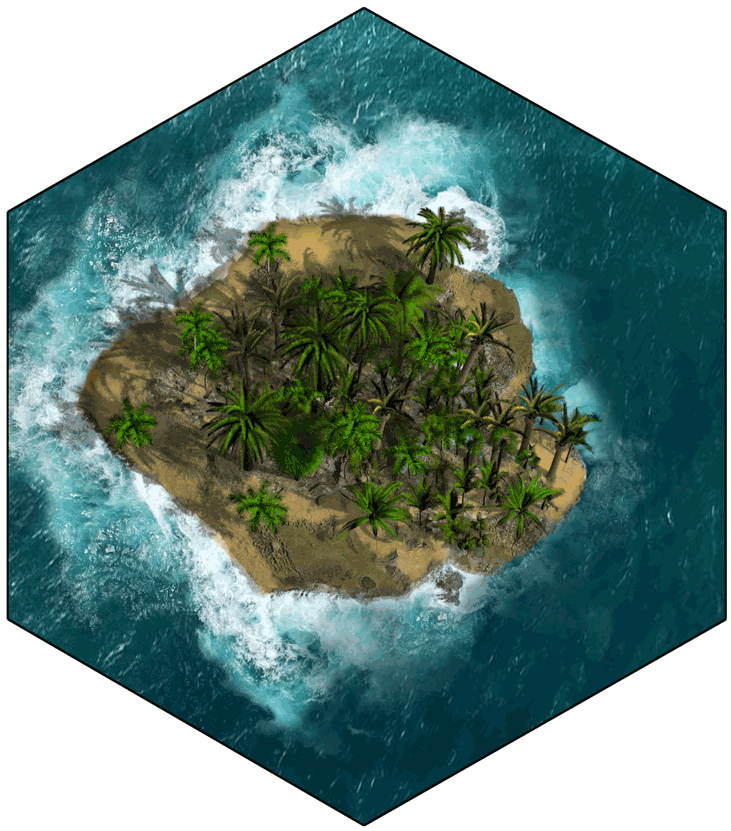
The greatest battle in naval history took place off the unremarkable island of Midway, a small piece of sand, coral and palm trees whose main features are an airstrip and an albatross colony. One of the more confusing aspects of the engagement for historians and combatants is that the Japanese force is on one side of the International Dateline, while the Americans are on the other. Patrol planes leave Midway late on June 3, fly into a battle just after midnight on June 5, and return to Midway on June 4. In addition, the Japanese Navy uses Tokyo time wherever it goes.

The battle of Midway begins before dawn when four PBY Catalinas from the island attack the Midway Occupation Force. Despite exhaustion and greenness, Ensign Gaylord “Dagwood” Propst scores a minor hit on an oiler, Akebono Maru, killing 13 men and wounding 11. Propst regards the barrage of flak, with its noise and pyrotechnics, as being like “Coney Island on the Fourth of July.”


These four pilots attacked the Japanese fleet with patrol planes like the one in the background. Ensign Gaylord "Dagwood" Propst is on the left.


On Midway, everyone knows the attack is coming. Officers remove their insignia to keep Japanese snipers from identifying them. An Army officer tries to buy the full $10,000 GI life insurance — but no forms are left. Marines burn their remaining classified documents and swap frightening scuttlebutt. Lt. Col. Ira E. Kimes tells his Marine Air Group 22 personnel, “This is it, boys. Give it all you’ve got, and good luck to you.” VT-8 Detachment Ensign Bert Earnest finds a $2 bill on the Eastern Island runway, and pockets it, believing it will bring him good luck.

Out at sea, the American ships continue to steam “as before,” awaiting the enemy. Admirals Fletcher and Spruance try to piece out the fragmentary intelligence from their scout planes. Fletcher later says, “After a battle is over, people talk a lot about how the decisions were methodically reached, but actually there’s always a hell of a lot of groping around.”

At dawn the two enemy carrier task forces are 400 miles apart. The Japanese have no idea where the Americans are, or even if they’re at sea. The Americans know the Japanese are out there, but are not sure precisely where. The burden of attack rides upon the dour, casual Vice Adm. Chuichi Nagumo, a veteran sea dog and expert in destroyer tactics who has led his carriers to Pearl Harbor and victory after victory. Nagumo in turn relies on his chief of staff, Rear. Adm. Kusaka, and air officer, Cdr. Minoru Genda.

The latter comes staggering onto the bridge at 3 a.m., weak from pneumonia but ready to plan the fleet’s reconnaissance flights. “I am very sorry, sir, to have been absent so long,” Genda says. “I have a slight temperature but am feeling much better now.” Actually, he looks pale and wobbly, but nobody argues with his determination. Nagumo throws a fatherly arm around Genda and has the air officer prepare the reconnaissance plan.

Genda orders up a one-stage plan, cutting the recce slice thin, theorizing that every plane wasted on reconnaissance is unavailable for attack. His views echo Japanese naval doctrine.

On the Japanese carriers, crewmen ready the planes for attack, and pilots eat breakfast – rice, soybean soup, pickles, dry chestnuts, and cold sake – the latter two being traditional foods for Japanese warriors entering battle. On Soryu, a pilot, as usual, tells CPO Juzo Mori, “You’re going to get it today.” “No, you’re the one,” Mori retorts, also as usual.

On USS Enterprise, the supply officer orders breakfast served before morning GQ and supper after evening GQ is secured, so that only one meal has to be taken to men at battle stations. In the galleys, cooks prepare thousands of meals of sandwiches, fresh fruit and coffee, which is put into 3-gallon cans. Reveille is blared at 3:30 a.m. over the 1MC. Everyone heads for breakfast.

In the Torpedo 6 wardroom, Pablo Riley sees that Cdr. Gene Lindsey is still wearing tape and bandages from a recent accident. Riley says: “You look pretty beat up, skipper. You really feel well enough to fly today?”

Lindsey answers: “This is the real thing today, Pablo, the thing we’ve been training for. I’ll take the squadron in.”

At 4:30 a.m., Yorktown launches 10 scout planes. At that precise moment, the Japanese launch their scouts, except for one plane from the cruiser Tone, whose balky seaplane catapults delay her launch until 5 a.m. While Tone’s crew fusses (the ship was configured to carry several seaplanes and enjoyed a spacious hangar deck that doubled as comfy crew accommodations), the carriers ready their initial strike on Midway.

Conforming to “Organization No. 5,” 36 Kate torpedo bombers (armed with 1,770-pound contact bombs) from Hiryu and Soryu, 36 Val dive bombers on Akagi and Kaga (each with a 550lb armor-piercing bomb) and 36 Zero fighters as escort rise up the elevators of all four carriers. Veteran China pilot Lt. Joichi Tomonaga from Hiryu leads the strike.

On Akagi, Cdr. Mitsuo Fuchida, weak, faint and grounded by his appendix operation, crawls through watertight doors and through 10 manholes to reach his cabin. He washes, shaves, dons his uniform and struggles to air ops, where Lt. Izumi Furukawa helps him to a seat. Furukawa briefs Fuchida on the search plan. Fuchida isn’t happy. Not enough planes. However, Fuchida is up against Japanese naval doctrine, which calls for no more than 10 percent of total strength to be used on reconnaissance, preferably on a one-phase search system. More important, the Japanese have no carrier-borne search aircraft. Most of the reconnaissance birds are seaplanes from the cruisers Tone and Chikuma. A reason they accompany Nagumo’s task force is the fact that they are configured to carry a number of seaplanes. But most important, the Japanese smugly don’t expect to even find the American fleet. Nagumo’s Estimate of the Situation reads, Sentence D: “The enemy is not aware of our plans.”

Fuchida crawls down onto the flight deck to watch the pre-dawn launch. Akagi turns into the wind, creating a 19.2 mph headwind. The temperature is 70F. Pilots and bombardiers climb into cockpits in the dawn, and start engines on signal. Floodlights illuminate the teakwood decks, engines cough to life, spewing exhaust, and Cdr. Shogo Masuda swings his green signal lamp over his head on Akagi, giving the order to launch.

On all ships’ decks, crewmen cheer as fighters and bombers claw into the air, form up, and head southeast in three-plane V formations at 4:45 a.m. As soon as Nagumo’s first strike is airborne, a second wave of planes is rushed onto the flight deck, ready to attack any enemy naval forces the scouts may discover. This force consists of 36 dive-bombers from Hiryu and Soryu, 36 torpedo bombers from Akagi and Kaga, and 36 fighters from all carriers. With the planes fueled and armed, all hands wait for new orders.

Meanwhile, Tone finally sorts out her defective catapult at 5 a.m., and launches Scout No. 4 — half an hour late, headed northeast … directly toward the American fleet. Amazingly, nobody on Nagumo’s staff chastises Tone for the delays, nor does Nagumo launch one of his own planes as a replacement — another sign of sloppy, cocksure command. Also, Nagumo’s combat air patrol for 21 ships consists of only 18 Zeros.

200 miles north and slightly east of Midway, American aviators eat breakfast — scrambled eggs for Cdr. Wade McClusky on Enterprise — and wait in their ready rooms for orders. The ready rooms look like classrooms, rows of seats with writing arms, all facing a blackboard. On that, the information of the day is written: position, wind, course, target and “Point Option,” the carriers’ location after the strike. Like their enemies on Nagumo’s carriers, the American aviators must hurry up and wait. McClusky doesn’t go to the ready room. He has an office on Enterprise, where he learns that his regular gunner has just broken his glasses. McClusky calls for a replacement, and he gets ARM1 W.G. Chochalousek, fresh out of aviation gunnery school — just what he needed.

At 5:10, Lt. Howard Ady flies his PBY Catalina along the 315-degree segment, near the end of his search arc. He sees a small seaplane race past from the west, intent on its business, which seems to be straight for Midway. Ady fires off the single word “aircraft,” and then gives position, course and speed. Ady’s Catalina bucks through squalls for another 20 minutes, and then sees, “like a curtain going up at a theater,” two aircraft carriers 20 miles away, headed straight for him. Just south of Ady, Lt. William Chase, spots a huge formation of fighters and bombers heading for Midway at 5:40 a.m. Chase doesn’t waste time trying to encode his contact report, but instead signals in plain English, “Many planes heading Midway. Bearing 320, distance 150.”

At 5:34, Ady finally starts sending his messages: “Enemy carriers,” followed at 5:40 by distance, course, and speed. The Japanese fleet is 200 miles west-southwest of Yorktown. Fletcher spots an airstrike on his flight deck. ("Spotting" is the term for setting planes on a flight deck for a strike.)

At 5:53, Enterprise intercepts the “Many planes heading Midway” message, and Spruance orders his chief of staff, Capt. Miles Browning, to “launch everything you have at the earliest possible moment and strike the enemy carriers.” Spruance will hold nothing back. Neither will Fletcher, who studies the mathematics and the map to determine that Spruance is closer to the enemy than Yorktown. At 6:07 Fletcher orders Spruance to “proceed southwesterly and attack enemy carriers when definitely located.” Fletcher holds his planes back, remembering how his all-out strike at Coral Sea, based on slim intelligence, missed the large enemy carriers completely. He recalls his scout planes, intending to launch a complete strike.


American B-17 bombers prepare for takeoff from Midway, 3 or 4 June 1942.


At 5:53 Midway’s radar picks out the incoming Japanese strike and reports, “Many bogey aircraft bearing 310, distance 93.” The air raid siren goes off two minutes later. The B-17s are already airborne, heading for the transports, but they are rerouted to hit the reported enemy carriers. Next, the Midway defenders start launching aircraft, first the 26 fighters at 6 a.m. Six F4F Wildcats and 20 outdated F2A Brewster Buffalos, under Marine Maj. Floyd “Red” Parks, take off. One, Lt. Charles S. Hughes, returns to base when his engine starts coughing badly. The fighters are followed by the six detached TBFs of Torpedo 8, the four Army B-26s configured as torpedo bombers, and finally the Marine dive-bombers, 12 SBU Vindicators and 16 Dauntlesses, at 6:15.

At that precise moment, USS Enterprise sounds general quarters with its buzzer, a new innovation. USS Hornet goes to GQ at 6:26 a.m., using her older gong. Nobody blows bugles into public address systems any more. As Paul Fussell observes in a later book, the war is moving “from light to heavy duty.” Regardless of the alarm system, the impact is the same: Sailors vault out of racks or from offices and mess decks, buckle on helmets and anti-flash gear, and race up narrow ladders to their battle stations.

As the last Dauntless departs Midway, the noise of revving engines, jeeps and air-raid sirens replaced by an ominous silence. Everyone is staring northwest, awaiting the Japanese attack. Capt. James O’Halloran reminds his E Battery lookouts to watch other directions because the Japanese already have pulled a few surprises. However, Capt. Simard is busy looking northwest, as is famed movie director Lt. Cdr. John Ford, atop the powerhouse, festooned with cameras, binoculars and field telephone. He has been sent to Midway to boost morale with his Hollywood tales and also make a documentary of the battle. A one-man camera crew, Ford has a perfect position to shoot the action.

Warrant Officer Bill Lucius trots toward his slit trench and hears Maj. William Benson call out, “Bill, I have the best dugout on the island, as well as the best communications equipment. Why don’t you stay with me?” Lucius looks back at Benson and his command post, and answers, “I was so scared at Pearl Harbor that I hardly saw the Japanese planes. I don’t want to miss them now.”

The American fighters claw into the sky. The stubby little F2As are pleasant to fly, and answer to three names: “Buffalo” to the Navy, “Brewster” to the Marines and “Flying Coffin” to both services. Yet prewar aviation magazines have touted the Buffalo as being superior to all Japanese aircraft. The experiences of Malaya, Burma and Philippines have left the Buffalo’s reputation — and many of its pilots — in the dust. Amazingly, one nation is getting sterling service out of this aircraft, racking up several aces in the plane: Finland. However, a nation can only fight with what weapons it has, and on this morning, the U.S. Marines must use the Buffalo.

However, it is the Marine Wildcats that get the first punch. At 6:12 a.m., Capt. John Carey shouts into his radio, “Tallyho! Hawks at Angels 12! Supported by bombers!” This message is an adaptation of the highly successful communications system developed by the Royal Air Force Fighter Command for and in the Battle of Britain. Simply put, it means, “Enemy sighted. Fighters at 12,000 feet.” Carey and his two wingmen, Capt. Marion Carl and Lt. Clayton Canfield, dive in to attack, as the other aircraft swing in. Carey sees V-formations of Vals flying ahead of Zeros, decides to hit the bombers before the Zeros hit him.

At 6:16 a.m., CPO Juzo Mori, flying a Val from Soryu, spots Midway dead ahead. Seconds later, the two Vals in front of him explode. One is Carey’s victim, the other is Canfield’s. Mori looks up to see Wildcats swooping down on and past him. The Wildcats swing back for a second pass and come smack into Mori’s escorting Zeros and 20mm fire from the Vals. Bullets and steel fragments rip into Carey’s legs. Agonized, Carey cannot work his plane’s rudders, and he flies home, with Canfield leading. Despite nearly passing out twice in the cockpit, Carey is able to follow Canfield home to Midway.


Capt. John Carey's F4F Wildcat fighter crash-landed on Midway's Sand Island.


Meanwhile, Carl finds several Zeros behind him. He streaks down on the deck, and the enemy gives up at 3,000 feet. Carl flies back up to 20,000 to find the battle has moved on southeast to Midway. He races back to find three Zeros circling at low altitude. Carl swoops in, and splashes one. The other two attack Carl. He tries hiding in the clouds, which loses one pursuer. The other is more determined. Carl deliberately throws his F4F into a skid, and the attacker shoots by and ahead. Carl pulls the trigger, but his weapons don’t answer. He pulls out to 10,000 feet to stay out of the battle until he can land and re-arm.

As Carl turns out of the battle, Maj. Floyd “Red” Parks and his Buffalos charge in. Parks’ division leads the attack, smacking into Soryu’s level bombers, downing one. However, Zeros pounce on all five Buffalos and send them into the drink. Hughes is the only survivor, landing his aborted plane at 6:25.

The six Buffalos of the second division do slightly better. Zeros make repeated passes at Lt. Darrell Irwin’s slow-moving Buffalo, yet he manages to fly home, bullets lining his backseat armor plate — which is only shoulder high. Capt. Phillip White, on the other hand, catches a group of eight bombers and shoots one down. He sees another Val heading home, and White stitches it with bullets, slowing it down. White moves in for the kill and squeezes the trigger, but he’s out of ammunition. He turns for home. White doesn’t know it, but he may have hit strike leader Joichi Tomonaga, holing one of the Val’s fuel tanks.

White and Capt. Herbert Merrill lumber home in battered Buffalos, Merrill having to parachute into the lagoon, unable to fly further with his burned face, neck, and hands.

Meanwhile, the third division, under Capt. Kirk Armistead, tries to climb into the sun to attack the enemy. His division attacks a group of five planes, and flames two of them. Japanese Zeros swoop in and shred his plane. Armistead pulls out of his spiral and manages to wobble home to Midway. Next is Capt. William Humberd’s third division’s second section, which splashes a bomber and again finds Zeros on its tails. Humberd dives to water level at full speed, a Zero chasing. Amazingly, he gains speed and distance on the Zero, and claws round to bring his guns to bear. Humberd opens fire, and demonstrates the disadvantages of the Zero’s lack of armor: The Zero bursts into flame and crashes into the sea.

Humberd climbs back to 10,000 feet to find ammo and fuel low. He turns back to Midway and gets permission to land. To make the landing interesting, his hydraulic fluid is gone and the landing gear won’t lower. Humberd lands on his emergency brakes. Ground crews repair the holes in the hydraulics and pour in new fluid. Humberd takes off to resume the battle. Humberd’s wingman also has a busy morning, his plane’s wing scratching that of a Japanese bomber. When two Zeros attack him, Humberd leads them over Midway Island and its flak guns, which drives the enemy off. As the Zeros pull out, Lt. William Brooks spots two planes dogfighting, and he flies in to help his buddy. The two planes are Japanese Zeros, staging a sham battle to attract the Americans. Brooks throws his plane into a curve to flee, and collects 72 bullet holes. He lumbers back over Midway, and sees two Zeros attacking a Buffalo. Brooks attacks, but has only one of four guns working. He’s too late, though. The attacked Buffalo spirals into the sea, and Brooks heads back to land.

Meanwhile, Lt. Charles M. Kunz attacks another Japanese bomber group, shooting down an enemy plane. With no Zeros around, he swings round for another attack, and blasts another bomber. Now he has the Zeros attention and their bullets, and one strikes him in the head. Others rip up the wings. Dizzy and dazed, Kunz circles the field, staying out of battle until he can land.

The last two F4Fs are caught by eight Zeros, who shoot down one, flown by Capt. Francis P. McCarthy, and riddle the second, flown by Lt. Roy A. Corry, Jr. Faced by four Zeros, Corry splashes one and avoids the other three, catching a Val returning from its attack. Corry shoots down the bomber, but his Wildcat is leaking fuel. He swoops down on the deck to return to Midway. Only nine of the 26 attacking Americans survive the encounter.

Both sides emerge surprised. The Marines are astonished by the maneuverability, speed and firepower of the Zero. Many Allied pilots have already learned this about the Zero, but few are left alive after these encounters to report their conclusions. Ironically, the Army Air Force has pigeonholed a pre-war report from Col. Claire Chennault about the efficiency of the Zero and its Army knock-off, the Oscar, over China.

The Japanese, however, are surprised by the American tenacity in battle. Until now, Nagumo’s aviators have enjoyed one easy success after another: at Pearl Harbor, Port Darwin, in the Indian Ocean, rarely meeting an enemy whose tactics or technology were the equal of their own. Here the American aircraft are still outclassed. Lt. Hughes says the Buffalos “looked like they were tied to a string while the Zeros made passes at them,” but their tactics of using the sun and altitude show adaptability and understanding. “I believe that our men with planes even half as good as the Zeroes would have stopped the raid completely,” Hughes says later.

Next: Midway Under Attack

See these planes in action! Click here to order
Midway: Turning Point in the Pacific TODAY!

David H. Lippman, an award-winning journalist and graduate of the new School for Social Research, has written many magazine articles about World War II. He maintains the World War II Plus 55 website and currently works as a public information officer for the city of Newark, N.J. We're pleased to add his work to our Daily Content.