| Midway Deluxe Edition:
Design Notes: Pearl Harbor
By Mike Bennighof, Ph.D.
December 2022
 The Pacific War – narrowly defined as the part involving the United States – began on the morning of 7 December 1941, with the attack of the Japanese First Air Fleet against the American naval base at Pearl Harbor on the Hawaiian island of Oahu. The Japanese brought all six of their heavy carriers – the only time they would manage to operate all six of them together – and wreaked great destruction on the aircraft based around Pearl Harbor and the battleships moored there. The Pacific Fleet’s aircraft carriers escaped destruction. The Pacific War – narrowly defined as the part involving the United States – began on the morning of 7 December 1941, with the attack of the Japanese First Air Fleet against the American naval base at Pearl Harbor on the Hawaiian island of Oahu. The Japanese brought all six of their heavy carriers – the only time they would manage to operate all six of them together – and wreaked great destruction on the aircraft based around Pearl Harbor and the battleships moored there. The Pacific Fleet’s aircraft carriers escaped destruction.
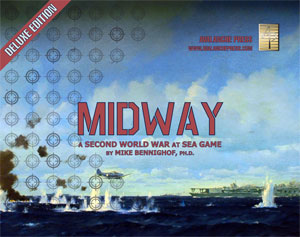
Second World War at Sea: Midway Deluxe Edition is, by definition, deluxe. And that includes a deluxe, full-color display of Pearl Harbor so you can put your ships right on it in the game’s Pearl Harbor scenarios.
 There are five of those Pearl Harbor scenarios, and we start out with the Japanese attack on Pearl Harbor, with an operational scenario and a battle scenario. There are five of those Pearl Harbor scenarios, and we start out with the Japanese attack on Pearl Harbor, with an operational scenario and a battle scenario.
The first operational scenario opens on the morning of December 7th, with the Japanese First Air Fleet about to launch its strike. The U.S. Pacific Fleet is caught at anchor; the battleships and their supporting vessels may not do much of anything until the Japanese have had a chance to attack them. How surprised they are can vary; the Japanese player doesn’t get to throw in his or her attack squadrons with complete knowledge of what awaits them. But it’s probably going to be bad for the good guys.

Once the attacks are complete, the Americans can try to pursue. They have a pair of carrier task forces hanging around the Hawaiian Islands, one of them pretty close by, the other not so much. The Japanese could, in theory, try to track these down – the Axis player can read the scenario book and knows they’re out there – but probably wants to escape with minimal losses. It will be up to the Americans to try to force the action, but this may be action of which they want no part.
 In both the operational scenario and the associated battle scenario, you get to use the Pearl harbor Tactical Display. The display is a full-color rendering of Pearl Harbor on the morning of 7 December, with spots marked for every major warship (and most of the minor ones) present on that morning. You place the pieces on the display, and then you bomb them. And also try to attack them with mini-submarines, but that’s not going to do as much as the airplanes. You also get variations, mostly based on different possible force levels for both sides but a few addressing American readiness. In both the operational scenario and the associated battle scenario, you get to use the Pearl harbor Tactical Display. The display is a full-color rendering of Pearl Harbor on the morning of 7 December, with spots marked for every major warship (and most of the minor ones) present on that morning. You place the pieces on the display, and then you bomb them. And also try to attack them with mini-submarines, but that’s not going to do as much as the airplanes. You also get variations, mostly based on different possible force levels for both sides but a few addressing American readiness.
This chapter differs from the rest of the game; I didn’t design most of the Pearl Harbor chapter (just the Pearl Harbor operational scenario) and decided not to include variants within the scenarios. The alterations to orders of battle and orders of appearance also alter things like victory conditions, and pretty soon you have a different scenario layered over the existing one, so I decided to just write a different scenario from the start.
 Pearl Harbor is different. The Japanese launched their war (a war of choice, not necessity) with a strike into the unknown. They knew for sure that Pearl Harbor served as the base for the U.S. Pacific Fleet, and the certainties pretty much ended there. The Americans should have known that the Japanese might attack, but didn’t fully appreciate what intelligence they did have (some things never change). To tell that story, there needs to be a great deal of uncertainty, and since the players can both read the scenario book, variations in forces and readiness and such are a fine way to do I, with victory conditions to reflect the unknown parameters. Pearl Harbor is different. The Japanese launched their war (a war of choice, not necessity) with a strike into the unknown. They knew for sure that Pearl Harbor served as the base for the U.S. Pacific Fleet, and the certainties pretty much ended there. The Americans should have known that the Japanese might attack, but didn’t fully appreciate what intelligence they did have (some things never change). To tell that story, there needs to be a great deal of uncertainty, and since the players can both read the scenario book, variations in forces and readiness and such are a fine way to do I, with victory conditions to reflect the unknown parameters.
The three scenarios that round out the chapter are all designed by developers Jim and Robin, and are based on WPPac-46, the most recent U.S. Navy war plan at the time of the Pearl Harbor attack. The Americans are heading westward to attack the Japanese bases in the Marshall Islands (which appear in the lower left quadrant of the Midway Deluxe operational map) as the first step toward their Plan Orange march across the Pacific to relieve the Philippines.
 But that plan assumed a fair amount of Japanese passivity, which was contrary to the known situation even before Pearl Harbor and even contradicts the plan’s own logic: if the Japanese are aggressive enough to invade the Philippines, then why are they passive everywhere else? While there definitely was a school of thought within the Imperial Navy that called for allowing the Americans to weaken themselves with a cross-Pacific drive before the decisive battle would be fought, that faction lost the argument in late 1941. Japan would take the war to America. But that plan assumed a fair amount of Japanese passivity, which was contrary to the known situation even before Pearl Harbor and even contradicts the plan’s own logic: if the Japanese are aggressive enough to invade the Philippines, then why are they passive everywhere else? While there definitely was a school of thought within the Imperial Navy that called for allowing the Americans to weaken themselves with a cross-Pacific drive before the decisive battle would be fought, that faction lost the argument in late 1941. Japan would take the war to America.
In this small scenario set, the Japanese are acting just like they did in December 1941: with risk-taking aggression. Isoroku Yamamoto and the Combined Fleet are out there with the battleships of the Main Body and four heavy carriers of the First Air Fleet. Husband E. Kimmel has taken the Pacific Fleet out on the offensive, with nine battleships and three heavy carriers of his own (since the American carrier air groups are larger than those of the Japanese flattops, the odds are about even). The Japanese will have to take Wake and Midway in the face of open opposition.
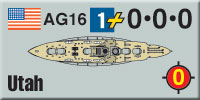 Which means that things could go very wrong for the Americans, if the Japanese attack squadrons find all those battleships out there in deep water instead of the shallow confines of Pearl Harbor. “If those same ships had been lured to sea and been sunk,” as Chester Nimitz said later, “we would have lost 38,000 men instead of 3,800.” Which means that things could go very wrong for the Americans, if the Japanese attack squadrons find all those battleships out there in deep water instead of the shallow confines of Pearl Harbor. “If those same ships had been lured to sea and been sunk,” as Chester Nimitz said later, “we would have lost 38,000 men instead of 3,800.”
Pearl Harbor is a difficult topic to re-create in game form; everyone knows what’s about to happen, but we all have to pretend that we don’t. I’m really pleased with this little set of scenarios; I think they tell the story of uncertainty, risk and surprise very well, and show just what an enormous gamble the Japanese took at Pearl Harbor. Fortunately, they had no idea of what to do after their victory, dooming the brutal Imperial system to defeat and collapse.
You can order Midway: Aftermath right here.
Please allow an extra three weeks for delivery.
You can order Midway Deluxe Edition right here.
Sign up for our newsletter right here. Your info will never be sold or transferred; we'll just use it to update you on new games and new offers.
Mike Bennighof is president of Avalanche Press and holds a doctorate in history from Emory University. A Fulbright Scholar and NASA Journalist in Space finalist, he has published a great many books, games and articles on historical subjects; people are saying that some of them are actually good.
He lives in Birmingham, Alabama with his wife and three children. He will never forget his Iron Dog, Leopold.
Want to keep Daily Content free of third-party ads? You can send us some love (and cash) through this link right here.
|