Golden Journal No. 52
Russo-Japanese War: Shopping Spree
The Feeding Frenzy
by Mike Bennighof, Ph.D.
August 2024
 Through the 1860’s and 1870’s, both Argentina and Chile pressed their control southward into the wild region known as Patagonia. That led to potential conflict, with both nations seeking advantage, and with Chile embroiled in the War of the Pacific in the late 1870’s the Argentines sought to leverage what they saw as their rival’s vulnerability. They agreed to negotiate their boundary, but by the time the talks opened the Chileans had thoroughly defeated both Peru and Bolivia and held instead a strong position. Through the 1860’s and 1870’s, both Argentina and Chile pressed their control southward into the wild region known as Patagonia. That led to potential conflict, with both nations seeking advantage, and with Chile embroiled in the War of the Pacific in the late 1870’s the Argentines sought to leverage what they saw as their rival’s vulnerability. They agreed to negotiate their boundary, but by the time the talks opened the Chileans had thoroughly defeated both Peru and Bolivia and held instead a strong position.
The Boundary Treaty of 1881 defined the border as running along the crest of the Andes Mountains, and placed the Strait of Magellan under Chilean sovereignty. It split the island of Tierra del Fuego down the middle, but it left ambiguous the fate of the small islands along the Beagle Channel, just to the south of Tierra del Fuego.
The islands held deposits of guano, but the reaction of both nations seems disproportionate to the spoils. That covered bigger issues. Chile felt aggrieved at the “loss” of Patagonian territory that had never been Chilean, with nationalists believing that Chile should extend from sea to sea. Argentine nationalists, for their part, resented Chilean control of the Strait of Magellan. Given the remote location and, at the time, total political and economic irrelevance of these lands, these resentments rested purely in the realm of ego. But ego is the most destructive force in the known universe.
Nevertheless, a naval buildup began in 1889. Chile kicked it off, ordering a small battleship and two cruisers from French builders. Argentina countered by ordering two small coast-defense battleships in Britain. And the race was on.
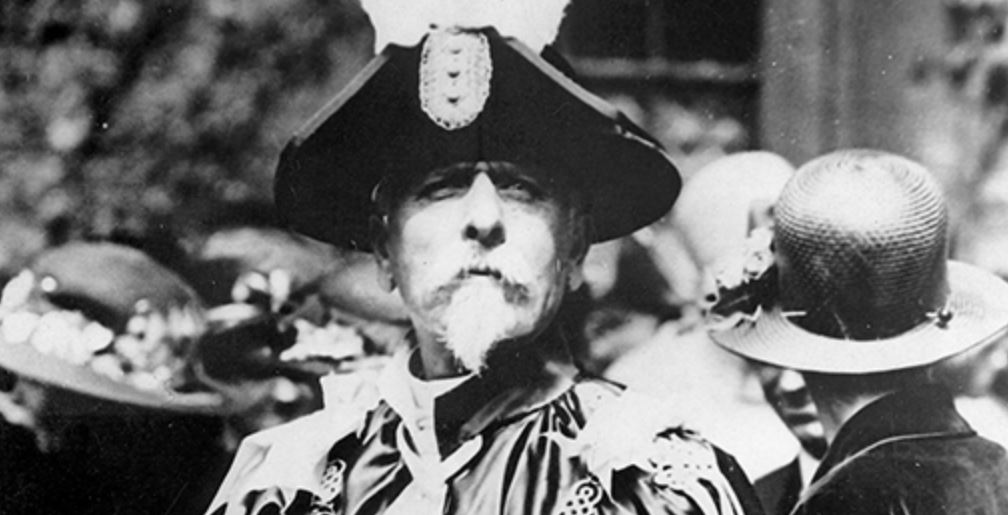
Basil Zaharoff, The Merchant of Death.
By the 1890’s, international man of mystery Basil Zaharoff had arrived in the region as the sales representative of Vickers (and under their then-legal combine arrangement, Armstrong’s as well). The Merchant of Death, as he soon became known applied his self-titled Zaharoff System: tell one side that their rival has ordered a ship. Convince them to order their own. Run back to the first customer, show them the purchase order, and convince them to order another. And so it went. Zaharoff racked up three cruiser sales to each country until Ansaldo’s Ferdinando Maria Perrone an injected the Italian yard into the mix, selling to Argentina. That only accelerated things, as now Zaharoff had to sell twice as much to Chile to keep up his commissions.
Both Chile and Argentina financed the lifestyles of Zaharoff and Perrone (who made enough to actually buy out Ansaldo himself) through large-scale borrowing. That attracted the attention of bankers in London and New York, who believed that both countries risked financial instability (and thus would not pay back their loans). They pressured their governments to do something about it, and then as now, when bankers want action, they tend to get it.
Daily Content includes no AI-generated content or third-party ads. We work hard to keep it that way, and that’s a lot of work. You can help us keep things that way with your gift through this link right here.
An American-sponsored meeting between Argentine President Julio A. Roca and Chile’s Federico Errázuriz in 1899 only calmed things for a few months, and by 1901 both countries were arming rapidly once again, egged on by their favorite salesmen. This dispute would simmer on and off for the next century, but in May 1902, the two countries agreed to settle their differences by peaceful means. War, seen as certain just a few days before, became a much more remote possibility.
A British tribunal arbitrated the boundary disputes all along the Andes and down to the southern islands. The findings, published in the name of Britain’s King Edward VII, implied that Britain would back them with force. There would be no war, but there were many warships.
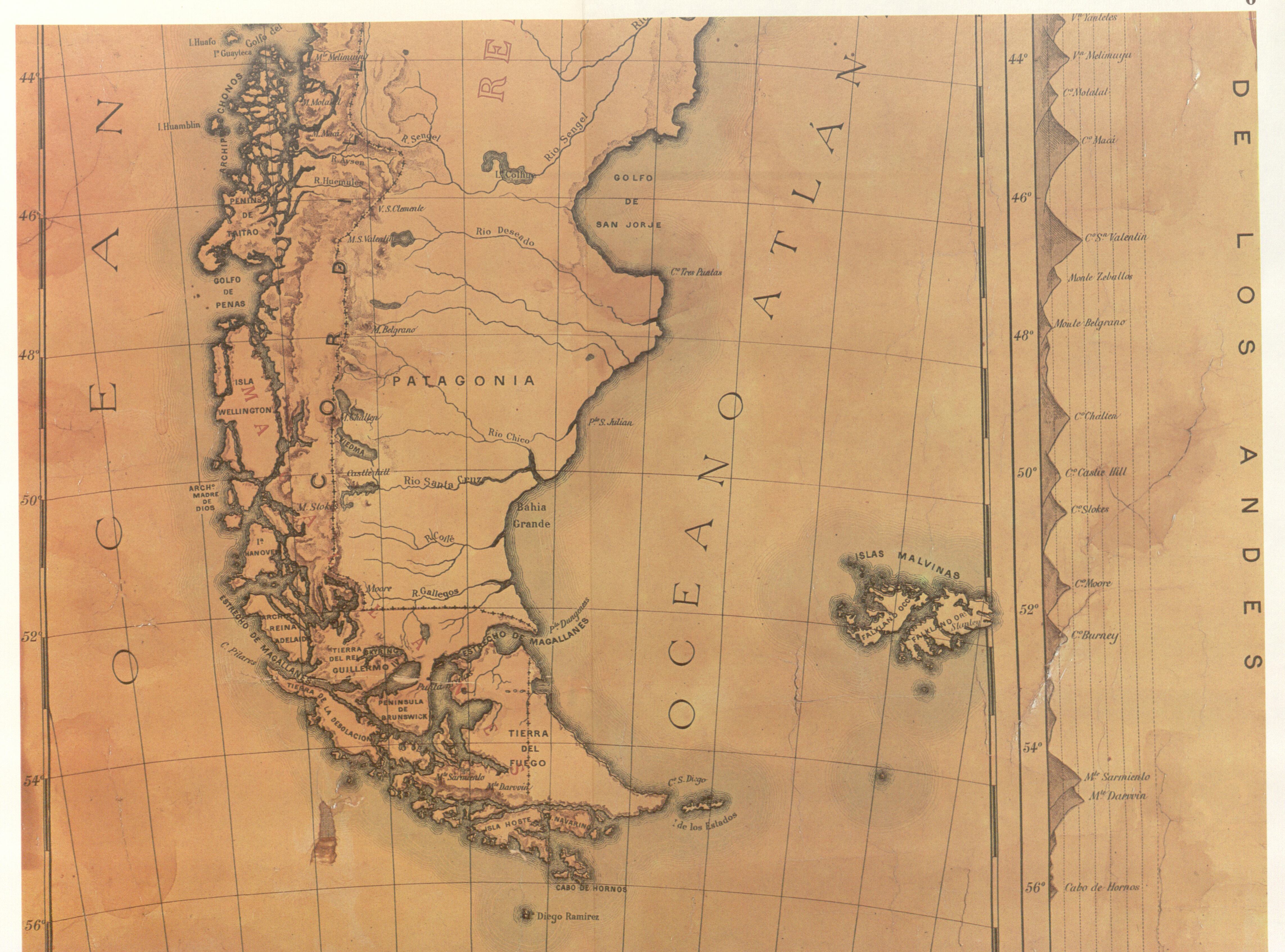
The arbitrated borders. Open in new tab to embiggen the image.
Each navy found itself directed to unload the expensive warships. Argentina cancelled orders for two modern battleships placed in Italy; Chile withdrew its offer to buy a pair of older American battleships.
Argentina had already accepted delivery of four armored cruisers of the Giuseppe Garibaldi class built in Italy. Two more were just completing at Ansaldo’s yard in Genoa. Chile had answered the Argentine challenge by ordering a pair of second-class battleships in British yards, Constitucion from Armstrong and Libertad from Vickers. These also were well advanced.
The Japanese navy wanted to buy both of the battleships and all of the armored cruisers, starting with the two British-built ships. Britain and Japan had signed an alliance in 1902, and with war looming in the Far East between Japan and Russia the British did their best to help the Japanese acquire new ships and prevent the Russians from doing so.
In November 1903, the Japanese asked the British to make an inquiry with Chile about their battleships, and the British reported that Chile would sell; but the Royal Navy also passed on that a German arms broker believed to be working for the Russian Navy was also preparing an offer. The Japanese desperately wanted to buy both warships, but could not invoke a parliamentary session in time to authorize the money. To prevent the ships from going to the Russians, on 4 December the Royal Navy bought both of them. Re-named Triumph and Swiftsure, both saw action during the First World War.
When the Japanese Diet convened two weeks later, the Imperial Navy had the money for the battleships and tried to buy them from the British. The Balfour government refused to make the sale, not wanting to create diplomatic problems with Russia, even though the Royal Navy was deeply unenthusiastic over its two newest battleships.
Denied their battleships but still holding the Diet’s authorization to spend, the Japanese next turned to the Argentine cruisers. Zaharoff served as intermediary, and a deal was quickly struck. On the last day of 1903, with the ships almost complete, Argentina sold both cruisers to the Japanese. Zaharoff even arranged for British mercenary crews to get them to Japan, sparking a series of Russian protests.
Both Chile and Argentina had turned a profit on the quick sales, and now looked to garner even more cash. The Pacts of May had required Argentina to disarm two of her Garibaldi-class armored cruisers, and now the Argentines looked for brokers to sell them to either side: the Roca government did not really care which. All four ships would be sold for the right price. To avoid selling to a belligerent state, the American arms dealer Winfield Stern assisted the Argentines in arranging an intermediary navy. Turkey and Greece signaled their willingness to funnel Russian money to Argentina, while Persia was willing to do the same for Japan. British diplomats pressured all these governments to cease their efforts, and when the Russians moved on to Morocco and land-locked Bolivia, the British ministers there let it be known that fronting for the Russian navy would have repercussions in London.

No deal could be finalized for Capitán Prat.
In Santiago, the Chilean Navy received offers from China and Greece for its pair of British-built armored cruisers and the small coast-defense battleship Capitán Prat. The Greek offer was likely a Russian front, but it is not clear who the Chinese represented, only that they were not inquiring on behalf of their own navy. Once again, the British intervened to scuttle the sale.
The Russian Navy appears to have had a better shot at making a deal with Argentina, despite the previous sale of Argentina’s two new cruisers to Japan. Had the deal been made, four modern armored cruisers would have been added to Admiral Z.P. Rozhdestvensky’s Second Pacific Squadron. This would have likely meant that the ancient ironclads of Admiral Nikolai Ivanovich Nebogatov’s Third Pacific Squadron, added on the unusual official reasoning that they might “attract shells intended for more valuable ships,” would not have made the journey to the Far East. The Russian shipyard owners who gouged the government to refit them would lose out, which may have played a role in the deal’s demise (fortunately, these days large corporations no longer take advantage of national emergencies for their own profit). The Russian Navy did not have enough trained crews to both operate four new large warships and bring the old ships out of reserve and into service.
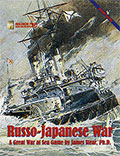
In our Golden Journal No. 52: Russo-Japanese Shopping Spree, you can not only play with these ships (we have 20 new pieces for them, for Great
War at Sea: Russo-Japanese War), you can also engage in the Competitive Shopping Game.
The Golden Journal is only available to the Gold Club (that’s why we call it the Golden Journal).
Click here to join the Gold Club.
See your Gold Club Insider newsletter for ordering information.
Sign up for our newsletter right here. Your info will never be sold or transferred; we'll just use it to update you on new games and new offers.
Mike Bennighof is president of Avalanche Press and holds a doctorate in history from Emory University. A Fulbright Scholar and NASA Journalist in Space finalist, he has published a great many books, games and articles on historical subjects; people are saying that some of them are actually good.
He lives in Birmingham, Alabama with his wife, three children, and new puppy. He misses his lizard-hunting Iron Dog, Leopold.
Daily Content includes no AI-generated content or third-party ads. We work hard to keep it that way, and that’s a lot of work. You can help us keep things that way with your gift through this link right here.
|