Prizes of War:
The Ships
by Mike Bennighof, Ph.D.
February 2025
 The idea of taking a former enemy (or even an ally’s) warships and making them part of your own fleet at times excites diplomats and journalists (as with the French fleet in 1940, or the Central Powers navies after World War One). In practice, it’s actually fairly rare, chiefly thanks to maintenance problems. The idea of taking a former enemy (or even an ally’s) warships and making them part of your own fleet at times excites diplomats and journalists (as with the French fleet in 1940, or the Central Powers navies after World War One). In practice, it’s actually fairly rare, chiefly thanks to maintenance problems.
That usually doesn’t stop the fleets of defeated nations from becoming bargaining chips, even before their owner’s collapse. Rumors swirled around the French and Russian fleets during the First World War. Russia, of course, actually collapsed and some Russian warships came under German and/or British control. France did not, but wobbled under the weight of Army mutinies and battlefield defeat, and offered to sell her incomplete battleships to the British.
That’s the premise of Jutland: Prizes of War, an expansion book for Great War at Sea: Jutland (and only for Jutland). For the most part, these are only the modern, useful ships as the British and especially the Germans didn’t bother to man their own over-aged pre-dreadnoughts and certainly wouldn’t have bothered with foreign models.
The book includes 23 new scenarios, and 80 new silky-smooth, die-cut playing pieces: 60 “long” ship pieces (29 British, 31 German) and 20 standard-sized square ones (all German). The long ship pieces have brand-new artwork, too: the new printing process we use is so sharp that it reveals all the previously-obscured flaws of the old art).
Let’s have a look at the new toys.
Russian Battleships
Each fleet receives the four ships of the Russian Gangut class, built to the “Cuniberti” pattern with four triple turrets with 12-inch (305mm) guns, all on the main deck level along the center line. That meant that the two central turrets could only fire to either broadside. None saw much action during the Great War and only a little during the Russian Civil War; the Germans did not demand them during the peace negotiations at Brest-Litovsk in 1918 when they probably could have easily obtained them as the Bolsheviks had already diverted the crews of three of the four to ground fighting.
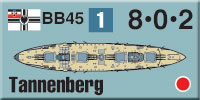 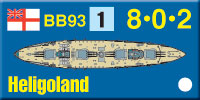
The Russian dreadnoughts did not meet British or German standards, with fairly weak protection and an odd turret layout that forced half of their armament to fire only on the broadside. They had been designed to be faster than foreign battleships, but years of neglected maintenance and crew disaffection had eroded their performance.
That still made them no worse than the earliest German dreadnoughts, thoroughly unsatisfactory fighting ships that the High Seas Fleet desperately wished to replace. Had they fallen into German hands – an outcome that easily could have occurred - it’s difficult to say whether the dockyard time to make them battle-worthy would have been a worthwhile investment given the needs of the High Seas Fleet and the submarine arm.
For the British, the ships would have had even less utility. The Russian Baltic Fleet had discussed plans to make a run out of the Baltic, either for internment in Sweden or a desperate dash through the Danish Straits and into the North Sea. Once in Britain, the ships more than likely would have moved on to the Mediterranean to make war on the Turks.
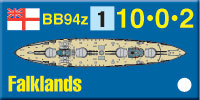
On the off chance they were sold to the Royal Navy instead, they did have one redeeming feature: the barbette underneath their triple 12-inch turrets could probably have been replaced with the standard British Mark I dual 15-inch turret. Sir John Jellicoe urged the Admiralty to build more ships carrying this weapon, as quickly as possible. He probably didn’t have re-armed tin-plated Russian rejects in mind, but they would have met his demand. Soviet naval architects later proposed a similar modification to the Borodino-class battlecruisers, replacing their triple 14-inch turrets with dual turrets for 16-inch guns.
Russian Battle Cruisers
The true prizes among the Prizes of War would have been the four incomplete battle cruisers of the Russian Borodino class. They’re big and fast, with powerful main armaments. They add a lot to the German First Scouting Group and are no mean addition to the Royal Navy’s Battle Cruiser Fleet, either. Or at least they are at first glance. Their dozen 14-inch guns give them firepower equal to any other British or German battle cruiser, and they are almost as fast as any other, making 26 knots (good enough for speed class 2 in game terms).
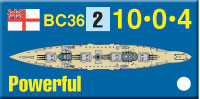 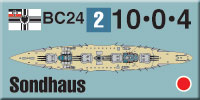
And then the comparisons start to break down. We over-rated them in our Jutland game; they are not as tough to sink as we made them and this is a serious shortcoming. They’re also relatively short-legged, which doesn’t matter much in the bathtub-like Baltic Sea or even in the North Sea, but would if they were deployed just about anywhere else.
Officially laid down in December 1912, work moved slowly and the hulls were finally launched in 1915 (three of them) and 1916 (the fourth). By that point the Russians had no hope of completing them before the war ended, or perhaps at all, as many vital components had been ordered in Germany. The gun turrets in particular lagged well behind the rest of the ships, and it appears that the Russian Navy overestimated the capabilities of Russian industry – the battle cruisers were simply too much ship for local yards to handle.
While the incomplete ships might easily have fallen into German hands, either seized by German troops occupying St. Petersburg where all four were built, or handed over by the Bolsheviks in a peace settlement, they would be unlikely to fall into British hands – if they were built in Russian yards. Had they been ordered from British shipbuilders, they would have been less expensive and would have been completed much faster. And they then would have been subject to seizure or sale when war broke out in August 1914.
The Russians had ordered the large armored cruiser Rurik from Vickers, and been deeply disappointed in her. That experience turned them away from British builders for the Borodino class, but it probably would have been a better choice (except for the excellent chance of losing them to the Royal Navy in the event of war – all contracts for warships built in Britain for foreign fleets included a clause allowing the Royal Navy to purchase them in the event of war or an undefined “national emergency”).
And those are the big formerly Russian ships of Prizes of War; next time we’ll look at the smaller ones, plus the former Turks and Greeks.
Click right here to order Prizes of War right now.
Sign up for our newsletter right here. Your info will never be sold or transferred; we'll just use it to update you on new games and new offers.
Mike Bennighof is president of Avalanche Press and holds a doctorate in history from Emory University. A Fulbright Scholar and NASA Journalist in Space finalist, he has published a great many books, games and articles on historical subjects; people are saying that some of them are actually good.
He lives in Birmingham, Alabama with his wife and three children. His Iron Dog, Leopold, could swim very well.
Want to keep Daily Content free of third-party ads? You can send us some love (and cash) through this link right here.
|