| Royal Netherlands Navy:
The Ships,
Part 1
By Mike Bennighof, Ph.D.
July 2017
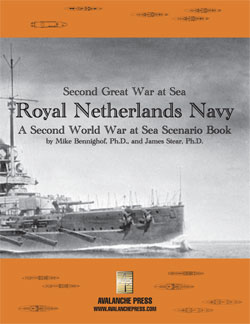 In our Second Great War alternative history, Imperial Germany and Austria-Hungary survive the Great War only to face an even more determined onslaught in 1940 from France, Italy, Russia and eventually Britain. In our Second Great War alternative history, Imperial Germany and Austria-Hungary survive the Great War only to face an even more determined onslaught in 1940 from France, Italy, Russia and eventually Britain.
The Netherlands eventually enters the war as well, on the side of the Central Powers, and has built a much more powerful fleet than was the case historically, applying its financial and industrial means to provide an adequate defense for its resource-rich colonies in the East Indies. This is the fleet the Dutch admirals wanted in our world, and could have built with a commitment from their government to meet their military obligations.
Royal Netherlands Navy, includes a sheet of pieces letf over from an old product called Spice Islands plus a new sheet, for a total of 120 “long” ship pieces and 190 square ones (aircraft, small ships and some markers). Most of these represent the greatly increased naval and air forces of the Netherlands, with additional ships and planes for Britain, Germany, France and Japan.
Here’s a look at the battleships, large cruisers and mine warfare vessels of the Royal Dutch fleet that never was:
Battleships
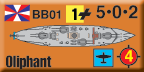 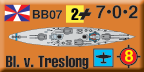 
The Dutch considered dreadnought battleships of their own before the Great War, as they had grown dissatisfied with their small and slow "armored ships" and felt it necessary to defend the East Indies from potential Japanese adversaries. We covered these in a previous Daily Content piece, and included examples of them in Great War at Sea: Cruiser Warfare and Great War at Sea: Jutland.
Royal Netherlands Navy has three classes of them, all grown up and modernized with improved anti-aircraft batteries and additional armor and blisters like other nations' battleships of 1914 vintage. There are 14 of them included in the set, but they don't all appear in scenarios together. The Dutch might have built a second class of dreadnoughts if they'd laid down their first set during the 1912 fiscal year but they definitely would not have constructed a third class.
These ships all appeared in Jutland or Cruiser Warfare or both, in their Great War at Sea era configurations. The names don't match up exactly in all cases: the Dutch named their major units after “Admirals of the Golden Age” in the last decades of the 19th century and first decades of the 20th, but then started giving those names to destroyers in the 1930s. So some names had to be altered to avoid confusion, but that did let me honor Bloys van Treslong — the Dutch second-in-command at the Battle of Camperdown in 1797 fought heroically. The later frigate named in his honor is best known for the wild antics of topless female crewmembers during NATO exercises.
Large Cruisers
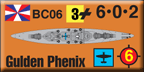 
The 1939 battle cruiser bore a striking resemblance to the German Scharnhorst class, but beyond that was actually a much more modern ship particular in regards to her sophisticated anti-aircraft armament.
During the 1920s, Dutch firms fronted for the Germans in a number of areas of weapons development, including warship design. That in turn yielded contacts in Germany once open re-armament commenced, and so plans for the Hipper class heavy cruisers came into Dutch hands. The admirals wanted a similar ship for the East Indies, thinking the design — if modified to Dutch standards — a good counter to the big Japanese heavy cruisers.
There are six of them in Royal Netherlands Navy — two sets of the three-ship groups the Dutch preferred to build — and they get a lot of work in the scenarios. The degree of fantasy involved in the various ships included differs from design to design of course, but these big cruisers were exactly what the Royal Netherlands Navy wanted for the East Indies station. They were well within Dutch financial and industrial capability to build, even if some economically conservative politicians preferred to cling to balanced budgets and the gold standard rather than face up to the threat presented by Axis aggression. In The Second Great War setting, it's British and Japanese pressure, with the Ducth ready to meet this test.
All of the new battle cruisers and the big heavy cruisers bear the names of famous Dutch warships of the Golden Age, accounting for some of those that seem less-than-warlike. Ever-conscious of each gulden in 1639 just like 1939, the Dutch relied heavily on conscripted merchant ships in their battle fleets and these retained their names in naval service.
Mine Warfare
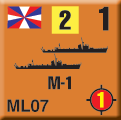 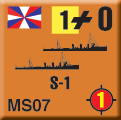
The Royal Netherlands Navy took mine warfare very seriously, and designed and built a series of modern and highly innovative minelayers and minesweepers in the 1930s. Most of the minelayers were dual-purpose vessels, in keeping with the parsimonious nature of Dutch politics — peacetime roles included fishery protection vessels, survey ships, a cadet training ship and a government yacht.
The minelayers included in Royal Netherlands Navy are based loosely on Willem van der Zaan, but unlike the actual vessel they do not carry a seaplane and are intended for a single purpose (though they are quite capable anti-submarine escorts, another mission the Dutch built into their mine warfare craft). The Dutch named their minelayers, but those in Royal Netherlands Navy are numbered instead — I borrowed the actual names for destroyers.
The minesweepers, likewise, follow actual Dutch practice and are very similar to the actual Jan van Amstel class — the difference here being their greater numbers. With the narrow waters of the East Indies, Dutch players will find many tempting locations for minefields to slow the Japanese advance, British attacks or French raiders.
In a later installment we'll take a look at the aircraft carriers, small cruisers, destroyers and aircraft.
Click here to order Royal Netherlands Navy right now!
Mike Bennighof is president of Avalanche Press and holds a doctorate in history from Emory University. A Fulbright Scholar and award-winning journalist, he has published over 100 books, games and articles on historical subjects.
He lives in Birmingham, Alabama with his wife, three children and his dog, Leopold. |