The Deluge
Scenario Preview, Part One
by Mike Bennighof, Ph.D.
September 2025
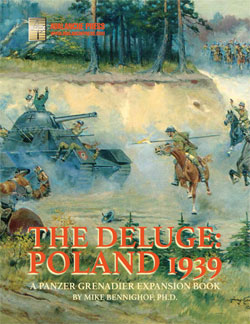 Over the past few years, I’ve found it much more rewarding to design Panzer Grenadier games in terms of chapters, each made up of multiple scenarios that tell the story of a larger battle or campaign. When I set out to design The Deluge, I at first had in mind an upgraded edition of our old White Eagles book. That could have been a good book; the White Eagles scenarios are good ones and well worth bringing back into print. But that wouldn’t have told the story the way I wanted to tell it. Over the past few years, I’ve found it much more rewarding to design Panzer Grenadier games in terms of chapters, each made up of multiple scenarios that tell the story of a larger battle or campaign. When I set out to design The Deluge, I at first had in mind an upgraded edition of our old White Eagles book. That could have been a good book; the White Eagles scenarios are good ones and well worth bringing back into print. But that wouldn’t have told the story the way I wanted to tell it.
And so I added scenarios. A lot of scenarios. I had much better source material this time around, and I used it. Chapter One of The Deluge has six scenarios: one re-worked scenario from White Eagles (the first one) and five new ones. Not every chapter is quite this heavy on new stuff, but some of them are and all have at least a few. From a business perspective, it was an astoundingly stupid decision: we won’t lose any sales, but we won’t gain many, either.
The Deluge is the book that I wanted to write, and probably not the one I should have written. But it’s done, so let’s take a look at Chapter One.
Chapter One
Mlawa, Day One
 Mlawa lay on the road and railroad leading directly south from East Prussia to Warsaw. That had made it a vital communications hub during the First World War, and it served as the supply center for the Second Army’s ill-fated advance in August 1914. The Polish defense plan charged Army Modlin with holding the sector, an “army” composed of two infantry divisions and two cavalry brigades, with one of the divisions stationed well to the rear and not yet fully mobilized. Mlawa lay on the road and railroad leading directly south from East Prussia to Warsaw. That had made it a vital communications hub during the First World War, and it served as the supply center for the Second Army’s ill-fated advance in August 1914. The Polish defense plan charged Army Modlin with holding the sector, an “army” composed of two infantry divisions and two cavalry brigades, with one of the divisions stationed well to the rear and not yet fully mobilized.
The 20th Infantry Division manning the front lines mobilized in March 1939 and moved the Mlawa in July, where it began digging trenches and anti-tank ditches, laying wire and minefields, and building concrete machine-gun posts and tank traps. Additional engineer units were attached to assist, and local civilians volunteered in large numbers to help with the work. German military intelligence did not detect these preparations, but the lone division was a very small force to hold the line at Mlawa, even with a crack cavalry brigade on either flank.

The German Third Army in East Prussia launched a sizeable force southward against Army Modlin. On its right, or western flank it had I Corps with three infantry divisions: the “First Wave” 11th Infantry Division and the hastily-organized 61st and 217th Infantry divisions. It also had Panzer Division Kempf, a unit formed in mid-August from a collection of regular army units and Waffen SS militia. On its left, or eastern flank Korps Wodrig had two First Wave infantry divisions (1st and 12th) and the German Army’s lone cavalry brigade.
Third Army commander Georg von Küchler had a rather simple plan for the campaign: to drive southward along the road from his headquarters at Neidenburg through Mlawa to Modlin and then on to Warsaw. He did not expect a single Polish infantry division to offer serious opposition.
Scenario One
Cavalry
1 September 1939
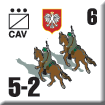 On the right flank of the German Third Army striking southward out of East Prussia, the German 1st Cavalry Brigade attacked the Polish Mazowiecka Cavalry Brigade along the Ulatkowka River. The September Campaign is best remembered today as the birthplace of blitzkrieg, but a large-scale clash of cavalry was among its very first battles. On the right flank of the German Third Army striking southward out of East Prussia, the German 1st Cavalry Brigade attacked the Polish Mazowiecka Cavalry Brigade along the Ulatkowka River. The September Campaign is best remembered today as the birthplace of blitzkrieg, but a large-scale clash of cavalry was among its very first battles.
Conclusion
A few mounted clashes actually occurred on this front, and the Polish horsemen held their sector against the German cavalry’s attack. Thrown back across the river, the Germans re-grouped to try again, but the next day the Poles had withdrawn thanks to increasing gains made by the German 12th Infantry Division just to the west.
Notes
Cavalry against cavalry, something you don’t see often in World War II, so it needed to be included. We had this scenario in White Eagles, which used a board from the old Road to Berlin game that was easily replaced by a nearly-identical one from Fire in the Steppe.
Scenario Two
Prepared Defense
1 September 1939
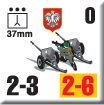 The German 11th Infantry Division crossed the Polish border at about 0500, immediately running into scattered resistance from Polish delaying forces screening the border. The Poles slowed the advance, and by the time the Germans reached the main line of resistance the Polish defenders had been fully altered and occupied the positions that German pre-invasion intelligence claimed did not exist. The German 11th Infantry Division crossed the Polish border at about 0500, immediately running into scattered resistance from Polish delaying forces screening the border. The Poles slowed the advance, and by the time the Germans reached the main line of resistance the Polish defenders had been fully altered and occupied the positions that German pre-invasion intelligence claimed did not exist.
Conclusion
The 11th Infantry Division, one of the well-equipped “First Wave” infantry divisions expected to provide the Wehrmacht’s striking power, ran into unexpectedly heavy Polish resistance behind well-prepared defenses. German efforts to break through proved futile and the division pulled back into German territory.
Notes
This is a pretty intense scenario; there are a lot of troops on the board and the fighting’s going to get ugly. The Germans have the edge in artillery, but the Poles are fortified and have both morale and morality on their side.
Scenario Three
National Socialist Ardor
1 September 1939
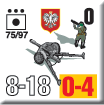 In early August 1939 the German Army’s 7th Panzer Regiment and the Waffen SS “Deutschland” Regiment moved to East Prussia to form the ad hoc “Panzer Division Kempf.” They held their first exercises on 8 August, the first time that regular army troops and Waffen SS militia trained together. The division attacked the Mlawa defenses on the first day of the invasion, with the SS charging straight down the road to Mlawa. In early August 1939 the German Army’s 7th Panzer Regiment and the Waffen SS “Deutschland” Regiment moved to East Prussia to form the ad hoc “Panzer Division Kempf.” They held their first exercises on 8 August, the first time that regular army troops and Waffen SS militia trained together. The division attacked the Mlawa defenses on the first day of the invasion, with the SS charging straight down the road to Mlawa.
Conclusion
Polish and German accounts of this action differ widely. According to the Germans, they suffered only light casualties before pulling back to reorganize their attack. According to the Poles, the 75mm guns of the 20th Light Artillery Regiment devastated the first SS battalion to approach their positions. Whatever the truth may be, the SS men fled the battlefield and could only be coaxed back into action with the presence of tanks.
Notes
The title is something of a tradition now in Panzer Grenadier games, as is depicting actions where the Waffen SS get their asses handed to them. The scenario’s based on the Polish version of events, because I tend to believe them over the war criminals they fought.
Scenario Four
Throwing Good After Bad
1 September 1939
 SS Group Leader Paul Hausser, serving on the panzer division’s staff, insisted that its commander, Maj. Gen. Werner Kempf, give his men tank support for a renewed assault on the Poles. Given the political realities of September 1939, Kempf had little choice in the matter and ordered the armor to accompany the militia’s second attempt. SS Group Leader Paul Hausser, serving on the panzer division’s staff, insisted that its commander, Maj. Gen. Werner Kempf, give his men tank support for a renewed assault on the Poles. Given the political realities of September 1939, Kempf had little choice in the matter and ordered the armor to accompany the militia’s second attempt.
Conclusion
The panzers rolled up to the Polish positions, where the anti-tank gunners shot them up. Undeterred, the tanks then turned to find the Polish flank - now exposing their broadsides as they trundled along in front of the Poles, who gleefully put more rounds into them. When the attack finally collapsed, the Polish gunners had claimed 39 of Panzer Division Kempf’s 154 machines.
Notes
The SS come back with tanks, and find out that those Polish 37mm anti-tank guns are hell on Panzer I and II light tanks. Lately I’ve come to think that since the Waffen SS was not a branch of the German Armed Forces, but rather of the National Socialist Party, it’s more accurate to refer to them as “militia” rather than “soldiers,” a label they do not deserve.
Scenario Five
Anders’ Army
1 September 1939
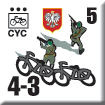 On the left flank of the Polish Army Modlin, Col. Wladyslaw Anders’ Nowogrodzka cavalry brigade had to prevent the German I Corps from outflanking the prepared positions at Mlawa. Andres’ brigade followed the larger, four-regiment organization and had been mobilized since March 1939, making it one of the best-prepared large Polish units when the Germans attacked. The attackers were less ready for war. On the left flank of the Polish Army Modlin, Col. Wladyslaw Anders’ Nowogrodzka cavalry brigade had to prevent the German I Corps from outflanking the prepared positions at Mlawa. Andres’ brigade followed the larger, four-regiment organization and had been mobilized since March 1939, making it one of the best-prepared large Polish units when the Germans attacked. The attackers were less ready for war.
Conclusion
The Polish cavalry put up stout resistance right on the border, and Gen. Richard Baltzer’s infantry division halted its advance right there. The 217th Infantry Division had been organized only on 16 August as a training unit, upgraded to infantry division status on the 26th with an infusion of East Prussia Landwehr and reservists. As a Wave Five outfit it lacked modern weapons and presented little challenge to Anders’ crack brigade.
Notes
More Polish cavalry in action! The Germans they’re fighting are really bad at this whole invading-other-countries thing, so the Poles are going to have to achieve a lot in order to win the day.
Scenario Six
Prussian Blues
1 September 1939
 On the Polish right flank, the 20th Infantry Division had stationed just one of its three regiments, counting on promised reinforcements to take over the fortifications there. More by luck than design, the East Prussian 1st Infantry Division was able to deploy its full strength against the sole Polish regiment still on its own when the German invasion began. On the Polish right flank, the 20th Infantry Division had stationed just one of its three regiments, counting on promised reinforcements to take over the fortifications there. More by luck than design, the East Prussian 1st Infantry Division was able to deploy its full strength against the sole Polish regiment still on its own when the German invasion began.
Conclusion
The Germans had the numbers and firepower on their side; the Poles brought determination and some well-laid fortifications. Despite repeated German efforts, and some tank support provided by Kempf’s scratch division, the Germans could not pierce the Polish main line of resistance. The German Third Army overseeing operations in East Prussia decided that the Poles would have to be outflanked.
Notes
Most Panzer Grenadier scenarios represent a slice of a much larger battle. Not always; some of them show all the action that happened. But most often that’s not true. I decided that this scenario wasn’t different enough from No. 2 up above - a German assault on a Polish fortified line - so I made it bigger, covering more of the action and thereby allowing the Germans to try to stretch the Poles and make them nervous for their flanks. That meant including some extra Germans from 1940: The Fall of France but I thought that was worth it to provide a really big scenario with lots of action going on.
And that’s all for Chapter One. Next time, we look at Chapter Two.
Order The Deluge Here.
Sign up for our newsletter right here. Your info will never be sold or transferred; we'll just use it to update you on new games and new offers.
Mike Bennighof is president of Avalanche Press and holds a doctorate in history from Emory University. A Fulbright Scholar and NASA Journalist in Space finalist, he has published a great many books, games and articles on historical subjects; people are saying that some of them are actually good.
He lives in Birmingham, Alabama with his wife and three children. He misses his lizard-hunting Iron Dog, Leopold.
Daily Content includes no AI-generated content or third-party ads. We work hard to keep it that way, and that’s a lot of work. You can help us keep things that way with your gift through this link right here.
|