The Deluge
Scenario Preview, Part Two
by Mike Bennighof, Ph.D.
September 2025
 For a very long time, I knew that the Polish Army had fought very hard and, at the tactical level, very well in defense of their country. Yet the September Campaign was over in 30 days, with the Polish state destroyed. It was an unmitigated disaster for Poland and for humanity in general; over six million Polish citizens, half of them Jewish, would be murdered by the Nazis. For a very long time, I knew that the Polish Army had fought very hard and, at the tactical level, very well in defense of their country. Yet the September Campaign was over in 30 days, with the Polish state destroyed. It was an unmitigated disaster for Poland and for humanity in general; over six million Polish citizens, half of them Jewish, would be murdered by the Nazis.
The Poles started mobilization too late, deployed their forces badly when they did get them ready, and then could not re-deploy quickly enough to answer the rapidly-moving German mechanized and motorized forces.
That didn’t make the campaign a rollover for the Germans. Many Polish units fought well, and scored plenty of tactical victories. It wasn’t enough to save their country from the tide of unmitigated evil pouring over the borders in this second Deluge. Let’s look at some more of those battles.
Chapter Two
Assault on Pomerania
The initial Polish deployment placed Army Pomorze in an impossible situation, having to defend Polish Pomerania from German advances on two opposite flanks. The Polish high command arrayed Gen. Wladyslaw Bortnowski’s five infantry divisions and single cavalry brigade in an exposed position to keep Polish mobilization centers from being overrun before the reservists could report for duty, and to maintain a connection with Poland’s lone port at Gydnia. Bortnowski lacked the troops to maintain a continuous front with the Polish armies on either flank, or even among his own divisions.
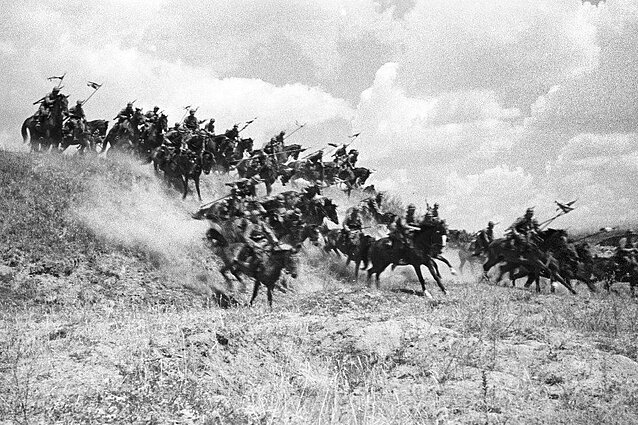
Sound Garryowen! The 7th Cavalry Regiment on exercises near Lublin, Summer 1939.
Bortnowski would face the German Fourth Army led by Günther von Kluge. Kluge had two infantry corps with five divisions between them, but his real striking power lay in Heinz Guderian’s XIX Motorized Corps with 3rd Panzer Division and 2nd and 20th Motorized Divisions. Once the Polish Corridor had been severed, Guderian’s corps would conduct a deep penetration, joining with Third Army marching south from East Prussia to envelop Warsaw from the north and east.
Scenario Seven
Train in Vain
1 September 1939
 On the northern flank of the German XIX Panzer Corps striking into the Polish Corridor, Armored Train No. 3 lumbered across the border intent on seizing the town of Chojnice in a surprise attack. Not only panzers could conduct blitzkrieg, the train's commander apparently decided to prove to the high command. Stunned by the train's brazen appearance with no supporting units, the Polish garrison quickly fanned into the nearby forests, intent on ambushing this smoke-belching monster. On the northern flank of the German XIX Panzer Corps striking into the Polish Corridor, Armored Train No. 3 lumbered across the border intent on seizing the town of Chojnice in a surprise attack. Not only panzers could conduct blitzkrieg, the train's commander apparently decided to prove to the high command. Stunned by the train's brazen appearance with no supporting units, the Polish garrison quickly fanned into the nearby forests, intent on ambushing this smoke-belching monster.
Conclusion
The Poles stopped the train with a shot from an anti-tank gun and then riddled it with small arms fire, leaving it a smoking ruin. Chojnice fell and the wreck was rescued when troops from 90th Motorized Infantry Regiment sped to the scene of the disaster. Armored Train Number Three was salvaged and rebuilt in time to be shot to pieces by Dutch troops in 1940.
Notes
A version of this strange little scenario appeared in White Eagles; this is pretty much a new scenario given all the changes to reflect better research since the old book’s publication. The train isn’t completely on its own, as it has two platoons of infantry aboard, and the Poles will need some good shooting to knock it out.
Scenario Eight
Bicycle Races
1 September 1939
 The Polish Army deployed forward during the September Campaign, hoping to slow the German advance long enough for their French allies to launch their own promised offensive into Germany. That meant that in some places, Polish troops were stretched very thin. One of these was along the Brda River in the so-called Polish Corridor, where the Pomorska Cavalry Brigade had only its attached cyclist squadron available to hold the line. The Polish Army deployed forward during the September Campaign, hoping to slow the German advance long enough for their French allies to launch their own promised offensive into Germany. That meant that in some places, Polish troops were stretched very thin. One of these was along the Brda River in the so-called Polish Corridor, where the Pomorska Cavalry Brigade had only its attached cyclist squadron available to hold the line.
Conclusion
The German probe across the river found the crossing lightly defended, but the Poles put up stiff resistance until tanks got across to their side. The Germans secured the bridge while the cyclists pulled back, and soon the entire panzer division was pushing deeper into Poland.
Notes
This is one of the few White Eagles scenarios to carry over close to untouched. It’s a sharp little fight, where the Polish bicycles can give the defenders an unexpected advantage in mobility.
Scenario Nine
Tuchola Forest
1 September 1939
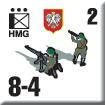 Polish military intelligence provided a steady flow of detailed information on German intentions. The Poles knew they would be facing concentrated armored formations, and had a pretty good idea of what these units could achieve. To continue their advance, the Germans would have to capture crossings over the river Brda suitable for tanks; one such lay near the village of Pruscz. Polish military intelligence provided a steady flow of detailed information on German intentions. The Poles knew they would be facing concentrated armored formations, and had a pretty good idea of what these units could achieve. To continue their advance, the Germans would have to capture crossings over the river Brda suitable for tanks; one such lay near the village of Pruscz.
Conclusion
The Poles stalled the German advance long enough to set the heavy railroad bridge over the Brda on fire. Not for the last time, the Germans noted how the Polish anti-tank gunners fought with suicidal determination. The staff of Panzer Regiment 5 decided that they had done enough for the day and stopped to rest by the burning remnants of the bridge, bringing their enraged corps commander to the scene.
Notes
This is a new scenario for The Deluge, and it’s a tough one for the Poles. The Germans outnumber them greatly and have scads of tanks. Not very good tanks, but tanks all the same. All the Poles have to do here is slow down the panzers, and that’s achievable.
Scenario Ten
The Rytel Position
1 September 1939
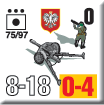 While XIX Motorized Corps commander Heinz Guderian swanned about in a half-track micro-managing 3rd Panzer Division’s advance, he left the two motorized infantry divisions under his command to their own devices. Second Motorized Division crossed the border and soon ran into tough Polish fixed defenses at Rytel. Rather than use his mobility to find the Polish flank and move around the fortifications, division commander Paul Bader dismounted his infantry and ordered a frontal assault. While XIX Motorized Corps commander Heinz Guderian swanned about in a half-track micro-managing 3rd Panzer Division’s advance, he left the two motorized infantry divisions under his command to their own devices. Second Motorized Division crossed the border and soon ran into tough Polish fixed defenses at Rytel. Rather than use his mobility to find the Polish flank and move around the fortifications, division commander Paul Bader dismounted his infantry and ordered a frontal assault.
Conclusion
Podpulkownik Jan Maliszewski’s 35th Infantry Regiment had mobilized in March 1939 and deployed at Rytel in July. For the past two months he had set his men to stringing wire, digging trenches and building concrete emplacements. Bader helpfully flung the bulk of his infantry directly at those positions, and the Poles poured rifle and machine-gun fire on the Germans as they struggled through the swampy ground in front of the fortifications while the division artillery - concentrated here - rained down shells as well. Bader continued the attacks for six hours before realizing that his division was shattered; during the night Maliszewski was ordered to abandon Rytel because 3rd Panzer Division’s advance threatened to outflank him.
Notes
We always try to include plenty of small scenarios in Panzer Grenadier games and expansions, one or two maps and maybe a few dozen pieces at most, that can be completed in an hour or two. This is not one of those scenarios: a huge German force advances on foot against well-prepared and well-manned Polish fortifications. It’s more like 1918 than 1939, and for once the Poles have actual artillery support.
Scenario Eleven
Wojtaszewski’s Battalion
1 September 1939
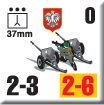 XIX Corps commander Heinz Guderian focused on the lead elements of 3rd Panzer Division - the Lehr panzer demonstration unit and the divisional recon and motorcycle battalions - while its other elements ran into problems of their own. Just north of Guderian’s position at Pruscz, the 6th Panzer Regiment ran into a single Polish infantry battalion. Not waiting for infantry support, the tanks simply charged straight ahead. XIX Corps commander Heinz Guderian focused on the lead elements of 3rd Panzer Division - the Lehr panzer demonstration unit and the divisional recon and motorcycle battalions - while its other elements ran into problems of their own. Just north of Guderian’s position at Pruscz, the 6th Panzer Regiment ran into a single Polish infantry battalion. Not waiting for infantry support, the tanks simply charged straight ahead.
Conclusion
Major Stanislaw Wojtaszewski’s I Battalion of the 34th Infantry Regiment had put out an outpost that shot up several German tanks, but that didn’t slow down the panzers. They came straight into the teeth of his positions, and the Polish anti-tank gunners destroyed still more when they assaulted the main positions in and around the town of Gostycyn. Fighting raged in and around Gostycyn until midnight, when division headquarters ordered Wojtaszewski to fall back to the river Brda.
Notes
It’s a Polish shooting gallery, with unsupported Panzer I and Panzer II light tanks charging into the teeth of the Polish anti-tank guns. The German player may want to wait for the infantry, with which his or her historical counterpart didn’t bother.
Scenario Twelve
The Eternal Lie
1 September 1939
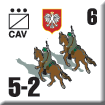 On the northern end of the line in the so-called "Polish Corridor" of West Prussia, the Pomorska Cavalry Brigade faced heavy attacks by German mobile units. Taking half of his regiment on a wide flanking attack, Col. Kazimierz Mastelarz surprised a German battalion sitting down to dinner. On the northern end of the line in the so-called "Polish Corridor" of West Prussia, the Pomorska Cavalry Brigade faced heavy attacks by German mobile units. Taking half of his regiment on a wide flanking attack, Col. Kazimierz Mastelarz surprised a German battalion sitting down to dinner.
Conclusion
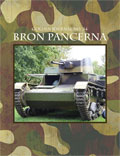
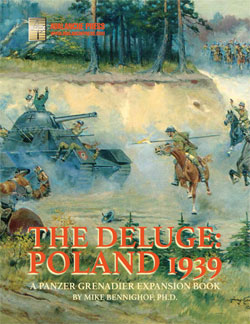
Acting as though they were not in the middle of a shooting war, the German infantrymen carried on with their summer camp routine. Mastelarz's men rode down many of the Germans, but armored cars from the divisional recon battalion arrived just in time to prevent the German battalion’s annihilation. The colonel and 20 of his troopers were killed in action, and the Germans proudly showed their corpses to Italian war correspondents, claiming that the foolish Poles had launched a saber charge against tanks. A myth would spread from this incident, one that still surfaces on occasion (including the cover of our book, a contemporary Polish take on the legend).
Notes
You can’t have a game on tactical battles of the 1939 Campaign without this famous action, the supposed lances-against-tanks charge that inspired the mocking painting on our book’s cover. Well, as far as I know this is the only game ever published on these battles, but we have the famous one.
Scenario Thirteen
Manteuffel’s Crossing
1 September 1939
 Enraged at the failure of 3rd Panzer Division to cross the river Brda, XIX Corps commander Heinz Guderian personally ordered Lt. Col. Günther von Manteuffel to take his 3rd Motorcycle Battalion and get across the water barrier immediately, whatever the cost. While the small group of Polish defenders on the opposite bank opened fire with rifles and machine guns, Manteuffel’s men swapped their Zündapp machines for rubber boats and started paddling. Enraged at the failure of 3rd Panzer Division to cross the river Brda, XIX Corps commander Heinz Guderian personally ordered Lt. Col. Günther von Manteuffel to take his 3rd Motorcycle Battalion and get across the water barrier immediately, whatever the cost. While the small group of Polish defenders on the opposite bank opened fire with rifles and machine guns, Manteuffel’s men swapped their Zündapp machines for rubber boats and started paddling.
Conclusion
The Germans made it over the river and drove the Poles away from the burned wreck of the railway bridge. Combat engineers soon had it repaired and Guderian sent the 3rd Panzer Division’s recon battalion across and on to the division’s next objectives. It was a well-executed operation, but certainly not one that needed the corps commander’s direct supervision.
Notes
It’s a contested river crossing, with a dismounted German biker gang trying to get across in the face of a small Polish rearguard. The Poles don’t have a whole lot to fight with, so they’re going to have to stop the Germans from getting firmly ashore.
And that’s all for Chapter Two. Next time, we look at Chapter Three.
Order The Deluge Here.
Sign up for our newsletter right here. Your info will never be sold or transferred; we'll just use it to update you on new games and new offers.
Mike Bennighof is president of Avalanche Press and holds a doctorate in history from Emory University. A Fulbright Scholar and NASA Journalist in Space finalist, he has published a great many books, games and articles on historical subjects; people are saying that some of them are actually good.
He lives in Birmingham, Alabama with his wife and three children. He misses his lizard-hunting Iron Dog, Leopold.
Daily Content includes no AI-generated content or third-party ads. We work hard to keep it that way, and that’s a lot of work. You can help us keep things that way with your gift through this link right here.
|