Valhalla
of Games
When we formed the original Avalanche Press in 1994,
we never really thought through what we would
do with game titles that sold out. There was
some vague notion that this would eventually
happen, but running out of the stacks and
stacks of those first two games seemed a time
that would never come.
Here are the honored games of our past,
that have performed with honor and been honorably retired.
Jutland
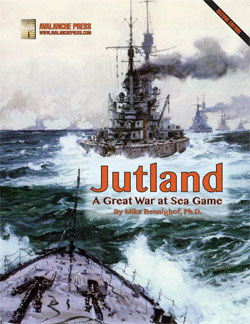 Our best-selling wargame of all time had to sell out eventually, and it finally has. We printed an enormous quantity (the quirks of ocean freight encouraged filling the freight container), and the supply lasted for almost exactly two decades. If it’s not the best-selling hex-and-counter wargame of this century, it’s a contender. Our best-selling wargame of all time had to sell out eventually, and it finally has. We printed an enormous quantity (the quirks of ocean freight encouraged filling the freight container), and the supply lasted for almost exactly two decades. If it’s not the best-selling hex-and-counter wargame of this century, it’s a contender.
Jutland went through two editions. The first, which includes most copies, went out in a box (two different styles) with scenarios that covered the entire war in the North Sea and the Baltic. They were old-school shotgun-style scenarios, with no connection between them. The second edition, issued in Playbook format, is tightly focused on the Battle of Jutland, with story-arc scenarios. It’s among my very best work as a game designer and writer, and I’m very proud of it.
We supported Jutland heavily, with scads of expansion books, Golden Journals, and website Content. All of those did their job splendidly, to sell out this magnificent game (which was never placed on fire sale).
We will, of course, return to the Battle of Jutland, with a brand-new game.
Zeppelins
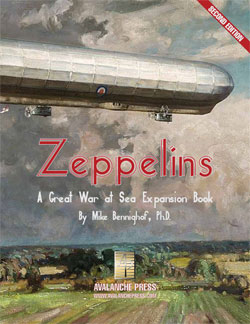 Of all the expansions we’ve published, Zeppelins is probably my favorite. It was built around a set of 88 huge airship pieces and gave them far more capabilities than they’d had in the standard first edition rules. We liked those rules so much, we incorporated most of them into the Second Edition of Great War at Sea’s series rules. The book went through two editions of its own; the first had a handful of scenarios, the second instead incorporated the giant airships into the existing scenarios from various books and games. Of all the expansions we’ve published, Zeppelins is probably my favorite. It was built around a set of 88 huge airship pieces and gave them far more capabilities than they’d had in the standard first edition rules. We liked those rules so much, we incorporated most of them into the Second Edition of Great War at Sea’s series rules. The book went through two editions of its own; the first had a handful of scenarios, the second instead incorporated the giant airships into the existing scenarios from various books and games.
We’re using the last few cartons of those wonderful pieces in Golden Journal No. 62: Naval Airships and greatly expanding the airship story in the Historical Study, Zeppelin Tales. That will let us keep the history in print even after the pieces are all gone.
Red and White
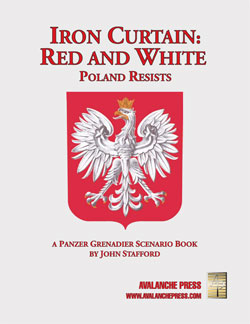 Years ago, we published a downloadable expansion for Panzer Grenadier, called Polish Steel. It was pretty weird: Polish Exile troops re-armed for a Cold War turned hot, with the post-war tanks (Pershings, Chaffees, Centurions) and some German captures (Panthers, Tigers). We make downloads for weird ideas, so that was okay. But then we needed to fill a spot in a counter printing run (in the bad old days, you couldn’t print them separately, but on large press sheets with eight slots), and we filled it with Polish Steel. Years ago, we published a downloadable expansion for Panzer Grenadier, called Polish Steel. It was pretty weird: Polish Exile troops re-armed for a Cold War turned hot, with the post-war tanks (Pershings, Chaffees, Centurions) and some German captures (Panthers, Tigers). We make downloads for weird ideas, so that was okay. But then we needed to fill a spot in a counter printing run (in the bad old days, you couldn’t print them separately, but on large press sheets with eight slots), and we filled it with Polish Steel.
Once Polish Steel had its run, we used the pieces for a new book, Red and White. The heavily armed Poles fight off a 1951 Soviet invasion, in a whopping 40 scenarios. They were very nice pieces, and solid scenarios, but the topic turned out to be too weird for regular players, not weird enough for those who cherish unique gaming opportunities. When that book had had its day, which didn’t take long, we tipped hundreds more counter sheets into the dumpster out back. Sometimes, ideas just don’t work out.
Hammer & Sickle
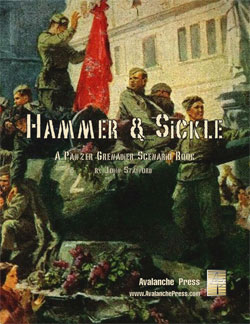 I stood at the free-throw line, trying to clear my mind for the next shot, when the thought came to me: we had space to fill one the counter sheets for Zeppelins. The technology of the time did not allow the mix-and-match die cutting we enjoy now, so to print two sheets of 44 giant pieces, we also had to fill two sheets of 77 square ones, Panzer Grenadier sized. We could fill those a pair of Panzer Grenadier expansions, one each for the Soviets and the Americans, featuring the early Cold War tanks that either weren’t produced beyond a prototype, or didn’t see combat. I stood at the free-throw line, trying to clear my mind for the next shot, when the thought came to me: we had space to fill one the counter sheets for Zeppelins. The technology of the time did not allow the mix-and-match die cutting we enjoy now, so to print two sheets of 44 giant pieces, we also had to fill two sheets of 77 square ones, Panzer Grenadier sized. We could fill those a pair of Panzer Grenadier expansions, one each for the Soviets and the Americans, featuring the early Cold War tanks that either weren’t produced beyond a prototype, or didn’t see combat.
We published them together, as Iron Curtain, with a small, rather cheaply made comb-bound booklet of scenarios. Since the pieces were more or less a throw-in with Zeppelins, I was happy enough with the outcome, but I believed that Zeppelins would be a runaway hit (it was) and we printed its pieces accordingly. That left us with mountains of Iron Curtain pieces.
We re-used the Soviet pieces in Hammer & Sickle, a full-sized book with 20 new scenarios, the 19 scenarios from Iron Curtain, and a pretty convoluted campaign game. When the core games on which it depended for maps and pieces went out of print, so did the book. The pieces get their third and final use in Golden Journal No. 63: War Machines, where they can fight the German super-tanks.
I did hit the shot, by the way.
Patton’s Nightmare
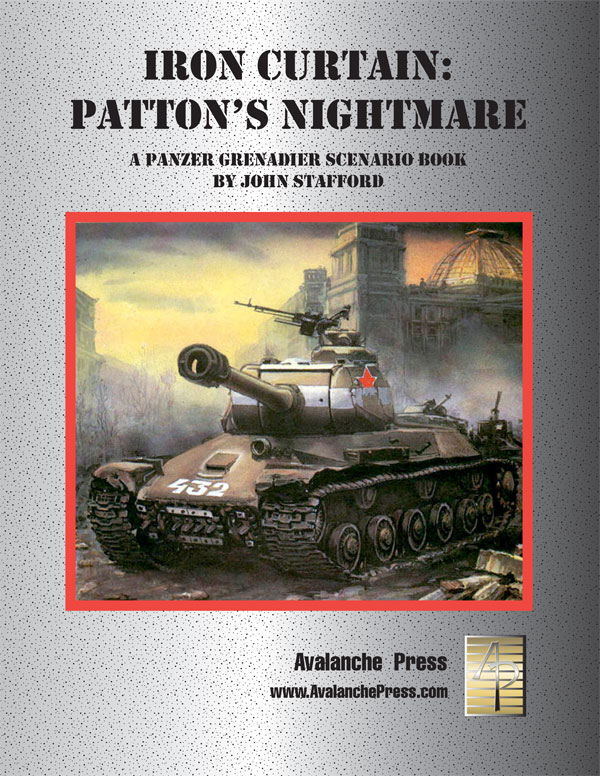 When we split the Iron Curtain pieces to create two new books, the American sheet went to Patton’s Nightmare. The Americans fight the Soviets across central Germany, as the 1948 Berlin Crisis leads to a shooting war (which was probably the more likely outcome, rather than the mutual backing down that actually happened). When we split the Iron Curtain pieces to create two new books, the American sheet went to Patton’s Nightmare. The Americans fight the Soviets across central Germany, as the 1948 Berlin Crisis leads to a shooting war (which was probably the more likely outcome, rather than the mutual backing down that actually happened).
Patton’s Nightmare has the Cold War also turning hot in 1947, as events move faster than they did historically. The Soviets blockade Berlin, shoot up an American supply convoy, and the West reacts with a full-scale invasion of East Germany. Twenty scenarios tell that story, and then nearly half of the book is govern over to an even more convoluted campaign game that I’m reasonably sure no one ever played after we tried it out ourselves.
As with Hammer & Sickle, the last of the American Iron Curtain pieces are going into Golden Journal No. 63: War Machines.
Blood and Iron
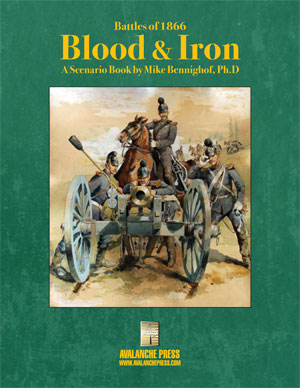 In the spring of 1866, Bavarian chief of staff Ludwig Freiherr von der Tann proposed that in the event of war with Prussia, the Royal Bavarian Army should march northward into Austrian-ruled Bohemia to fight alongside the Austrians there. That’s the basis of Battles of 1866: Blood and Iron, an expansion for Frontier Battles. You get 64 more pieces (24 huge and 40 merely large) and six new scenarios featuring the Bavarians and some of their smaller German allies. In the spring of 1866, Bavarian chief of staff Ludwig Freiherr von der Tann proposed that in the event of war with Prussia, the Royal Bavarian Army should march northward into Austrian-ruled Bohemia to fight alongside the Austrians there. That’s the basis of Battles of 1866: Blood and Iron, an expansion for Frontier Battles. You get 64 more pieces (24 huge and 40 merely large) and six new scenarios featuring the Bavarians and some of their smaller German allies.
As with Frontier Battles, a lot of research went into Blood and Iron. This isn’t just about a battle that’s not well-covered in popular (or even specialist) history, and it’s not something we just made up. This battle plan existed but was never executed. Von der Tann went to Vienna and made his presentation, was rejected, and only once the war had begun did the Austrian leadership change their minds and call on the Bavarians to march to their aid. But by then it was too late.
Lithuania’s Iron Wolves
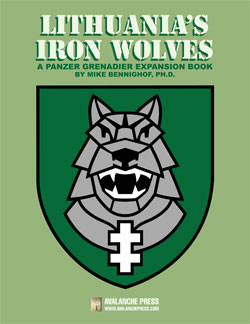 One of our first downloads brought the Lithuanian Army of 1940 to Panzer Grenadier. Foolishly, I listened to the cries for “real counters” and we printed them. They were among our last American-made pieces, produced using outdated technology that forced you to print in sets of eight sheets rather than one at a time. Sometimes, you ended up printing things just to fill the space. The Lithuanians filled one of those slots. I later re-used the pieces for Lithuania’s Iron Wolves, because they were there. One of our first downloads brought the Lithuanian Army of 1940 to Panzer Grenadier. Foolishly, I listened to the cries for “real counters” and we printed them. They were among our last American-made pieces, produced using outdated technology that forced you to print in sets of eight sheets rather than one at a time. Sometimes, you ended up printing things just to fill the space. The Lithuanians filled one of those slots. I later re-used the pieces for Lithuania’s Iron Wolves, because they were there.
I’m very proud of Lithuania’s Iron Wolves: it’s the mix of history and game-play I want to see in all of our products. The research is deep and good (you seen many orders of battle for the 1940 Soviet occupation of Lithuania?). You get to fight the Poles, Germans, and Soviets. It’s a great book, there’s just one problem: Lithuania.
Legend of the Iron Wolf
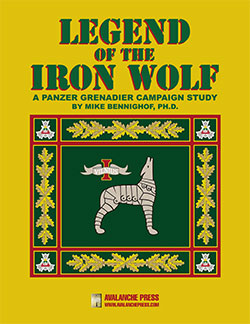 I wrote too much stuff for Lithuania’s Iron Wolves; scenario length (how much space it takes up, not how long it takes to play) is hard to judge, but this time I was way off. And so the rest of the text (two chapters, with scenarios) went into a Campaign Study, that I named Legend of the Iron Wolf. It’s a well-balanced little book of story and scenario: we tell about the Lithuanian Army of 1940, and then add ten more scenarios. I like it a great deal, and I’m proud of the work, but once again: Lithuania. I wrote too much stuff for Lithuania’s Iron Wolves; scenario length (how much space it takes up, not how long it takes to play) is hard to judge, but this time I was way off. And so the rest of the text (two chapters, with scenarios) went into a Campaign Study, that I named Legend of the Iron Wolf. It’s a well-balanced little book of story and scenario: we tell about the Lithuanian Army of 1940, and then add ten more scenarios. I like it a great deal, and I’m proud of the work, but once again: Lithuania.
Land Cruisers
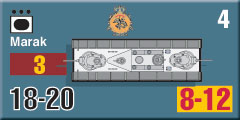 I created Land Cruisers as an inside joke to please my friend, the late Larry Marak, who loved a giant Panzer Grenadier fighting machine I’d drawn for an April Fools’ Day entry. Land Cruisers is all about huge dieselpunk fighting machines, that lumber across the landscape crushing all opposition in their path. It was part of our brief foray into laser-cut counters, which had the benefit of a very low minimum order (one), but the ones we got were of terrible quality and we threw out well over half of what we received. The real error I made was in printing “real” counters for Land Cruisers, die-cut and silky-smooth, and they are beautiful. I created Land Cruisers as an inside joke to please my friend, the late Larry Marak, who loved a giant Panzer Grenadier fighting machine I’d drawn for an April Fools’ Day entry. Land Cruisers is all about huge dieselpunk fighting machines, that lumber across the landscape crushing all opposition in their path. It was part of our brief foray into laser-cut counters, which had the benefit of a very low minimum order (one), but the ones we got were of terrible quality and we threw out well over half of what we received. The real error I made was in printing “real” counters for Land Cruisers, die-cut and silky-smooth, and they are beautiful.
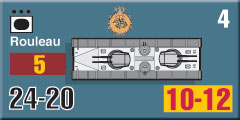 Land Cruisers is a fun little expansion: a good background story, and a fun new way to play Panzer Grenadier. It’s problem is that we went cheap, and made it a little expansion, and therefore only accessible if you already own other, full-sized Panzer Grenadier games. We should have gone big, with a full-sized complete game playable unto itself, and probably would have done quite well. Land Cruisers is a fun little expansion: a good background story, and a fun new way to play Panzer Grenadier. It’s problem is that we went cheap, and made it a little expansion, and therefore only accessible if you already own other, full-sized Panzer Grenadier games. We should have gone big, with a full-sized complete game playable unto itself, and probably would have done quite well.
Alsace 1945
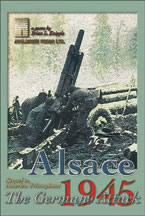 It’s a small, complete game, regimental scale, based on the German Operation North Wind in January 1945. It’s a good little game, and both sides get the chance to attack. Production values are extremely good, and that little box is very sturdy. It’s a small, complete game, regimental scale, based on the German Operation North Wind in January 1945. It’s a good little game, and both sides get the chance to attack. Production values are extremely good, and that little box is very sturdy.
Alsace 1945 was part of an experiment in small-box games that we could sell through retail at a low, intro-friendly price. Alsace 1945 sold well for the first years of its life, but we printed it in China and needed to fill a shipping container (if you don’t fill it, your product goes on pallets and gets beaten all to hell in transit, and the shipping company would not sell you empty air). So we had an enormous number of them, even after the game’s course had run.
Gazala 1942
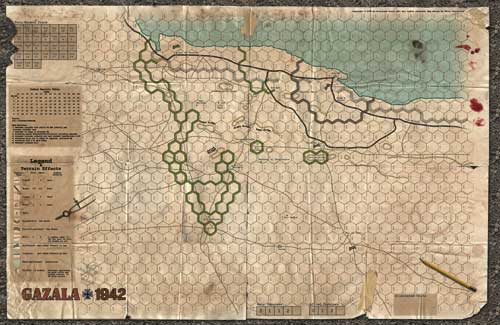 Gazala 1942 uses a very similar game system to Alsace 1945; the difference lies in a more involved armor/anti-tank sub-system. The map, by Terry Strickland, is one of the best wargame maps ever. You get plenty of hot desert action, and the game system is easy to play and nicely interactive. Gazala 1942 uses a very similar game system to Alsace 1945; the difference lies in a more involved armor/anti-tank sub-system. The map, by Terry Strickland, is one of the best wargame maps ever. You get plenty of hot desert action, and the game system is easy to play and nicely interactive.
We printed Gazala 1942 alongside Alsace 1945; it was always the better seller of the pair so we don’t have many of them left. At some point before our 2009 warehouse move to Alabama, some clown removed all the copies of Gazala from their protective cartons. So while Alsace’s remaining copies are pristine, Gazala’s are dust-scarred. The innards are fine. We gave it a number of downloadable expansions over the years.
Eastern Fleet: Gulf of Aden
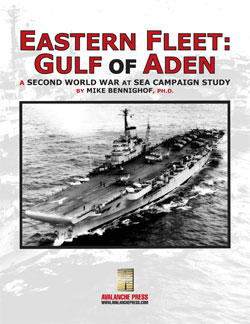 One of our early Campaign Studies, Gulf of Aden used the expanded map from Horn of Africa (the first edition had a much smaller one) and drew pieces from Eastern Fleet, Horn of Africa, and Bismarck. The story’s based on a claim in Andrew Boyd’s The Royal Navy in Eastern Waters, that the Japanese intended to seize Ceylon and then rampage across the western Indian Ocean, striking various zones of British interest including the Strait of Bab-el-Mandeb at the southern outlet of the Red Sea. And so the Japanese First Air Fleet fights the British in the Gulf of Aden, seeking to render the Suez Canal irrelevant. One of our early Campaign Studies, Gulf of Aden used the expanded map from Horn of Africa (the first edition had a much smaller one) and drew pieces from Eastern Fleet, Horn of Africa, and Bismarck. The story’s based on a claim in Andrew Boyd’s The Royal Navy in Eastern Waters, that the Japanese intended to seize Ceylon and then rampage across the western Indian Ocean, striking various zones of British interest including the Strait of Bab-el-Mandeb at the southern outlet of the Red Sea. And so the Japanese First Air Fleet fights the British in the Gulf of Aden, seeking to render the Suez Canal irrelevant.
Rising Sun 1940
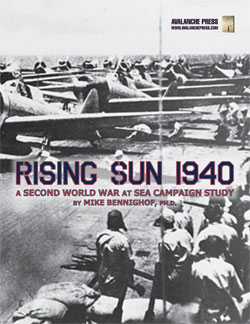 The move of the U.S. Pacific Fleet (then called the “Battle Fleet”) to Pearl Harbor in the summer of 1940 helped drive the Japanese Empire to war. But the Japanese waited another 18 months before attacking it there, spending their time planning and preparing, while the Americans built up the base’s defenses. The move of the U.S. Pacific Fleet (then called the “Battle Fleet”) to Pearl Harbor in the summer of 1940 helped drive the Japanese Empire to war. But the Japanese waited another 18 months before attacking it there, spending their time planning and preparing, while the Americans built up the base’s defenses.
Rising Sun 1940 studies the possibilities of an immediate Japanese attack. The Americans have next to no anti-aircraft defenses, and their carriers are still operating biplanes. But on the Japanese side, their two newest carriers were not yet in commission, and they had not yet developed the shallow-run torpedoes and special armor-piercing bombs that made the actual attack so devastating.
Golden Journal No. 34: Bron Pancerna
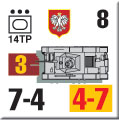 The Golden Journal is our playground for weird ideas. I didn’t think this topic was too weird: the powerful tanks Polish designers drafted just before the 1939 German invasion, that never made it off the drawing boards. So we gave players the 14TP and 10TP and the other Polish tanks that never were, but could have been, and let them chew up the Nazi invaders. With these tanks, the battlefield calculus is reversed, and it’s the Poles turn to do the wiping out, and the Nazis running and dying. The Golden Journal is our playground for weird ideas. I didn’t think this topic was too weird: the powerful tanks Polish designers drafted just before the 1939 German invasion, that never made it off the drawing boards. So we gave players the 14TP and 10TP and the other Polish tanks that never were, but could have been, and let them chew up the Nazi invaders. With these tanks, the battlefield calculus is reversed, and it’s the Poles turn to do the wiping out, and the Nazis running and dying.
Golden Journal No. 45: Fleet Air Arm
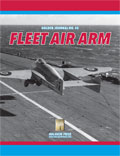 We published East of Suez, an expansion for the old Second World War at Sea: Leyte Gulf, long ago. A quirk of the printing trade meant that we ended up with more than twice as many sheets of pieces for East of Suez as we’d had for Leyte Gulf (I could explain, but no one would care). Since an expansion never sells more copies than its core game, we had a lot of extras. I crafted a Plan Z-related story for them, and we had Fleet Air Arm. It was a fun story, with fun scenarios, but when the first printing of the books ran out, I decided to do something new instead and consign all those extra pieces to the New Georgia Landfill. We published East of Suez, an expansion for the old Second World War at Sea: Leyte Gulf, long ago. A quirk of the printing trade meant that we ended up with more than twice as many sheets of pieces for East of Suez as we’d had for Leyte Gulf (I could explain, but no one would care). Since an expansion never sells more copies than its core game, we had a lot of extras. I crafted a Plan Z-related story for them, and we had Fleet Air Arm. It was a fun story, with fun scenarios, but when the first printing of the books ran out, I decided to do something new instead and consign all those extra pieces to the New Georgia Landfill.
Golden Journal No. 37: Heavy Metal
 Another of our early expansion books, Secret Weapons, also yielded a vast surplus of pieces – its pieces shared the third sheet of the top-selling Elsenborn Ridge. Secret Weapons included all sorts of British and German experimental heavy tanks, and I wanted to write new scenarios for them. So I did, and it was a fun exercise. But once the books were gone, I saw no reason to reprint them, so Heavy Metal can rumble into Valhalla, and the surplus pieces will go away. Another of our early expansion books, Secret Weapons, also yielded a vast surplus of pieces – its pieces shared the third sheet of the top-selling Elsenborn Ridge. Secret Weapons included all sorts of British and German experimental heavy tanks, and I wanted to write new scenarios for them. So I did, and it was a fun exercise. But once the books were gone, I saw no reason to reprint them, so Heavy Metal can rumble into Valhalla, and the surplus pieces will go away.
Island of Death
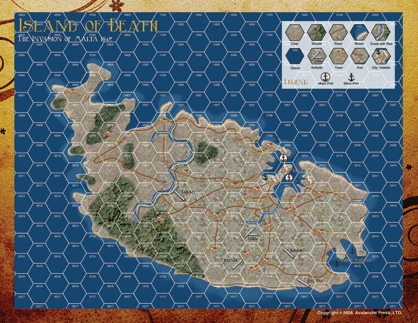 Island of Death has been out of print for a while now; we published it in 2008 and sold the last copies in 2017. It was a small game, about the planned German airborne invasion of Malta. We later did an expansion book called Fortress Malta that studied Italian invasion plans as well. It used a fairly detailed combat system, one we’d applied to other games, at a battalion scale. Hexes in Island of Death were one kilometer across. Island of Death has been out of print for a while now; we published it in 2008 and sold the last copies in 2017. It was a small game, about the planned German airborne invasion of Malta. We later did an expansion book called Fortress Malta that studied Italian invasion plans as well. It used a fairly detailed combat system, one we’d applied to other games, at a battalion scale. Hexes in Island of Death were one kilometer across.
It was a pretty tense game, with the Germans needing to get their lodgment early or the British and Maltese will toss them into the sea. We still sell a downloadable version on Wargame Vault. We will likely return to Malta someday, but in a Panzer Grenadier game.
Bitter Victory
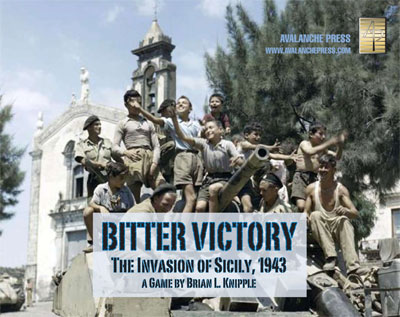 We likewise sold the last copy of Bitter Victory, published in a small box in 2006, in 2017; by that point the original print-run had long sold out and we put together a couple hundred copies from the leftover maps and pieces. It was a regimental-scale game of the 1943 invasion of Sicily, with many options for different landing zones and stronger or weaker Axis garrisons. The map showed all of the island, which very neatly framed the battlefield (every edge was the Mediterranean Sea). We likewise sold the last copy of Bitter Victory, published in a small box in 2006, in 2017; by that point the original print-run had long sold out and we put together a couple hundred copies from the leftover maps and pieces. It was a regimental-scale game of the 1943 invasion of Sicily, with many options for different landing zones and stronger or weaker Axis garrisons. The map showed all of the island, which very neatly framed the battlefield (every edge was the Mediterranean Sea).
Tropic of Capricorn
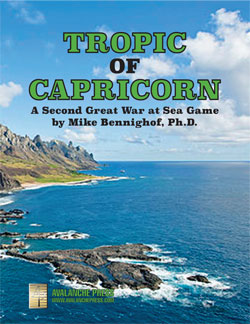 Avalanche Press World Headquarters occupies a spot in a 1970’s-era office building with a flat roof. That roof was repaired a few years ago, and Kendra the building manager climbed up there to berate the roofers for not doing a very good job. Then she left, without watching over them. That was probably a mistake, because the roof opened up a couple weeks back and the back of our office received a dousing of nasty water. We caught it pretty quickly, but we did lose a few cartons of parts, including the maps for Second Great War at Sea: Tropic of Capricorn. Avalanche Press World Headquarters occupies a spot in a 1970’s-era office building with a flat roof. That roof was repaired a few years ago, and Kendra the building manager climbed up there to berate the roofers for not doing a very good job. Then she left, without watching over them. That was probably a mistake, because the roof opened up a couple weeks back and the back of our office received a dousing of nasty water. We caught it pretty quickly, but we did lose a few cartons of parts, including the maps for Second Great War at Sea: Tropic of Capricorn.
Tropic of Capricorn was a unique product, a complete alternative-history game from our Second Great War story arc. It used the leftover maps from our old Cone of Fire game, and we printed new pieces. The maps are larger than our now-standard size, so printing more of them would be difficult and expensive, and not worth it given the game’s limited remaining shelf life.
Tropic of Capricorn was fun. The Brazilians, with Imperial German help, took on the Argentines, who have British help. Some Chileans appear as well. It had lots of battleship action, and all sorts of ships that might have joined the South American navies, but never did. Plus a few that actually did exist.
Tropical Storm
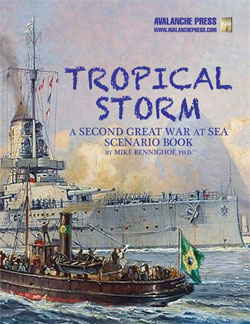 We expanded Tropic of Capricorn with a book that sports one of our best covers. Tropical Storm continued the story, with more scenarios and more fake history, and another sheet of pieces (80 of them, 60 of those double-sized). We also included another old Cone of Fire map to bring the action further southward. We expanded Tropic of Capricorn with a book that sports one of our best covers. Tropical Storm continued the story, with more scenarios and more fake history, and another sheet of pieces (80 of them, 60 of those double-sized). We also included another old Cone of Fire map to bring the action further southward.
Tropical Storm wrapped up the story of the Second Great War in South American waters with 30 more scenarios. It’s an odd book, but it was fun to do and I think players liked it. But without Tropic of Capricorn, there’s not much point to reprinting it even though it did not suffer in the ceiling leak. Tropical Storm had pretty much had its day anyway, and now it joins the other fallen heroes.
Golden Journal No. 43: River Plate
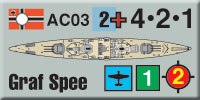 With River Plate, we turned around the usual model of our Journals, taking an alternative-history game (Tropic of Capricorn) and using it as the basis for a historical campaign, in this case the last days of the German armored cruiser Admiral Graf Spee. You get the Battle of the River Plate between the German raider and British cruisers, the hunt for the ship, and the story of this pivotal 1939 campaign. But supplies had run out, and without Tropic of Capricorn, there’s no reason to reprint it. With River Plate, we turned around the usual model of our Journals, taking an alternative-history game (Tropic of Capricorn) and using it as the basis for a historical campaign, in this case the last days of the German armored cruiser Admiral Graf Spee. You get the Battle of the River Plate between the German raider and British cruisers, the hunt for the ship, and the story of this pivotal 1939 campaign. But supplies had run out, and without Tropic of Capricorn, there’s no reason to reprint it.
U.S. Navy Plan Crimson
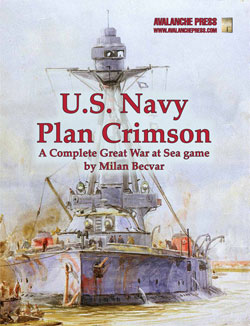 We’ve published some unusual stuff, but Great War at Sea: U.S. Navy Plan Crimson may be the strangest. It’s a game about a naval war on the Great Lakes (yes, the Great Lakes) which never happened (well, not yet) with fleets of small battleships that never existed. We did it first as a download, and then for some reason I cannot fathom, we printed actual die-cut and silky-smooth pieces for it. We’ve published some unusual stuff, but Great War at Sea: U.S. Navy Plan Crimson may be the strangest. It’s a game about a naval war on the Great Lakes (yes, the Great Lakes) which never happened (well, not yet) with fleets of small battleships that never existed. We did it first as a download, and then for some reason I cannot fathom, we printed actual die-cut and silky-smooth pieces for it.
We had planned to re-issue it in a Second Edition, with the Great War at Sea Second Edition series rules, but then the ceiling opened up and the pieces for Plan Crimson sat on the shelf next to Tropic of Capricorn. While some of them are okay, there aren’t enough to justify a print run of the complete game. The project was pretty marginal when we had the pieces already, so we’ll print something new instead. Plan Crimson enters Valhalla, a victim of our landlord’s incompetent roofing crew.
Golden Journal No. 26: Armored Cruisers
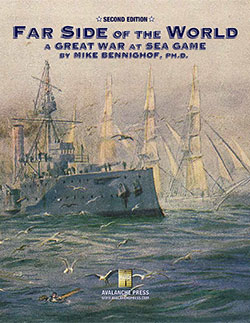
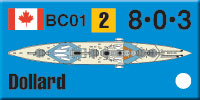 Our second new-model Golden Journal was devoted to the old Great War at Sea: Cruiser Warfare, a game now long out of print. We released a new game on the same topic last year, Far Side of the World, that includes many of the pieces we put in Armored Cruisers. We had some other fun things in this Journal, like the briefly0-proposed Canadian battle cruiser and the design for a battle cruiser version of the armored cruiser Blücher. But with Cruiser Warfare long gone, we won’t reprint Armored Cruisers now that we’ve run out. Our second new-model Golden Journal was devoted to the old Great War at Sea: Cruiser Warfare, a game now long out of print. We released a new game on the same topic last year, Far Side of the World, that includes many of the pieces we put in Armored Cruisers. We had some other fun things in this Journal, like the briefly0-proposed Canadian battle cruiser and the design for a battle cruiser version of the armored cruiser Blücher. But with Cruiser Warfare long gone, we won’t reprint Armored Cruisers now that we’ve run out.
Infantry Attacks: Winter’s Battle
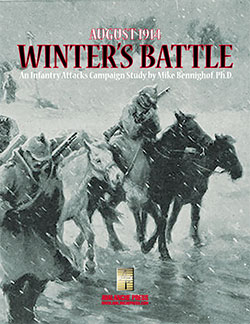 Winter’s Battle adds the Second Battle of the Masurian Lakes to August 1914. The battle took place in the bitter cold of February 1915, in deep snows, and was a crushing German victory that also brought home the reality that Russia could lose plenty of battles and still not be knocked out of the war. I liked this little project very much; it has a very good scenario set, and the history came out exactly as I wished. There aren’t any modern secondary works that treat this battle in depth, and I liked digging out the details. But we’re not keeping Campaign Studies in print forever, and when we ran out of Winter’s Battle, it was time for it to enter Valhalla. Winter’s Battle adds the Second Battle of the Masurian Lakes to August 1914. The battle took place in the bitter cold of February 1915, in deep snows, and was a crushing German victory that also brought home the reality that Russia could lose plenty of battles and still not be knocked out of the war. I liked this little project very much; it has a very good scenario set, and the history came out exactly as I wished. There aren’t any modern secondary works that treat this battle in depth, and I liked digging out the details. But we’re not keeping Campaign Studies in print forever, and when we ran out of Winter’s Battle, it was time for it to enter Valhalla.
Battles of 1866: Frontier Battles
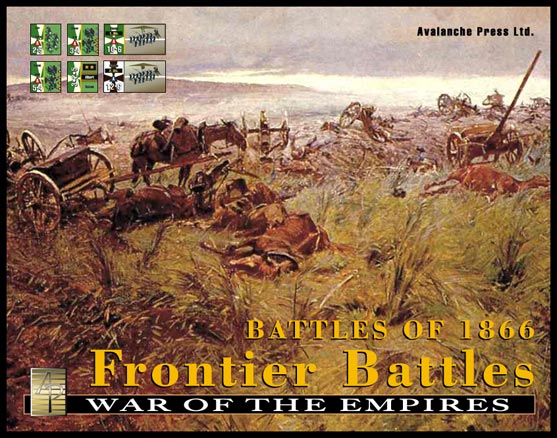 It pains me to add Frontier Battles to Valhalla’s ranks; the game’s publication back in 2012 represented a personal vindication. At that point, no one but my dog, Leopold, believed that Avalanche Press would ever publish another game. We still have a huge number of pieces, but printing the maps as they deserve (not as sets of small panels, as we did initially) and converting to Playbook format would cost about as much as a smaller new game. And it’s a much better investment for the company, to publish something new. It pains me to add Frontier Battles to Valhalla’s ranks; the game’s publication back in 2012 represented a personal vindication. At that point, no one but my dog, Leopold, believed that Avalanche Press would ever publish another game. We still have a huge number of pieces, but printing the maps as they deserve (not as sets of small panels, as we did initially) and converting to Playbook format would cost about as much as a smaller new game. And it’s a much better investment for the company, to publish something new.
Frontier Battles used a game system that I didn’t design, and I never really liked it much. We adopted it for reasons of internal company politics, and that turned out to be a mistake. The game system used way too many pieces (often three or four for the same unit) and didn’t handle ranged fire (artillery, in this game) very elegantly. The map was divided into uneven areas, which meant that artillery ranges were not exactly consistent, as your cannonballs could pick their flight path.
We’ll return to the 1860’s, but with a completely new game system.
Panzer Grenadier: Afrika 1944
 I wrote this bizarre Panzer Grenadier alt.history to use the pieces left over from another, ill-advised foray into alternative history. We sold them all, and people liked it, so it was a good project. But I’m not sure we can scrounge up enough pieces for another print run, and even if we did, it appears that Afrika 1944 has had its day. It was fun to make, and fun to play: desert fighting in 1944, with the late-war tanks and weaponry of Germany and the Western Allies. It included gigantic scenarios suitable for team play, and that was great fun, too. I wrote this bizarre Panzer Grenadier alt.history to use the pieces left over from another, ill-advised foray into alternative history. We sold them all, and people liked it, so it was a good project. But I’m not sure we can scrounge up enough pieces for another print run, and even if we did, it appears that Afrika 1944 has had its day. It was fun to make, and fun to play: desert fighting in 1944, with the late-war tanks and weaponry of Germany and the Western Allies. It included gigantic scenarios suitable for team play, and that was great fun, too.
Golden Journal No. 29: Ancient Armor
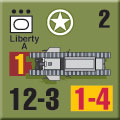 The Golden Journal has a job: to promote its core game. Ancient Armor had a unique theme that I found fascinating: the old, Great War-era tanks that the United States possessed on the eve of World War Two. The tanks really existed, hundreds of them, both heavy and light models. The oft-repeated line that the United States had no tanks in 1939 is just not true. The tanks weren’t very good, but they existed, and I thought Panzer Grenadier players would want to play with them. The Journal moved slowly, so while we still have pieces for it I don’t think it a good idea to print more books to go with them. The Golden Journal has a job: to promote its core game. Ancient Armor had a unique theme that I found fascinating: the old, Great War-era tanks that the United States possessed on the eve of World War Two. The tanks really existed, hundreds of them, both heavy and light models. The oft-repeated line that the United States had no tanks in 1939 is just not true. The tanks weren’t very good, but they existed, and I thought Panzer Grenadier players would want to play with them. The Journal moved slowly, so while we still have pieces for it I don’t think it a good idea to print more books to go with them.
Panzer Grenadier: Spearhead Division
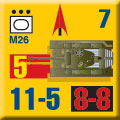 This expansion book brought 24 new scenarios and 88 golden pieces (standard U.S. Army in a special divisional color scheme) to Elsenborn Ridge. It gets the ultimate praise for a Panzer Grenadier title: it sold like a naval game. We have no more golden counters for it; that by itself shows that this book did extremely well. I suspect that those fine sales would not be matched were we to reprint those pieces, so instead we’ll look to do more books like this one, for other valiant divisions. This expansion book brought 24 new scenarios and 88 golden pieces (standard U.S. Army in a special divisional color scheme) to Elsenborn Ridge. It gets the ultimate praise for a Panzer Grenadier title: it sold like a naval game. We have no more golden counters for it; that by itself shows that this book did extremely well. I suspect that those fine sales would not be matched were we to reprint those pieces, so instead we’ll look to do more books like this one, for other valiant divisions.
Golden Journal No. 28: British Carriers
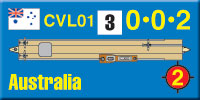 This was fun: we added battle cruiser conversions (into aircraft carriers) for Hood, Repulse, and Renown and a few other ships. And the original three battle cruiser conversions (Furious, Courageous, Glorious) as modernized battle cruisers (which shows that turning them into aircraft carriers was a very good idea). Since we won’t be reprinting Eastern Fleet when its supply runs out, this Journal has lost its core game. This was fun: we added battle cruiser conversions (into aircraft carriers) for Hood, Repulse, and Renown and a few other ships. And the original three battle cruiser conversions (Furious, Courageous, Glorious) as modernized battle cruisers (which shows that turning them into aircraft carriers was a very good idea). Since we won’t be reprinting Eastern Fleet when its supply runs out, this Journal has lost its core game.
Red God of War
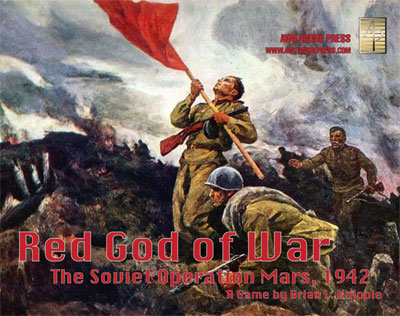 Red God of War is based on the Soviet Operation Mars, which took place at Rzhev (west of Moscow) in late 1942. The game’s at regimental scale, and it’s an unusual situation with the Germans holding a “bulge” in the lines that their omniscient leader will not allow them to abandon, while the Soviets assail them from three sides. Red God of War is based on the Soviet Operation Mars, which took place at Rzhev (west of Moscow) in late 1942. The game’s at regimental scale, and it’s an unusual situation with the Germans holding a “bulge” in the lines that their omniscient leader will not allow them to abandon, while the Soviets assail them from three sides.
Red God of War shares the same game system as Alsace and Gazala; we didn’t print it at the same time but the same conditions applied (needing to fill a container) so we received a huge number of them. It sold pretty well: an eastern Front game, low price point, in a nice box.
At some point, the same crew who un-boxed Gazala assembled thousands of unboxed Red God sets of rules, map, and pieces. We paid them for that; wasted money is the tale of Avalanche Press. We sold some of these “kits,” but it’s not set up in the web store and not fully assembled (just in kit form), and it’s not worth the effort to do those things and put it on clearance. I was sorely tempted to re-issue it in Playbook format, but instead the final copies are going straight to the dumpster. We need to put that effort behind new projects instead.
The Kokoda Campaign
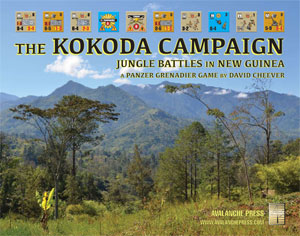 Dave Cheever originally submitted a set of 39 scenarios based on the Australian battles against the Japanese in a jungle-covered mountains of New Guinea. We first issued this as an expansion book, and when the games on which it drew for pieces fell out of print, switched to game format using the remaining stocks of those pieces (from the old Afrika Korps and Guadalcanal games). Dave Cheever originally submitted a set of 39 scenarios based on the Australian battles against the Japanese in a jungle-covered mountains of New Guinea. We first issued this as an expansion book, and when the games on which it drew for pieces fell out of print, switched to game format using the remaining stocks of those pieces (from the old Afrika Korps and Guadalcanal games).
The Kokoda Campaign was one of our Panzer Grenadier-without-panzers titles; the game system was designed to place infantry combat at its center and so the game played very well. When the supplies of Australian pieces ran out, we decided to retire The Kokoda Campaign rather than print new ones.
U.S. Navy Plan Gold
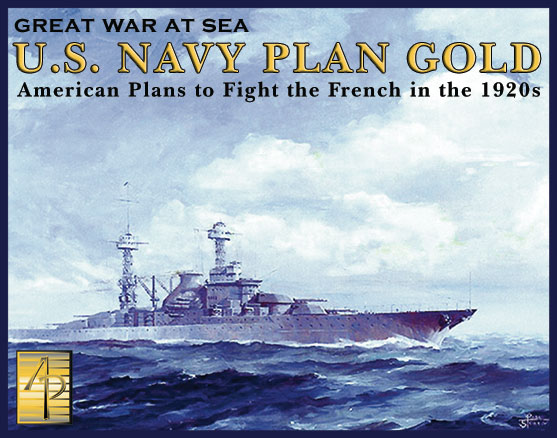 We always intended U.S. Navy Plan Gold to be a short-print-run, limited-edition game that would meet the desires of our hard-core players for another “war plan” game but not stay in inventory very long. The game met that first requirement very well, and for what it was (the Americans against the French in a Caribbean naval war that never happened) Plan Gold was a good game. The Caribbean map makes for some interesting operational situations, with the dominating American base at Guantanamo Bay sitting right at the center, the strategic prize of the Panama Canal down in the lower left, and the barrier islands of the Greater and Lesser Antilles framing the sea itself. We always intended U.S. Navy Plan Gold to be a short-print-run, limited-edition game that would meet the desires of our hard-core players for another “war plan” game but not stay in inventory very long. The game met that first requirement very well, and for what it was (the Americans against the French in a Caribbean naval war that never happened) Plan Gold was a good game. The Caribbean map makes for some interesting operational situations, with the dominating American base at Guantanamo Bay sitting right at the center, the strategic prize of the Panama Canal down in the lower left, and the barrier islands of the Greater and Lesser Antilles framing the sea itself.
At the time we produced Plan Gold, we still made games in the Far East, and that meant that we had no means to print just a few copies – we ended up with a lot of them, and still had stacks of them well after the game had outlived its useful sales life.
We made use of the last boxes of maps and pieces in a revised, limited edition War Plan Gold.
Dave Powell’s Chickamauga & Chattanooga
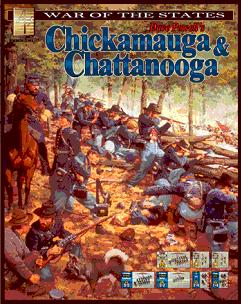 I’ve never really known what to think about this game. It used the unusual map style (with terrain-clinging area boundaries rather than traditional hexagons) we tried in a number of other games, an approach I’ve pretty much soured on now particularly for battles from the age of rifled cannon (the increased ranges don’t dovetail well with uneven area sizes). But it did give me an excuse to write about George Thomas, a Southern general worthy of statues. I’ve never really known what to think about this game. It used the unusual map style (with terrain-clinging area boundaries rather than traditional hexagons) we tried in a number of other games, an approach I’ve pretty much soured on now particularly for battles from the age of rifled cannon (the increased ranges don’t dovetail well with uneven area sizes). But it did give me an excuse to write about George Thomas, a Southern general worthy of statues.
Dave Powell, a noted authority on the Battle of Chickamauga, provided a very fine game that included both the battles of Chickamauga and Chattanooga, plus a linking campaign to tie them together. Dave is one of the handful of game designers who really cares about the history behind their games and will delve into primary sources (and knows how to make use of them – which is a lot tougher than it sounds).
Eastern Front
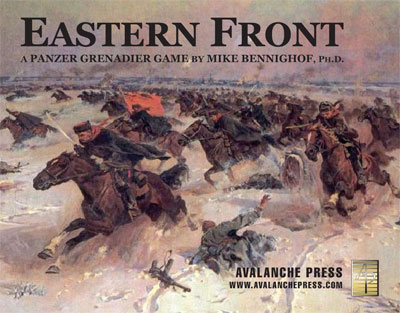 For years the core of our Panzer Grenadier line and maybe of our entire lineup, by the end of 2014 Eastern Front had started to show its age. While I toyed with the idea of keeping it in print with the new Fourth Edition rulebook for Panzer Grenadier, the map artwork and the scenarios just weren’t on the same level as the new games in the series. For years the core of our Panzer Grenadier line and maybe of our entire lineup, by the end of 2014 Eastern Front had started to show its age. While I toyed with the idea of keeping it in print with the new Fourth Edition rulebook for Panzer Grenadier, the map artwork and the scenarios just weren’t on the same level as the new games in the series.
Eastern Front was a remake of the original Panzer Grenadier game, which we always called “Eastern Front” even though it didn’t actually have those words anywhere on its cover. As such it carried on the oldest scenarios in the system, many of them pre-dating the fall of the Soviet Union and subsequent opening of a vast trove of new information on the Great Patriotic War.
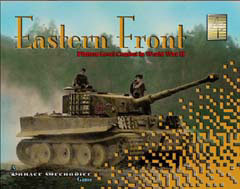 We sold an enormous number of copies of each version, making Eastern Front a top-five seller in the company’s history. Even so, I don’t think we’ll do a third edition of it. Scholarship has passed by some (though far from all) of the scenarios, but there’s also the issue of the maps. The original maps were designed to model terrain in Ukraine, but we used them for scenarios set all over Russia. Russia is a big place, with many different environments: taiga, forest, swamp etc. and our boards did not really reflect that. We issued new versions of the maps and re-used most of the pieces in a completely new game, Fire in the Steppe. We sold an enormous number of copies of each version, making Eastern Front a top-five seller in the company’s history. Even so, I don’t think we’ll do a third edition of it. Scholarship has passed by some (though far from all) of the scenarios, but there’s also the issue of the maps. The original maps were designed to model terrain in Ukraine, but we used them for scenarios set all over Russia. Russia is a big place, with many different environments: taiga, forest, swamp etc. and our boards did not really reflect that. We issued new versions of the maps and re-used most of the pieces in a completely new game, Fire in the Steppe.
Secret Weapons
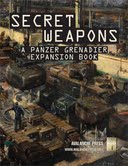 Knowing that gamers like weird science and giant tanks, I had great hopes for this book. Plus, it had helicopters: games with helicopters are just cooler than other games. And it did sell very well, but creatively, it was kind of a mess, with the articles and scenarios having no connecting story arc or theme (beyond the weird science theme). The individual parts were all fine; I’ve just come to really like the way we’ve been doing these things the last couple of years much, much better. Knowing that gamers like weird science and giant tanks, I had great hopes for this book. Plus, it had helicopters: games with helicopters are just cooler than other games. And it did sell very well, but creatively, it was kind of a mess, with the articles and scenarios having no connecting story arc or theme (beyond the weird science theme). The individual parts were all fine; I’ve just come to really like the way we’ve been doing these things the last couple of years much, much better.
We took it permanently out of print when the boxed games needed to support its scenarios went out of print. Because of that, we won’t be bringing it back. I’d like to find a way to work the pieces into a new Long War setting for Panzer Grenadier (to match the Second World War at Sea setting).
DAK ’44
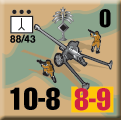 Once upon a time, we made downloadable supplements for our games. I intentionally steered the themes toward things we wouldn’t want to later bring out in print, which made for a range of very odd topics. So when Brian McCue suggested a Panzer Grenadier supplement set in North Africa in 1944, as part of a protracted war in the desert, it seemed like a good idea at the time. Once upon a time, we made downloadable supplements for our games. I intentionally steered the themes toward things we wouldn’t want to later bring out in print, which made for a range of very odd topics. So when Brian McCue suggested a Panzer Grenadier supplement set in North Africa in 1944, as part of a protracted war in the desert, it seemed like a good idea at the time.
And then things got complicated. An online retailer swore to our sales manager that he could sell 500 copies of Panzer Grenadier: Battle of the Bulge, then out of print, and if we reprinted it he would buy those 500 copies as soon as they were ready. We had boxes and maps and scenario books for the game already in storage, plus rules packets, so it just needed some counters. But the way we made games in those days, we needed to fill a full press sheet when we made counters, and we needed to get to press fast. Some boxed games were in the pipeline but their counters were not ready to go, so I filled the press sheet with pieces for a couple of books, printed versions of a couple of older downloads, and the DAK ’44 pieces (sharing a sheet with another download called Polish Steel). That sale of 500 copies of Battle of the Bulge would easily cover the printing of the counters and a good bit more, making anything we made from the products made possible by the extra counters just butter. We could turn that money right around and wrap up the boxed games in the pipeline. It was all good.
As it turned out, that retailer bought six copies of Battle of the Bulge, not 500. Six. I hope his cattle get worms.
Tiger of Malaya
 When we offered Tiger of Malaya through our ultimately failed “Classic Wargame” program it was already an older game design. Brian Knipple finished it well before other games with the same system that appeared years earlier. As a Classic Wargame, we didn’t print very many of them, and that’s probably a good thing. It sold enough to justify its existence, but that whole Land War in Asia theme proved a serious obstacle to greater sales success despite our deploying a good bit of Daily Content support. When we offered Tiger of Malaya through our ultimately failed “Classic Wargame” program it was already an older game design. Brian Knipple finished it well before other games with the same system that appeared years earlier. As a Classic Wargame, we didn’t print very many of them, and that’s probably a good thing. It sold enough to justify its existence, but that whole Land War in Asia theme proved a serious obstacle to greater sales success despite our deploying a good bit of Daily Content support.
Tiger of Malaya was one of our better efforts. It uses the same system as our upcoming Army of Lappland and Red Desert, what we call Corps Command now. The Japanese are trying to drive across Johore Province in southern Malaya against a motley collection of Australian, British and Indian forces and land on the island of Singapore to bring the campaign to a close. As a game, it held the problem for the Allied player of “get your ass handed to you a week later than your historical counterpart” victory conditions. As a history, it’s really well done. The map was acceptable at best, and while the pieces were okay I thought the text on them came out much too small. We did use individual, pictographic set-up sheets for the many scenarios, which was a pretty cool extra but probably didn’t justify the massive amount of labor invested.
To bring it back, I’d want to replace the map and the pieces, and that’s probably not justified by potential sales. So even though the Corps Command system is making a large-scale comeback with a re-booting including rational brand management and thoroughly upgraded artwork, Tiger of Malaya will most likely remain in Valhalla.
We later made Tiger of Malaya available in downloadable format (you have to paste the maps and pieces together yourself).
Combined Fleet
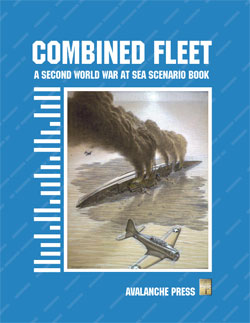 On occasion, I do come up with actual good ideas. I know I keep writing that, but despite the many examples of evidence to the contrary it’s actually true. Combined Fleet was a Second World War at Sea scenario book and step toward the sort of book supplement we now make, concentrating on just one or two boxed games and really tackling their potential in depth. In this case, Combined Fleet was intended to bring together our Coral Sea and Midway games with more scenarios on each map, the centerpiece being a combined scenario allowing each side to allocate their forces to each theater. On occasion, I do come up with actual good ideas. I know I keep writing that, but despite the many examples of evidence to the contrary it’s actually true. Combined Fleet was a Second World War at Sea scenario book and step toward the sort of book supplement we now make, concentrating on just one or two boxed games and really tackling their potential in depth. In this case, Combined Fleet was intended to bring together our Coral Sea and Midway games with more scenarios on each map, the centerpiece being a combined scenario allowing each side to allocate their forces to each theater.
The book had no pieces, just scenarios and background articles. Most of the scenarios are good, though they lack the creative touch of current series developer Jim Stear. The book’s problem came with its length; we produced it initially with our own in-house machinery, a badly-made and badly-designed piece of junk that could, when it chose to actually work, print perfect-bound (standard paperback) books of any length up to about 200 pages (the manual said 320 pages, but in that as in most other things the manual lied). When we finally got rid of that financial and mechanical albatross, we started printing books elsewhere, where offset presses needed their page counts to come in multiples of 16. Combined Fleet would have needed a total re-design to come in at that length (we published it at 72 pages, though for some reason our propaganda always said 64), and I decided it wasn’t worth the effort.
These days, I don’t think we’ll bring the book back even in revised form: Midway been replaced with a new game that no longer synchs up with Combined Fleet’s scenario text.
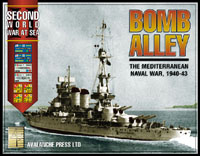 Second World War at Sea: Bomb Alley Second World War at Sea: Bomb Alley
One of our best-selling games ever, age finally caught up with this great Second World War at Sea series game. We replaced the old rigid box with a new sleeve-and-black-box model. When its supply of pieces finally ran out, we stretched that out a little with some of the older-model laser-cut playing pieces, but those were never really satisfactory and when the map supply dwindled I decided to call a halt to further production. Bomb Alley was ready for retirement.
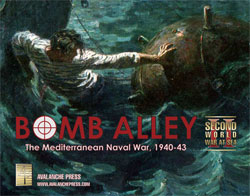 Bomb Alley was a great game: it had a huge number of scenarios, almost all of them based on actual operations, and because of the geography they pretty much assured that there would be battle. The Mediterranean Sea might as well be a bathtub, and both sides have to cross it: the British to run their convoys between Gibraltar and Egypt (and sometimes just halfway across, to Malta) and the Italians from mainland ports (usually Naples) to Libya. In some scenarios, they’re both doing so at the same time. It makes for wild action. The game itself was very satisfying visually, with scads of pieces and a very nice map. Bomb Alley was a great game: it had a huge number of scenarios, almost all of them based on actual operations, and because of the geography they pretty much assured that there would be battle. The Mediterranean Sea might as well be a bathtub, and both sides have to cross it: the British to run their convoys between Gibraltar and Egypt (and sometimes just halfway across, to Malta) and the Italians from mainland ports (usually Naples) to Libya. In some scenarios, they’re both doing so at the same time. It makes for wild action. The game itself was very satisfying visually, with scads of pieces and a very nice map.
The month of Bomb Alley’s release remains our best month for sales, ever, by a huge margin. We’re returning to the Mediterranean with La Regia Marina, a brand-new game boasting even better stuff.
 Scotland the Brave Scotland the Brave
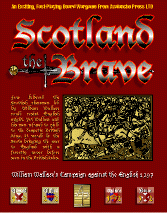
It came and went so fast, does anyone recall Scotland the Brave?
This began as a joint project with Shadis magazine, the long-defunct house organ of our friends at Alderac Entertainment Group. Editor Jim Pinto wanted a complete wargame published in the magazine to highlight a special issue, and publisher John Zinser – then as now a master showman – offered to foot the bill for it. William Sariego designed a fine little game of the days of William Wallace, with point-to-point movement and roll-a-six combat. It was wildly popular, and the issue soon sold out.
As part of the deal, Z paid for 7,500 sets of game pieces, used 5,000 for the magazine, and shipped the remainder to us. We ginned up a hard-mounted map and a box, and the game lasted about a year. Our first sales manager, hired for the thankless task of selling the card game Airlines (not fit for Valhalla; that disaster went to one-l Norse Hel), hit on the perfect formula: sell it to the Celtic-stuff trade. And sell it did; Scotland the Brave would be the first Avalanche Press game to sell out.
Some years later, Terry Moore Strickland painted a series of figures (similar to those of Granada) for a new, deluxe edition of the game. I still have that artwork, which is exceptionally fine, and would like to make use of it sometime.
 East of Suez East of Suez
We launched this book to help support sales of Leyte Gulf, the monstrous game of the final battles of the Pacific War that’s long been out of stock (see below). It featured the British Pacific Fleet, with new battleships and carriers (a lot of carriers, most of them small) and aircraft for them (including jet planes). The book came with 23 scenarios, ranging from British amphibious assaults in the East Indies up to the attacks on Japan itself. Once Leyte Gulf sold out, sales for the book dropped off, and when supplies ran out we let it stay out of print.
We do have a great many counter sheets left over, and they’ll return someday.
Imperial&Royal Navy
Spice Islands
The Tsar’s Navy
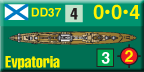 When at our most desperate, Avalanche Press released a series of download-only supplements to other games; three of them were alternative-history naval titles introducing fleets that never existing to the Second World War at Sea series. Each had 210 pieces (70 “long” ship pieces, 140 square ones for aircraft, small warships and markers) and 10 scenarios. When at our most desperate, Avalanche Press released a series of download-only supplements to other games; three of them were alternative-history naval titles introducing fleets that never existing to the Second World War at Sea series. Each had 210 pieces (70 “long” ship pieces, 140 square ones for aircraft, small warships and markers) and 10 scenarios.
Imperial&Royal Navy included an Austro-Hungarian fleet for an empire surviving into the 1940’s to fight a variety of foes. Spice Islands presented the fleet the Dutch admirals hoped to build but were denied, fighting in the East Indies against, usually, Japanese aggression. The Tsar’s Navy had the Imperial Russian Black Sea Fleet, fighting its enemies in the Mediterranean. They were by far the most popular of the downloads, and when customers demanded “real counters” we issued them for Imperial & Royal Navy and Spice Islands.
While they had weird and wonderful ships and scenarios, they had very little continuity even within the three modules, much less between them. When Jim Stear took over as developer of the naval games he induced story discipline: starting with The Kaiser’s Navy, these alternative histories would form part of a setting called The Second Great War at Sea, with each telling its own story within the book and forming part of a larger whole.
We made use of the old counter sheets from Imperial&Royal Navy in the first edition of The Habsburg Fleet, part of the Second Great War story arc, and did the same with those from Spice Islands in Royal Netherlands Navy. The Tsar’s Navy is sort of an outlier; its scenarios are built on the idea that the Tsar captured Constantinople during the First World War, and built a large fleet to project power into the Mediterranean. That doesn’t fit with the Second Great War story line, where Turkey is very much alive and kicking much ass, so The Tsar’s Navy will rest in Valhalla for eternity.
 Great War at Sea/Second World War at Sea: Cone of Fire Great War at Sea/Second World War at Sea: Cone of Fire
This was a grand experiment: a game including maps and pieces for both Great War at Sea and Second World War at Sea games within the same box. In one way I guess it succeeded – we sold them all. But we won’t be repeating this in the future.
Cone of Fire covered South America with three full-sized maps – one for the Southern Cone, one for the Rio de la Plata estuary region off Argentina and the third for the southern coast of Brazil centered on Rio de Janeiro. They overlap to let you sail all along the coastline. I was never really satisfied with Cone of Fire; while the 42 scenarios are a good set and individually are fun to play, it had the potential to be far more interesting. We may return to South America in the future, but will do so with two or more completely new games, each from just one of the game series.
 Panzer Grenadier: White Eagles Panzer Grenadier: White Eagles
I’d wanted to do a game on the Polish Campaign of 1939 from the moment I first designed the Panzer Grenadier game system, but didn’t see how we could sell 3,000 copies of a boxed game on a subject like that. When we started publishing expansion books, those seemed a feasible means to get that project into print. So when I designed our Road to Berlin boxed game, I designed the maps to also support the supplement that became White Eagles.
We re-used the pieces in The Deluge; I'd intended to re-use the scenarios, too, but ended up writing mostly new ones.
 Great War at Sea: Sea of Troubles Great War at Sea: Sea of Troubles
When the first edition of U.S. Navy Plan Red sold out, we were left with thousands of counter sheets but no more boxes or maps (the economies of scale on old-style die-cut counters yields much greater savings than on boxes, maps or booklets). Not wanting to throw them out nor pay to store them when they had no purpose, I crafted a book of new scenarios moving the setting to the Caribbean map from U.S. Navy Plan Gold. The Americans and British are still going at it, but this time farther to the south.
Sea of Troubles went out of production for the same reason as White Eagles: it was an odd-sized book that would need to be laid out all over again to print on a standard press. At roughly the same time, we’d developed our black box technology to allow older games like Plan Red to come back into print without committing to printing thousands of units, so the stockpile of pieces had another use.
Sea of Troubles lacks the coherent story line that marks our more recent offerings. There might be a few scenarios worth salvaging for a new book – I haven’t studied them very carefully – but we won’t be reprinting Sea of Troubles.
SWWAS: Strait of Magellan
I wrote this 10-scenario supplement to pull ships and aircraft from other Second World War at Sea games onto the maps from Cone of Fire. And so the Japanese and the Germans attack the namesake Strait, while the Americans and British join the locals to defend it.
Lacking Stear steering, it also lacks coherence – the individual scenarios are pretty good, but there’s no real connection between most of them. With Cone of Fire also entering Valhalla, I don’t see this one ever rising again.
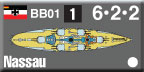 Great War at Sea: Reichsmarine Great War at Sea: Reichsmarine
Reichsmarine was a downloadable-only product, a format we stopped producing in 2011 (I think) and abandoned completely in October 2013 following a bizarre blackmail attempt. It included the older ships of the German High Seas Fleet in the colors of the Weimar Republic’s Reichsmarine, and the newer ones in Royal Navy colors. And there were 10 fairly disjointed scenarios for their use. As another pre-Stear production, it had no story arc whatsoever.
I don’t see us ever creating a new version of Reichsmarine, so I guess it’ll just be an odd collectors’ item, as long as you leave the counters unpunched.
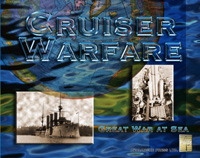 Great War at Sea: Cruiser Warfare Great War at Sea: Cruiser Warfare
Cruiser Warfare was an unusual game in the Great War at Sea series, with a world-wide area map rather than the operational maps used in every other game. It also had the game rules included in the scenario book rather than the standard series rulebook that every other Great War at Sea game carries, since the operational rules from that book were not used, only the battle rules.
The game was popular, but I was never really satisfied with it from the box cover and map art through the relatively large amount of errata it generated compared to our other games.
We returned to the same topic with a completely new game, Far Side of the World (which re-uses the Cruiser Warfare map).
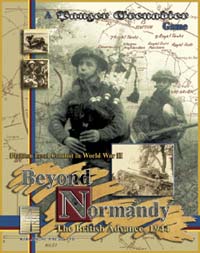 Panzer Grenadier: Beyond Normandy Panzer Grenadier: Beyond Normandy
Beyond Normandy was the first game we produced in the Far East, and if I’d had any sense it would have been the last. The game was delayed in printing and finally ready to leave just in time for the Chinese New Year. So it sat for an extra six weeks before departing. Then it was shipped to Long Beach, California instead of Norfolk, Virginia as specified; it sat for an extra six weeks waiting for its ship to unload (Long Beach was badly clogged) and then two more travelling across the country by truck. No one remembers when a game is late, at least among the consumers (they most definitely rage, but then they forget), but the delays caused all sorts of serious financial distress for the company. When it arrived, we found the playing pieces had been die-cut with enormous force, far more than is required to cut chipboard. They actually look good, but came out very, very thin from the smashing.
The game itself is one of the handful in the Panzer Grenadier line that does not use the standard geomorphic mapboards, but rather “actual terrain” maps that show the area around Hill 112 in Normandy. None of the games that use this “historical” approach have come close to the sales of their generic sisters. So when we ran out of one of the sheets of ultra-thin pieces, it seemed better to just retire the game rather than go through an extensive reprint.
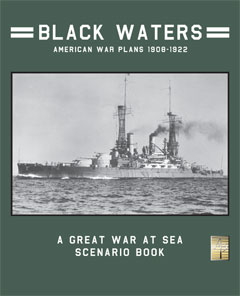 Great War at Sea: Black Waters Great War at Sea: Black Waters
This book existed solely to make use of the pieces from the old U.S. Navy Plan Black boxed game (see below); we had probably 1,000 to 1,200 sheets left over when that game went out of print. Using our current technology we could have just brought the game back with a new box wrap and a cardstock map, and made it look much better while doing so, but we didn’t have that option at the time and so I wrote a book instead. It wasn’t a bad book, though not as focused as some of our later efforts. When the supply of extra pieces ran out, it was time to retire the book.
Panzer Grenadier: March on Leningrad
Panzer Grenadier: Siege of Leningrad
These were a pair of “zippies,” as the then-sales manager dubbed the line – comb-bound booklets containing 10 Panzer Grenadier scenarios each. These were both designed by Mike Perryman, and they’re good scenarios. But the presentation is no longer acceptable with the physical upgrades we’re giving to our line of games, so in October 2013 we retired all of the “zippies.” Placed alongside our other products, they’re just not very attractive and look like they were printed on the office printer and bound in the back room. Because they were.
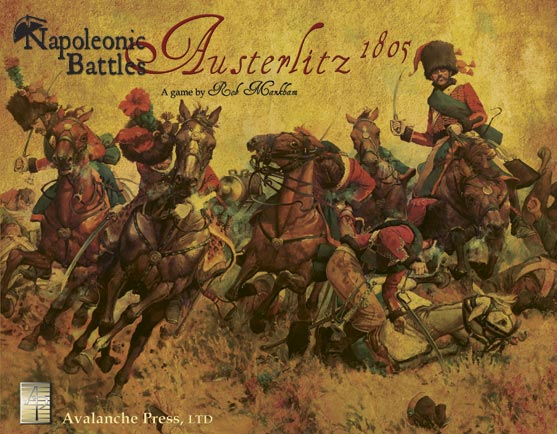 Napoleonic Battles: Austerlitz Napoleonic Battles: Austerlitz
There aren’t that many games I wish we’d never published, but Austerlitz is one of them. It came from a great designer and it’s a very good game for what it is: Rob Markham took on a difficult job and he delivered. But the map art was poor and I should never have sent it to press; the pieces were pretty but hard to use. It did have a very nice box. Napoleonic wargames as a sales category are about as dead as their namesake, so I don’t see us returning to them.
 Second World War at Sea: Second World War at Sea:
Leyte Gulf
It was the largest game we've ever made, with 630 double-sized ship counters and 1,540 standard-sized pieces plus three maps and acres of charts. It began life as part of our now-defunct Classic Wargames program, and was enough of an event to merit its own Ode as its stockpile dwindled.
While we like to keep our naval games in print, we've had to say goodbye to Leyte Gulf. Giant wargames are even more difficult to fit into the new-model Avalanche Press, where a roster of 15 employees apiece has given way to one of just two.
 Panzer Grenadier: Airborne (boxed edition) Panzer Grenadier: Airborne (boxed edition)
This game had the unfortunate release date of Sept. 11, 2001. Intended as an introductory game for the Panzer Grenadier series, it wasn't really that so much as just a small game in the Panzer Grenadier series. It was much smaller than the first two (both now out of print) so that helped it some on that front as it had a low price, but it did not show off Panzer Grenadier the way we really needed it to.
Even so, it retired as one of our all-time best-sellers, and we did sell a lot of them in several iterations. The first edition had a hard-mounted game board and an unattractive olive-drab box. The next version had the same unattractive box, but a lightweight game board like those in our current Panzer Grenadier games. And then finally we sold it in an unattractive light green box with the lightweight board.
The game had 165 pieces, but uniquely for the Panzer Grenadier series, that included all of the required markers (it didn't include the generic marker sheet that all other series games receive). Most of the scenarios took place during the airborne landings behind the Normandy beaches in June 1944.
The scenarios changed with the box change, and we replaced the four original scenarios that used pieces from other games with four new ones that, like the other 16, only called for parts already in the box. There is a sharp division among players over this policy: some want to be able to mix their pieces between games and have more scenarios, but others insist that even one scenario out of 50 requiring pieces from another product yields an "incomplete game." Wailing and pants-soiling ensues. And so we have chosen to enforce the Fulda Rule, that every boxed game must be fully playable only with pieces within its box. And then we sell the "crossover" scenarios separately.
We eventually re-issued most of the scenarios, along with the map (we had a huge supply of them) in a book edition.
 America Triumphant America Triumphant
This game has a fine system, one we've used
since in Alsace 1945, Red God of War, Bitter
Victory, Campaign for Italy and probably
many more to come. It sold out in 2006, with a large print run, so it was very successful. It needs to return to the lineup with new counter artwork, and improved map and a better name. It had a really stupid name, but a very fine price which no doubt aided sales and it's been called the best-playing game of the Battle of the Bulge.
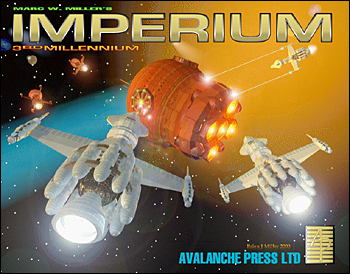 Imperium Third Millennium Imperium Third Millennium
Our first space combat game, Imperium was
a licensed version of Marc Miller’s
1977 classic published by GDW. We went a little
overboard with it (see the “Tale of
Obsession”) but it sold very
well and deserves its place in our hall of
honor. Since it was a licensed product, it
won’t be reprinted.
 Red Steel: Clash of Armor at Kishinev Red Steel: Clash of Armor at Kishinev
Red Steel might have been the best
hard-core wargame design we’ve published
but its unusual topic doomed it to average
sales. The Romanian assault on Bessarabia
may be legendary in Romania, but doesn’t
resonate much in the United States or even
Western Europe. It is one of my favorite game
designs, and even spawned two stillborn sequels:
one smaller one on the Falciu Bridgehead,
one larger one on the siege of Odessa. Those would have been fun to design and publish, but less fun to have to try to sell.
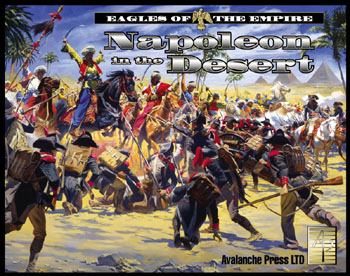 Napoleon in the Desert Napoleon in the Desert
This was a game I’d wanted to design
for a long time, though I don't know why. It was built
around the Battle of the Pyramids, and included
several other clashes between the French and
the Turks and/or Egyptian Mamelukes plus the
1785 Battle of Cairo between the Turks and
Mamelukes (not something you’ll find
in just any wargame!).
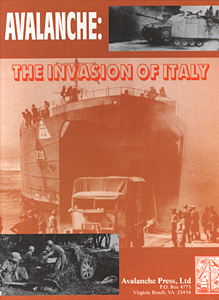 Invasion of Italy Invasion of Italy
Our very first game, Invasion of Italy was a fairly intense simulation of the
Allied landings at Salerno in September 1943.
We tried to send it off in truly spectacular
fashion, by giving the final 300 copies a
true Viking Funeral. We were ready with the
permit, and had plans for a picture gallery
on the website of a couple hundred ugly brown
boxes going up in flames. The customers confounded us by snapping
them up instead to save them from a fiery
end. I was truly disappointed. They’re
probably pretty happy: it was a surprisingly
good game for a first effort and held up as
a design (though not graphically) for its
entire 12-year existence.
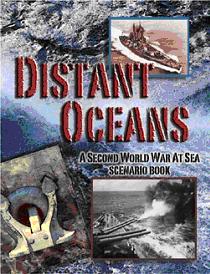 Second World War at Sea: Distant Oceans Second World War at Sea: Distant Oceans
The book supplement gave new scenarios for
all of the games then in print in the series,
but concentrated on what was then the newest
title, Bomb Alley. It has background
articles on Italian carrier programs, the
German helicopter carrier and the Royal Yugoslav
Navy. And scenarios for Eastern Fleet,
SOPAC and Midway for good measure. It lacked good focus and had its additional pieces printed on the back cover, a very poor substitute for actual physical ones. This book will never see a reprint.
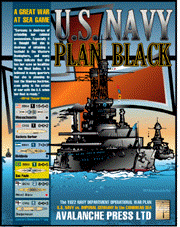 Great War at Sea: U.S. Navy Plan Black Great War at Sea: U.S. Navy Plan Black
Plan Orange (see below) was a very
successful game for us, and so in 1999 we
made plans to release a companion game at
the same time as Great War at Sea: 1904 (also seen below). Plan Black was
initially offered only directly to consumers
from Avalanche Press, but heavy retail demand
eventually made us change those terms. Once it sold out we re-packaged the pieces in the Black Waters book (see above).
The game focuses on German and American plans
to fight a naval war in the Caribbean Sea
in the early 1920s, presuming a German victory
in the Great War. Each side’s plans
more or less mirrored the other’s, and
that made for a very nice set of scenarios.
While it’s been called an “alternate
history” game, I’ve never thought
of it that way since it’s based on actual
war plans. It is filled with ship designs
that were never launched, for both sides.
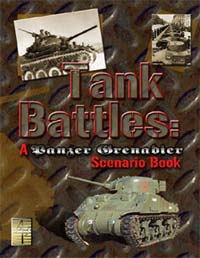 Panzer Grenadier: Tank Battles Panzer Grenadier: Tank Battles
Tank Battles represented a step in the evolution
of our current supplement line. It did not have its own die-cut
and mounted playing pieces, instead relying
on cut-and-paste pieces printed on the back
cover.
The book lacked a tight focus; most
of the book is devoted to new scenarios for Eastern
Front and the long out-of-print Heroes
of the Soviet Union. It also has historical
pieces on the Austrian Army of 1938 and German
helicopter development.
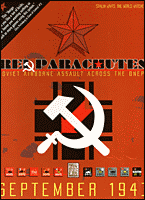 Red Parachutes Red Parachutes
Brian Knipple designed Red Parachutes at my request as the follow-up to Invasion
of Italy. He had several other games set
in the Italian theater (the Anzio landings,
the Canadian battles around Ortona, every
Allied army taking a crack at Monte Cassino)
but I felt it best that the series next move
to the Eastern Front. I don’t think
that was necessarily a bad decision, but perhaps
we should have built a following by producing
related games. Given that we’ve sold
them all or I wouldn’t be writing this,
I guess it wasn’t a bad choice after
all.
As a game, Red Parachutes is old-style
wargaming at its finest. Brian is an outstanding
designer of hard-core wargames, and this one
shows why. Whole rifle divisions disappear
in a single turn, nails are bitten, sweat
is shed, the outcome is constantly in doubt.
It was always a fairly expensive game, and
we produced a whole lot of them. I remember stacking cartons of this game in
my attic during the company’s earliest
days; seemed like they’d last forever.
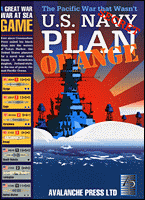 Great War at Sea: U.S. Navy Plan Orange Great War at Sea: U.S. Navy Plan Orange
The third game in this long-standing series, U.S. Navy Plan Orange won the 1998
Origins Award as Best Historical Wargame.
It’s based not on an actual war, but
on the actual war plans of the United States
and Japan for a naval war in 1930. Each side
has a collection of warships available at
the time, plus some of those cancelled by
the Washington Naval Treaties of 1922. Plan
Orange also introduced rules for aircraft
into the series, which became the basis for Second World War at Sea, and was noted for its American
aircraft-carrying zeppelins.
Plan Orange went through three printings, and
also appeared in a Japanese-language edition.
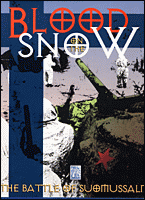 Blood on the Snow Blood on the Snow
Though we’re noted for our naval games,
for a few years in the early days this
one was our best-selling wargame (though it
does not touch the numbers of some titles that came later). A small game covering
the epic battle of Suomussalmi in 1939-1940
between the Finns and Soviets, it included a motorized Soviet brass band unit. Blood on the Snow was a very
popular player’s game that we might
need to re-issue someday; the title's literary reference was wasted on everyone but William Sariego. But it has to get a better map; I've seen uglier ones but thankfully usually in games we didn't publish.
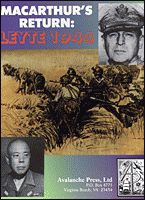 MacArthur’s Return MacArthur’s Return
Our second game ever, this one lasted 11
years before the last copy went out the door.
It also appeared in a Japanese edition.
The subject is the 1944 American invasion
of Leyte in the Philippines, site of Douglas
MacArthur's famous “I have returned”
landing. It’s a tense game; despite
overwhelming American firepower, the Japanese
player can use the jungles to advantage, make
kamikaze attacks, and has a small parachute
unit that can land behind American lines.
We did better game pieces here than in our
first effort, but they don’t hold up
against more recent work. They were also made
with recycled cardboard that resembles pressed
nuclear waste. The map was by Mark Simonitch,
no doubt one of the last ruby-film creations
ever published. The box art is fairly dreadful;
one of my most joyous moments at Avalanche
Press came when we sold thousands of sets
of components to a Japanese partner and I
got to jump up and down on the excess boxes.
What made MacArthur a winner was the outstanding
game system; Brian Knipple designed it but
I used it myself in several other games. Each turn, the American
and Japanese players each select several “impulse
chits” detailing what their units can
do. “Full” is the best, and lets
units operate fully. They can also “Move”
or “Attack,” or pick a “Half”
chit which allows a limited combination of
the two.
The catch is that the Americans have more
and better chits, reflecting their superior
supply and command arrangements. The players
draw these chits several times to make up
a turn (the number of these "impulses"
varies with the weather), and it's possible
that one side (usually the Americans) will
get to operate several times while the other
only goes once. It’s an excellent means
to model asymmetric capabilities, and we’ll
no doubt use it in many more games in the
future.
 Survival of the Witless Survival of the Witless
Knowledge is Nothing. Tenure is Everything.
Our hottest-selling game was this card game
of the tenure process. It’s a brutal
game, where the most common card is “ass-kissing”
(to simulate the most common action in academia).
Three to eight players try to collect enough
writing cards and a contract to finish their
book, and enough influence with committee
members to win a tenure decision.
Design of the game helped defuse a lot of
pent-up rage, after I was released from my
teaching post for winning a teaching award.
Yes, you read that right. It made the other
professors unhappy, my department chairman
informed me, to have an untenured colleague
publicly elevated in such a fashion. He was
sure I’d understand. He would later be forcibly retired and now works as ... wait for it ... an adjunct. Perhaps there is a just God.
Both The New York Times and the Chronicle of Higher Education profiled
the game, and that sparked huge sales through
non-game channels. The chairman of the blue-ribbon
panel reviewing the tenure system in Massachusetts
bought two dozen and handed them out to the
panelists, instructing them to play it. Several
universities adopted it as part of their graduate
student orientation, to display what sort
of life they might expect after receiving
their doctorates. And at least one case of
adultery was exposed through play of the “Seduction”
cards.
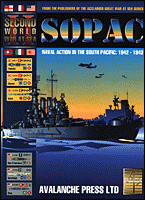 Second World War at Sea: SOPAC Second World War at Sea: SOPAC
With the success of Great War at Sea, we looked to branch out into World War
II. The first release in this line, SOPAC, came out in late 2000 after serious production
delays. It had hard-mounted game boards, and
covered naval and air action in the Solomon
Islands.
SOPAC proved very popular and spawned
a whole new series. Fans loved it, except
for the one guy who sent me hate mail
for years because he believed someone promised him a
780-turn campaign game scenario.
We’d like
to eventually replace SOPAC with
a new game featuring a full-sized map like
the other games in the series that will overlap
those from Strike
South. And we’d include new
game pieces to extend the scenarios into the
1943 actions in the Solomons.
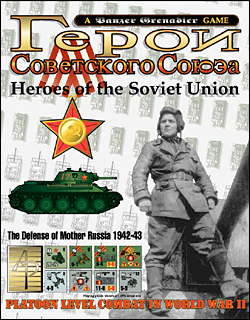 Panzer Grenadier: Panzer Grenadier:
Heroes of the Soviet Union
Our other flagship product line, Panzer
Grenadier, also debuted in 2000. The
first volume sold
out in 2003 and was replaced by Eastern
Front. The second game in the series, Heroes of the Soviet Union, was a compromise product
from the start and I was never really satisfied
with it. A shortage of art resources led to
its limitation to one countersheet, and that
with very few new counter images. We gave
it two mounted gameboards.
Given those limitations, Brian Knipple came
up with quite a good package of scenarios.
But when the game was gone, we decided not
to reprint it.
 Black Flags Black Flags
This was one of our finest d20 roleplaying
supplements. When it was named a finalist
for an Origins Award for best artwork, one
of the other nominees cried in frustration.
"Have you seen the cover?" he gasped. "It has a girl pirate . . . a naked girl pirate!" He was, of course, Canadian.
Behind the cover lurked a pretty damned
fine pirate role-playing game. The book sold
out in less than six months, and Black
Flags remains one of our best product
concepts.
 Twilight of Atlantis Twilight of Atlantis
Another excellent Lorenzo Sperlonga cover,
with etraordinary detail (every one of those leaves has a unique vein structure) this time gracing Jim Li’s take on Atlantean
culture. The Atlanteans are way more than human, and pretty near immortal, though they have bitter enemies in the evil cat-people of Mu. And then there's the issue of keeping their island-continent from sinking. If that happens, then they have a problem. It’s a very fine supplement,
and it sold out pretty quickly.
 Ragnarok Ragnarok
Ragnarok was an Origins Award finalist
for artwork, for layout, and as a supplement. William Sariego, designer of our Western Desert Force boardgame, wrote this one.
It has a great system for playing minor Norse
gods, and runic magic. We liked it so much
that when it sold out, we produced an
expanded version as Viking
Age. The cover made us notorious; a retail store chain ordered up hundreds of store posters, then decided it was too hot to handle. An RPG review mag ran it on their cover, but added on some extra bands to hide that deadly underboob.
 Greenland Saga Greenland Saga
My personal favorite among the d20 line,
this was a sourcebook on the fringe of the
Norse world, the isolated colony of Greenland.
It also had an adventure where our heroes
try to find why the dysfunctional, inbred,
jealous and petty inhabitants of the frozen
wasteland keep disappearing. In other words,
it was an allegory for the wargame industry.
It was actually a good adventure, an Origins
Award finalist, and it sold out fairly quickly.
It appeared in German and Italian editions as well.
 I, Mordred I, Mordred
An outside submission, this came in needing
extensive surgery from our line manager, John
R. Phythyon Jr. The book contains a well-drawn
description of Camelot’s faded glory,
and has d20 stats for all of the tale’s
well-known characters. The centerpiece is
John Phythyon’s adventure, which looks at the Arthurian legend from the title character's perspective.
The cover is by Terry Moore Strickland, as
we experimented with some beefcake rather
than cheesecake. Quite the handsome model.
 Noble Knights Noble Knights
This was
a pet project of our then-sales manager and
never quite seemed to take clear shape. It’s
not a settings book, but neither is it the
useful rules supplement it probably should
have been.
Noble Knights is probably our weakest
d20 supplement. As originally planned
this should have been a supplement to a Crusades
sourcebook, and the utter depravity of these
religious wars would have handled the demands
for noble actions. In that combination the
book would have been quite useful. It does have a great cover.
 Noble Steeds Noble Steeds
This had the
potential to be the best book we put out.
The real reason we published it was because
my daughter, then five years old, wanted to
know, “How come you never make books
about horses?”
A finalist for the 2002 Origins Award for
Best RPG Supplement, Noble Steeds never fulfilled its great promise. At a time when d20 books on stupid topics were appearing almost daily, we had truly filled a useful niche and failed to market the book very well.
 Doom of Odin Doom of Odin
Doom of Odin was John Phythyon’s
follow-up to our very successful Ragnarok book. In the adventure portion,
our heroes must solve riddles and rescue a
princess from dwarven captivity.
Lorenzo continued his pattern of painting
strong women. A few Internet people snarked that our cover Valkyrie is not actually
about the loose her arrow as it’s on
the wrong side of the bow. But the rest of
the staff liked her; she’s a dead ringer
for a former employee (especially
the snarl).
 Nile Empire Nile Empire
For this module, we went back to Egypt’s
ancient pantheon of gods and Old Kingdom culture.
The book was a difficult project and needed
extensive surgery to bring it up to standard.
For the first time, Lorenzo used the model
who quickly became our favorite, Veronika
Kotjalich. An art gallery owner by day and
former Playboy NSS model, Veronika
is also capable of a seemingly infinite number
of looks. She’s also one of the nicest
people we’ve ever worked with.
 All For One, One For All All For One, One For All
Without question, this was the weakest product
in our d20 line. It has extensive rules for
sword combat, paramours and other aspects
of 17th century life. These are very good;
if they weren’t, we wouldn’t have
published them in our Black Flags book. The background needed even
heavier surgery than Nile Empire.
Lorenzo wanted to try another cover with
a male lead, with a sexy cover woman
relying more on expression and less on cleavage.
It’s a good piece, and the fact that
he finished it ahead of deadline is the biggest
reason this book wasn’t simply spiked.
 Viking Age Viking Age
Our last d20 book, and felt by many
to be our best. Conceived as a companion to Celtic
Age, it was also meant to
bring the campaign rules of Ragnarok back into print.
Viking Age covered all aspects of
Viking society, with great detail on their
weapons, ways of war, everyday life, marriage
rules, laws and more. There are two systems
of magic detailed, including the creepy Norse
dream magic. There’s also ritual sex,
and that was damned fun to playtest.
Diana Knight, who’s modeled extensively
for comics and is the official spokesmodel
for the Las Vegas Fetish & Fantasy Ball,
is the cover model. Painting is again by Lorenzo
Sperlonga.
 Vlad, the Impaler Vlad, the Impaler
Though Celtic
Age won the Origins Award as Best
RPG Supplement of 2002, I’ve always
been partial to Vlad the Impaler as
the best piece in our RPG line. Of course,
I wrote it myself, but out of hundreds of
publications over the years, this is one of
the handful of which I’m most proud.
It was very satisfying both as a work of history
and as a game book.
The background is disturbing, and it was
meant to be. This is the real Vlad the Impaler,
and Wallachia was a cruel place. Much of the
background was based on Romanian-language
sources and a number of primary documents.
We received a fair amount of criticism for
the unvarnished look at evil, but we never
intended the book for children. A finalist
for the 2002 Origins Awards in two separate
categories, we were pleased that other professionals
recognized what we were trying to say.
The front cover, by Lorenzo Sperlonga, is
a disturbing piece of evil. The back cover
is by Terry Moore Strickland, another disturbing
piece as the devil birds of the Balkans, the
vukodlak, feast on the dead.
There were also numerous pieces from the
Romanian National Museum in Bucharest, images
I obtained in the early 1980s. A number of
these were destroyed during the 1989 uprising
that rid Romania of the modern Vlad, Nicolae
Ceausescu. Many have never been published
anywhere else.
 Endless Sands Endless Sands
Endless Sands veered away somewhat from our
historical/mythological bent to pursue an
Arab-influenced desert setting. I was concerned
that this book hold a respectful view of Islam,
and that was handled well with the fantasy religion of the Endless Sands.
The cover painting features the exquisite Veronika Kotjalich as the standing model. The fallen woman is an original
composition by Lorenzo.
 Aztecs: Empire of the Dying Sun Aztecs: Empire of the Dying Sun
This one was a straight historical take on
the Aztec Empire. It tells of their culture
from their own viewpoint, and puts human sacrifice
into an actual logical context.
The cover model once again is the lovely
Veronika. The background might be Lorenzo’s
best. I’ve never liked the painting
of Veronika as well as some of the others,
but it had a determined following who placed
it at the top of Lorenzo’s portfolio.
|