| Soldier
Emperors
The Generals of Soldier Emperor, Part One
By Mike Bennighof, Ph.D.
November 2022
Play in Soldier
Emperor often depends on the quality of one’s
generals. Here's
a look at some of them.
Britain
Given the low standard of British generalship throughout the period – Napoleon’s epithet of “lions led by asses” was very much on point – the ratings of British leaders in the game are somewhat misleading. Their good commanders, on both land and sea, were very good. Everyone else? Not so much. That’s not a major handicap in Soldier Emperor, as the British player will not likely be sending many fleets and armies out to do battle.
Wellington
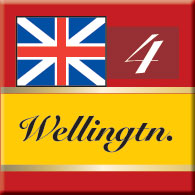 Famously scorned by Napoleon as a “sepoy general,” the British military establishment apparently agreed. Arthur Wellesley returned from India in 1805, having recorded a number of amazing battlefield victories. But he had only commanded relatively small forces in India, and upon his returned was only entrusted with brigade-level commands. He finally finagled command of an expedition to South American in 1808, only to have it diverted to Portugal. Famously scorned by Napoleon as a “sepoy general,” the British military establishment apparently agreed. Arthur Wellesley returned from India in 1805, having recorded a number of amazing battlefield victories. But he had only commanded relatively small forces in India, and upon his returned was only entrusted with brigade-level commands. He finally finagled command of an expedition to South American in 1808, only to have it diverted to Portugal.
There he won a pair of victories, but remained a subordinate field commander. Not until the spring of 1809 did he receive supreme command of British forces in the Peninsula (the British term for the theater of war in Spain and Portugal), defeating a series of French marshals, but not facing Napoleon himself until the anti-climactic Battle of Waterloo in the summer of 1815. Ennobled in 1809, Wellesley’s brother Richard chose the name Wellington after an industrial town in Somerset with no connection to the family beyond a name that sounded vaguely similar.
Wellington succeeded at a time when other British operations routinely ended in disaster thanks to his attention to detail: logistics, communications, intelligence and the other “invisible” sinews of war.
Moore
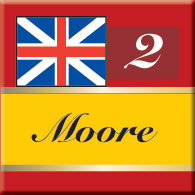 Sir John Moore’s reputation rests on a single battle, his victory over Jean de Dieu Soult in 1809 at Corunna, in which he died after being hit by a cannonball. Napoleon himself had led a massive force into Spain, and Moore – who had only recently arrived himself – skillfully withdrew his greatly-outnumbered British forces to the port of Corunna and held off Soult long enough to get his troops aboard ship. They left his body behind, and it remains in Corunna. Sir John Moore’s reputation rests on a single battle, his victory over Jean de Dieu Soult in 1809 at Corunna, in which he died after being hit by a cannonball. Napoleon himself had led a massive force into Spain, and Moore – who had only recently arrived himself – skillfully withdrew his greatly-outnumbered British forces to the port of Corunna and held off Soult long enough to get his troops aboard ship. They left his body behind, and it remains in Corunna.
Moore is likely over-rated in the game. While it’s impossible to say that he would not have gone on to many more successes had he avoided the fatal cannonball of Corunna, it’s also impossible to say that he would have. When Wellington and Moore are both in play the combination does give the British player far better leadership than the overall performance of the British Army’s generals would imply.
Beresford
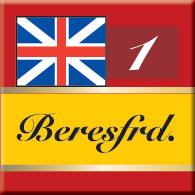 Lord William Beresford served in the Peninsula War, overseeing the re-training of the Portuguese Army as its field marshal, and serving in the field as a subordinate commander under Wellington. As an independent commander he defeated Jean de Dieu Soult at Albuera in 1811, but was badly wounded at Salamanca a year later and at some point suffered what was termed a nervous breakdown. He continued to serve under Wellington until 1814, but did not join him in Belgium in 1815. Wellington apparently did not think much of his abilities in the field, but admired his organizational talents – always an important consideration for the Iron Duke – and named him his second-in-command in Spain. Lord William Beresford served in the Peninsula War, overseeing the re-training of the Portuguese Army as its field marshal, and serving in the field as a subordinate commander under Wellington. As an independent commander he defeated Jean de Dieu Soult at Albuera in 1811, but was badly wounded at Salamanca a year later and at some point suffered what was termed a nervous breakdown. He continued to serve under Wellington until 1814, but did not join him in Belgium in 1815. Wellington apparently did not think much of his abilities in the field, but admired his organizational talents – always an important consideration for the Iron Duke – and named him his second-in-command in Spain.
Jervis
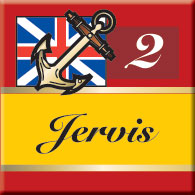 Sir John Jervis built a successful combat record in the American Revolution, and in 1795 – well before the scenarios of Soldier Emperor begin - he received command of the Mediterranean Fleet. His victory at Cape St. Vincent in 1797 brought him into the peerage, though the public reserved most of its adoration for one of his ship captains, the valiant Horatio Nelson. A year later he unleashed Nelson in pursuit of the French fleet to Egypt, leading to the Battle of the Nile. A stickler for detail, Jervis brought organization and efficiency to the Mediterranean Fleet and in particular its bases. He became First Sea Lord in 1801, charged with fighting dockyard corruption. Sir John Jervis built a successful combat record in the American Revolution, and in 1795 – well before the scenarios of Soldier Emperor begin - he received command of the Mediterranean Fleet. His victory at Cape St. Vincent in 1797 brought him into the peerage, though the public reserved most of its adoration for one of his ship captains, the valiant Horatio Nelson. A year later he unleashed Nelson in pursuit of the French fleet to Egypt, leading to the Battle of the Nile. A stickler for detail, Jervis brought organization and efficiency to the Mediterranean Fleet and in particular its bases. He became First Sea Lord in 1801, charged with fighting dockyard corruption.
Success at busting up decades-old scams made Jervis many enemies among powerful lords, ministers and courtiers who had long profited from selling green or rotten timber to the Navy and collecting wages for non-existent workers. In 1805 he left the Admiralty and returned to sea as commander of the Channel Fleet. He retired two years later, aged 72 years, and entered the House of Lords where he fought against abolition of the slave trade.
Nelson
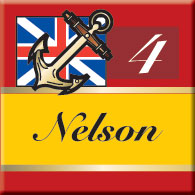 Britain’s most famous naval commander, Horatio Nelson, won major victories at the Nile, Copenhagen and Trafalgar, but only exercised actual fleet command for a very brief period. At the Nile (also known as the Battle of Aboukir) in 1798 and Copenhagen in 1801 he was actually a subordinate. Only in May 1803 did he receive fleet command, which he held until his death at the Battle of Trafalgar in October 1805. Refusing to change into a plain coat or to allow another ship to lead his line of battle, he was shot by a French sniper and died a few hours later. Britain’s most famous naval commander, Horatio Nelson, won major victories at the Nile, Copenhagen and Trafalgar, but only exercised actual fleet command for a very brief period. At the Nile (also known as the Battle of Aboukir) in 1798 and Copenhagen in 1801 he was actually a subordinate. Only in May 1803 did he receive fleet command, which he held until his death at the Battle of Trafalgar in October 1805. Refusing to change into a plain coat or to allow another ship to lead his line of battle, he was shot by a French sniper and died a few hours later.
Nelson’s preferred tactic, to “go right at them,” suited the Royal Navy’s capabilities at the time, with a decided superiority in quality of personnel and often of numbers. A generation of sea officers worshipped Nelson and copied his aggressiveness (and fondness for other men’s wives).
Collingwood
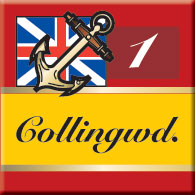 Nelson’s second-in-command at Trafalgar, Sir Cuthbert Collingwood led the second of the two British lines that attacked the Franco-Spanish fleet and assumed command of the Mediterranean Fleet following Nelson’s death. The Admiralty considered him the Royal Navy’s most skilled admiral and refused his repeated requests for retirement as cancer sucked away his life; he died in 1810 on his way back to England, his medical leave having finally been granted. Nelson’s second-in-command at Trafalgar, Sir Cuthbert Collingwood led the second of the two British lines that attacked the Franco-Spanish fleet and assumed command of the Mediterranean Fleet following Nelson’s death. The Admiralty considered him the Royal Navy’s most skilled admiral and refused his repeated requests for retirement as cancer sucked away his life; he died in 1810 on his way back to England, his medical leave having finally been granted.
Collingwood is probably best known for his habit, while between commands, of taking long walks near his home and planting acorns along the way so that England would always have plentiful oak for new warships.
Austria
Austria spent most of this period at war, fighting
major campaigns against France in 1805 and 1809,
a brief war with Russia in 1812, and then back to
war with France from 1813 to 1815.
In game terms, Austria begins with one excellent
leader in Charles and a pair of lightweights. Like
the emperor Franz, the Austrian player usually feels
constrained to put most of his forces under Charles.
Better leaders will arrive later, with Schwarzenberg
entering the leader pool in 1809 and two good leaders
in 1812, plus another “1” leader.
Austrian generalship suffered from the favoritism
shown to those of high birth, and it shows in game
terms as well. Career soldiers from the lower nobility
like Radetzky and Frimont had to wait well into
middle age or beyond before being trusted with command,
while teenaged archdukes led armies into battle.
Frimont
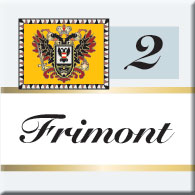 Johann
Frimont, an Alsatian soldier of fortune in Austrian
service, commanded at the 1809 victory of Sacile
over Eugene de Beauharnais’ Army of Italy (though
Archduke John had the titular command). In 1812
he was second in command (to Schwarzenberg) of Austrian
forces in Russia. He led the Austrian Army of Italy
in 1815, clashing with the French in some minor
skirmishes. Considered one of the empire’s top soldiers,
Frimont commanded Austria’s forces in northern Italy
for the next 20 years, crushing insurgent forces
in 1823 and 1830. Johann
Frimont, an Alsatian soldier of fortune in Austrian
service, commanded at the 1809 victory of Sacile
over Eugene de Beauharnais’ Army of Italy (though
Archduke John had the titular command). In 1812
he was second in command (to Schwarzenberg) of Austrian
forces in Russia. He led the Austrian Army of Italy
in 1815, clashing with the French in some minor
skirmishes. Considered one of the empire’s top soldiers,
Frimont commanded Austria’s forces in northern Italy
for the next 20 years, crushing insurgent forces
in 1823 and 1830.
Radetzky
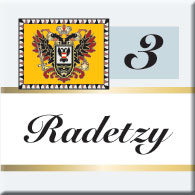 Austria’s
greatest battlefield commander, Josef Radetzky von
Radetz had an undistinguished career for most of
the Napoleonic wars. A cavalry division commander
in 1809, he won praise for independent action at
Landshut in Bavaria. His talents remained untapped
until he served as chief of staff of the combined
Allied armies in 1814 and 1815. After more years
of obscurity, he succeeded Frimont as commander
in Italy. At age 84, he won a brilliant string of
victories in 1848 over the Piedmontese, crowning
these achievements with the victory of Novara in
1849. The old man remained in the saddle until 1857.
A beer magnate paid his worthless son Theodor to
inter the great general's remains alongside the
millionaire. Radetzky is the only historical figure
in the game to receive a leader piece but not hold
an independent command, though he could easily have
been selected. Austria’s
greatest battlefield commander, Josef Radetzky von
Radetz had an undistinguished career for most of
the Napoleonic wars. A cavalry division commander
in 1809, he won praise for independent action at
Landshut in Bavaria. His talents remained untapped
until he served as chief of staff of the combined
Allied armies in 1814 and 1815. After more years
of obscurity, he succeeded Frimont as commander
in Italy. At age 84, he won a brilliant string of
victories in 1848 over the Piedmontese, crowning
these achievements with the victory of Novara in
1849. The old man remained in the saddle until 1857.
A beer magnate paid his worthless son Theodor to
inter the great general's remains alongside the
millionaire. Radetzky is the only historical figure
in the game to receive a leader piece but not hold
an independent command, though he could easily have
been selected.
Bianchi
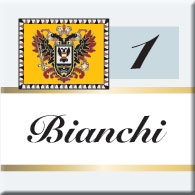 Friedrich Bianchi led
a typical staff officer’s career in the Austrian Army, holding positions assisting various high-born personages and commanding regiments and brigades. There his career likely would have stalled, but in 1809 he won the Military Order of Maria Theresa (and thus instant ennoblement) for his lone brigade’s three-day defense of a bridgehead over the Danube against Nicholas Davout’s French corps. Rising rapidly thereafter, he led a division in the 1812 campaign and a corps in 1814.
With a meteoric rise unseen in Austrian service
for those not of the imperial family, he received
an independent command in 1815. In that campaign
he defeated Joachim Murat’s Neapolitan army at the
Battle of Tolentino despite being outnumbered 3
to 1, and then crushed the satellite kingdom. Friedrich Bianchi led
a typical staff officer’s career in the Austrian Army, holding positions assisting various high-born personages and commanding regiments and brigades. There his career likely would have stalled, but in 1809 he won the Military Order of Maria Theresa (and thus instant ennoblement) for his lone brigade’s three-day defense of a bridgehead over the Danube against Nicholas Davout’s French corps. Rising rapidly thereafter, he led a division in the 1812 campaign and a corps in 1814.
With a meteoric rise unseen in Austrian service
for those not of the imperial family, he received
an independent command in 1815. In that campaign
he defeated Joachim Murat’s Neapolitan army at the
Battle of Tolentino despite being outnumbered 3
to 1, and then crushed the satellite kingdom.
Mack
 The
“unhappy General Mack” of Tolstoy’s War
and Peace, Karl Mack von Leiberich had carried a sabre as a private
soldier in a cavalry regiment and risen through the ranks. Despite these
harsh origins he possessed courtly manners and made
a soldierly impression on many influential people.
Seconded to the Kingdom
of Naples, he was defeated by the French in 1798 and made a prisoner despite a guaratee of safe conduct; when he later escaped he was accused of breaking parole and the cloud on his honor kept him out of active service until 1805 when he was given the key command in Bavaria (held
in name by Archduke Ferdinand). When he found Napoleon’s
troops had infiltrated behind his positions at Ulm,
he promptly surrendered Austria’s main field army. The
“unhappy General Mack” of Tolstoy’s War
and Peace, Karl Mack von Leiberich had carried a sabre as a private
soldier in a cavalry regiment and risen through the ranks. Despite these
harsh origins he possessed courtly manners and made
a soldierly impression on many influential people.
Seconded to the Kingdom
of Naples, he was defeated by the French in 1798 and made a prisoner despite a guaratee of safe conduct; when he later escaped he was accused of breaking parole and the cloud on his honor kept him out of active service until 1805 when he was given the key command in Bavaria (held
in name by Archduke Ferdinand). When he found Napoleon’s
troops had infiltrated behind his positions at Ulm,
he promptly surrendered Austria’s main field army.
John
 Archduke
John, brother of the emperor and of Archduke Charles,
went straight to the top. His first military experience
consisted of “command” of the Austrian
army smashed by Jean Moreau at Hohenlinden in 1800.
Franz Lauer held the real command of the 18-year-old
archduke’s army. Granted command again in
1809, he served as a figurehead for Frimont until
the latter was wounded. Taking direct control of
his army, his jealousy of his brother Charles led
him to keep it off the battlefield at Wagram. Banished
in disgrace, he spent the next four decades hunting
in the Alps, emerging during the revolutions of
1848 as the “people’s archduke” and nearly
winning the crown in the process. In game terms
he is likely overrated. Archduke
John, brother of the emperor and of Archduke Charles,
went straight to the top. His first military experience
consisted of “command” of the Austrian
army smashed by Jean Moreau at Hohenlinden in 1800.
Franz Lauer held the real command of the 18-year-old
archduke’s army. Granted command again in
1809, he served as a figurehead for Frimont until
the latter was wounded. Taking direct control of
his army, his jealousy of his brother Charles led
him to keep it off the battlefield at Wagram. Banished
in disgrace, he spent the next four decades hunting
in the Alps, emerging during the revolutions of
1848 as the “people’s archduke” and nearly
winning the crown in the process. In game terms
he is likely overrated.
Charles
 Destined
from birth for a military career, 21-year-old Charles accompanied
his guardian Duke Albert of Teschen to the 1792
campaign and soon received his own command. A series
of victories in 1796 in Germany (some of them achieved
through bribery rather than bullets) cemented his
position as Austria's top field commander. Small
and sickly, Charles often missed crucial moments
due to epileptic fits or general poor health, though
he at times avoided difficult situations with this
excuse. In 1805 he defeated Massena at Caldiero,
and in 1809 defeated Napoleon himself at Aspern
and nearly did so again at Wagram. After the 1809
campaign he never again held active command, briefly
returning to the colors in 1812 as military governor
of Mainz. Destined
from birth for a military career, 21-year-old Charles accompanied
his guardian Duke Albert of Teschen to the 1792
campaign and soon received his own command. A series
of victories in 1796 in Germany (some of them achieved
through bribery rather than bullets) cemented his
position as Austria's top field commander. Small
and sickly, Charles often missed crucial moments
due to epileptic fits or general poor health, though
he at times avoided difficult situations with this
excuse. In 1805 he defeated Massena at Caldiero,
and in 1809 defeated Napoleon himself at Aspern
and nearly did so again at Wagram. After the 1809
campaign he never again held active command, briefly
returning to the colors in 1812 as military governor
of Mainz.
Schwarzenberg
 Karl
Phillip zu Schwarzenberg spent most of his career
as a diplomat, but had some military command experience
when he burst into prominence. In 1812 the emperor
tapped him to lead the Austrian auxiliary corps
into Russia alongside Napoleon, and he defeated
Tormassov’s Russian army. The next year he commanded
the Austrian armies that intervened against the
French, and was named supreme Allied commander.
He commanded the combined Austrian, Prussian and
Russian armies at Leipzig and Dresden. Schwarzenberg
then oversaw the strategy that drove Napoleon back
into France and ultimately off his throne, and also
served as supreme commander during the Corsican’s
abortive comeback in 1815. Karl
Phillip zu Schwarzenberg spent most of his career
as a diplomat, but had some military command experience
when he burst into prominence. In 1812 the emperor
tapped him to lead the Austrian auxiliary corps
into Russia alongside Napoleon, and he defeated
Tormassov’s Russian army. The next year he commanded
the Austrian armies that intervened against the
French, and was named supreme Allied commander.
He commanded the combined Austrian, Prussian and
Russian armies at Leipzig and Dresden. Schwarzenberg
then oversaw the strategy that drove Napoleon back
into France and ultimately off his throne, and also
served as supreme commander during the Corsican’s
abortive comeback in 1815.
Click here to order Soldier Emperor right now.
Please allow an extra three weeks for delivery.
You can order Great Powers right here.
Please allow an extra three weeks for delivery.
The Emperor’s Package
Soldier Emperor
Soldier Emperor: Indian Empires
Soldier Emperor: Great Powers
Retail Price: $172.97
Package Price: $135
Gold Club Price: $108
You can experience the Emperor's Package right here.
Please allow an extra three weeks for delivery.
Sign up for our newsletter right here. Your info will never be sold or transferred; we'll just use it to update you on new games and new offers.
Mike Bennighof is president of Avalanche Press and holds a doctorate in history from Emory University. A Fulbright Scholar and NASA Journalist in Space finalist, he has published a great many books, games and articles on historical subjects; people are saying that some of them are actually good.
He lives in Birmingham, Alabama with his wife, three children, and his new puppy. He misses his Iron Dog, Leopold.
Want to keep Daily Content free of third-party ads? You can send us some love (and cash) through this link right here.
|