Ships of the Black Sea
By Mike Bennighof, Ph.D.
July 2026
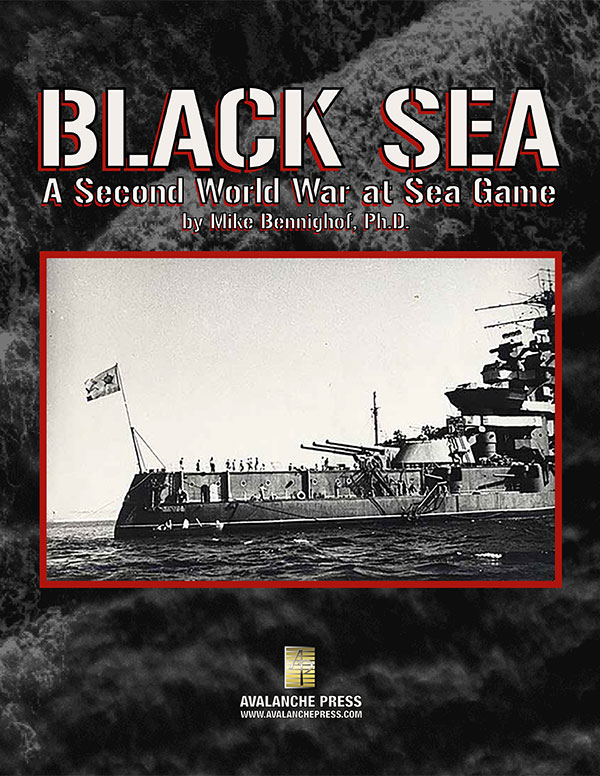 Tucked into Europe's lower right corner, it's easy to overlook the Black Sea. But in both world wars it's been the scene of intense naval combat, made even fiercer by the sea's isolation. Tucked into Europe's lower right corner, it's easy to overlook the Black Sea. But in both world wars it's been the scene of intense naval combat, made even fiercer by the sea's isolation.
Our Second World War at Sea: Black Sea is a complete game in the known universe’s most beloved series of naval wargames. You get 370 die-cut pieces, 150 of them double-sized ship pieces. An operational map of the Black Sea, the standard Second World War at Sea tactical map and rules, and 24 scenarios so you can play with all of that.
It’s the ships that excite the shipheads, and we have them. Almost all of those 220 standard-sized square pieces are airplanes; the Black Sea is a very small sea, and so aircraft are very central to the naval war waged there. The megalomania of all the region's leaders created unbalanced navies with relatively few small warships. There are escorts, minesweepers, and auxiliaries on the Black Sea, but not as many as one would expect.
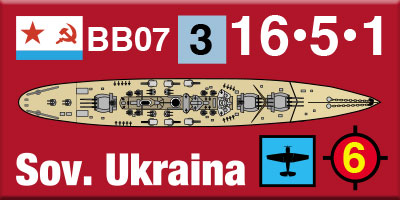
The Soviet Black Sea Fleet began the war built around a core of refurbished veterans of the tsar's fleet. One battleship and a cruiser had been transferred from the Baltic in early 1930, and two cruisers begun for the Tsarist Black Sea Fleet were completed a decade late. An ancient protected cruiser was also rebuilt as a training ship, and would be pressed into action in 1941.
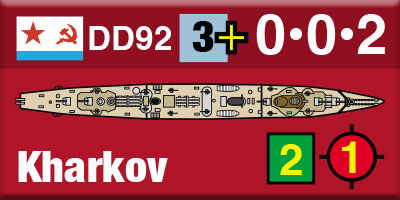
During the Great War, the Imperial Russian Navy's Novik type destroyers had easily been the world's biggest, fastest and most heavily armed destroyers. They were very effective warships in 1915, much less so in 1941, but they remained the backbone of the Red Navy's destroyer force and much like the contemporary American “flush deck” destroyers gave good service 25 years after they had been laid down.
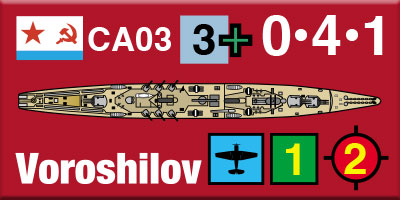
Great Stalin ordered a massive fleet buildup in the mid-1930s, and by the time war broke out a handful of these ships were in service. The Kirov class cruisers reflected the fact that the Soviet Union had not been asked to sign any of the naval limitations treaties of the 1920s and 1930s, and so they carried a main battery of an “intermediate caliber,” nine 7.1-inch (180mm) guns. Two of them were in service on the Black Sea when the Nazis launched their sneak attack on 22 June 1941, with Molotov having joined the fleet only a week before.
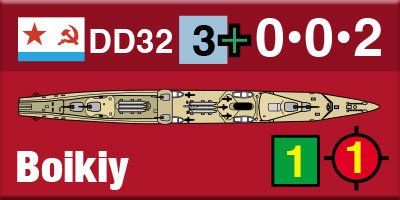
Seeking outside expertise, the Soviets bought the flotilla leader Tashkent from Italy's OTO yard in 1937. The "Blue Beauty," as she was known, was exceedingly fast and well-armed. The Type 7 destroyers she was expected to command were also based on Italian practice, and were very similar to the Regia Marina's Freccia class destroyers. And like Italian destroyers, they were not particularly seaworthy to start with and suffered when the Soviets gave them even heavier armament. An improved version, enlarged to carry the added weapons, had just begun to enter service when the war began.
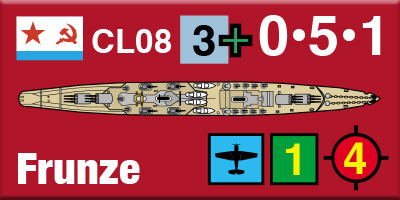
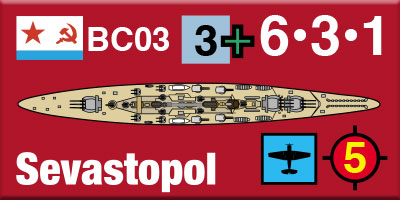
Soviet industry had been ordered to turn out a much grander array of warships, capable of challenging the imperialist powers. When war came to the black sea, a huge battleship was under construction along with a battle cruiser, a large class of light cruisers and improved flotilla leaders and destroyers. Only some of the cruisers and destroyers would ever be completed, with most of the remainder damaged beyond repair during the course of the war.
The Soviet Union's part in defeating Fascist Italy (the Italian Army suffered more casualties on the Eastern Front than in North Africa) entitled the Red Navy to a share of the surrendered Italian fleet. One battleship, one cruiser and two destroyers arrived in the Black Sea after the war and served into the late 1950s, though the battleship was destroyed in an explosion purportedly caused by die-hard Fascist saboteurs.
And no study of the Red Navy would be complete without its efforts to build an aircraft carrier. None went to sea during this time frame, but we've provided three examples of the most likely designs along with the aircraft that would have flown from them.
As the vanguard of international revolution, the Soviet Union's leaders felt they had to justify their actions to the world. Much of the justification for the naval buildup was the “threat” presented by Turkey. The Turks refitted their battle cruiser, and so the former German Goeben appears in Turkish colors under her Turkish name, Yavuz, as modernized for the Second World War.
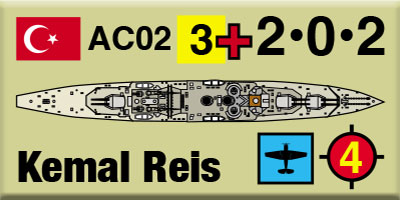
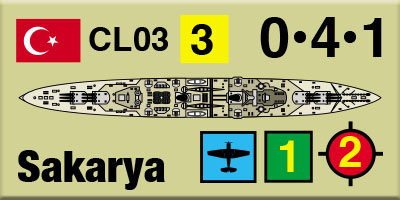
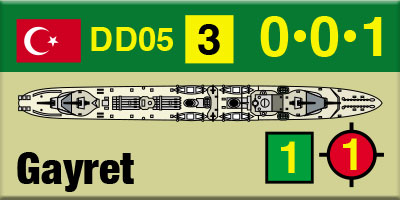
As possible replacements for Yavuz, the Turks also receive a pair of British-built large cruisers originally proposed for Greece to counter the Italian heavy cruisers. At 18,000 tons, with six 254mm (10-inch) guns and a top speed of 33 knots, they would have been potent combatants and worthy successors to the grim old battle cruiser. Turkey also gets the pair of light cruisers she tried unsuccessfully to buy in Britain, and the battleship she was offered in their place. And of course, the backbone of their actual Turkish fleet is present, the modern destroyers ordered in Italian and British shipyards.
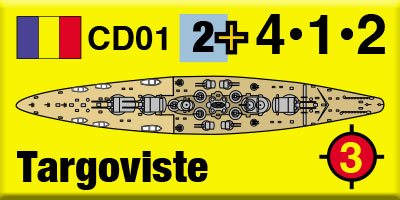
Soviet analyses rarely mentioned Romania as a threat, though the Romanians attempted to spend their oil revenues on a modest fleet construction program in the 1930’s. Italian shipyards presented them with a number of very interesting proposals, and we have these present.
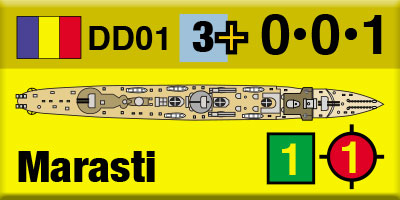
The centerpiece is a pair of 17,000-ton coast defense ships, originally offered to Sweden. With six 280mm guns in three twin turrets, they’re not quite the same as a true battleship, but are very capable combatants. The Ansaldo combine's U90 project was a variation on the German "pocket battleship" concept, with six 10-inch (254mm) guns in a pair of triple turrets on the hull of a Duca degli Abruzzi class light cruiser. As the design developed, the hull had to be enlarged to carry such a powerful main armament and the ship would have displaced about 10,000 tons had she been built. OTO offered a much smaller ship with their U102 project, a light cruiser with six six-inch guns mounted forward in the same turrets used in the Littorio class battleships with the aft deck kept clear to handle seaplanes � a concept very similar to the Japanese Oyodo drafted about a year later. Neither of these cruiser programs, nor the attempt to add a second division of four destroyers to the fleet, would come to fruition.
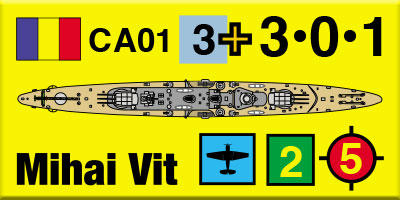
The Romanians instead chose an alternative offered by Vickers, a more conventional light cruiser derived from the Arethusa-class design. She would have carried six 6-inch guns and made 32 knots; the same provisions of the 1936 London Naval Treaty that blocked Turkey’s order for new cruisers scuttled this project as well.
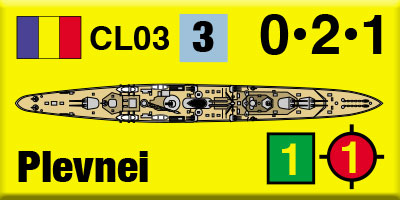
And those are the ships of Black Sea
Sign up for our newsletter right here. Your info will never be sold or transferred; we'll just use it to update you on new games and new offers.
Mike Bennighof is president of Avalanche Press and holds a doctorate in history from Emory University. A Fulbright Scholar and NASA Journalist in Space finalist, he has published a great many books, games and articles on historical subjects; people are saying that some of them are actually good.
He lives in Birmingham, Alabama with his wife and three children.
Daily Content includes no AI-generated content or third-party ads. We work hard to keep it that way, and that’s a lot of work. You can help us keep things that way with your gift through this link right here.
|