Golden Journal No. 55 Flying Carriers
Design Notes
by Mike Bennighof, Ph.D.
June 2026
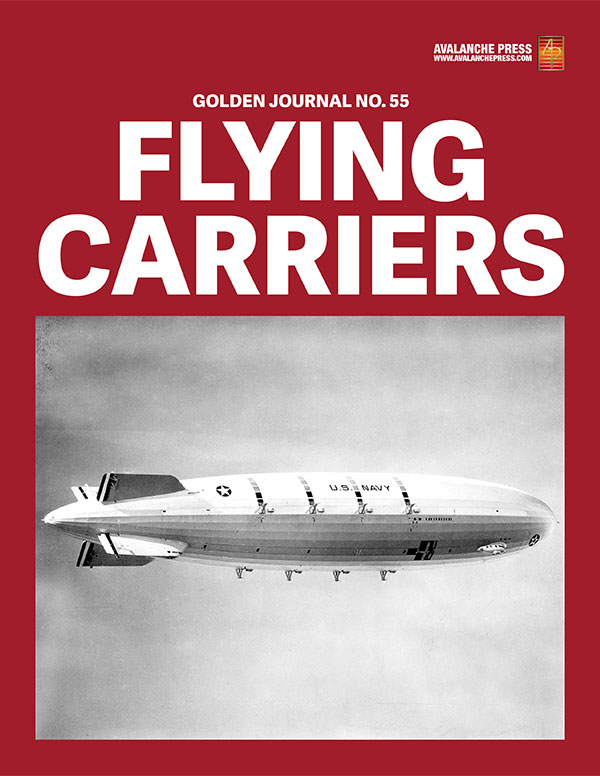 Note: Golden Journal No. 55: Flying Carriers brings both American and Japanese projects for aircraft-carrying airships to Second World War at Sea (plus some airships that actually existed). Note: Golden Journal No. 55: Flying Carriers brings both American and Japanese projects for aircraft-carrying airships to Second World War at Sea (plus some airships that actually existed).
They actually existed: graceful, helium-filled airships that also carried airplanes. The flying carriers had just a brief moment in the 1930’s, before both of them crashed and plans to build more, bigger flying carriers deflated. But they were a real thing, and almost an even bigger thing.
Golden Journal No. 55: Flying Carriers brings these majestic airships to Second World War at Sea. You get 28 new pieces: twelve of them double-sized pieces for the flying carriers (three of those don’t carry airplanes), and 16 airplanes to fly from the flying carriers. Plus, a carrier organization card for them (just like the ones in Second World War at Sea games, except this time, the aircraft carriers can fly).
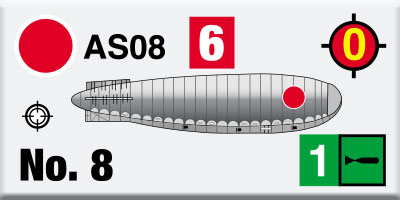
This mix is heavily slanted toward the U.S. Navy, because the U.S. Navy led the way in flying carrier development and was the only service to actually build and deploy flying aircraft carriers. Ten of the twelve airships are American, and fourteen of the sixteen air squadrons. The other two airships and two squadrons are Japanese. We have rules for the flying carriers, including combat between airships. The Japanese airships are filled with hydrogen and yes, they can attempt to crash their flying bombs into American ships. And this being an Avalanche Press Golden Journal, we have their stories, too. Plus, we tell you how to add them to the scenarios from Midway and The Emperor’s Sword.
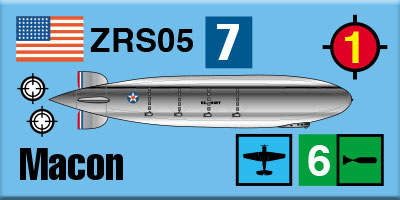
We’ve released games with flying carriers before; they’re a staple of the Second Great War alternative history games. Imperial Germany has a great many flying carriers, Italy deploys one in Sword of the Sea, and Imperial Russia has three in The Cruel Sea. There are many more in the upcoming The King’s Ships, both German and British.
Bu those are all from an alternative history. Those flying carriers never really existed. Flying Carriers, our Golden Journal, is based on the flying carriers that actually existed – both those that were built and deployed, and those actually planned and designed by the United States and Japan.
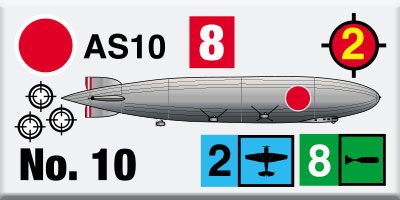
In game terms, flying carriers operate much like wet navy aircraft carriers. They launch and recover aircraft, and they have carrier “boxes” for those planes allowing the same types of missions: Search, CAP, ASW. And while they do add additional airpower to the carrier fleets, the fact is that their airplanes are not very good.
Starting in the late 1930’s, fixed-wing aircraft began a rapid surge of technological advances. They became exponentially more powerful: bigger engines meant more speed and load capacity, allowing more weapons and ordnance, too. Carrier admirals demanded more range and that demanded more fuel (as did those bigger engines).
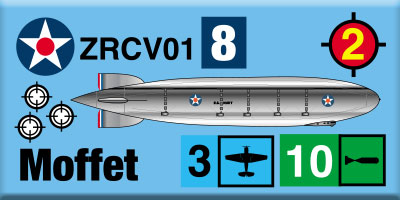
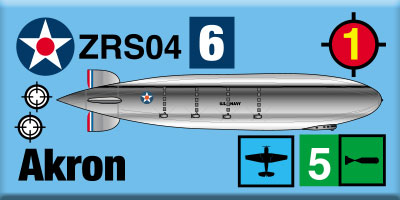
Airships, already maximized for lift, had little extra weight left to shed in compensation for the heaver new aircraft. They could either carry a much smaller number, or they could stick with their lightweight, but older, airplanes. We went with the latter option, and the flying carriers operate older and much less capable (but lighter) planes.
That makes it rather dicey to deploy the flying carriers in a strike role (and the Japanese flying carrier doesn’t even have any strike aircraft). Japanese Zero fighters on CAP will shred the F3F biplane fighters and SBU biplane dive bombers. A flying carrier’s air group is best used in two roles, as its real-world advocates urged: to attack undefended rear-echelon elements like replenishment oilers. And for scouting. On the other hand, flying carriers, unlike the floating kind, are totally invulnerable to submarines.

The American flying carriers, when they appear in numbers, give the Allied player a recon capability across the entire map (even the combined maps from Midway and The Emperor’s Sword). That’s mostly from their aircraft, but the airship herself is a viable recon platform as well. Should the Japanese find them, they’ll not last long against the A6M carrier fighter. But the deep recon capability they provide would not exist in the real world until the advent of satellite intel in 1969 (and it would only become really useful some years after that).
Flying Carriers also includes scenario modifications for every operational scenario in Midway Deluxe Edition and The Emperor’s Sword. Victory conditions are rarely altered: just because there are giant floating gasbags overhead carrying airplanes, the objectives have not changed. What has changed is the information available. You can still miss an enemy task force; the flying carriers are not omnipotent eyes in the sky. But they might alter the outcome.
That’s more evident in the Midway scenarios. Would Spike Pye have called off the relief of Wake Island in December 1941, with Akron and Macon in the air and reporting a clear path to the beleaguered garrison? Would a flying carrier in the air on the morning of 7 December 1941 have made all of the early-warning difference? Airship advocates certainly made that claim in the days after Pearl Harbor (they didn’t get much traction). Would a Japanese flying carrier given Nagumo the needed sighting of the American carriers?
I only added a few flying carriers to Midway’s scenarios; these are historical scenarios and I didn’t want to unbalance them. The big ZRCV flying carriers make their appearance in The Emperor’s Sword, which seems appropriate since it’s an alternative-history expansion for Midway set in a high-tech (for the 1940’s) reality. They can carry a huge bomb load, though there aren’t many targets for them to bomb. And they can carry more airplanes than their smaller cousins, enough to make it tempting to use them in a strike role. But they’re not very good airplanes.
I thought over this question for some time. Aircraft grew is size and weight at the time, because they could. Their weight mattered little, as long as they had enough power to get them off the ground. Traditional aircraft carriers had some trouble handling the newest high-performance aircraft; the Japanese believed that only their newest carriers could have accommodated the A7M Reppu and B7N Tenzan, and American thought held at first that the F4U Corsair would likewise be limited.
Would the presence of flying carriers have pushed the development of high-performance aircraft to operate from them? Planes with greater speed and heavier armament, but not weighing much more than the biplanes that flew from Akron and Macon?
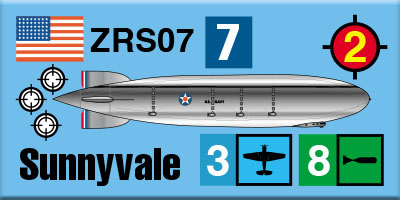
The design task would have been exceedingly difficult. To operate from a flying carrier, an aircraft needed not just light weight, but a very low stall speed, and good handling characteristics at low speed. Add a structure robust enough for the trapeze attachment gear (less of a problem for a biplane) and compact size to fit inside the hangar (or the nests of the ZRCV). And that’s why our American flying carriers operate biplanes, and the Japanese airship carries the otherwise obsolete A5M monoplane fighter.
Even with biplanes, the big ZRCV flying carriers have enough aircraft to strike a blow, if the Allied player is clever. Given the size of the Japanese fleet that assaults the West coast in our alternative history, there are ample targets of opportunity. Though most of them are capable of fighting back.

Games are supposed to be fun, and Flying Carriers adds a significant slice of fun to both Midway and The Emperor’s Sword. The flying carriers no longer existed by 1941, but they easily might have with just a little more luck and skill. You can decide for yourself if they were worth the potential investment – and that’s what a good wargame should let you do.
Order Flying Carriers Here.
Sign up for our newsletter right here. Your info will never be sold or transferred; we'll just use it to update you on new games and new offers.
Mike Bennighof is president of Avalanche Press and holds a doctorate in history from Emory University. A Fulbright Scholar and NASA Journalist in Space finalist, he has published a great many books, games and articles on historical subjects; people are saying that some of them are actually good.
He lives in Birmingham, Alabama with his wife and three children.
Daily Content includes no AI-generated content or third-party ads. We work hard to keep it that way, and that’s a lot of work. You can help us keep things that way with your gift through this link right here.
|