Golden Journal No. 55 Flying Carriers
Publisher’s Preview
by Mike Bennighof, Ph.D.
May 2026
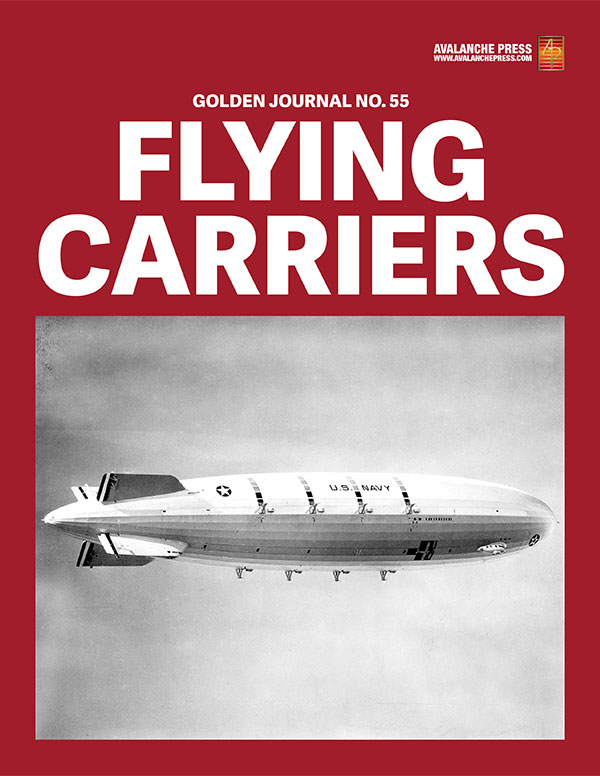 Golden Journal No. 55: Flying Carriers brings the American lighter-than-air aviation program to Second World War at Sea. We’ve done this before, with aircraft-carrying airships that never actually existed, in Second Great War at Sea: The Cruel Sea. Those craft are modeled on proposals from German zeppelin designers to build airships that could also carry airplanes. Golden Journal No. 55: Flying Carriers brings the American lighter-than-air aviation program to Second World War at Sea. We’ve done this before, with aircraft-carrying airships that never actually existed, in Second Great War at Sea: The Cruel Sea. Those craft are modeled on proposals from German zeppelin designers to build airships that could also carry airplanes.
Many of those same designers would move on to the American-German joint venture, Goodyear-Zeppelin Corp., and have a hand in designing the American flying carriers. Both the fictional Imperial German flying carriers of The Cruel Sea and the actual American airships of Flying Carriers have a common root.
Flying Carriers includes eight American flying carriers, plus two rigid airships without their own aircraft. Only two of those eight actually took flight, but the others are based on the designs prepared to follow them. Airship advocates hoped that these sophisticated and advanced craft could provide an American fleet with long-range recon capability beyond that foreseen for airplanes alone. A fixed-wing aircraft could stay aloft for hours, but an airship could do so for many days. And the airship could move at more than twice the speed of a cruiser seeking enemies on the surface.
None of that would matter, after tragic accidents claimed both of the operational flying carriers. But in our Flying Carriers, you get to try out these propositions with the actual flying carriers that saw U.S. Navy service, and those the Navy hoped to build. The Journals shows you how to add them to the scenarios of our Midway, Coral Sea, Java Sea, or South Pacific games, bringing airship scouting to the Pacific War.
Let’s have a look at the American airships of Flying Carriers. There are also two Japanese airships; we’ll look at them separately.
Akron and Macon
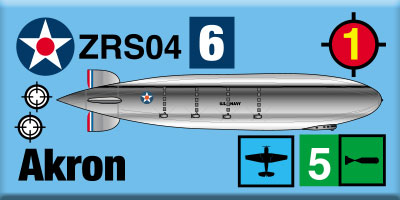
The original, and famed, flying carriers crashed in 1933 and 1935, never to be replaced. Goodyear-Zeppelin won the contract, and their design drew on previous proposals to the Imperial German Navy for aircraft-carrying zeppelins. The first ship, Akron, began construction in 1929 and took her first flight in 1931; the was lost with all hands in 1933. Macon took her first flight less than three weeks after the loss of Akron, and would herself be wrecked in 1935.
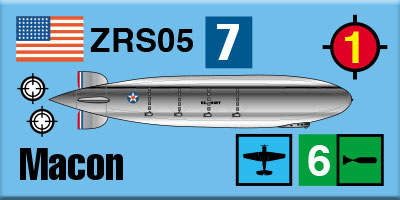
The two airships performed well during their very brief careers, though the Bureau of Aeronautics engaged in a purposeful public relations campaign to obtain more such vessels. That spared them from exercises that might have put them in a less favorable light. The U.S. Navy only had a rigid airship recon capability for about four years, during which the flying 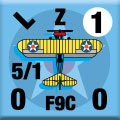 carriers had to engage in testing, training, and airship propaganda, limiting their time with the fleet. carriers had to engage in testing, training, and airship propaganda, limiting their time with the fleet.
The flying carriers had an air group of five F9C biplane fighters. Initially intended for point defense, the mission evolved into one of recon, vastly extending the airship’s potential air search coverage
Lakehurst, Sunnyvale, and Weymouth
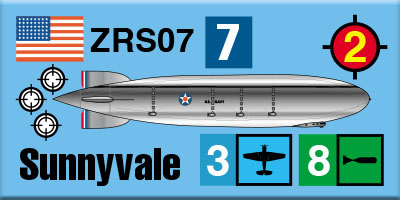
To replace the lost Akron and increase scouting capabilities, the new chief of the Navy’s Bureau of Aeronautics, Rear Admiral Ernest J. King (the future wartime Chief of Naval Operations) wanted stretched version of the lost flying carrier. This ship would have the same capabilities as Akron, simply more of them – a larger hangar for more planes, and the fuel, armaments, and parts needed to keep them flying.
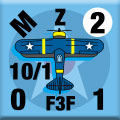 Akron crashed in April 1933, almost exactly one month after the inauguration of President Franklin D. Roosevelt. While some sources claim that Roosevelt disliked airships and in particular, the Goodyear-Zeppelin Corp. and its president, Paul Litchfield, there doesn’t seem to be much evidence for this. Asking for new airships as the new president addressed the Great Depression would have been a tough political fight whatever FDR’s views; as it stood, the King program had little support in the wake of what was at the time the worst air disaster in American history. Akron crashed in April 1933, almost exactly one month after the inauguration of President Franklin D. Roosevelt. While some sources claim that Roosevelt disliked airships and in particular, the Goodyear-Zeppelin Corp. and its president, Paul Litchfield, there doesn’t seem to be much evidence for this. Asking for new airships as the new president addressed the Great Depression would have been a tough political fight whatever FDR’s views; as it stood, the King program had little support in the wake of what was at the time the worst air disaster in American history.
Moffett, Lansdowne, and Maxfield
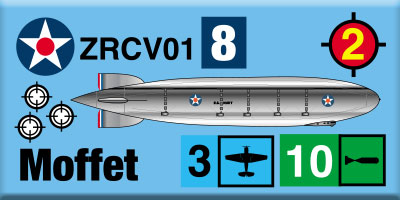
This is the true flying carrier, the ZRCV, as designed by C.P. Burgess of the Navy’s Bureau of Aeronautics. Burgess drafted a new design, rather than an improved Akron, and drew a great deal of inspiration from the then-new German passenger zeppelin Hindenburg in terms of internal structure.
 The Burgess ZRCV would have had both an internal hangar, and ventral racks to hold and launch planes externally. The former would allow her to carry a strike and scouting group of nine BT-1 dive bombers, while the external racks could carry up to five fighters for immediate launch in case of danger. The fighters couldn’t stay out there on their external racks for extended periods, or the winds would eventually damage them, but they would give the ZRCV potent immediate defense when in a combat zone as well as an independent strike capability. The Burgess ZRCV would have had both an internal hangar, and ventral racks to hold and launch planes externally. The former would allow her to carry a strike and scouting group of nine BT-1 dive bombers, while the external racks could carry up to five fighters for immediate launch in case of danger. The fighters couldn’t stay out there on their external racks for extended periods, or the winds would eventually damage them, but they would give the ZRCV potent immediate defense when in a combat zone as well as an independent strike capability.
Los Angeles

The only American airship to find a peaceful end, Los Angeles began as the Zeppelin Company’s LZ126, built as a replacement for the airships assigned to the United States as post-war reparations. Because of treaty restrictions on military airships, the Zeppelin Company built her as a passenger ship and she had passenger accommodations inside the forward part of the hull.
Los Angeles entered service in 1924, and spent the next eight years conducting experimental and training flights, showing herself across the United States, and participating in scientific experiments. The terms under which the Allied Powers had approved her sale forbade her use in any form of military exercises. She tested the concepts of launching and recovering fixed-wing aircraft in flight, and trained pilots and crew. Grounded in 1932, she briefly returned to service after the crash of Akron the next year, and spent her final days as a permanently-moored training aid before scrapping in 1939.
Niagara

Following the 1933 wreck of Akron, the Navy sought funding for two more airships: a replacement for the lost flying carrier, and a dedicated training ship that could be used for scouting in wartime, without the legal restrictions that hobbled Los Angeles. This never came to pass. “We’ve built three and lost two,” House Naval Affairs Committee Carl Vinson told the press. “You can take it from me, there won’t be any more airships built.”
Niagara’s inclusion supposes that Vinson could be charmed into funding the pair of airships. But the man most likely to accomplish that feat, Rear Admiral William Moffett, perished along with Akron and 72 others aboard.
Order Flying Carriers Here.
Use coupon code DANA for 20 percent off.
Sign up for our newsletter right here. Your info will never be sold or transferred; we'll just use it to update you on new games and new offers.
Mike Bennighof is president of Avalanche Press and holds a doctorate in history from Emory University. A Fulbright Scholar and NASA Journalist in Space finalist, he has published a great many books, games and articles on historical subjects; people are saying that some of them are actually good.
He lives in Birmingham, Alabama with his wife and three children. He misses his lizard-hunting Iron Dog, Leopold.
Daily Content includes no AI-generated content or third-party ads. We work hard to keep it that way, and that’s a lot of work. You can help us keep things that way with your gift through this link right here.
|