Solomons Naval Campaign:
Author’s Notes
by Mike Bennighof, Ph.D.
December 2025
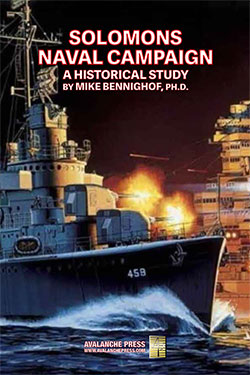 Solomons Naval Campaign is a book of history, intended as a companion to Ironbottom Sound, a scenario book that expands Second World War at Sea: South Pacific. Solomons Naval Campaign is a book of history, intended as a companion to Ironbottom Sound, a scenario book that expands Second World War at Sea: South Pacific.
In the early days of Avalanche Press, we wanted to publish works of history. That’s the real reason the company is named “Press” and not “Games.” It took us long enough, but we have the first of these out, and it’s called Solomons Naval Campaign.
Solomons Naval Campaign is the first of our Historical Studies. It’s a book of history, without any game stuff, telling the story of the American invasion of Guadalcanal in August 1942 and the Japanese response. It picks up the story with the preliminaries: Japanese construction of the Lunga Point airfield that became the centerpiece of the campaign, American plans to immediately follow up their victory at Midway. It ends with the November 1942 Battle of Tassafaronga, the last major surface action in Ironbottom Sound (the waters just north of Guadalcanal). That makes for a good spot to end the story, and it’s also where I ran out of space.
I didn’t initially plan on writing and publishing a separate book of history. We’d published a very large wargame about the invasion of Guadalcanal and the ensuing naval battles, called South Pacific, but I found that I still had more to say. We planned a scenario-and-history book called Ironbottom Sound to continue the story from South Pacific. We’ve published quite a few books on that model, but I was becoming increasingly dissatisfied with them. None of them more so than our Panzer Grenadier book, Black Panthers. I’m still enormously proud of that book, but I realized too late that the game content held it back.
The history part could not stand alone, and that greatly limited the potential audience.
Just as had been the case with South Pacific, I soon ran into space limitations with Ironbottom Sound. Even an extra book didn’t allow for all of the scenarios I wanted to include, so I chose to break it into two books, one of history and one of game stuff, giving me a little more than double the space. And that’s how Solomons Naval Campaign came to be.
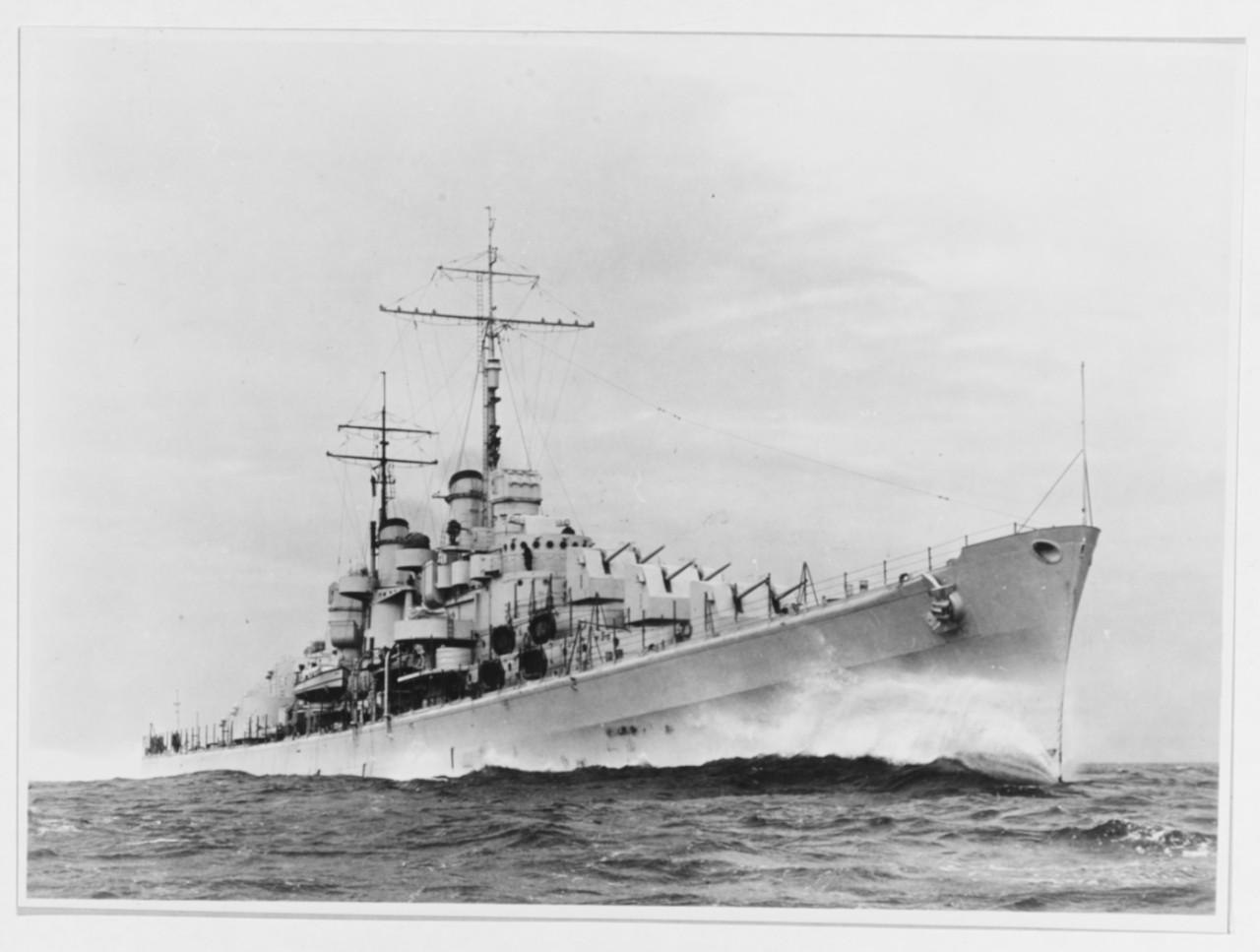
The American light anti-aircraft cruiser Atlanta.
Solomons Naval Campaign is the first book we’ve issued in a new format. Well, new to us: it’s simply the standard trade paperback size that’s been used by publishers for generations. It’s a handier size for reading than the large-format standard we use for game-related books (where you’ll want to open them wide for the scenarios, game rules or other useful stuff within). I love the feel of the book, and I’m eager to publisher another like it.
There are other books about the Solomons naval campaign, though not as many as I’d anticipated before starting this project. The preceding Battle of Midway is one of the most-studied in all of military history, but interest seems to wane afterwards. The Solomons campaign is much more interesting, to my mind, but it’s also far more complex. The Midway campaign is almost perfectly constructed for a dramatic re-telling: the Japanese plan their attack, the Americans learn of it and plan their response, the Japanese get their asses kicked, everyone goes home. The End.
In the Solomons, things are much less straightforward. The Americans launched their operation before they were really ready, and stumbled into a war-winning success, grabbing the Lunga Point airfield at just the right moment: not quite finished enough for the Japanese to use it, but almost finished enough for the Americans to put on the final touches and use it themselves. The Japanese tried to take it back repeatedly, but throughout the campaign they fell back into the mindset that would cost them the war, deploying just enough force to accomplish the mission, but not the overwhelming might to assure victory even if things went wrong.
To me, that made for a compelling story, with bravery and sacrifice on both sides, but the Americans holding a decisive edge in what really mattered: they had a clear goal and the will to pursue it. Individual leaders faltered in that pursuit, but Pacific theater commander Chester Nimitz never wavered. Well, almost never. Isoroku Yamamoto shed plenty of tears for the men trapped in the hell of Starvation Island yet still somehow fighting on. But he would not release the surface forces, including his comfortable flagship Yamato, that might have swamped the out-numbered Americans.
I’ve often preferred to write military history from the ground up, building on the stories of individuals to tell the broader narrative. It’s a good model; it lends itself to drama and I like writing drama. But for Solomons Naval Campaign, I wanted to build a more traditional military history, one centered on the movement and combat of men and planes and ships. And that has plenty of drama.
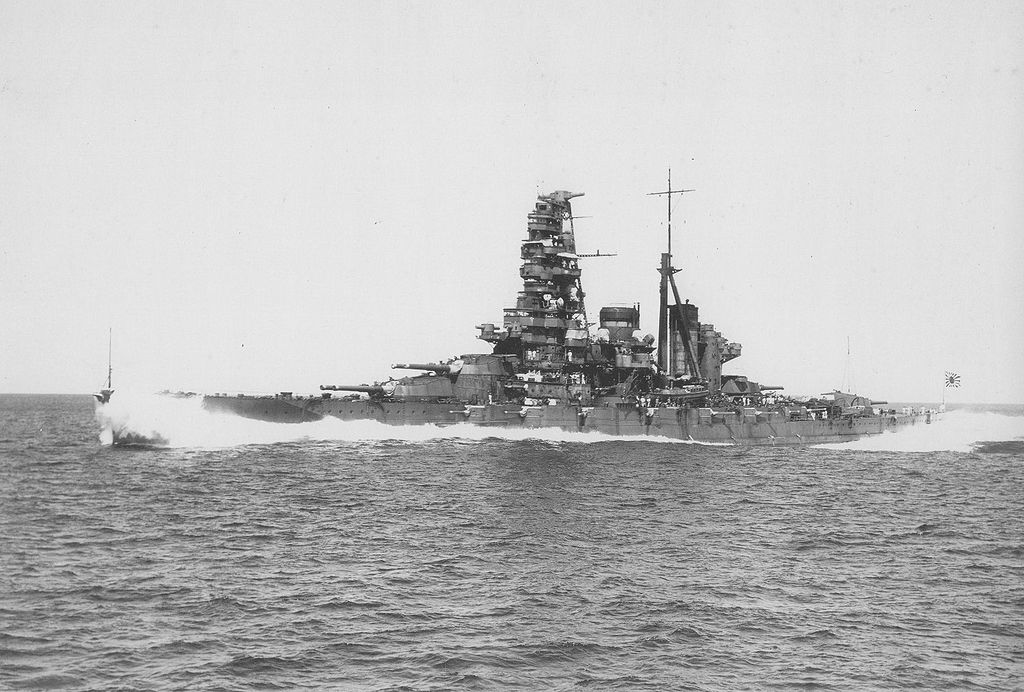
The Japanese fast battleship Hiei.
Solomons Naval Campaign is a stand-alone history, and while it’s not a game book, I also wanted it to mirror the scenarios from South Pacific and Ironbottom Sound. I built those scenarios based on reading a lot of history, and looking at a great many primary documents, and then drawing conclusions from that. So, while Solomons Naval Campaign is a straightforward history of the campaign, it’s one that emphasizes the same points that I found important in the game design. Namely, the Japanese failure to take the necessary gamble and commit all of their forces, when they had already committed themselves to the much greater wager of starting a war of choice against the United States.
The Americans made their own blunders; the cult of the seniority list reigned supreme, and men led American squadrons into battle whether they had the experience and mindset necessary to do so or not, because their promotion was dated a few days before that of the actually qualified commander. Their attitude toward their enemies swung wildly from contempt to awe and back, and helped bring on defeat more than once.
We’ll return to this story with another volume; there’s still a great deal more that I want to say. When the Japanese finally pulled out of Guadalcanal, they did so with a masterfully-executed operation that probably hasn’t gotten enough attention in the historiography (most secondary accounts simply state that they left without the Americans noticing). The Americans then began to fight their way up the Solomons chain, while the Japanese resisted. By this point they did not commit major surface forces in the face of growing American air superiority, but their lighter forces still contested the waters around the Solomons and it’s a tale well worth completing.
I don’t think the book breaks much new ground, but it does illuminate some elements of the campaign that haven’t gotten enough attention, like the disastrous practice run for the invasion held in Fiji. Solomons Naval Campaign is meant to be a readable, enjoyable account that holds up with or without the game. I think it does that very well, and think that you’ll like it.
Order Solomons Naval Campaign Here.
Companion piece to Ironbottom Sound, or just read it separately.
Order South Pacific Here.
Order Ironbottom Sound Here.
Includes Solomons Naval Campaign book.
Sign up for our newsletter right here. Your info will never be sold or transferred; we'll just use it to update you on new games and new offers.
Mike Bennighof is president of Avalanche Press and holds a doctorate in history from Emory University. A Fulbright Scholar and NASA Journalist in Space finalist, he has published a great many books, games and articles on historical subjects; people are saying that some of them are actually good.
He lives in Birmingham, Alabama with his wife and three children. He misses his lizard-hunting Iron Dog, Leopold.
Daily Content includes no AI-generated content or third-party ads. We work hard to keep it that way, and that’s a lot of work. You can help us keep things that way with your gift through this link right here.
|