The Emperor’s Sword:
Design Notes, Chapter Three
by Mike Bennighof, Ph.D.
March 2026
 In the actual Pacific War, the Japanese stood very little chance of victory. It’s not quite no chance, because they did have the enormous striking power of the First Air Fleet that could overwhelm any Allied naval force of the time. But it was a very fragile striking force; once four of its six carriers were sunk at Midway, the Empire was doomed to defeat. But through alternative history, we can provide the Japanese with a more robust fleet and see how the Pacific War might have played out. In the actual Pacific War, the Japanese stood very little chance of victory. It’s not quite no chance, because they did have the enormous striking power of the First Air Fleet that could overwhelm any Allied naval force of the time. But it was a very fragile striking force; once four of its six carriers were sunk at Midway, the Empire was doomed to defeat. But through alternative history, we can provide the Japanese with a more robust fleet and see how the Pacific War might have played out.
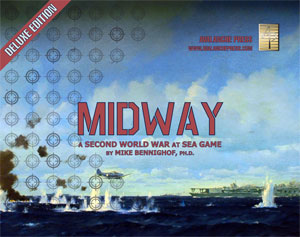
Second World War at Sea: The Emperor's Sword is an expansion set for Second World War at Sea: Medway Deluxe edition. You’ll need a copy of Midway to play any of the scenarios in The Emperor’s Sword. It comes with a map extending the operational map from Midway all the way eastwards to the U.S. West Coast. And you get 420 new pieces, adding the drawing-board aircraft carriers, cruisers, battleships and warplanes that never actually saw service. But now they do.
In the first chapter of The Emperor’s Sword, the Americans began the war with a sneak attack on the Japanese battleship fleet anchored in Pearl Harbor. In this world that never was, Hawaii is an integral prefecture of the Japanese Empire. It doesn’t go as well as hoped; running carrier battles and surface actions ensue between Hawaii and the American West Coast.
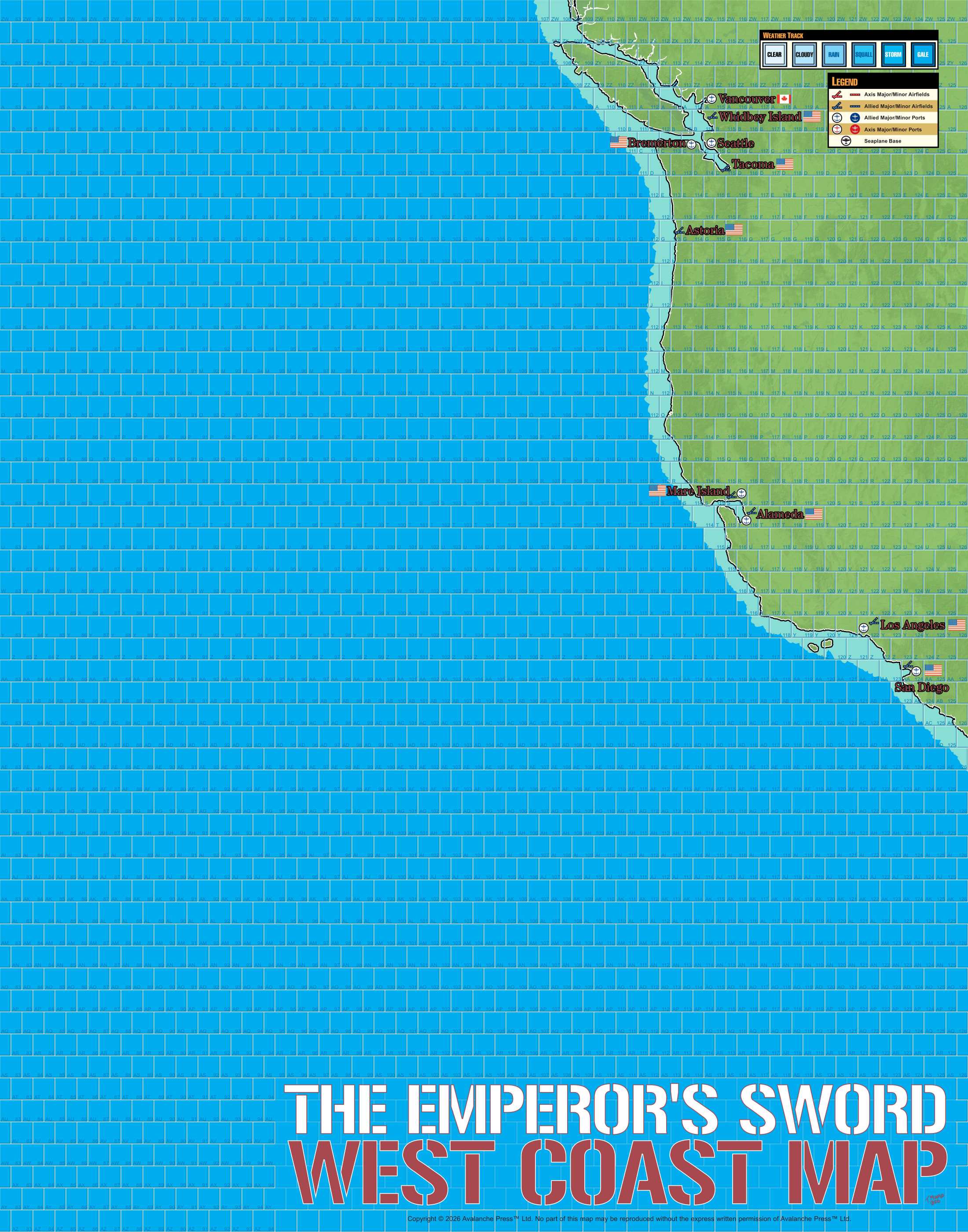 In the second chapter, the Japanese execute their long-standing plans to retaliate with a series of raids along the American coastline. This exposes the American lack of recon assets (as in, PBY flying boats), allowing Japanese super-battleships to approach and bombard the California coast. And that leads to squadrons of Yamato- and Montana-class super-battleships fighting each other. Which is what y’all want to play. In the second chapter, the Japanese execute their long-standing plans to retaliate with a series of raids along the American coastline. This exposes the American lack of recon assets (as in, PBY flying boats), allowing Japanese super-battleships to approach and bombard the California coast. And that leads to squadrons of Yamato- and Montana-class super-battleships fighting each other. Which is what y’all want to play.
But the Americans have not been passively accepting this air and naval pounding. The president demands action against Japanese territory, and the U.S. Navy is ready for this challenge. Rather than tackle the island of Oahu and its airfields packed with bombers and fighters, the initial target will be Albatross Island, what the Americans call Midway.
The Americans have brought up their Atlantic Fleet carriers for this operation, their decks brimming with new, high-performance aircraft: the TBY “Sea Wolf” torpedo bomber and the F4U Corsair fighter, known to the Japanese as “the new carrier fighter” (“Whistling Death” was an invention of the American press). The reinforcements total five Yorktown-class carriers; two of the converted Lexington-class battlecruisers have also received the new planes for their air groups.
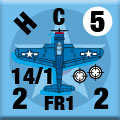
And the super-carrier has so far escaped unscathed. Lafayette, once the French passenger liner Normandie, is a behemoth: an 80,000-ton aircraft carrier as long as a Nimitz-class super-carrier, though only about half as wide. Even so, she can operate much heavier aircraft than other American flattops, and for the Midway operation she’s carrying the jet-and-piston-powered FR1 Ryan Fireball fighter and the Boeing F8B long-range multi-role fighter-bomber.
  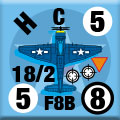 
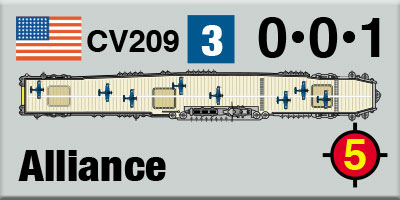
With all of the American carriers still operational after the Pearl Harbor and West Coast operations, that gives the U.S. Navy thirteen fleet carriers, plus two converted liners providing fighter cover to the battleship fleet, and two flight deck cruisers. This is a much greater example of sea-based airpower than in the historical Battle of Midway.
The Japanese have the First Air Fleet to start with, with three converted battlecruisers and two converted liners, the latter operating as fighter carriers. They’re still fielding the same aircraft as at the start of the war: A6M2 fighters, D3A1 dive bombers, and B5N2 torpedo planes. These are the same planes that fought the historical battles of Pearl Harbor and Midway.
The Second Air Fleet’s four carriers (two each of the Hiryu and Soryu classes) are hurried back from Japan, where they had been dispatched for re-fitting and to train new aircrew after the West Coast operations. They return still operating the excellent A6M2 fighter, but they’ve replaced their older attack planes with the fast but fragile D4Y dive bomber and the B6N torpedo plane. While the A6M2 Zero outclassed the Airabonita and Wildcat fighters encountered in the first operations against the Americans, it in turn is no match for the Corsair.
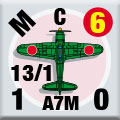
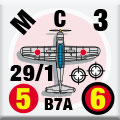
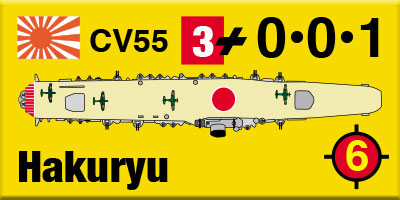
But wait, there’s more. Third Air Fleet follows, and it brings six much bigger carriers: four of the Shokaku class, and two of the Taiho class. And their decks are crammed with the newest high-performance aircraft that the Empire can offer: the A7M “Reppu” (Hurricane)” fighter and the B7A “Ryusei” (Shooting Star) attack plane. The Shooting Star may act as a torpedo bomber or a dive bomber, and it is deadly in either role. The Hurricane lacks the range or toughness of the Corsair, but it is just as deadly in air-to-air combat.
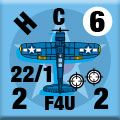 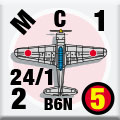 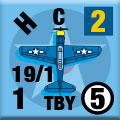 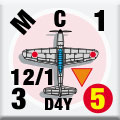
That puts the balance of power at thirteen American fleet carriers against thirteen Japanese fleet carriers. Most of the American carriers hold more planes than those of the Japanese. But while the Americans have improved, they still have not fully mastered the art of combining the air groups of multiple carriers into a single strike. That allows the Japanese to form massive airborne fists to overwhelm the American Combat Air Patrol, even when it includes the awesome Corsair.
Unlike the actual battle of Midway, both sides have brought their battleships into the combat zone and are expected to use them. Albatross Island is heavily fortified and will need to be heavily bombarded before the waves of Marines hit the beaches. And there’s simply the principle at stake here, that we gave you all of these super-battleship pieces, so you’d damned well better have a chance to use them on the game table.
The scenarios have the Americans make their approach, fight off the First Air Fleet, and land on Midway after a tremendous battleship bombardment. That brings out all of the Japanese forces: the Second and Third Air Fleets from the Home Islands, and the battleship fleet from Pearl Harbor. A series of fierce battles, both air and surface, culminates in the clash of Third Air Fleet’s modern new planes with those of the American Task Force 13. It’s sort of like the Battle of Midway if both sides had had three times as many ships and planes. Unlike the real thing, with that many task forces on the sea and that many planes out looking for them, there’s almost certain to be contact, and therefore battle.
I like to think that The Emperor’s Sword meets its design brief exceedingly well: to tell a compelling story via the wargame format and also provide exciting game play while doing so. It’s in some ways a story similar to that of the Battle of Jutland: the fleets of the world’s two leading industrial powers finally meet, with all of the latest weaponry and ships that their respective nations’ engineers and factories can put into their hands.
You are in for wargame fun.
Order The Emperor’s Sword Here.
Sign up for our newsletter right here. Your info will never be sold or transferred; we'll just use it to update you on new games and new offers.
Mike Bennighof is president of Avalanche Press and holds a doctorate in history from Emory University. A Fulbright Scholar and NASA Journalist in Space finalist, he has published an unknowable number of books, games and articles on historical subjects.
He lives in Birmingham, Alabama with his wife and three children.
Want to keep Daily Content free of third-party ads? You can send us some love (and cash) through this link right here.
|