Pacific Armor:
Scenario Preview, Chapter Four
by Mike Bennighof, Ph.D.
March 2026
 One thing becomes crystal clear when working on a game about the Pacific War’s tactical level battles between Japan and the United States: it was a brutal conflict that Japan lost decisively. Japanese casualties in every battle, even those they won, were simply enormous. One thing becomes crystal clear when working on a game about the Pacific War’s tactical level battles between Japan and the United States: it was a brutal conflict that Japan lost decisively. Japanese casualties in every battle, even those they won, were simply enormous.
Japan did not have the resources to match an industrial powerhouse like the United States. And what resources the Empire did possess, went first to the naval and air forces. The Imperial Army made do with the leftovers, and you can see the results right on your Panzer Grenadier cardboard battlefield: the Japanese are brave and often well led, but they do not have the firepower of the Americans. They lack the tanks, the artillery, and the automatic weapons.
Panzer Grenadier: Pacific Armor looks closely at the one battle in the Pacific War when they did have the tanks, the struggle for Luzon’s central valley in January and February 1945. Even then, the tanks stood at a terrible quality disadvantage. The Japanese tried to compensate for that; let’s see what they did in Chapter Four:
Chapter Four
Battle of Muňoz
While the 25th Infantry Division pressed down Highway 8, the 6th Infantry Division advanced on the same target from the south-west, up the Manila Railroad to its terminus at San Jose. The 6th Infantry Division spent the years after the Great War as a training command, until activation as a combat division in late 1939. It included the 1st, 20th, and 63rd Infantry Regiments, all of them regular outfits. For the first several years of the war, the 6th Infantry Division functioned as an experimental unit, testing out concepts of a fully-motorized and of a mechanized infantry division before it set out for the South Pacific in 1944 and trained for jungle warfare. After a brief exposure to combat in New Guinea, it landed in Lingayen Gulf on 9 January 1945, part of the first wave.
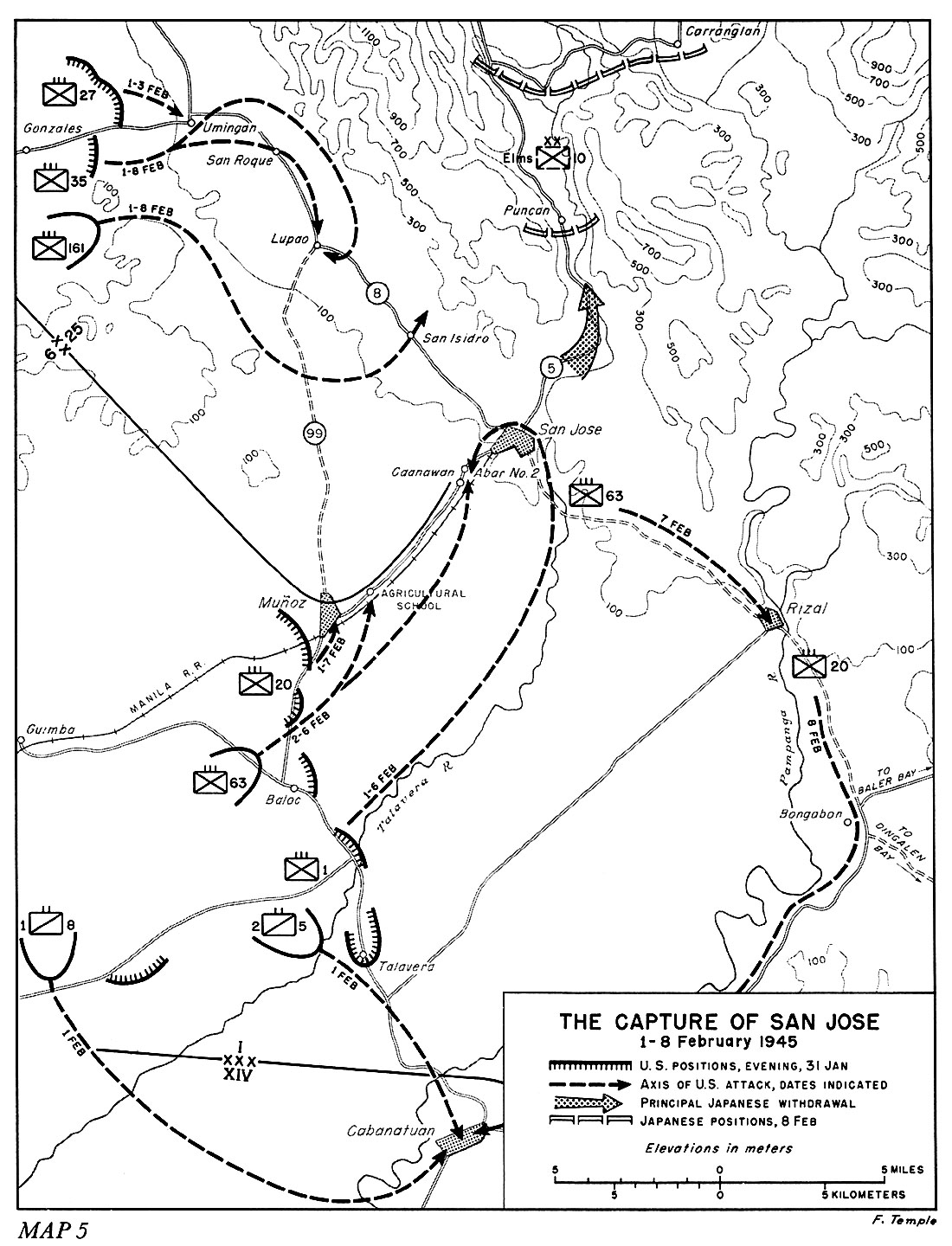
The battles at Lapao and Muňoz. Open in new tab to embiggen the image.
Like other American infantry divisions, the 6th had attached tank and tank destroyer battalions but no organic armor of its own. Its men lacked the extensive combat experience of the Tropic Lightning division, and though the division had been activated before the war, it had given up many of its trained cadre to form six other divisions over the years that followed. They would now be asked to force the gateway to the Cagayan Valley.
Scenario Sixteen
Roadblock at Muňoz
1 February 1945
 The Japanese defended Muňoz with a strong force of infantry, armor, and anti-tank guns. As had been the case at Lupao, they gave much less attention to guarding their flanks – and as at Lupao, the Americans obliged them by coming straight at their defenses. The ground around the town offered little cover, and the Japanese had prepared their defenses well for both tanks and infantry. The Japanese defended Muňoz with a strong force of infantry, armor, and anti-tank guns. As had been the case at Lupao, they gave much less attention to guarding their flanks – and as at Lupao, the Americans obliged them by coming straight at their defenses. The ground around the town offered little cover, and the Japanese had prepared their defenses well for both tanks and infantry.
Conclusion
A rain of Japanese fire, including the rarely seen howitzer batteries, kept the Americans from even reaching the outskirts of town. The open ground provided little cover, and the Japanese had dug in their tanks so that only the turret showed above-ground. The swift capture of Muňoz demanded by division commander Edward Patrick (who would, six weeks later, become the second of three American division commanders killed in action during the war) would not become reality.
Notes
This is by far the largest scenario in Pacific Armor, and one of the largest we’ve published for the Pacific theater. Masses of troops and tanks brawl across all three non-beach maps (well, the American tanks do some brawling, the Japanese are probably dug in).
Scenario Seventeen
Ruins of Muňoz
6 February 1945
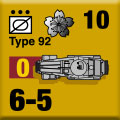 Days of steady, grinding combat had brought the Americans to the edge of Muňoz, but still the Japanese steadily held out. About half of the defending troops had been killed or wounded, and perhaps half of their tanks knocked out. That doesn’t seem to have broken their will to resist; while their fire slackened, it didn’t cease. With the broken town almost in their grasp, the Americans made one more attempt to seize it. Days of steady, grinding combat had brought the Americans to the edge of Muňoz, but still the Japanese steadily held out. About half of the defending troops had been killed or wounded, and perhaps half of their tanks knocked out. That doesn’t seem to have broken their will to resist; while their fire slackened, it didn’t cease. With the broken town almost in their grasp, the Americans made one more attempt to seize it.
Conclusion
Patrick had sacked the 20th Infantry’s commander, Col. Washington Ives, but still didn’t get the results he desired. If he couldn’t capture the town, then he would destroy it. The new planned called for heavy artillery bombardments and massive air strikes including napalm. But the Japanese were making their own plans for Muňoz.
Notes
The Americans have inched closer to Muňoz, but they’ve paid a price for the rice paddies and mud flats. Meanwhile the Japanese have been pretty thoroughly pulverized but don’t seem to understand that they’ve lost this battle. So they’re going to keep fighting.
Scenario Eighteen
Escape from Muňoz
7 February 1945
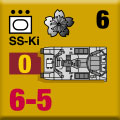 The Japanese Ida Detachment, defending Muňoz, had already lost most of its strength and the town around them had been flattened. But they had greatly delayed the Americans, which had been their task, and now they would attempt to slip away. But the Americans had already slipped behind the Japanese. The Ida Detachment would have to fight its way free. The Japanese Ida Detachment, defending Muňoz, had already lost most of its strength and the town around them had been flattened. But they had greatly delayed the Americans, which had been their task, and now they would attempt to slip away. But the Americans had already slipped behind the Japanese. The Ida Detachment would have to fight its way free.
Conclusion
The fearsome Battle of Muňoz ended with a whimper; the Japanese apparently did not realize that their escape route (Highway 5) had already fallen into American hands. Only a handful of survivors, and none of the tanks or other vehicles, made it to Japanese lines. But they had done their job, keeping the Americans held up for six days when their division command had expected to take the town in less than 24 hours.
Notes
It’s another escape scenario; the Japanese actually have a reasonably force to try to bop their way past the Americans, but there are Americans all over the place. This is going to be tough on the Emperor’s tank soldiers.
Order Pacific Armor Here.
Please allow an extra six weeks for delivery.
Order Saipan 1944 Here.
Please allow an extra six weeks for delivery.
Sign up for our newsletter right here. Your info will never be sold or transferred; we'll just use it to update you on new games and new offers.
Mike Bennighof is president of Avalanche Press and holds a doctorate in history from Emory University. A Fulbright Scholar and NASA Journalist in Space finalist, he has published a great many books, games and articles on historical subjects; people are saying that some of them are actually good.
He lives in Birmingham, Alabama with his wife and three children. He misses his lizard-hunting Iron Dog, Leopold.
Daily Content includes no AI-generated content or third-party ads. We work hard to keep it that way, and that’s a lot of work. You can help us keep things that way with your gift through this link right here.
|