Pacific Armor:
Scenario Preview, Chapter Five
by Mike Bennighof, Ph.D.
March 2026
 Jay Townsend submitted the expansion book that became Panzer Grenadier: Pacific Armor as a set of scenarios drawn from the 1945 Battle of Luzon between the Japanese 2nd Tank Division, and the various American infantry divisions that ground it into scrap metal. I thought it pretty interesting, but I also thought that it needed more tanks. Jay Townsend submitted the expansion book that became Panzer Grenadier: Pacific Armor as a set of scenarios drawn from the 1945 Battle of Luzon between the Japanese 2nd Tank Division, and the various American infantry divisions that ground it into scrap metal. I thought it pretty interesting, but I also thought that it needed more tanks.
So I made some changes, adding Elsenborn Ridge as a required game (so that Pacific Armor didn’t need so many extra American pieces that hard-core players already had on their shelves), and replacing those extra Americans with more Japanese tanks. The new models either held back for homeland defense, or not yet fully in service.
And in Chapter Five, you get to play with them. Let’s look at the scenarios.
Chapter Five
The Emperor’s Tanks
In June 1943, the Japanese War Ministry directed that all resources – raw materials, factory space, labor, even design bureaus – be directed toward warships and aircraft. Tanks, artillery, and motor vehicles would continue to be manufactured, but with much lower priority.
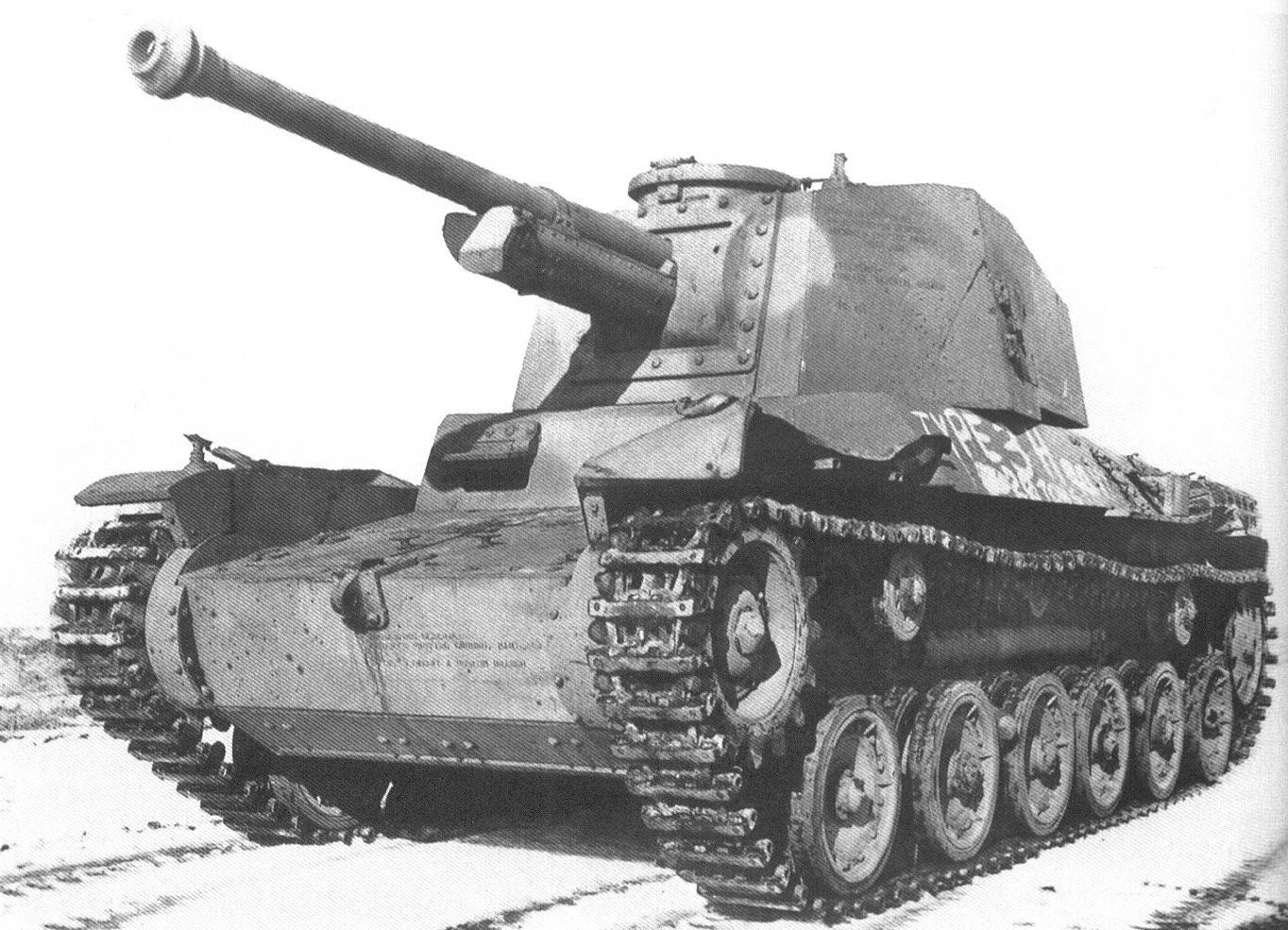
A captured example of the Type 3 Chi-Nu medium tank.
That left Japanese tank development stunted, and the Shinhoto Chi-Ha medium tanks that greeted the Americans on Saipan and Luzon were the vehicles developed to counter the Soviet BT-7 and T-26 tanks encountered at Nomonhan in the summer of 1939. Newer tanks would only be manufactured in small numbers and held back for the defense of Japan itself. A reluctance to see these rare specimens sent to the bottom of the Pacific by American submarines probably played a role as well.
In this chapter, you get to use these tanks in the Battle of Luzon. None of these battles actually took place.
Scenario Nineteen
Abrupt Meeting in the Central Valley
January 1945
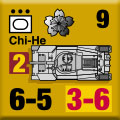 American air reconnaissance reported the presence of tanks behind the Lingayen Gulf beaches; signal intelligence made the 2nd Tank Division’s equipment to be the Type 97 Shinhoto Chi-Ha. The fighting on Saipan had already shown Japan’s best tank to be small, under-armed and thoroughly outdated. The separate tank destroyer battalions attached to the American infantry divisions should be sufficient to deal with any Japanese armor. American air reconnaissance reported the presence of tanks behind the Lingayen Gulf beaches; signal intelligence made the 2nd Tank Division’s equipment to be the Type 97 Shinhoto Chi-Ha. The fighting on Saipan had already shown Japan’s best tank to be small, under-armed and thoroughly outdated. The separate tank destroyer battalions attached to the American infantry divisions should be sufficient to deal with any Japanese armor.
Conclusion
While the new Japanese tanks were far more capable than the Type 97 (even with its improved turret), the best of them (the Type 4 Chi-To) still only barely matched the American Sherman tank. Were the Japanese to have success, they would need to overwhelm with numbers. The Americans did not deploy an armored division to the Pacific theater; the shipping burden made this nearly impossible. The Japanese would therefore face only the separate tank and tank destroyer battalions assigned for infantry support.
Notes
We lead off with a mass meeting engagement on the flat plains of Luzon. Not exactly tank country, with all those rice paddies, but about as open as the ground is going to get. The Japanese have many more tanks, but the Americans have the can openers they need to smack them around.
Scenario Twenty
Lingayen Beachhead
January 1945
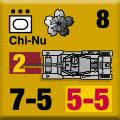 In the historical campaign, the Japanese did not contest the American landings in Lingayen Gulf, making their stand inland instead. With an armored division deployed behind the beaches, well-hidden from American aircraft and equipped with more modern tanks, the option of a powerful counterattack would have been on the table. In the historical campaign, the Japanese did not contest the American landings in Lingayen Gulf, making their stand inland instead. With an armored division deployed behind the beaches, well-hidden from American aircraft and equipped with more modern tanks, the option of a powerful counterattack would have been on the table.
Conclusion
While the Japanese might be able to overwhelm an American beachhead with an armored attack, it would be a far more difficult thing to do so in the face of American naval gunfire. Even Japan’s new almost-good tanks had no defense against 8-inch cruiser shells.
Notes
A mass Japanese tank attack on the American beachhead. This is a huge scenario, with the Americans strung along a wide arc of sand and the Japanese able to concentrate their force as they choose. Opportunities abound for tank-on-tank action.
Scenario Twenty-One
Stout Defense at Muňoz
February 1945
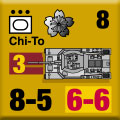 The Japanese 2nd Tank Division, equipped with 220 desperately-outclassed Type 97 Shinhoto medium tanks, dug them in as immobile steel pillboxes rather than expose them to the deadly firepower of American tanks. With tanks that could stand up to those of the Americans, those decisions might have been somewhat different. And that would have given the Americans a very different problem to solve. The Japanese 2nd Tank Division, equipped with 220 desperately-outclassed Type 97 Shinhoto medium tanks, dug them in as immobile steel pillboxes rather than expose them to the deadly firepower of American tanks. With tanks that could stand up to those of the Americans, those decisions might have been somewhat different. And that would have given the Americans a very different problem to solve.
Conclusion
Armor superiority on the battlefield would also require air superiority over it, else the Japanese tanks would become so many targets for American pilots. Even then, the shiny new Chi-Nu would have to approach the Sherman very carefully when on the attack (or counterattack).
Notes
The Japanese are defending, but they can call on powerful armored reinforcements to try to sweep the Americans off the battlefield. Powerful is a relative term; the Japanese get a great many tanks, and they’ll need them to swarm the Shermans.
Scenario Twenty-Two
Counterattack at Muňoz
February 1945
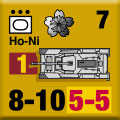 With the American advance halted, the next step fr the Japanese would be to attack them. This might not have been the best decision in terms of the wider campaign, but the 2nd Tank Division had tasted victory and now would push the enemy back as the first step toward defeating the invasion. With the American advance halted, the next step fr the Japanese would be to attack them. This might not have been the best decision in terms of the wider campaign, but the 2nd Tank Division had tasted victory and now would push the enemy back as the first step toward defeating the invasion.
Conclusion
Japanese armored divisions had only seen combat against the poorly-armed Chinese when the Americans invaded Luzon in January 1945. By this point in the war, other armies had discovered that their tanks needed plentiful infantry to accompany them (the Russians would re-discover this lesson in 2022). The Japanese armored divisions, in contrast, had very little motorized infantry.
Notes
This time it’s a set-piece attack, with the Americans dug in and the Japanese on the attack, backed by plentiful armor. But as the Conclusion hints, the American infantry has strong firepower and plentiful bazookas – which might not brew up a Tiger tank, but are plenty potent against a Chi-To.
Order Pacific Armor Here.
Please allow an extra six weeks for delivery.
Order Saipan 1944 Here.
Please allow an extra six weeks for delivery.
Sign up for our newsletter right here. Your info will never be sold or transferred; we'll just use it to update you on new games and new offers.
Mike Bennighof is president of Avalanche Press and holds a doctorate in history from Emory University. A Fulbright Scholar and NASA Journalist in Space finalist, he has published a great many books, games and articles on historical subjects; people are saying that some of them are actually good.
He lives in Birmingham, Alabama with his wife and three children. He misses his lizard-hunting Iron Dog, Leopold.
Daily Content includes no AI-generated content or third-party ads. We work hard to keep it that way, and that’s a lot of work. You can help us keep things that way with your gift through this link right here.
|