South Pacific:
Shokaku-Class Carriers, Part Two
by Mike Bennighof, Ph.D.
August 2025
 When Shigeyoshi Inoue, commanding Fourth Fleet and charged with the occupation of Port Moresby and the Solomons, asked Combined Fleet commander Isoroku Yamamoto for increased carrier support, Yamamoto initially offered the carrier Kaga. Kaga would not complete repairs to her hull from reef damage in time to participate, and Inoue, the former chief of naval aviation, wanted more carrier planes anyway. So Yamamoto gave him the Fifth Carrier Division. When Shigeyoshi Inoue, commanding Fourth Fleet and charged with the occupation of Port Moresby and the Solomons, asked Combined Fleet commander Isoroku Yamamoto for increased carrier support, Yamamoto initially offered the carrier Kaga. Kaga would not complete repairs to her hull from reef damage in time to participate, and Inoue, the former chief of naval aviation, wanted more carrier planes anyway. So Yamamoto gave him the Fifth Carrier Division.
The Japanese would declare the Battle of the Coral Sea that resulted from the operation a tremendous victory, as they lost one light carrier (Shoho) but sank an American heavy carrier (Lexington) and damaged another (Yorktown; the Japanese believed she had been sunk as well). Arrogance and complacency now dominated the staffs at both Combined Fleet and First Air Fleet; the second-rate Fifth Carrier Division had defeated the best the Americans had to offer. “Even a bastard could have won,” staffers told one another.
Zuikaku, considered a lucky ship, suffered no damage, but her air group was shattered with over one-third of her aircraft lost (23 of 63, with crews lost as well from 14 of the planes). Shokaku suffered fewer losses to planes and aircrew, but took three bomb hits that caused extensive damage. The two carriers returned to Japan, with Shokaku almost capsizing along the way.
Bureaucratic inertia slowed the re-constitution of Zuikaku’s air group, and she did not sail with the rest of the First Air Fleet for the invasion of Midway in June 1942. While many reasons have been given for this in secondary works trying to explain the inexplicable, the true reason seems to be that First Air Fleet’s staff simply did not think that they needed Zuikaku and so did not press for her air group to be rushed into readiness. If two carriers with less-capable air groups had wiped out the American carriers at Coral Sea, then four of them with their crack fliers would exterminate whatever the Americans could send against them.
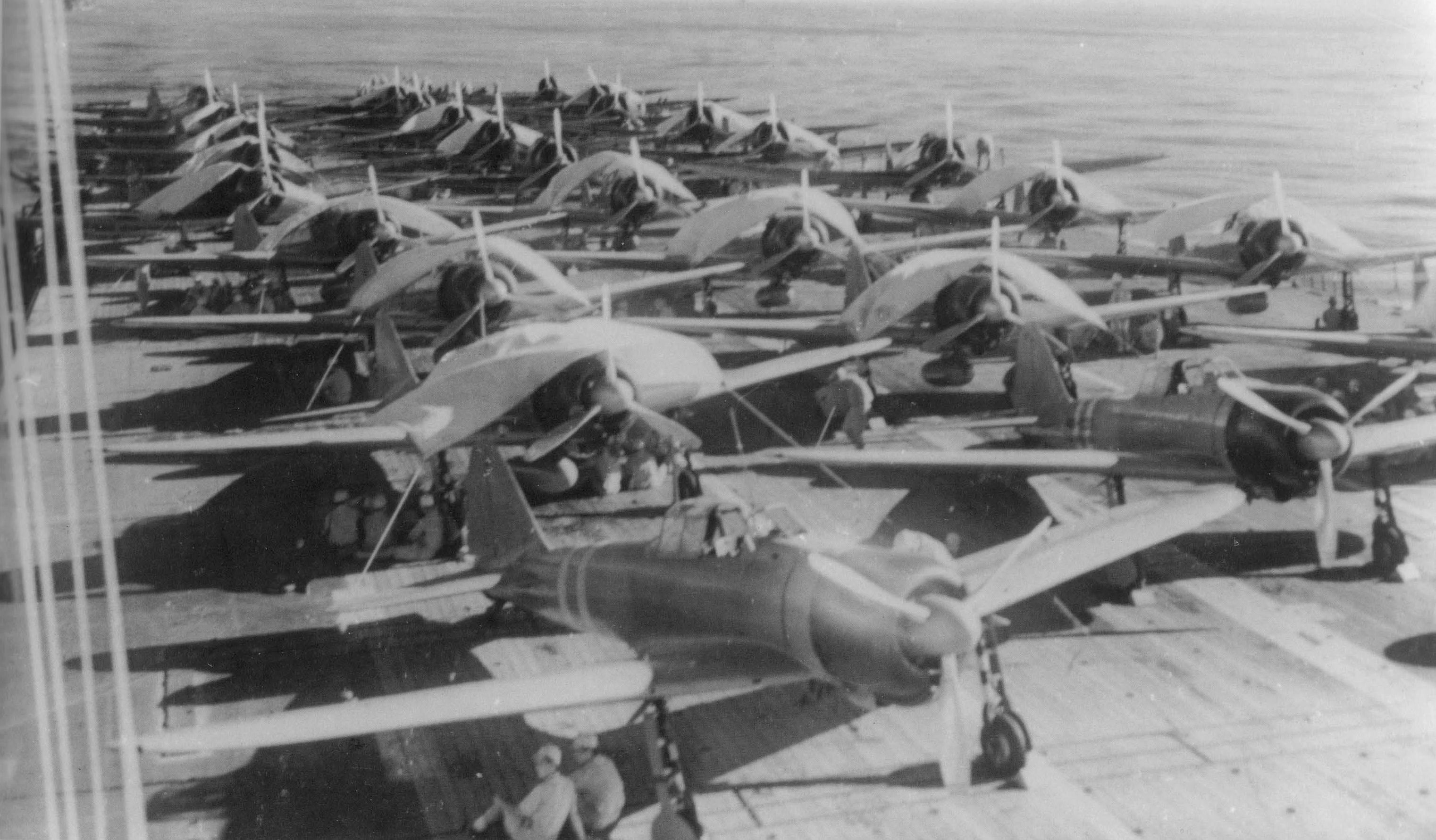
Zuikaku prepares to launch her planes before the Battle of the Coral Sea. 5 May 1942
.
It actually turned out the other way around, with the Japanese losing all four of the heavy carriers brought to Midway by First Air Fleet. Zuikaku sortied a few days after the battle, probing into waters south of the Aleutians in search of suspected American movements there. An air group had been flung together from the remnants of her own squadrons; most of the spare planes and pilots had already been flung together to provide an air group for the new carrier Junyo.
The Imperial Japanese Navy’s execution of the Pacific War is replete with examples of magical thinking; one of many is the expectation that Japanese industry would suddenly begin turning out sufficient aircraft to re-fill the carriers’ hangar decks. That resulted in a marked reluctance to put together ad hoc squadrons, or fly the planes from one carrier off the deck of another. Carrier air groups were considered part of the ship’s crew, and each plane had its own air crew, one crew to one plane. American squadrons easily shifted from carrier to carrier; Japanese squadrons did not.
Both carriers spent weeks in training aircrew after Shokaku’s return to service, before deploying to Truk in August 1942 to counter the American landings on Guadalcanal. Along with new flight-school graduates, both carriers also received hardened veterans who’d survived the inferno of Midway (the Naval General Staff wished to send these men as far from Japan as possible, to keep the extent of the disaster at Midway hidden from the Japanese public). A very definite pecking order existed among the Japanese carriers, and Shokaku and Zuikaku now had first pick of officers and crewmen, with the light carriers receiving the men who had been passed over.
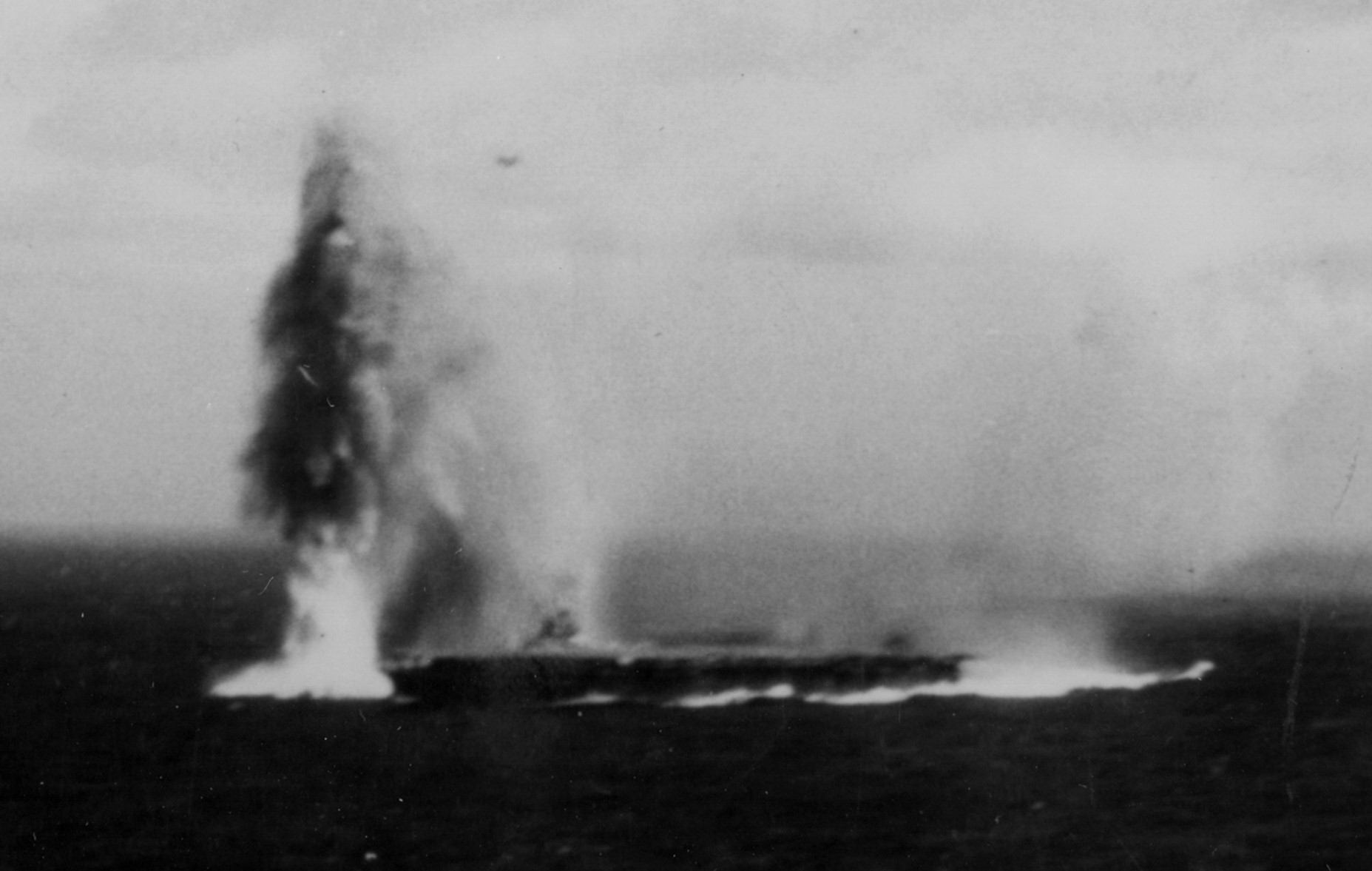
Shokaku under attack during the Battle of the Coral Sea.
Revised Japanese doctrine added more fighters to carrier air groups, and a light carrier to each carrier division to carry still more fighters. The new doctrine quickly crumbled at the August 1942 Battle of the Eastern Solomons, with the light carrier Ryujo detached by Yamamoto for futile strike mission that only resulted in her destruction. The lack of her fighters helped American strike aircraft break through the Japanese Combat Air Patrol, but they missed Shokaku. They never spotted the lucky Zuikaku. However, both carriers again suffered heavy losses to planes and aircrew.
They undertook a lengthy sortie in September, looking for the Americans, who also sent their carriers out, but neither side found the other. They did the next month, when the Battle of the Santa Cruz Islands saw the American carrier Hornet sunk and Shokaku suffer six hits from Hornet’s dive bombers. Once again, Zuikaku completely escaped American attack. Each carrier lost half of its aircraft, along with most of the irreplaceable aircrew aboard the planes.
This time, the damage to Shokaku took seven months to repair. Zuikaku also returned to Japan to train new aircrew, coming back to the Solomons in late January 1943 to cover the evacuation of Guadalcanal. She left again in the spring, leaving behind much of her air strength – after painstakingly re-creating an air group of carrier-qualified aircrew, the Japanese Naval General Staff threw them into the bitter attritional air war from land bases in the Solomons.
The sisters re-united in July 1943, and undertook several failed interceptions of the American carrier groups raiding the Japanese-held islands in the Central Pacific. In November 1943 they again detached their air groups to defend Rabaul, a move that cost over half of the aircraft involved. Once again, the training cycle started up.
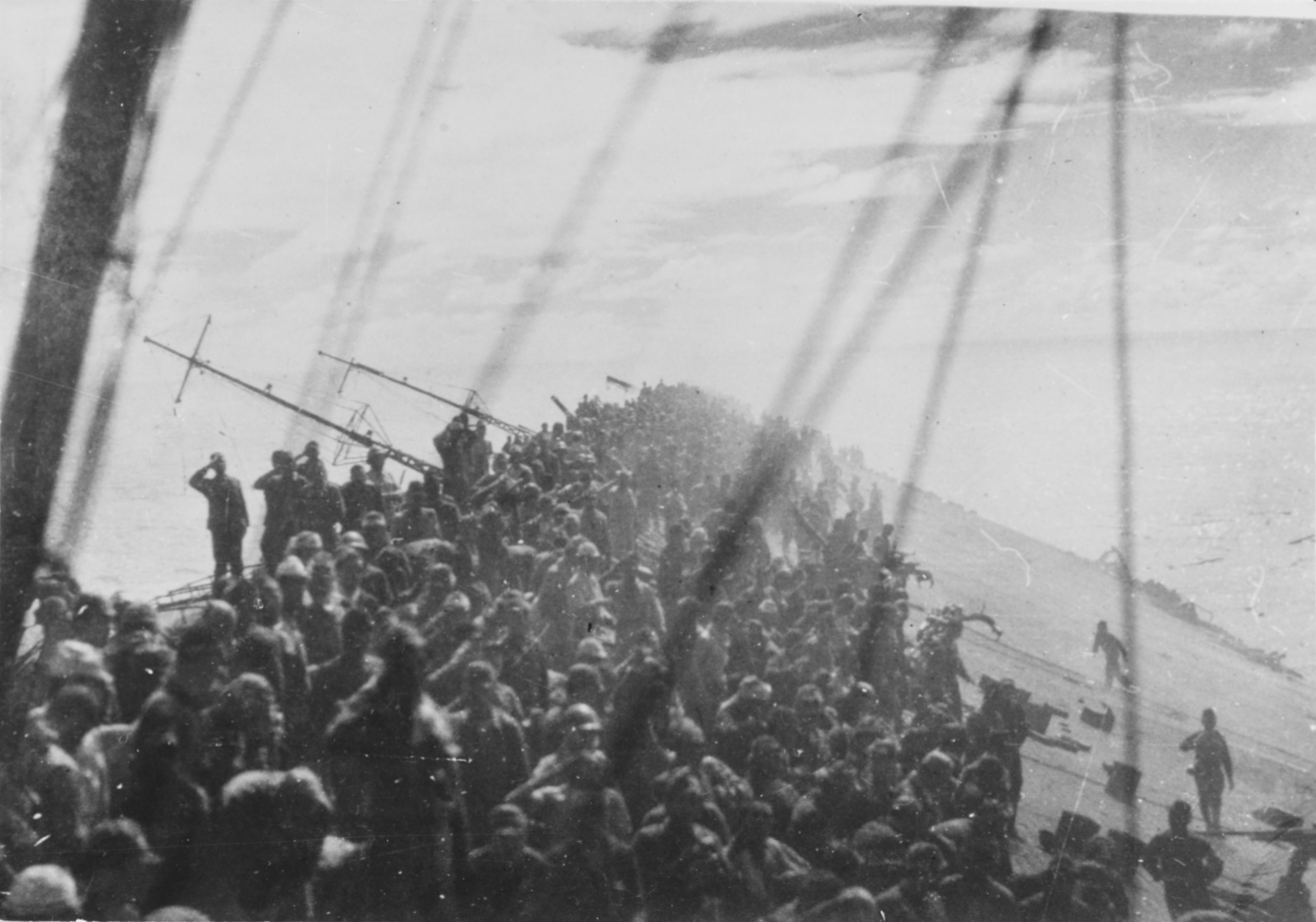
Zuikaku's crew salutes the Rising Sun Ensign one final time.
In June 1944, both carriers, along with the new heavy carrier Taiho, sortied to intercept the American fleet invading the Mariana Islands. American submarines sank both Shokaku and Taiho, while Zuikaku was damaged by a bomb for the first time in the war. Japan’s luck was running out alongside Zuikaku’s. Zuikaku would be sunk in October during the Battle of Leyte Gulf, hit by seven bombs and seven torpedoes.
The Imperial Navy garnered a much greater return on their investment in the Shokaku class than in the contemporary Yamato class of super battleships. They bore the chief burden of Japanese carrier power for two years after the Battle of Midway, a role that could not be filled by the converted liners and seaplane carriers that made up the rest of the Imperial Navy’s carrier force.
Their weaknesses lay outside their design or their crews. First, the failure to make a matching investment in aircrew training and aircraft production. The big, expensive carriers spent months out of active service because Japan could not provide adequate numbers of planes and pilots. They never went into action with their full allotment of aircraft after Pearl Harbor. Second, the fateful decision to split the First Air Fleet allowed Japan’s mighty carrier force to be defeated in detail while pursuing useless strategic goals (like the capture of Midway Island).
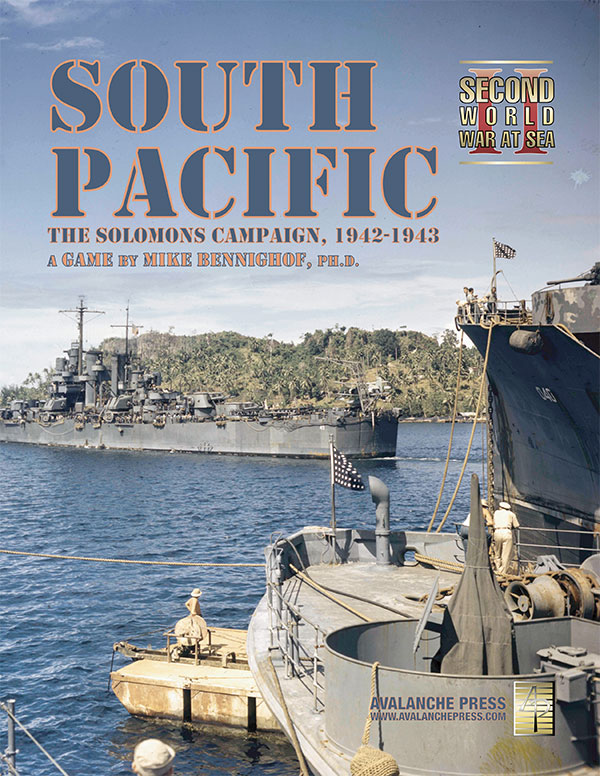
Shokaku and Zuikaku feature in almost all of the Second World War at Sea games set in the Pacific theater: Midway, South Pacific, Coral Sea, and Eastern Fleet (they do not show up in Java Sea). The massive alternative-history expansion set The Emperor’s Sword has two sister ships, projected but never funded, let alone laid down.
Order South Pacific Here.
Ironbottom Sound is a scenario book that expands Second World War at Sea: South Pacific. It comes with 36 new scenarios for South Pacific, extending the story through August 1943 and the campaign for New Georgia. All of the maps and pieces needed are included in South Pacific; the companion history book, Solomons Naval Campaign, comes bundled with Ironbottom Sound.
Order Ironbottom Sound Here.
Includes Solomons Naval Campaign book.
Order Solomons Naval Campaign Here.
Companion piece to Ironbottom Sound, or just read it separately.
Sign up for our newsletter right here. Your info will never be sold or transferred; we'll just use it to update you on new games and new offers.
Mike Bennighof is president of Avalanche Press and holds a doctorate in history from Emory University. A Fulbright Scholar and NASA Journalist in Space finalist, he has published a great many books, games and articles on historical subjects; people are saying that some of them are actually good.
He lives in Birmingham, Alabama with his wife and three children. He misses his lizard-hunting Iron Dog, Leopold.
Daily Content includes no AI-generated content or third-party ads. We work hard to keep it that way, and that’s a lot of work. You can help us keep things that way with your gift through this link right here.
|