| Saipan 1944:
Publisher’s Preview
By Mike Bennighof, Ph.D.
May 2025
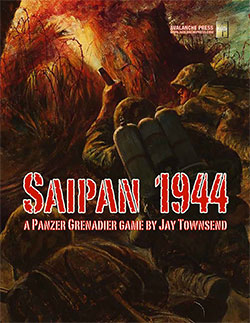
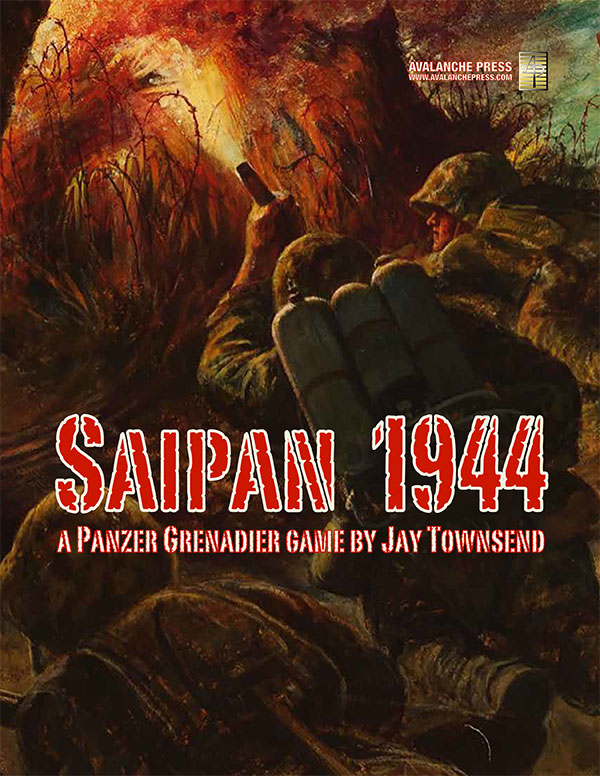 Within the wargame industry, Land War in Asia is traditionally held to be a tough sell. Panzer Grenadier: Saipan 1944 has been a pleasant exception to that rule, becoming one of the series’ most popular titles. Beautiful maps help, as well as a set of 40 of intense battles between elite infantry forces in fearsome defensive terrain. Within the wargame industry, Land War in Asia is traditionally held to be a tough sell. Panzer Grenadier: Saipan 1944 has been a pleasant exception to that rule, becoming one of the series’ most popular titles. Beautiful maps help, as well as a set of 40 of intense battles between elite infantry forces in fearsome defensive terrain.
Saipan 1944 was the last Panzer Grenadier game that had never received a full update to the Fourth Edition of the series rules. When it came time to transition from boxed to Playbook format, that gave us the opportunity to update all of the scenarios to the new standard (since the book has to be laid out all over again for the new format; they’re just different enough that the old layouts can’t be used again – if you must know, it’s the extra space down the gutter for the staples).
 Saipan 1944 had a solid underlying design; the use of geomorphic maps to display the terrain of what is not a very large island was a brilliant innovation. But it is 12 years old at this point, and during those intervening years, a great deal of Japanese-language scholarship on the campaign has become available online. I became aware of this when I worked on Second World War at Sea: Java Sea, and delved into it for the Saipan rebuilding. Saipan 1944 had a solid underlying design; the use of geomorphic maps to display the terrain of what is not a very large island was a brilliant innovation. But it is 12 years old at this point, and during those intervening years, a great deal of Japanese-language scholarship on the campaign has become available online. I became aware of this when I worked on Second World War at Sea: Java Sea, and delved into it for the Saipan rebuilding.
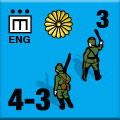 That changed a number of scenarios; some of them had Japanese heavy weapons right on the map that the Japanese version makes very clear were firing from what would be locations off the game board. Others had Japanese Army units fighting battles actually waged by the Imperial Navy’s ground forces (the Marine Corps official history claims that the Japanese Navy forces had been wiped out fighting on the beaches). That changed a number of scenarios; some of them had Japanese heavy weapons right on the map that the Japanese version makes very clear were firing from what would be locations off the game board. Others had Japanese Army units fighting battles actually waged by the Imperial Navy’s ground forces (the Marine Corps official history claims that the Japanese Navy forces had been wiped out fighting on the beaches).
 Between added historical knowledge and the need to check every scenario for compliance with the Fourth Edition series rules, I worked over every scenario (the rules editions aren’t hugely different, but the scenarios still needed to be checked to make sure). Some changed only a little; some received radical overhauls. One got thrown out and replaced by a completely new one. Between added historical knowledge and the need to check every scenario for compliance with the Fourth Edition series rules, I worked over every scenario (the rules editions aren’t hugely different, but the scenarios still needed to be checked to make sure). Some changed only a little; some received radical overhauls. One got thrown out and replaced by a completely new one.
 Saipan is an island in the middle of the Pacific Ocean. It’s not very large as islands go, but much more substantial than the coral atolls of the Central Pacific. It came under Japanese rule in 1919, and had slowly developed as an outpost of the Empire, with a civilian population and a handsome capital, Garapan, dubbed the “Tokyo of the South Seas.” In 1944 it hosted a sugar industry, and Imperial General Headquarters had determined to hold the island. Saipan is an island in the middle of the Pacific Ocean. It’s not very large as islands go, but much more substantial than the coral atolls of the Central Pacific. It came under Japanese rule in 1919, and had slowly developed as an outpost of the Empire, with a civilian population and a handsome capital, Garapan, dubbed the “Tokyo of the South Seas.” In 1944 it hosted a sugar industry, and Imperial General Headquarters had determined to hold the island.
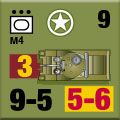 Japanese naval intelligence correctly identified Saipan as an American target. What they missed was the date; they forecast an American invasion in October 1944. Imperial General Headquarters began sending reinforcements to the island: troops, tanks, heavy guns, building materials, and construction teams to emplace the weaponry and build the fortifications. By this point in the war, the Japanese had finally recognized the need for specialized construction units that could operate under battlefield conditions. The ships that brought the men and materiel returned with civilians, though this started only in the weeks just before the invasion. Japanese naval intelligence correctly identified Saipan as an American target. What they missed was the date; they forecast an American invasion in October 1944. Imperial General Headquarters began sending reinforcements to the island: troops, tanks, heavy guns, building materials, and construction teams to emplace the weaponry and build the fortifications. By this point in the war, the Japanese had finally recognized the need for specialized construction units that could operate under battlefield conditions. The ships that brought the men and materiel returned with civilians, though this started only in the weeks just before the invasion.
 American submarines disrupted the flow, and many troops arrived on the island with literally just the clothes on their backs after their transports had been torpedoed. Others did not arrive at all. The Americans would find heavy coast-defense guns still in their packing material, as the men who should have emplaced them and manned them never arrived. American submarines disrupted the flow, and many troops arrived on the island with literally just the clothes on their backs after their transports had been torpedoed. Others did not arrive at all. The Americans would find heavy coast-defense guns still in their packing material, as the men who should have emplaced them and manned them never arrived.
 Saipan’s story is pretty straightforward. Two divisions of Marines initially land on 15 June 1944 (each keep a reserve); the rest of the Marines and an Army division come ashore over the following days. The Americans have firepower on their side, in the form of heavy naval guns, air support, and very soon they have artillery ashore as well (though their commander, Holland Smith, would chide his subordinate Marine and Army generals for not making use of the massive artillery firepower available to them). Saipan’s story is pretty straightforward. Two divisions of Marines initially land on 15 June 1944 (each keep a reserve); the rest of the Marines and an Army division come ashore over the following days. The Americans have firepower on their side, in the form of heavy naval guns, air support, and very soon they have artillery ashore as well (though their commander, Holland Smith, would chide his subordinate Marine and Army generals for not making use of the massive artillery firepower available to them).
 The Japanese hoped to conduct a fighting retreat, exacting a maximum toll on the invaders and awaiting reinforcements from Japan to throw them back into the sea. Imperial General Headquarters, well aware that such troops, planes, and weapons would never be sent, let alone arrive, kept exhorting the garrison to fight on in this hope. Under relentless air attack, Japanese communications broke down, and 31st Army lost control of its subordinate units. That left its regiments and battalions to fight their own battles, with only sporadic direction from higher authority. The Japanese hoped to conduct a fighting retreat, exacting a maximum toll on the invaders and awaiting reinforcements from Japan to throw them back into the sea. Imperial General Headquarters, well aware that such troops, planes, and weapons would never be sent, let alone arrive, kept exhorting the garrison to fight on in this hope. Under relentless air attack, Japanese communications broke down, and 31st Army lost control of its subordinate units. That left its regiments and battalions to fight their own battles, with only sporadic direction from higher authority.
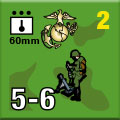 That’s the sort of situation where Panzer Grenadier shines as a tactical system. The battles are relatively small, and self-contained. The Americans can bring more force to bear, but the need to maintain their lines and their own heavy casualties keep them from bringing numbers to bear on the Japanese. The Japanese simply lack the ability to coordinate large masses until the very end of the campaign, when they’re all jammed into the north end of the island and the orders for a final, suicidal mass charge could be transmitted by runners. That’s the sort of situation where Panzer Grenadier shines as a tactical system. The battles are relatively small, and self-contained. The Americans can bring more force to bear, but the need to maintain their lines and their own heavy casualties keep them from bringing numbers to bear on the Japanese. The Japanese simply lack the ability to coordinate large masses until the very end of the campaign, when they’re all jammed into the north end of the island and the orders for a final, suicidal mass charge could be transmitted by runners.
 The game opens with the amphibious landings: armored amphibious tractors and unarmored landing craft bring the Marines ashore, while the Japanese shoot at them. Then the Marines press their way off the beaches and drive back the Japanese defenders. Or at least they try to; the Japanese beach defenses are pretty stout and at this stage of the battle they still have good artillery support. “Good” is of course relative; the Americans have battleships floating offshore. The game opens with the amphibious landings: armored amphibious tractors and unarmored landing craft bring the Marines ashore, while the Japanese shoot at them. Then the Marines press their way off the beaches and drive back the Japanese defenders. Or at least they try to; the Japanese beach defenses are pretty stout and at this stage of the battle they still have good artillery support. “Good” is of course relative; the Americans have battleships floating offshore.
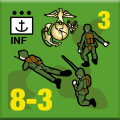
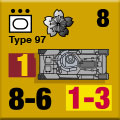
 Afterwards, the story’s primarily one of infantry combat, in varied but usually rough terrain (edge to the defense). Both sides actually have tanks, though the Japanese armor is soon mostly gone and no match for that of the Americans. There’s even a tank battle. There are four services involved: Japanese Navy Special Landing Forces and Base Defense Forces, the Imperial Japanese Army, the U.S. Marine Corps, and the United States Army. All have their own special color scheme; at Avalanche Press, we don’t speak generic. Afterwards, the story’s primarily one of infantry combat, in varied but usually rough terrain (edge to the defense). Both sides actually have tanks, though the Japanese armor is soon mostly gone and no match for that of the Americans. There’s even a tank battle. There are four services involved: Japanese Navy Special Landing Forces and Base Defense Forces, the Imperial Japanese Army, the U.S. Marine Corps, and the United States Army. All have their own special color scheme; at Avalanche Press, we don’t speak generic.
 To tell the story, we have four beautiful maps (that’s no exaggeration; you can see them right here) and 495 beautiful, silky-smooth pieces (smooth on both sides!). Saipan 1944 is, in physical terms, a gorgeous game. With the Fourth Edition rules and the thoroughly revised scenario set, it’s got both solid history and great game-play. To tell the story, we have four beautiful maps (that’s no exaggeration; you can see them right here) and 495 beautiful, silky-smooth pieces (smooth on both sides!). Saipan 1944 is, in physical terms, a gorgeous game. With the Fourth Edition rules and the thoroughly revised scenario set, it’s got both solid history and great game-play.
Order Saipan 1944 Here.
Order Saipan 1944 (Anarchy) Here.
No rules! You’ll need the Fourth Edition rules from another Panzer Grenadier game. Earlier edition rules will not work with this game.
Sign up for our newsletter right here. Your info will never be sold or transferred; we'll just use it to update you on new games and new offers.
Mike Bennighof is president of Avalanche Press and holds a doctorate in history from Emory University. A Fulbright Scholar and NASA Journalist in Space finalist, he has published a great many books, games and articles on historical subjects; people are saying that some of them are actually good.
He lives in Birmingham, Alabama with his wife and three children. He misses his lizard-hunting Iron Dog, Leopold.
Daily Content includes no AI-generated content or third-party ads. We work hard to keep it that way, and that’s a lot of work. You can help us keep things that way with your gift through this link right here.
|