| Ardennes 1944:
Scenario Preview, Part Two
By Mike Bennighof, Ph.D.
July 2026
 It’s a constant issue in both authoritarian and democratic states: wartime leaders, having been told what they wish to hear for their entire adult lifetime, decide that they know better than the generals commanding their armies. You can take that as torn from the headlines, and it will still be true ten years from this writing. It’s a constant issue in both authoritarian and democratic states: wartime leaders, having been told what they wish to hear for their entire adult lifetime, decide that they know better than the generals commanding their armies. You can take that as torn from the headlines, and it will still be true ten years from this writing.
By late 1944, Germany lacked the resources to undertake a grand counter-offensive on either front. The Supreme Leader did not wish to hear this, and he ordered such operations in the Ardennes and in Hungary. Plus, subsidiary offensives. March routes and timetables came down from on high with no tolerance for deviance, and when coupled with the inexperienced and/or untrained SS staff of Battle Group Peiper, led to predictable disaster for the Germans.
The Supreme Leader would not be the last supreme leader to forget the old truism: in war, the enemy always gets a vote. Caught by surprise, relatively junior American commanders improvised defenses to slow the Germans and allow reinforcements to rush to the Ardennes.
It makes for a fascinating game situation. The Germans have a lot of tactical skill, and a lot of firepower. But they’ve been deployed stupidly, and that gives the out-numbered Americans (often not front-line combat units) a chance to stop them. Let’s have a look at the finest hour of the U.S. Army’s Combat Engineers.
Chapter Two
Seizing the Bridges
The northern sector of the Ardennes front offered complicated terrain, which had caused the Allied command to believe an attack here to be extremely unlikely, and the German command to choose this spot for that very reason.
The Germans had to take care that this “advantage” didn’t turn into disaster. After the first, difficult breakthrough, their mechanized columns had to traverse rugged ground, almost a wilderness. From a high plateau, they entered the deeply-grooved Amblève river valleys, and the smaller valleys of streams. The course of the rivers causes a further obstruction as they flow in narrow, almost gorge-like valleys with steep sides, up to 100 or 200 meters high. Few bridges could accommodate the weight of the heavy tanks. And it was winter.
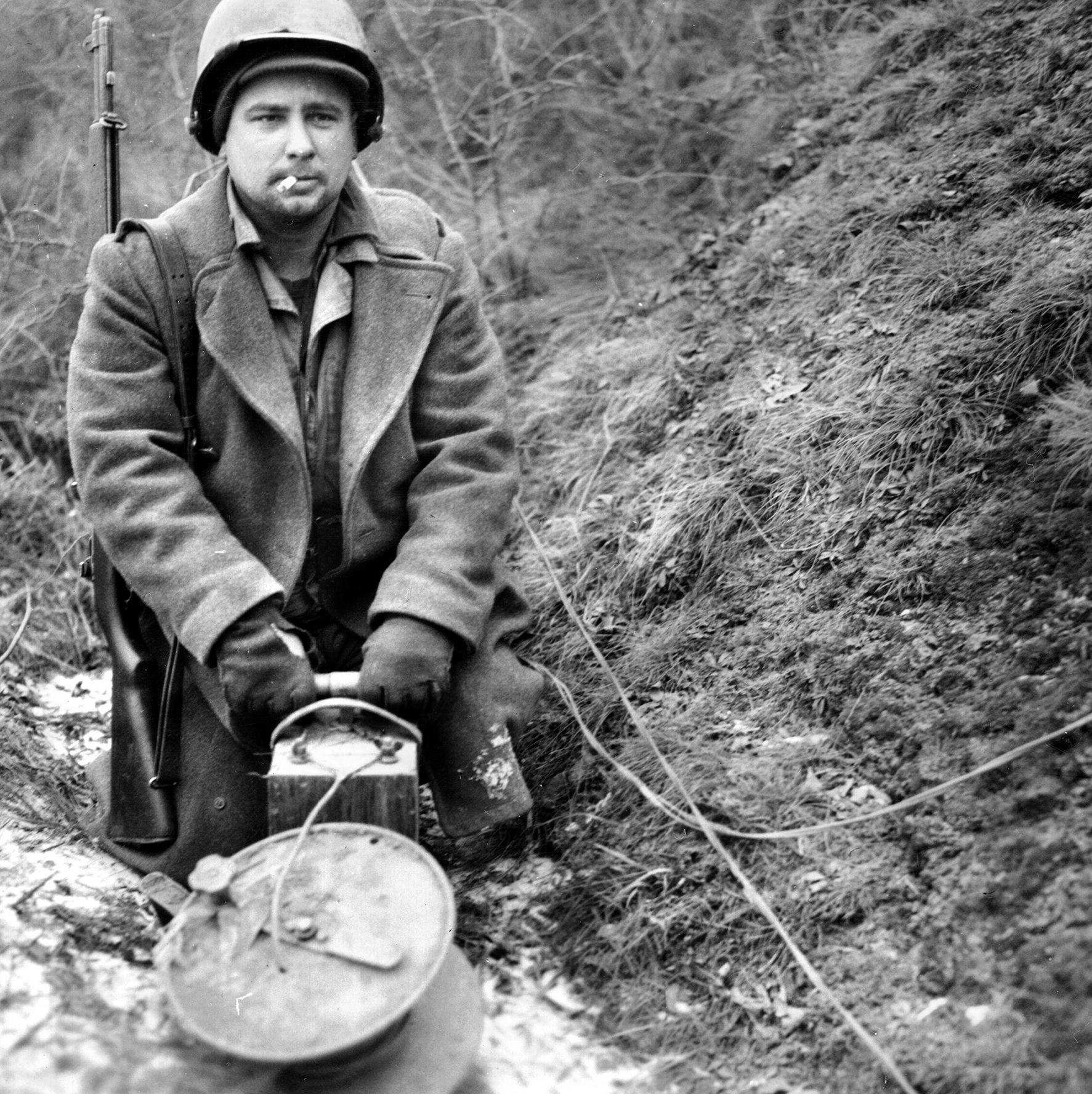
A U.S. Army Combat Engineer prepares to detonate charges. Ardennes, December 1944.
While Battle Group Peiper had a great deal of combat power, it had no bridging capacity. This had been a deliberate choice: speed and surprise would ensure that the necessary bridges would be captured intact. Should the Americans not cooperate, and either hold or destroy the bridges, the whole plan could easily unravel.
Scenario Seven
Late Lunch in Ligneuville
17 December 1944
Ligneuville, Belgium
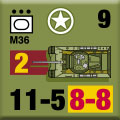 First SS Panzer Division’s armor pushed through the corridor south of Büllingen. While the killings at the Baugnez crossroads continued behind them, Peiper and his advance guard pressed relentlessly toward Ligneuville. An American prisoner had told Peiper that the village housed the headquarters of the 49th AAA Brigade (90mm guns), commanded by Brigadier General Edward W. Timberlake. Once again, Werner Sternebeck’s tanks led the advance. First SS Panzer Division’s armor pushed through the corridor south of Büllingen. While the killings at the Baugnez crossroads continued behind them, Peiper and his advance guard pressed relentlessly toward Ligneuville. An American prisoner had told Peiper that the village housed the headquarters of the 49th AAA Brigade (90mm guns), commanded by Brigadier General Edward W. Timberlake. Once again, Werner Sternebeck’s tanks led the advance.
Conclusion
 As Peiper approached Ligneuville, Combat Command B of the U.S. 9th Armored Division was moving toward St. Vith, although many of its support units still crowded the village. Around 1330, reports of rapidly advancing German armor sent headquarters personnel fleeing. Timberlake and his staff escaped the Hôtel du Moulin only minutes before Sternebeck's lead Panthers entered the village. Half-finished drinks and burning cigarettes testified to their hasty departure. As Peiper approached Ligneuville, Combat Command B of the U.S. 9th Armored Division was moving toward St. Vith, although many of its support units still crowded the village. Around 1330, reports of rapidly advancing German armor sent headquarters personnel fleeing. Timberlake and his staff escaped the Hôtel du Moulin only minutes before Sternebeck's lead Panthers entered the village. Half-finished drinks and burning cigarettes testified to their hasty departure.
Sternebeck's tanks pushed toward the bridge over the Amblève, where German engineers found the crossing undefended but came under heavy .50-caliber machine-gun fire while searching for demolition charges. As the rest of Battle Group Peiper closed up, American service vehicles streamed south out of Ligneuville. In the town center, however, a concealed Sherman and a tank dozer ambushed the lead Panther, destroying it along with a following half-track before being knocked out in turn. The action allowed most of the 14th Tank Battalion's maintenance personnel to escape.
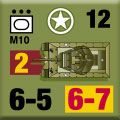 American resistance east and northwest of the village delayed the advance for several hours, and Peiper did not secure Ligneuville until about 1600. After reorganizing his now badly stretched column, he resumed the drive toward Stavelot around 1700. American resistance east and northwest of the village delayed the advance for several hours, and Peiper did not secure Ligneuville until about 1600. After reorganizing his now badly stretched column, he resumed the drive toward Stavelot around 1700.
The action at Ligneuville shows many of the hallmarks of Battle Group Peiper’s advance. The Armed SS spearheads acted aggressively, using their firepower and tactical experience to break through the American positions. And then they left those same Americans behind as they rushed on, allowing the Americans to set ambushes and slip away to join new defensive lines. Their haste would ultimately slow and then doom the battle group.
Notes
It’s not a very big scenario, which again is emblematic of the campaign. The Americans held only a thin line in this sector, while the Germans failed to concentrate their superior force at the point of attack. That’s in large part due to the terrain and road network, but the Germans chose this spot for their attack.
Scenario Eight
Board-Hammer
18 December 1944
Stavelot, Belgium
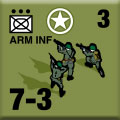 On the evening of 17 December, the German advance toward Stavelot continued at a slow pace along the narrow, winding mountain road. At approximately 1900 hours, a small, hastily erected roadblock brought the leading elements to a halt about one kilometer south of the town. Rather than launch an immediate assault, Peiper decided to postpone the attack until first light on 18 December. This poor decision would play a major role in the battle group’s failure: at that moment the road into Stavelot effective lay wide open, and the vital bridge over the Amblève had not yet been prepared for demolition. On the evening of 17 December, the German advance toward Stavelot continued at a slow pace along the narrow, winding mountain road. At approximately 1900 hours, a small, hastily erected roadblock brought the leading elements to a halt about one kilometer south of the town. Rather than launch an immediate assault, Peiper decided to postpone the attack until first light on 18 December. This poor decision would play a major role in the battle group’s failure: at that moment the road into Stavelot effective lay wide open, and the vital bridge over the Amblève had not yet been prepared for demolition.
At approximately 0400 hours on 18 December, German armored infantry quietly secured the slopes overlooking the bridge. By then, however, American reinforcements had reached Stavelot. Major Paul J. Solis of the 526th Separate Armored Infantry Battalion ordered Captain Charles A. Mitchell, commanding A Company, to establish roadblocks without delay. Despite confusion in the darkness and the bitter cold, a mixed force of half-tracks, anti-tank guns, and infantry crossed to the south bank of the Amblève to block the German approach. The Americans used “Board” and Hammer” as their challenge and password that night.
Conclusion
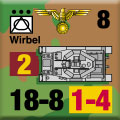 After crossing the bridge, the American force ran directly into a devastating ambush set by SS militiamen on the south bank of the Amblève that destroyed most of the force. The SS infantry pressed forward toward the bridge but heavy fire from American defenders on the north bank pinned them down. Although the SS militia briefly seized the bridge, they could not hold it and withdrew to the south bank. Engineers from the 9th Company, SS Panzer Regiment 1, inspected the bridge for demolition charges and confirmed that it was intact and had not been prepared for destruction. After crossing the bridge, the American force ran directly into a devastating ambush set by SS militiamen on the south bank of the Amblève that destroyed most of the force. The SS infantry pressed forward toward the bridge but heavy fire from American defenders on the north bank pinned them down. Although the SS militia briefly seized the bridge, they could not hold it and withdrew to the south bank. Engineers from the 9th Company, SS Panzer Regiment 1, inspected the bridge for demolition charges and confirmed that it was intact and had not been prepared for destruction.
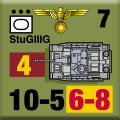 At first light, the leading German tanks reached the bridge. After a brief engagement with American anti-tank guns, they crossed into Stavelot, leading the advance of the SS militia through the town. The remaining U.S. tank destroyers brought the bridge approaches under sustained fire, setting several buildings ablaze and knocking out at least one Panther. In the midst of the fighting, a battery of American anti-aircraft half-tracks unexpectedly entered the town, fired across the Amblève in support of the defenders, and then withdrew in haste. By 1000 hours, organized American resistance had collapsed, and Stavelot fell to Peiper's battle group. At first light, the leading German tanks reached the bridge. After a brief engagement with American anti-tank guns, they crossed into Stavelot, leading the advance of the SS militia through the town. The remaining U.S. tank destroyers brought the bridge approaches under sustained fire, setting several buildings ablaze and knocking out at least one Panther. In the midst of the fighting, a battery of American anti-aircraft half-tracks unexpectedly entered the town, fired across the Amblève in support of the defenders, and then withdrew in haste. By 1000 hours, organized American resistance had collapsed, and Stavelot fell to Peiper's battle group.
Notes
It’s another small scenario. As the sun rises, so does the tide of SS scum: the militia have numbers, armor, artillery all on their side. The Americans are kind of confused, but they do have heavy weapons of their own and the militia have to accomplish a great deal if they want to win this scenario.
Scenario Nine
The Damned Engineers
18 December 1944
Trois-Ponts, Belgium
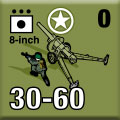 Peiper understood that even after securing the Amblève bridge at Stavelot, his advance would still depend on capturing the bridges over the Amblève and Salm Rivers at Trois-Ponts. The small town was a formidable obstacle, with three bridges (as its name suggests) along with underpasses, rail lines, rivers, steep terrain, and several important road junctions. At the beginning of the offensive, the 1111th Engineer Combat Group had its command post in Trois-Ponts, and its small staff immediately accelerated preparations for the town's defense. By early morning, the sound of fighting could be heard from the direction of Stavelot. Peiper understood that even after securing the Amblève bridge at Stavelot, his advance would still depend on capturing the bridges over the Amblève and Salm Rivers at Trois-Ponts. The small town was a formidable obstacle, with three bridges (as its name suggests) along with underpasses, rail lines, rivers, steep terrain, and several important road junctions. At the beginning of the offensive, the 1111th Engineer Combat Group had its command post in Trois-Ponts, and its small staff immediately accelerated preparations for the town's defense. By early morning, the sound of fighting could be heard from the direction of Stavelot.
Conclusion
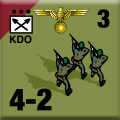 In the German plan’s first phase, Peiper intended to push directly from Stavelot to Trois-Ponts along the N.23 main road. In the second, two Panzer IV companies, supported by engineers and paratroopers, would advance through the surrounding hills to seize the Salm River bridge in the center of town. In the German plan’s first phase, Peiper intended to push directly from Stavelot to Trois-Ponts along the N.23 main road. In the second, two Panzer IV companies, supported by engineers and paratroopers, would advance through the surrounding hills to seize the Salm River bridge in the center of town.
Before noon, German tanks appeared around the bend on the Stavelot–Trois-Ponts road and halted in front of a field of daisy-chain mines. A brief duel began between the leading Panthers and an American 57mm anti-tank gun. Then a thunderous explosion from the town announced that the Amblève bridge had been destroyed. Moments later, a Panther round struck the American gun, killing the crew and forcing the remaining defenders to withdraw. The bridge’s demolition sealed off Peiper’s intended route west through Basse-Bodeux and Werbomont. He therefore redirected his battle group north, following the winding Amblève valley in an attempt to reach the next crossing at Cheneux.
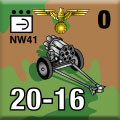 At almost the same time, a second German column attacked American positions on the high ground at Noupré, near Aisomont, south of the Amblève River. Three Panzer IVs approached the American defenses, but neither the daisy-chain mines nor bazooka fire succeeded in stopping them. The American position soon collapsed; however, the attackers failed to exploit their advantage and did not enter Trois-Ponts. At almost the same time, a second German column attacked American positions on the high ground at Noupré, near Aisomont, south of the Amblève River. Three Panzer IVs approached the American defenses, but neither the daisy-chain mines nor bazooka fire succeeded in stopping them. The American position soon collapsed; however, the attackers failed to exploit their advantage and did not enter Trois-Ponts.
Before 1300 hours, the Germans launched a final probe beyond the Noupré minefield. Several armored vehicles fired into Trois-Ponts from the ridge overlooking the town on the east bank of the Salm River. At 1300 hours, American engineers demolished the main bridge over the Salm.
Notes
The Americans are mostly those damned engineers, and they have the means to blow stuff up. The Germans have to get there before they do. We get to play on two of the denser terrain boards, representing the area around Trois-Ponts much more closely than the usual Panzer Grenadier generic terrain. Once again, the Nazis have plenty of advantages, but the Supreme Leader has personally set a very tight timetable.
Scenario Ten
Long and Winding Road
18 December 1944
Neufmoulin, Belgium
 Faced with the destruction of the bridges at Trois-Ponts, Peiper redirected his battle group along the winding road toward La Gleize and Cheneux in search of another crossing over the Amblève River. Along the route, the column came under repeated attacks by P-47 Thunderbolt fighter-bombers, which slowed its advance. Faced with the destruction of the bridges at Trois-Ponts, Peiper redirected his battle group along the winding road toward La Gleize and Cheneux in search of another crossing over the Amblève River. Along the route, the column came under repeated attacks by P-47 Thunderbolt fighter-bombers, which slowed its advance.
At dusk, the Germans continued westward through Rahier toward the Neufmoulin bridge over the Lienne River. This crossing, which linked Trois-Ponts with Werbomont, had been prepared for demolition following the fighting at Trois-Ponts earlier that morning.
Conclusion
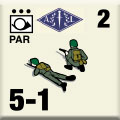 By 1600 hours, American engineers had prepared the 180-foot timber trestle bridge over the Lienne River for demolition and emplaced daisy-chain mines on the approaches along the west bank. Peiper still expected to reach Werbomont shortly after nightfall. By 1600 hours, American engineers had prepared the 180-foot timber trestle bridge over the Lienne River for demolition and emplaced daisy-chain mines on the approaches along the west bank. Peiper still expected to reach Werbomont shortly after nightfall.
At approximately 1645 hours, the leading German tank appeared on the road and opened fire. Moments later, the bridge exploded, and the American engineers withdrew. Two kilometers farther west at Oufny, the German column encountered an American blocking force of infantry, anti-tank guns, and tank destroyers.
With the bridge destroyed and the Lienne River unsuitable for crossing, Peiper sent elements north in search of another route. They found crossings at Les Forges and farther north, but neither could support tanks. A mined road toward Neufmoulin caused additional losses among the German half-tracks.
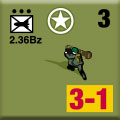 The Germans then attempted to advance toward Werbomont from the west bank, but found American infantry and tank destroyers already positioned along the road. When the first tank destroyer opened fire, the defenders engaged with all available weapons, destroying or forcing the abandonment of five German half-tracks. Once again, American engineers had denied Peiper a critical crossing. He recalled his forward elements and ordered the battle group to withdraw toward Cheneux. The Germans then attempted to advance toward Werbomont from the west bank, but found American infantry and tank destroyers already positioned along the road. When the first tank destroyer opened fire, the defenders engaged with all available weapons, destroying or forcing the abandonment of five German half-tracks. Once again, American engineers had denied Peiper a critical crossing. He recalled his forward elements and ordered the battle group to withdraw toward Cheneux.
Notes
It’s another one-board scenario, with the SS militia trying to find a bridge and bop their way past the scratch American defense. It depends on the hidden positions of the initial American defense (most of the Americans rush in as reinforcements). I don’t really like using hidden units in scenario design (all that writing down and pretending not to look at the hex with your guys in it), but it’s few enough in this scenario that it’s not a burden.
And that’s all for Chapter Two. Next time, Chapter Three!
Order Ardennes 1944 (full game) Here.
Please allow an extra six weeks for delivery.
Order Ardennes 1944 (Anarchy) Here.
No rules! You’ll need the Fourth Edition rules from another Panzer Grenadier game. Earlier edition rules will not work with this game.
Please allow an extra six weeks for delivery.
Sign up for our newsletter right here. Your info will never be sold or transferred; we'll just use it to update you on new games and new offers.
Mike Bennighof is president of Avalanche Press and holds a doctorate in history from Emory University. A Fulbright Scholar and NASA Journalist in Space finalist, he has published a great many books, games and articles on historical subjects; people are saying that some of them are actually good.
He lives in Birmingham, Alabama with his wife and three children.
Daily Content includes no AI-generated content or third-party ads. We work hard to keep it that way, and that’s a lot of work. You can help us keep things that way with your gift through this link right here.
|