| Ardennes 1944:
Scenario Preview, Part Three
By Mike Bennighof, Ph.D.
July 2026
 Panzer Grenadier: Ardennes 1944 is not, for the most part, a game of huge, sweeping battles. The terrain is very dense, and the battles are usually very small (the latter being an effect of the former). The lack of approach roads and poor German planning meant that even though the Germans had the element of surprise and an overall superiority of force in this sector, the startled but recovering Americans could often match their strength. Panzer Grenadier: Ardennes 1944 is not, for the most part, a game of huge, sweeping battles. The terrain is very dense, and the battles are usually very small (the latter being an effect of the former). The lack of approach roads and poor German planning meant that even though the Germans had the element of surprise and an overall superiority of force in this sector, the startled but recovering Americans could often match their strength.
Smaller scenarios are, to my mind, more rewarding to play. They move quickly, in Panzer Grenadier, and you need to plan ahead and pay close attention to your game strategy. And while they’re easy to play, they’re much tougher to design. The forces are limited, and the terrain usually is as well.
Philippe Léonard, designer of Ardennes 1944, has mastered this craft. The scenarios are filled with tough choices, and sometimes these are subtle ones. Doing the obvious will not always gain you victory. And all of the scenarios are deeply steeped in history; there’s no cheating in this design, by altering events or forces present to make the scenario “work better.”
I’m enormously pleased with this game. I think you will be, too. Let’s have a look at the third chapter.
Chapter Three
The Road to Vielsalm
On Peiper’s southern flank, Max Hansen’s battle group advanced with considerably less difficulty. Engineers successfully cleared the Belgian border minefields east of Krewinkel, allowing the formation to move forward. Twenty-one Jagdpanzer IV tank destroyers carrying the 1st SS Panzer Grenadier Battalion led the column, followed by the 2nd Battalion. The 3rd Battalion came next, accompanied by eleven towed 75 mm anti-tank guns.
Hansen planned to follow Rollbahn E through Krewinkel, Manderfeld, Herresbach, Werth, and ultimately to Vielsalm. Opposing his advance were the lightly-equipped troops of the 32nd and 18th Cavalry Squadrons. After several brief skirmishes, however, Colonel Devine ordered these units to withdraw to Born, reportedly without authorization.
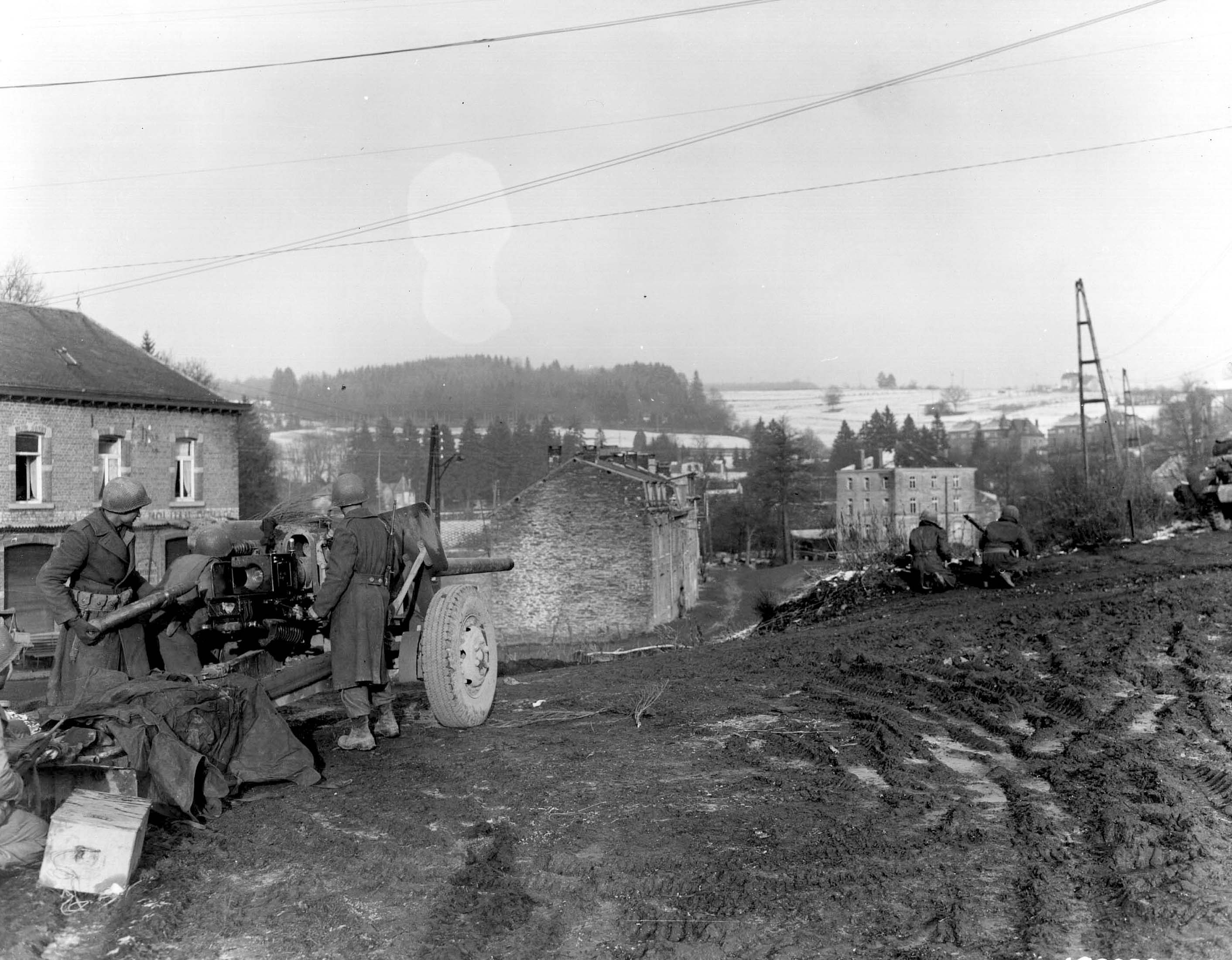
Troops of the 7th Armored Division prepare to defend Vielsalm, December 1944.
Although poor roads and difficult terrain slowed the advance, Hansen encountered little organized resistance. To maintain momentum, he divided his force among several secondary roads. By midday on 17 December, the leading elements of Hansen’s battle group had closed to within a few kilometers of Peiper’s column to its south.
At Recht, Hansen’s force engaged Combat Command R of the 7th Armored Division before pushing southwest toward Poteau during the early hours of 18 December. There, it overran Task Force Mayes, an action immortalized in one of the best-known wartime newsreels of the Second World War, filmed by propaganda correspondents attached to the SS 2nd Panzer Division.
Despite this success, the German forces did not exploit the road from Poteau to Vielsalm. Instead, they received orders to halt, await reinforcements, and then turn north to assist Peiper.
Scenario Eleven
Lucky Seventh
18 December 1944
Recht, Belgium
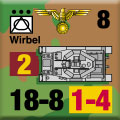 At the same time that the U.S. 7th Armored Division moved south to defend St. Vith on 17 December, the 1st SS Panzer Division raced westward. Combat Command R had barely passed through Ligneuville before Peiper’s column entered and occupied the village. CCR quickly established blocking positions several kilometers farther south at Recht, using the limited forces available. Lt. Col. Fred M. Warren had only the 17th Tank Battalion, with little infantry support, at his disposal. Relying on two companies of medium tanks and a platoon of Stuart light tanks, he gambled that he could hold the village until the following morning. At the same time that the U.S. 7th Armored Division moved south to defend St. Vith on 17 December, the 1st SS Panzer Division raced westward. Combat Command R had barely passed through Ligneuville before Peiper’s column entered and occupied the village. CCR quickly established blocking positions several kilometers farther south at Recht, using the limited forces available. Lt. Col. Fred M. Warren had only the 17th Tank Battalion, with little infantry support, at his disposal. Relying on two companies of medium tanks and a platoon of Stuart light tanks, he gambled that he could hold the village until the following morning.
At 2130, reports from the 18th Cavalry Reconnaissance Squadron, which had been ambushed just east of Recht, revealed a large German column advancing westward. The force consisted of the 1st SS Panzer Grenadier Regiment under Max Hansen, forming the southernmost column of the 1st SS Panzer Division as it advanced toward Vielsalm.
Conclusion
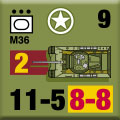 Hansen's leading elements (Jagdpanzer IV tank destroyers carrying the 1st SS Panzer Grenadier Battalion) reached Born during the afternoon of 17 December, followed by the 2nd SS Battalion and part of Knittel's reconnaissance group. German and American accounts differ on when the leading troops reached Recht, with German sources claiming they arrived at dusk and U.S. reports placing their arrival much later that night. Hansen's leading elements (Jagdpanzer IV tank destroyers carrying the 1st SS Panzer Grenadier Battalion) reached Born during the afternoon of 17 December, followed by the 2nd SS Battalion and part of Knittel's reconnaissance group. German and American accounts differ on when the leading troops reached Recht, with German sources claiming they arrived at dusk and U.S. reports placing their arrival much later that night.
Around 0100, American reconnaissance reported a German column approaching from the east, prompting Company C, 17th Tank Battalion, to move into Recht and block the road. About an hour later, German infantry, supported by self-propelled guns, attacked from the east and northeast. Using flares to silhouette the American tanks, they pressed the assault so aggressively that Warren ordered a withdrawal rather than risk losing his armor without adequate infantry support.
 The 17th Tank Battalion established a new defensive line south of Recht, while headquarters and the cavalry units fell back to Poteau, some five kilometers to the southwest. The railroad embankment provided a strong anti-tank barrier, forcing German tanks to attack through a narrow underpass while their infantry had to cross exposed ground. Although four Stuart light tanks became trapped in a bog during the redeployment and had to be abandoned, the new position proved effective. The 17th Tank Battalion established a new defensive line south of Recht, while headquarters and the cavalry units fell back to Poteau, some five kilometers to the southwest. The railroad embankment provided a strong anti-tank barrier, forcing German tanks to attack through a narrow underpass while their infantry had to cross exposed ground. Although four Stuart light tanks became trapped in a bog during the redeployment and had to be abandoned, the new position proved effective.
Before dawn, a Jagdpanzer IV/70 broke through the underpass and engaged Company C before American tanks destroyed it, though not before it knocked out one US medium tank. A second attack shortly after daybreak also failed, and additional German attempts to fire over the embankment forced only limited American withdrawals.
Focused on advancing toward Vielsalm through Poteau, Hansen made no serious effort to exploit the wooded approaches to St. Vith.
Notes
We’re getting into the part of the battle where the Americans are recovering their wits and sending more substantial forces to stem the German attack. That wasted first day becomes glaring now. The Americans now have tanks of their own. The Germans must accomplish a great deal, and the U.S. Army will have something to say about whether they do so.
Scenario Twelve
Ease on Down the Road
18 December 1944
North of St. Vith, Belgium
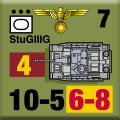 Hansen’s battle group followed Rollbahn E to Vielsalm. The route lay along the boundary between the German Sixth and Fifth Armies, just north of St. Vith, where scattered American units struggled to slow the German advance and prevent the town’s encirclement. Although the Germans had to guard against U.S. armored forces threatening their southern flank, they committed only enough troops to secure the key crossroads at Kaiserbaracke and Recht, together with the road from Born to Vielsalm. Hansen’s battle group followed Rollbahn E to Vielsalm. The route lay along the boundary between the German Sixth and Fifth Armies, just north of St. Vith, where scattered American units struggled to slow the German advance and prevent the town’s encirclement. Although the Germans had to guard against U.S. armored forces threatening their southern flank, they committed only enough troops to secure the key crossroads at Kaiserbaracke and Recht, together with the road from Born to Vielsalm.
Caught off guard by the speed of the German advance and delayed by severe traffic congestion, American units attempted to re-establish a defensive line around St. Vith while also receiving orders to counterattack, despite the growing confusion. East of Recht, improvised elements of the U.S. 7th Armored Division established roadblocks across the road between Malmedy and St. Vith. At dawn, the small village of Hunningen came under a two-pronged German assault.
Conclusion
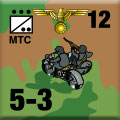 Northeast and east of St. Vith, German forces tightened their grip. At 0800 on 18 December, attacks from two directions struck the U.S. 7th Armored Division, forcing it to cancel a planned counterattack. Battle Group Knittel, built around the reconnaissance battalion of the 1st SS Panzer Division, had reached Born during the night behind Hansen. At dawn, it resumed the advance, reaching the Kaiserbaracke crossroads. While most of the formation continued west toward Recht, one company remained behind to secure the junction and probe south toward St. Vith. Northeast and east of St. Vith, German forces tightened their grip. At 0800 on 18 December, attacks from two directions struck the U.S. 7th Armored Division, forcing it to cancel a planned counterattack. Battle Group Knittel, built around the reconnaissance battalion of the 1st SS Panzer Division, had reached Born during the night behind Hansen. At dawn, it resumed the advance, reaching the Kaiserbaracke crossroads. While most of the formation continued west toward Recht, one company remained behind to secure the junction and probe south toward St. Vith.
At the same time, the mobile battalion of the 18th People’s Grenadier Division attacked Hunningen from Wallerode. Although American reconnaissance troops, reinforced by a platoon of Stuart light tanks, defended the village stubbornly, the Germans briefly captured it.
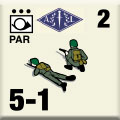 Farther south, Sherman tanks holding roadblocks near Kaiserbaracke destroyed a German scout car and repelled several enemy patrols. By early afternoon, however, the German company assigned to this sector had been recalled to support the attack on Stavelot. Farther south, Sherman tanks holding roadblocks near Kaiserbaracke destroyed a German scout car and repelled several enemy patrols. By early afternoon, however, the German company assigned to this sector had been recalled to support the attack on Stavelot.
The Americans reacted quickly. Beginning at 0930, a task force from the U.S. 9th and 7th Armored Divisions, supported by tank destroyers and anti-aircraft units, counterattacked toward Hunningen. Advancing from both the south and west, they outflanked the German force, whose exposed southern flank and limited strength made its position untenable. The successful counterattack retook Hunningen, reportedly destroying seven German tanks and an armored car while inflicting heavy casualties on the German infantry. American losses in men and vehicles were comparatively light.
Notes
We covered part of this battle in Elsenborn Ridge (Scenario Eleven, First Probe). By taking the larger view, adding the SS militia’s part of the action (Elsenborn Ridge only addressed the attack by the People’s Grenadiers). That makes it more of a mobile action, which in turn stretches the American defense (in the Elsenborn version, the Americans are more easily able to steal a march on the mostly foot-bound People’s Grenadiers). However, the German side still has a lot to accomplish, and the Americans are well able to interfere with their Supreme Leader’s plans.
Scenario Thirteen
Back-Door Men
18 December 1944
Poteau, Belgium
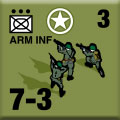 A hamlet on the St. Vith–Vielsalm highway, Poteau’s name, meaning “pole,” reflected its location on the former Belgian-German border before the First World War. The roads from Recht, St. Vith, and Vielsalm, along with a railway crossing, made it a strategically important crossroads. A hamlet on the St. Vith–Vielsalm highway, Poteau’s name, meaning “pole,” reflected its location on the former Belgian-German border before the First World War. The roads from Recht, St. Vith, and Vielsalm, along with a railway crossing, made it a strategically important crossroads.
During the night of 17 December, Poteau became one of the area’s worst traffic bottlenecks. The eastbound 7th Armored Division, moving to reinforce St. Vith, collided with retreating units, fragments of units, and stragglers moving in the opposite direction.
Although the German night attack on Recht succeeded in capturing the town, the determined defense by the 7th Armored Division’s Combat Command R disrupted the advance and prevented the Germans from exploiting their success quickly. By early morning on 18 December, the remaining elements of the 14th Cavalry Group had reorganized and received orders to advance toward Born through Recht.
At first light, in the morning mist, a small force under Major James L. Mayes (the same officer who had attempted to retake Lanzerath on 16 December) moved out from the Poteau crossroads. The force consisted of remnants of the 18th and 32nd Cavalry Reconnaissance Squadrons and one of the remaining platoons of towed 3-inch anti-tank guns from the 820th Tank Destroyer Battalion.
Conclusion
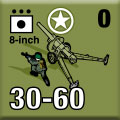 Task Force Mayes had advanced only 300 meters beyond the last houses of Poteau when a panzerfaust struck the second vehicle and German small-arms fire erupted. The force had run directly into Battle Group Hansen. After a brief delaying action, Task Force Mayes withdrew, while cavalrymen supported by CCR headquarters attempted to hold the crossroads and surrounding high ground against a determined German infantry attack supported by self-propelled tank destroyers. Task Force Mayes had advanced only 300 meters beyond the last houses of Poteau when a panzerfaust struck the second vehicle and German small-arms fire erupted. The force had run directly into Battle Group Hansen. After a brief delaying action, Task Force Mayes withdrew, while cavalrymen supported by CCR headquarters attempted to hold the crossroads and surrounding high ground against a determined German infantry attack supported by self-propelled tank destroyers.
Following the brief and intense fighting around Poteau, some American units fell back in confusion, and even the crews of eight 8-inch howitzers from the 740th Field Artillery Battalion abandoned their guns. After resisting and counterattacking, the remaining American vehicles escaped toward Vielsalm around midday.
 The Germans immediately fortified their position, placing tanks and infantry along the woods north and east of Poteau. A platoon of Jagdpanzer IV tank destroyers with infantry support continued west toward Vielsalm, where they encountered another American defensive position. There, Lt. Joe “Navajo” Whiteman of the 23rd Armored Infantry Battalion organized a makeshift defense from a jumble of infantry, cavalry, engineers, tanks, and tank destroyers. The Germans immediately fortified their position, placing tanks and infantry along the woods north and east of Poteau. A platoon of Jagdpanzer IV tank destroyers with infantry support continued west toward Vielsalm, where they encountered another American defensive position. There, Lt. Joe “Navajo” Whiteman of the 23rd Armored Infantry Battalion organized a makeshift defense from a jumble of infantry, cavalry, engineers, tanks, and tank destroyers.
Although the road to Vielsalm remained open by midday, Hansen had already received orders to secure Recht, await reinforcements from the 9th SS Panzer Division, and then turn north to assist Peiper. The Germans therefore made no serious attempt to push through Petit-Their, but instead strengthened their defenses in Poteau.
Notes
Despite having stuffed far too many troops into far too small an operational area, the Germans are still having trouble with the whole “concentration of force” concept. They have outstanding morale; they just don’t have the needed numbers. The Americans, for their part, have manufactured a defense out of thin air. And they have 8-inch howitzers.
Scenario Fourteen
Crossroads at Poteau
18 December 1944
Poteau, Belgium
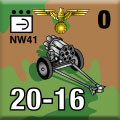 After driving the Americans from Poteau, the Germans quickly consolidated their hold on the village. They fortified the buildings, positioned snipers and machine-gun teams to cover the approaches, and deployed infantry armed with panzerfausts. Assault guns overlooking the railroad cut completed a strong defensive position. After driving the Americans from Poteau, the Germans quickly consolidated their hold on the village. They fortified the buildings, positioned snipers and machine-gun teams to cover the approaches, and deployed infantry armed with panzerfausts. Assault guns overlooking the railroad cut completed a strong defensive position.
German control of the crossroads posed a serious threat. It placed the St. Vith–Vielsalm road, the principal supply and communications route for the U.S. 7th and 9th Armored Divisions defending St. Vith, under direct observation and fire. If left in German hands, the position could have forced the Americans to abandon St. Vith. To eliminate this threat, 7th Armored Division ordered its Combat Command A to retake Poteau.
Conclusion
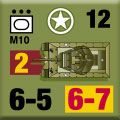 Combat Command A's advance guard departed its assembly area at Beho at 1010 on 18 December and advanced toward Poteau. After encountering German armor, the infantry dismounted and entered the village shortly after 1300. Strong German resistance stalled the attack throughout the afternoon. Combat Command A's advance guard departed its assembly area at Beho at 1010 on 18 December and advanced toward Poteau. After encountering German armor, the infantry dismounted and entered the village shortly after 1300. Strong German resistance stalled the attack throughout the afternoon.
At 16:00, CCA's commander, Col. Dwight A. Rosebaum. received an urgent message from his division commander, Brigadier General Robert W. Hasbrouck. “Imperative you seize Poteau this PM and hold it.” As darkness fell, CCA launched a second assault and, after fierce fighting, recaptured the crossroads. By evening, American tanks and infantry had secured Poteau, established outposts, and organized a strong defensive perimeter.
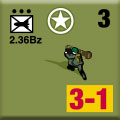 Despite this success, the situation remained precarious. CCA had not yet linked up with Combat Command R to the east, and the road between Poteau and Petit-Thier remained under German fire. The battle settled into a temporary stalemate: Hansen’s force had orders to hold its positions while awaiting reinforcements, and the Americans lacked the strength to mount a major offensive. Despite this success, the situation remained precarious. CCA had not yet linked up with Combat Command R to the east, and the road between Poteau and Petit-Thier remained under German fire. The battle settled into a temporary stalemate: Hansen’s force had orders to hold its positions while awaiting reinforcements, and the Americans lacked the strength to mount a major offensive.
Notes
A fairly small scenario. This time the Americans are on the attack; their edge in numbers and firepower is very slight, at least until reinforcements arrive. They are pretty determined and well-led, but at this stage of the battle the awesome American edge in artillery isn’t yet in play. This one’s going to be tough for everyone.
And that’s all for Chapter Three. Next time, on to Chapter Four.
Order Ardennes 1944 (full game) Here.
Please allow an extra six weeks for delivery.
Order Ardennes 1944 (Anarchy) Here.
No rules! You’ll need the Fourth Edition rules from another Panzer Grenadier game. Earlier edition rules will not work with this game.
Please allow an extra six weeks for delivery.
Sign up for our newsletter right here. Your info will never be sold or transferred; we'll just use it to update you on new games and new offers.
Mike Bennighof is president of Avalanche Press and holds a doctorate in history from Emory University. A Fulbright Scholar and NASA Journalist in Space finalist, he has published a great many books, games and articles on historical subjects; people are saying that some of them are actually good.
He lives in Birmingham, Alabama with his wife and three children.
Daily Content includes no AI-generated content or third-party ads. We work hard to keep it that way, and that’s a lot of work. You can help us keep things that way with your gift through this link right here.
|