| Ardennes 1944:
Scenario Preview, Part Four
By Mike Bennighof, Ph.D.
August 2026
 Panzer Grenadier: Ardennes 1944 takes players to a familiar battleground, the German offensive that became known as the Battle of the Bulge. There have been many games set in the Battle of the Bulge, and the task here has been to present a familiar tale in a new way. Panzer Grenadier: Ardennes 1944 takes players to a familiar battleground, the German offensive that became known as the Battle of the Bulge. There have been many games set in the Battle of the Bulge, and the task here has been to present a familiar tale in a new way.
Yet at the same time, “familiar” is a relative term. A 2020 survey showed that 22% of American Millennials (then aged 23-38) either believed that or were unsure whether the U.S. and Germany were allies during the Second World War. So, our project must also present a compelling story without falling back on familiar themes.
And that’s what we have in Ardennes 1944. It’s the story of the doomed German attempt to break through the thin American lines in far western Belgium, shoving 70-ton tanks along narrow backcountry paths without bothering to bring along gasoline, food, or, apparently, maps. Joachim Peiper, an SS poster boy, led the effort and he only wanted war fighters in his command, not those logistics and planning sissies. It did not end well for the Aryan Brotherhood.
Let’s have a look at the fourth chapter, as the Nazi Party militia run into first-rate resistance:
Chapter Four
Stavelot, The Missing Link
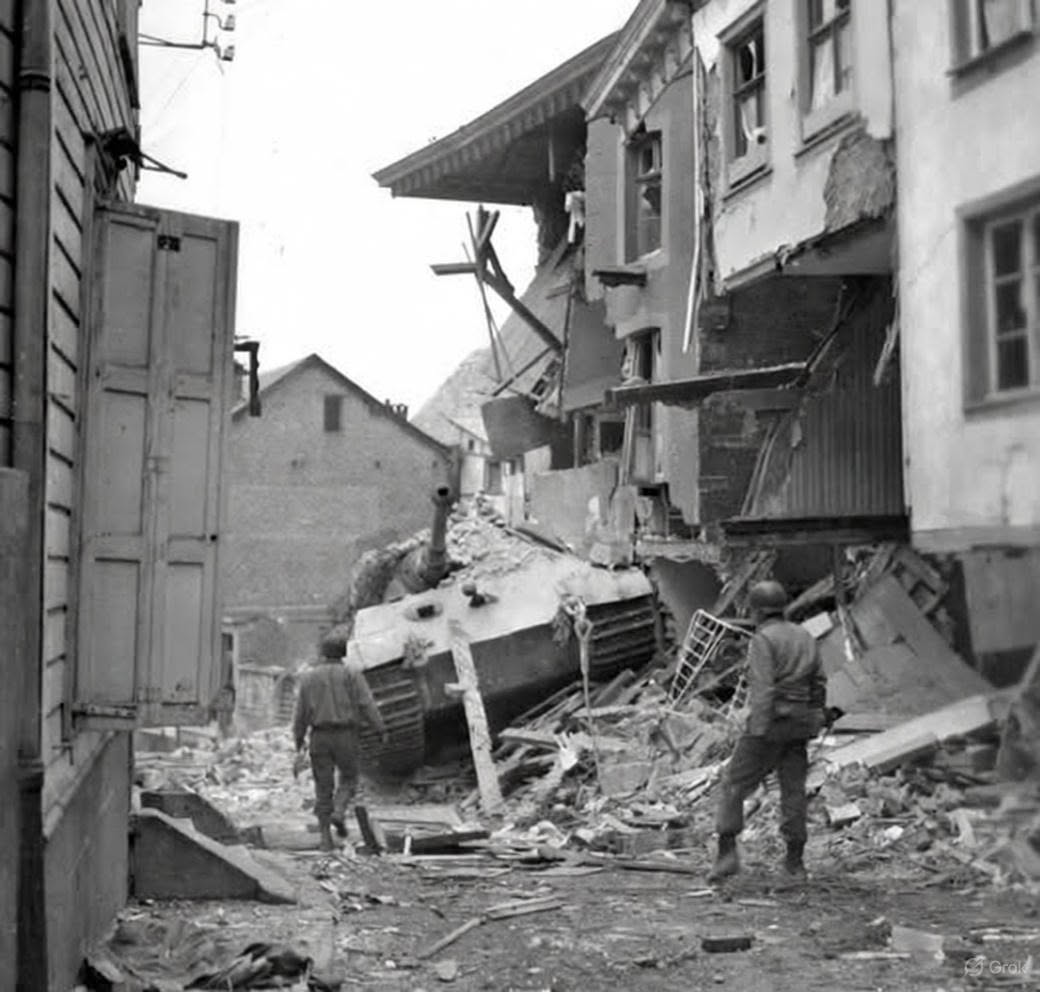 Royal Tiger No. 105 has come to grief at 4 Rue de Haut Rivage, Stavelot, Belgium. 21 December 1944. Royal Tiger No. 105 has come to grief at 4 Rue de Haut Rivage, Stavelot, Belgium. 21 December 1944.
Classical drama traditionally observes the three unities: a single action unfolding in one place over the course of one day. The French poet and critic Nicolas Boileau expressed the principle in these well-known lines:
Qu’en un lieu, qu’en un jour, un seul fait accompli
Tienne jusqu’à la fin le théâtre rempli.
(“That in one place, in one day, a single completed action holds the audience's attention until the final curtain.”)
The battle for the bridge at Stavelot in December 1944 came surprisingly close to this classical ideal. The action centered on a single objective in one location, although the struggle lasted four days before the opposing forces finally exhausted themselves.
On the morning of 18 December, Battle Group Peiper attacked Stavelot and pushed through the town, convinced that the Meuse lay within reach. In its haste, the formation paid little attention to its exposed flanks or to securing the vital bridge at the southern entrance to the town. That afternoon, the U.S. 1st Battalion, 117th Infantry Regiment advanced toward the bridge to cut the most important supply and communications route linking Battle Group Peiper to its rear.
Scenario Fifteen
Narrow Bridge
18 December 1944
Stavelot, Belgium
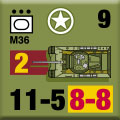 By late morning, a significant portion of Peiper’s combat group had already passed through Stavelot. However, much of the formation remained on the eastern bank of the Amblève River, waiting to cross. These forces included the main body of Knittel’s reconnaissance combat group, consisting of Kalischko’s 1st SS Panzer Artillery Battalion and Coblenz’s 2nd SS Panzer Reconnaissance Company, which had arrived from Recht. The majority of the Tiger tanks, the combat group’s support elements, and units from the two Panzer IV tank companies recalled from Wanne also waited to cross along with their accompanying engineers and paratroopers. By late morning, a significant portion of Peiper’s combat group had already passed through Stavelot. However, much of the formation remained on the eastern bank of the Amblève River, waiting to cross. These forces included the main body of Knittel’s reconnaissance combat group, consisting of Kalischko’s 1st SS Panzer Artillery Battalion and Coblenz’s 2nd SS Panzer Reconnaissance Company, which had arrived from Recht. The majority of the Tiger tanks, the combat group’s support elements, and units from the two Panzer IV tank companies recalled from Wanne also waited to cross along with their accompanying engineers and paratroopers.
By early afternoon, these troops finally advanced on Stavelot with the aim of crossing the Amblève as quickly as possible and securing the bridge, the most important crossing point in the area.
Conclusion
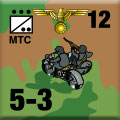 Inevitably, Peiper’s extended vehicle column attracted the attention of Allied tactical reconnaissance aircraft. Soon afterward, 34 P-47 Thunderbolts and two RAF Typhoons attacked the German column, continuing their strikes until shortly before nightfall. The heaviest assault began at 1440 and struck the entire length of the column, reaching as far back as Lodomez. Inevitably, Peiper’s extended vehicle column attracted the attention of Allied tactical reconnaissance aircraft. Soon afterward, 34 P-47 Thunderbolts and two RAF Typhoons attacked the German column, continuing their strikes until shortly before nightfall. The heaviest assault began at 1440 and struck the entire length of the column, reaching as far back as Lodomez.
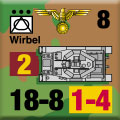
German anti-aircraft fire, particularly from the Wirbelwind vehicles, proved effective and several P-47s suffered damage. Meanwhile, two companies of the American 1st Battalion, 117th Infantry Regiment took advantage of the disruption caused by the air attacks. They infiltrated Stavelot, secured the town’s main square and principal street, and moved toward the bridge. However, German tanks blocking the streets prevented them from reaching the crossing.
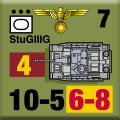
The Panzer IV tanks and engineer carriers returning from Wanne successfully crossed the bridge, but the Tigers encountered difficulties. One became immobilized and blocked the passage for the remaining vehicles, while another became trapped in the narrow streets after crashing into a building. By 1520 hours, the Americans had advanced closer to the bridge and occupied roughly half of Stavelot. That left vital elements of Battle Group Peiper unable to cross the Amblève River.
Notes
For the Nazis, it’s pretty simple: take the bridge, storm across, motor on off the opposite side of the board. They have tanks and morale on their side. But the American morale is almost as good, and they have their awesome artillery and a fair chance of bringing in pretty massive air support every turn. This one is going to be tough on the Germans, and it doesn’t help that Peiper’s amateur-hour staff will bring their forces into play piecemeal.
Scenario Sixteen
Code Name Curlew
18 December 1944
Stavelot, Belgium
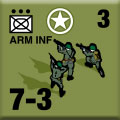 The Allied air attacks sowed confusion in Peiper’s column, disrupting movement, damaging vehicles, and delaying the advance at a critical moment. As the Germans struggled to reorganize, the steadily reinforced U.S. infantry regained control of the lower part of Stavelot, forcing the Germans to fight once again for access to the bridge over the Amblève River. What had seemed a secure crossing only hours earlier had become a contested choke point, with each delay allowing the American defenses to grow stronger. The Allied air attacks sowed confusion in Peiper’s column, disrupting movement, damaging vehicles, and delaying the advance at a critical moment. As the Germans struggled to reorganize, the steadily reinforced U.S. infantry regained control of the lower part of Stavelot, forcing the Germans to fight once again for access to the bridge over the Amblève River. What had seemed a secure crossing only hours earlier had become a contested choke point, with each delay allowing the American defenses to grow stronger.
Coblenz’s 2nd Company of Gustav Knittel’s reconnaissance combat group had already crossed the river and reached the heights west of Stavelot. Knittel ordered them to reverse course and return to the bridge, where Coblenz joined the effort to help the remaining companies force a passage across the Amblève.
Conclusion
 Following the Allied air attacks, Battle Group Knittel resumed its advance at 1645, leaving the cover of the heights south of the Amblève and moving toward the bridge at Stavelot. By then, American reinforcements including Sherman tanks had arrived, and the 1st Battalion, 117th Infantry Regiment (code-named Curlew) had consolidated its positions around the market square. Following the Allied air attacks, Battle Group Knittel resumed its advance at 1645, leaving the cover of the heights south of the Amblève and moving toward the bridge at Stavelot. By then, American reinforcements including Sherman tanks had arrived, and the 1st Battalion, 117th Infantry Regiment (code-named Curlew) had consolidated its positions around the market square.
At about 1700, the recon group’s 3rd Company, about 125 men strong, came under heavy fire at the southern approach to the bridge. Coblenz detached part of his company to support the embattled force, but the remainder of the column stayed trapped behind the leading vehicles. Progress through the town and across the bridge remained slow under persistent American fire, with several vehicles damaged or destroyed.
Around 1800, Coblenz’s company finally rejoined the reconnaissance group and continued toward Trois-Ponts. Meanwhile, fierce fighting raged in the narrow streets of Stavelot, where burning buildings illuminated a confused battlefield and made it difficult for either side to distinguish friend from foe. Throughout the night, American tanks and artillery covered the bridge and the roads leading north, inflicting further losses and disrupting the crossing.
By midnight, only about two-thirds of Battle Group Knittel had crossed the Amblève and reached La Gleize. The remainder stayed behind, delayed by the determined American defense.
Notes
The battlefield has constricted, and once again the militia come at the bridge piecemeal against a determined American defense backed by considerable (though not very flexible) American artillery. It’s not a large scenario, and it’s going to be tough for the Nazis.
Scenario Seventeen
The Bridge
19 December 1944
Stavelot, Belgium
 The Germans made a critical mistake by leaving only a small force to secure the bridge across the Amblève at Stavelot. Once the main column had pushed west, the crossing became increasingly vulnerable, allowing American forces to regain the initiative. Throughout the night, U.S. reinforcements reached the town, strengthening the defenders on the north bank and transforming the bridge into a firmly contested objective. With both sides preparing for renewed fighting, the second day of the Battle of Stavelot was about to begin. The Germans made a critical mistake by leaving only a small force to secure the bridge across the Amblève at Stavelot. Once the main column had pushed west, the crossing became increasingly vulnerable, allowing American forces to regain the initiative. Throughout the night, U.S. reinforcements reached the town, strengthening the defenders on the north bank and transforming the bridge into a firmly contested objective. With both sides preparing for renewed fighting, the second day of the Battle of Stavelot was about to begin.
Conclusion
 Early on 19 December, a column of Panzer IV tanks and Armed SS combat engineers, supported by elements of Knittel's reconnaissance group, attempted to cross the bridge at Stavelot. These tanks, together with accompanying engineers and paratroopers, had remained at Wanne on 18 December because of fuel shortages. After refueling from the supply trains, they set out to rejoin Peiper's force at La Gleize. Early on 19 December, a column of Panzer IV tanks and Armed SS combat engineers, supported by elements of Knittel's reconnaissance group, attempted to cross the bridge at Stavelot. These tanks, together with accompanying engineers and paratroopers, had remained at Wanne on 18 December because of fuel shortages. After refueling from the supply trains, they set out to rejoin Peiper's force at La Gleize.
By 1000, American troops had secured positions along the north bank of the Amblève and covered the bridge with direct and indirect fire. The Germans could not get across the bridge under these conditions. A second attempt about thirty minutes later, involving several amphibious vehicles, also failed, with the entire group destroyed before it could reach the far bank.
At 1100, Lt. Col. Walter F. Johnson ordered the bridge demolished. German tanks and machine guns overlooking the crossing made it impossible for the engineers to reach the charges safely.
The Germans mounted a much stronger assault at 1300. A mixed force of Tiger, Panther, and Panzer IV tanks, supported by Armed SS militia, combat engineers, and paratroopers, advanced in another effort to force a crossing. The attack faced the same obstacles as the earlier attempts: American infantry held the buildings overlooking the approaches, tank destroyers covered the bridge at close range, and artillery observers directed accurate fire onto every avenue of approach. The assault ended when an M10 tank destroyer knocked out a Tiger tank on the southern approach, blocking the crossing for the vehicles behind it.
Later that afternoon, American engineers again tried to reach the bridge and demolish it, but intense German small-arms and machine-gun fire forced them to withdraw. By the end of the day, the bridge remained intact, but it had become an impassable barrier for both sides.
Notes
The Tennessee National Guardsmen of the 117th Infantry Regiment landed on Omaha Beach on D-Day, and have been killing Nazis ever since. They hold a strong position, with stout morale and plentiful artillery. The SS fanatics aren’t going to dislodge them easily.
Scenario Eighteen
Shot to Pieces
19 December 1944
Stavelot, Belgium
 While the fighting continued around the bridge, Battle Group Sandig, built around the 2nd Panzer Grenadier Regiment, struggled to reach Stavelot. Delayed by congested roads and difficult terrain, the truck-mounted 1st Battalion did not reach the heights southeast of Stavelot until about noon. While the fighting continued around the bridge, Battle Group Sandig, built around the 2nd Panzer Grenadier Regiment, struggled to reach Stavelot. Delayed by congested roads and difficult terrain, the truck-mounted 1st Battalion did not reach the heights southeast of Stavelot until about noon.
Rudolf Sandig ordered the battalion to attack the bridge, despite having only limited time to prepare. Although Sandig had artillery support available, the assault relied largely on the remaining tanks and scattered elements left behind from the earlier, unsuccessful attacks.
The attack began at 1500 and coincided with a second assault from the western side of the town. There, Peiper had ordered Knittel's reconnaissance group to return from the La Gleize area and reopen the line of communications through Stavelot. After resting at La Gleize until mid-morning, Knittel's force moved back to Trois-Ponts to organize the attack. The militia left their vehicles near Petit-Spai and advanced on foot along the road beside the Amblève, supported by two Tiger tanks following behind. The coordinated assaults represented the Germans' strongest effort of the day to regain control of the bridge and restore the route to Peiper's isolated force.
Conclusion
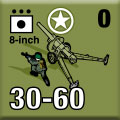 Wilhelm Mohnke, Sandig’s division commander, threatened to have him shot if he did not attack Stavelot immediately. Sandig’s rushed and poorly-coordinated assault quickly fell apart. “We arrived during the afternoon,” one company commander recalled, “and I suspected a trap; my suspicion was confirmed because we found two dead comrades and an abandoned Tiger in front of the bridge. When half of us reached the north side of the bridge we were shot to pieces.” Wilhelm Mohnke, Sandig’s division commander, threatened to have him shot if he did not attack Stavelot immediately. Sandig’s rushed and poorly-coordinated assault quickly fell apart. “We arrived during the afternoon,” one company commander recalled, “and I suspected a trap; my suspicion was confirmed because we found two dead comrades and an abandoned Tiger in front of the bridge. When half of us reached the north side of the bridge we were shot to pieces.”
The SS militia, many of them apparently drunk, ran into a wall of American fire and died before they could gain a foothold across the bridge. Dozens of bodies along with burning armored cars and amphibious vehicles littered the approaches. Despite these heavy losses, small groups infiltrated the town beyond the bridge, where the fighting quickly degenerated into a confused and bitter series of close-range engagements.
Advancing west of Stavelot, Knittel’s militia later claimed they had come under fire from Belgian partisans, an unsubstantiated claim later used to excuse the murder of approximately 80 civilian men, women, and children in the hamlets of Ster and Parfondruy. Near Farm Antoine (hex 0815), the German force came under intense American artillery fire and suffered further casualties. Even so, by about 1800 they had reached the western edge of Stavelot, where they encountered Company A, 1st Battalion, 117th Infantry Regiment. Five Sherman tanks supported the American defense, while the German Tiger tanks played little part in the engagement. A stalemate developed, with neither side able to dislodge the other.
Knittel also sent detachments onto the heights north of Stavelot in an attempt to locate and eliminate the American artillery batteries. Although they occupied Parfondruy with little difficulty, they failed to find the gun positions farther east and withdrew after a firefight near Renardmont. During the evening, additional German groups infiltrated the American lines and established positions in Villa Lambert and the first houses of Stavelot.
At 1945, on the opposite side of the town, American engineers succeeded in placing more than half a ton of TNT beneath the northern span of the bridge. Despite the presence of SS militia in nearby buildings, they detonated the charges, creating a 25-foot gap and finally rendering the bridge at Stavelot impassable.
Notes
This time the militia tries a two-pronged assault, along with liberal doses of schnapps. It’s still going to be tough to dislodge the defense here, with its ability to plaster the plastered militiamen with massive artillery barrages.
Scenario Nineteen
Repeated Failure at Stavelot
20 December 1944
Stavelot, Belgium
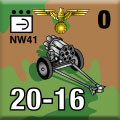 With the bridge over the Amblève destroyed and the route through Stavelot blocked, Peiper’s force could no longer receive the fuel and supplies needed to continue the advance. Restoring the line of communication became an urgent priority, and Peiper ordered Sandig and Knittel to force a passage through the town. With the bridge over the Amblève destroyed and the route through Stavelot blocked, Peiper’s force could no longer receive the fuel and supplies needed to continue the advance. Restoring the line of communication became an urgent priority, and Peiper ordered Sandig and Knittel to force a passage through the town.
By this stage, Rudolf Sandig had only his 1st Battalion available, as the 2nd Battalion had already been sent west to cross at the bridge near Petit-Spai and reinforce Peiper. Sandig did, however, have bridging equipment. Before dawn, about 100 men, supported by tanks and self-propelled guns, attempted to cross the Amblève using a partially completed pontoon bridge. At the same time, Coblenz’s 2nd Company of Knittel’s reconnaissance group launched another attack from its positions around Villa Lambert (Board 130/Hex 1113) and the houses on the western edge of Stavelot, hoping to break through the American defenses from within the town.
Conclusion
 Under cover of darkness, the Germans built a makeshift bridge near the dairy. The activity soon alerted American troops defending the riverfront around the town hall. Illuminated by flares, the crossing became an easy target, and American infantry with copious artillery support quickly brought the attack to a halt. White phosphorus shells further exposed the German assault. Although a few men reached the houses near the destroyed bridge, the attack failed, and the survivors who had crossed the previous day withdrew with heavy losses. Under cover of darkness, the Germans built a makeshift bridge near the dairy. The activity soon alerted American troops defending the riverfront around the town hall. Illuminated by flares, the crossing became an easy target, and American infantry with copious artillery support quickly brought the attack to a halt. White phosphorus shells further exposed the German assault. Although a few men reached the houses near the destroyed bridge, the attack failed, and the survivors who had crossed the previous day withdrew with heavy losses.
At first light, German forces also attacked east of Stavelot at Warche, briefly gaining ground before advancing through the Burteaumont Woods toward Challes. Their identity remains uncertain, although some may have belonged to Otto Skorzeny's force. Additional Germans attempted to establish a bridgehead near Chevofosse and later began building another bridge east of Stavelot. The U.S. 2nd Battalion, 117th Infantry Regiment broke up both efforts, clearing almost the entire north bank of the Amblève. American engineers then destroyed the remaining footbridges at Challes and Bressaix to prevent further infiltration.
Meanwhile, west of Stavelot, Knittel launched another determined attack. Coblenz attempted to outflank the main American defenses by advancing north toward Château des Rochettes, supported by combat engineers and Tiger tanks. The assault fell chiefly on Company A, 117th Infantry Regiment, forcing the Americans to withdraw several hundred meters toward the railway station. Reserve infantry and artillery finally stabilized the line, while additional German groups infiltrated the town using the Crespin footbridge and nearby houses. By late morning, American artillery had slowed the attack, and Coblenz’s exhausted force could advance no farther. Recognizing the danger posed by the Crespin crossing, American engineers demolished the footbridge later that afternoon. Despite fierce house-to-house fighting, the Germans lacked the strength to capture Stavelot.
Notes
The Germans have spread the battlefield in their frantic attempts to get over the river. They have more numbers and they have those Tiger II tanks. The Americans have picked up some more force as well, and still have that splendid artillery.
Scenario Twenty
Wiped Out
21 December 1944
Between Trois-Ponts and Stavelot, Belgium
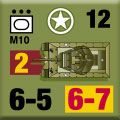 By late afternoon on 20 December, Task Force Lovelady of the U.S. 3rd Armored Division had advanced south along the road between La Gleize and Trois-Ponts. Although it lost several tanks near Petit-Spai, it cut Peiper’s main supply route and isolated Knittel’s reconnaissance combat group west of Stavelot. By late afternoon on 20 December, Task Force Lovelady of the U.S. 3rd Armored Division had advanced south along the road between La Gleize and Trois-Ponts. Although it lost several tanks near Petit-Spai, it cut Peiper’s main supply route and isolated Knittel’s reconnaissance combat group west of Stavelot.
The following day, Task Force Lovelady became stalled in the narrow corridor between Trois-Ponts and Petit-Spai. To maintain the pressure, a battle group led by Lt. Richard Edmark, built around Company D, 33rd Armored Regiment, advanced from Coo over narrow, wooded tracks and struck the rear of Knittel’s force west of Stavelot.
At the same time, two companies of the 3rd Battalion, 117th Infantry Regiment advanced from the woods north of Stavelot to capture the hamlets of Ster, Renardmont, and Parfondruy. From the east, the 1st Battalion, 117th Infantry Regiment renewed its attacks from within Stavelot, increasing the pressure on the increasingly isolated German force.
Conclusion
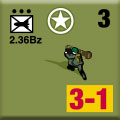 By 0950, the two companies of the 3rd Battalion, 117th Infantry Regiment had reached the approaches to Ster and Renardmont. Company L captured Ster with little difficulty by 1215 hours, while Company I continued fighting for Renardmont into the early afternoon. By 0950, the two companies of the 3rd Battalion, 117th Infantry Regiment had reached the approaches to Ster and Renardmont. Company L captured Ster with little difficulty by 1215 hours, while Company I continued fighting for Renardmont into the early afternoon.
Team Edmark advanced toward Parfondruy and the nearby road junction. Around noon, the task force reached a position within 500 meters of the hamlet but found itself exposed on an open hillside, visible to German forces south of the Amblève. Morning mist had concealed the American advance, but as the visibility improved, German tanks near Wanne engaged the column at long range. At the same time, Knittel’s force subjected Team Edmark to heavy fire from its flank and rear, slowing the advance.
By early afternoon, the Germans had been driven from the hamlets overlooking Stavelot, although they still held a precarious foothold on the town’s western outskirts. Near the destroyed bridge, another attempt by German panzer grenadiers to ford the icy Amblève ended in disaster as entrenched American defenders inflicted severe casualties before the crossing could be completed.
As darkness approached, American troops finally secured Parfondruy, bringing the day’s operations to an end. Knittel’s bridgehead north of the Amblève had been reduced to a narrow salient, and his remaining positions on the western edge of Stavelot were close to encirclement. After retaking the surrounding villages, American troops also discovered the bodies of more than 100 civilians who had been murdered by the SS militia.
Notes
The Germans are not yet encircled when the story begins, but the Americans are coming from two sides to crush them between. Now it’s the Americans’ turn to do some wiping out, and despite wielding armor and artillery, that’s going to be a tough order.
And that’s all for Chapter Four. Next time, on to Chapter Five.
Order Ardennes 1944 (full game) Here.
Please allow an extra six weeks for delivery.
Order Ardennes 1944 (Anarchy) Here.
No rules! You’ll need the Fourth Edition rules from another Panzer Grenadier game. Earlier edition rules will not work with this game.
Please allow an extra six weeks for delivery.
Sign up for our newsletter right here. Your info will never be sold or transferred; we'll just use it to update you on new games and new offers.
Mike Bennighof is president of Avalanche Press and holds a doctorate in history from Emory University. A Fulbright Scholar and NASA Journalist in Space finalist, he has published a great many books, games and articles on historical subjects; people are saying that some of them are actually good.
He lives in Birmingham, Alabama with his wife and three children.
Daily Content includes no AI-generated content or third-party ads. We work hard to keep it that way, and that’s a lot of work. You can help us keep things that way with your gift through this link right here.
|