| Ardennes 1944:
Scenario Preview, Part Five
By Mike Bennighof, Ph.D.
August 2026
 The Ardennes region is tamer now than it was in 1944. There are still forests, but the roads are actually paved now and wide enough for modern vehicles. That wasn’t the case when Germany’s Supreme Leader picked the rough and hilly ground for Germany’s grand counter-offensive. The Ardennes region is tamer now than it was in 1944. There are still forests, but the roads are actually paved now and wide enough for modern vehicles. That wasn’t the case when Germany’s Supreme Leader picked the rough and hilly ground for Germany’s grand counter-offensive.
As is often the case when a political leader decides that he knows better than the professionals, that turned into a disaster for the Nazi cause. Battle Group Peiper included plenty of party fanatics, equipped with the best tanks and weaponry, but didn’t bring along the staffers who might have pointed out that tanks need gasoline.
But in war, the other side gets a say, too. The American high command did not expect their enemies to be stupid enough to attack into this rough ground, in winter, without fuel, food, or ammunition. They had to improvise quickly, and improvise they did. Divisions that had been fighting well away from the Ardennes pulled out of the line and turned toward the sound of the guns, to meet and crush the Nazi infestation.
The SS, judged after the war to be a criminal organization, was not a branch of the German armed forces. But while its men were not soldiers, they did have extensive combat experience and all manner of nifty new weapons. They were a formidable foe, but the National Guardsmen and draftees who met them in the Ardennes proved more than a match.
That’s the story we tell in Panzer Grenadier: Ardennes 1944. Let’s look into the fifth chapter.
Chapter Five
Stoumont, The Point of the Sword
After failing to cross the Lienne at Neufmoulin/Habiemont on the evening of 18 December, Peiper withdrew into the woods between La Gleize and Stoumont. He then decided to follow the Amblève valley through Stoumont and Remouchamps, making another attempt to reach the Meuse. During the night, American forces began closing a tight ring around the spearhead of the 1st SS Panzer Division. At Trois-Ponts, the 82nd Airborne Division relieved the engineers. To the east, at Stavelot, the 117th Infantry Regiment prepared to sever Peiper’s supply route. Meanwhile, the 119th Infantry Regiment of the 30th Infantry Division advanced from the west to secure Stoumont.
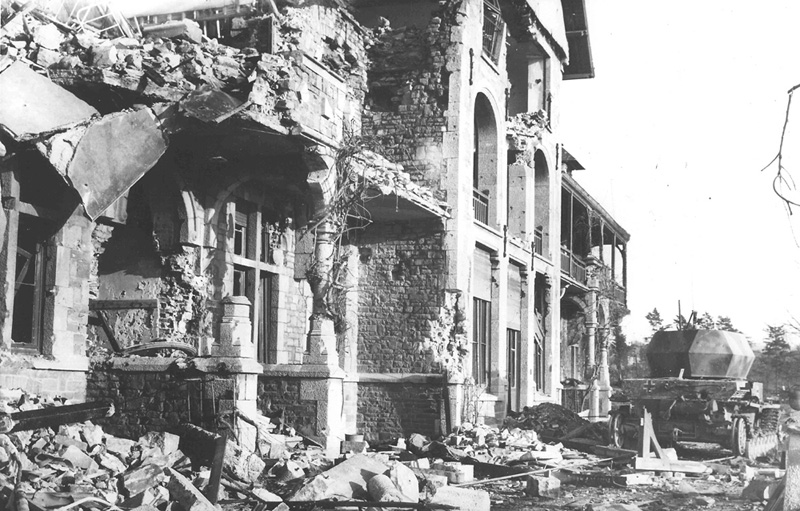
The Saint-Edouard Sanatorium after the battle, with a wrecked Wirbelwind anti-aircraft tank in front of the entrance.
The battle for Stoumont proved disappointing for both sides. The Germans had hoped to push rapidly through the village and continue toward the Meuse, but a shortage of fuel and determined American resistance frustrated their advance. The Americans should have been able to hold Stoumont on 19 December and then move more quickly to destroy the isolated and outnumbered German force.
Scenario Twenty-One
Before Dawn
19 December 1944
Stoumont, Belgium
 When Battle Group Peiper finally reached the Lienne bridge at Neufmoulin at dusk on 18 December, American engineers demolished it. During the night, the German force retraced its route toward Stoumont, intending to take another road west through the winding Amblève valley. When Battle Group Peiper finally reached the Lienne bridge at Neufmoulin at dusk on 18 December, American engineers demolished it. During the night, the German force retraced its route toward Stoumont, intending to take another road west through the winding Amblève valley.
That same evening, a security patrol from Company I, 119th Infantry Regiment, detected between 30 and 40 German armored vehicles southeast of Stoumont, near the Château de Froidcour. Despite this warning, the American infantry remained confident and did not appear particularly concerned by the situation. The Germans, for their part, made little effort to conceal their presence. Throughout the night, American troops could hear them shouting to one another and singing, while the glow of their cigarettes could be seen in the darkness.
At about 0200, as a prelude to the main attack, an Armed SS reconnaissance group moved forward to probe the American defenses around Stoumont.
Conclusion
 Early in the night, a German reconnaissance vehicle struck a mine in a field north of Stoumont and caught fire. But heavy fog and darkness allowed them to approach almost undetected and by 0400, German armored vehicles had reached the American positions. Early in the night, a German reconnaissance vehicle struck a mine in a field north of Stoumont and caught fire. But heavy fog and darkness allowed them to approach almost undetected and by 0400, German armored vehicles had reached the American positions.
At about 0415, the first American anti-tank gun crew withdrew after German troops overran its position. Two anti-aircraft guns arrived from the north to reinforce the defense, but one was lost in a ditch along with its towing vehicle during the confusion. The hastily-laid minefield also did little to slow the German advance.
By 0500, a second American gun crew withdrew under fire from advancing German tanks, while the accompanying infantry fell back toward the village. The German reconnaissance had successfully identified the weak points in the American defenses and paved the way for the main attack.
Notes
It’s a small scenario, in the darkness, without any artillery for either side. The Americans have a couple of batteries of the under-appreciated 3-inch anti-tank gun, while the Nazis get a Panther tank. Success will depend, as always, on the infantry.
Scenario Twenty-Two
An Ominous Rumble
19 December 1944
Stoumont, Belgium
 This is one of the best-known episodes of the Battle of the Bulge. Blocked by the “damned engineers” and forced into the winding Amblève valley, Peiper’s advance force attacked Stoumont in an attempt to break through toward the Meuse. He had little idea of the strength of the American defenses. This is one of the best-known episodes of the Battle of the Bulge. Blocked by the “damned engineers” and forced into the winding Amblève valley, Peiper’s advance force attacked Stoumont in an attempt to break through toward the Meuse. He had little idea of the strength of the American defenses.
During the night, the 3rd Battalion of the 119th Infantry Regiment had taken up positions in the village. It was supported by several anti-tank guns and a single anti-aircraft gun, while additional armored support had yet to arrive. From the east, the main road into Stoumont emerged from the woods where the Germans had gathered and followed the slopes of a hill that concealed the village until the last moment.
That morning, dense fog covered the entire Amblève valley, further restricting visibility. At about 0700, German infantry attacked the American roadblock at the entrance to the village.
Conclusion
 The fog proved to be the Nazis’ greatest ally that morning, allowing them to put the American anti-tank guns identified by the German reconnaissance patrol out of action before the German tanks moved forward. But when the first Panther passed the village church, the American 90mm anti-aircraft gun opened fire and disabled it. The attack stalled, and German commanders had to push their men forward to regain momentum. The fog proved to be the Nazis’ greatest ally that morning, allowing them to put the American anti-tank guns identified by the German reconnaissance patrol out of action before the German tanks moved forward. But when the first Panther passed the village church, the American 90mm anti-aircraft gun opened fire and disabled it. The attack stalled, and German commanders had to push their men forward to regain momentum.
Meanwhile, ten Sherman tanks from the 743rd Tank Battalion moved up to support the American infantry. More German tanks moved around the right flank of the American roadblock and opened fire on positions in Roua, in the northeastern part of the village. The Germans then prepared to push directly into the center of Stoumont.
The Americans gradually fell back through the village, but their defense briefly stabilized with the support of the Shermans. By 1000, however, the American positions had broken down, and a general withdrawal became unavoidable. After roughly three hours of fighting, the Germans had captured Stoumont. American losses were heavy, and Peiper appeared to have won an easy victory.
Notes
We’re fighting over the same ground, but day has come and with it, heavy fog. Both sides have committed more forces, and both have a chance at calling in artillery support (this is not guaranteed). The Germans can win this, but it will nto be an easy victory.
Scenario Twenty-Three
Seeking Gasoline
19 December 1944
North of Stoumont, Belgium
 Having captured Stoumont, the Germans paused to assess their position and, above all, to address their increasingly serious supply problems. The advance had consumed much of their available fuel, and without fresh supplies Peiper’s force could not hope to continue toward the Meuse. Having captured Stoumont, the Germans paused to assess their position and, above all, to address their increasingly serious supply problems. The advance had consumed much of their available fuel, and without fresh supplies Peiper’s force could not hope to continue toward the Meuse.
German patrols therefore moved north from both Stoumont and La Gleize in search of American fuel stocks. Large United States Army fuel dumps lay in the area, offering a potential solution to the Germans’ most pressing problem. Yet the same supply dumps had prompted the Americans to secure the roads leading toward them. Although relatively weak, the American detachments had already taken positions to block both routes.
Conclusion
 On the northern heights above Stoumont, reinforcements joined the small American security detachment at their newly-established roadblock. Some 90mm anti-aircraft guns arrived from Battery A of the 110th Anti-Aircraft Gun Battalion, along with about 80 infantrymen from Company L of the 3rd Battalion, 119th Infantry Regiment, who had withdrawn from Stoumont earlier that morning. On the northern heights above Stoumont, reinforcements joined the small American security detachment at their newly-established roadblock. Some 90mm anti-aircraft guns arrived from Battery A of the 110th Anti-Aircraft Gun Battalion, along with about 80 infantrymen from Company L of the 3rd Battalion, 119th Infantry Regiment, who had withdrawn from Stoumont earlier that morning.
At about 1400, a German reconnaissance group approached the western roadblock on the road to La Reid, followed by infantry. American artillery quickly opened fire, forcing the German infantry back into the woods. They later advanced again, reaching positions within about 500 meters of the American defenses, where they began digging in. Soon afterward, however, they withdrew toward Stoumont.
Meanwhile, another German patrol had moved northeast from La Gleize toward one of the largest American fuel dumps in Europe, concealed in the surrounding woods. Around noon, a German column of six vehicles approached the roadblock from the southwest. The Germans halted about 500 meters from the depot, where a minefield blocked their path. When several men moved forward to clear it, an American gunner spotted them through a gap in the trees and opened fire. A German armored vehicle immediately returned fire and killed the gunner.
The exchange quickly escalated, but neither side inflicted significant damage. The Germans eventually withdrew, ending what may have been Peiper’s last opportunity to seize American fuel supplies. Over the following two days, the Americans successfully evacuated the fuel dump.
Notes
I usually try to avoid hidden units in scenarios, but in this case, it fits the actual events, it makes the scenario work, and there are only two of them. The American defense is pretty thin, but there are not many Germans attacking them, either. The American defense is pretty potent with those anti-aircraft guns plus artillery support.
Scenario Twenty-Four
Stoumont Station
19 December 1944
Targnon, Belgium
 At the western edge of the newly-captured Stoumont, Peiper ordered his men to pursue the retreating Americans almost immediately. The Germans hoped to make another advance through the Amblève valley, but the worsening fuel shortage meant that this might be their last attempt to push farther west. At the western edge of the newly-captured Stoumont, Peiper ordered his men to pursue the retreating Americans almost immediately. The Germans hoped to make another advance through the Amblève valley, but the worsening fuel shortage meant that this might be their last attempt to push farther west.
Seven Panther tanks, one of them already damaged, set out in pursuit, accompanied by two self-propelled anti-aircraft vehicles and an Armed SS infantry company. The American withdrawal, meanwhile, quickly became a rout. The 3rd Battalion, 119th Infantry Regiment, and ten tanks from the 743rd Tank Battalion retreated along the winding forest road toward Stoumont railway station. “We felt,” one American infantryman later recalled, “like ducks in a shooting gallery.” Abandoned personal equipment lay scattered along the N33 for much of the route.
Near the railway station, Company C of the 1st Battalion moved into position and quickly established a new roadblock, giving the retreating Americans a chance to regroup and prepare for the German pursuit.
Conclusion
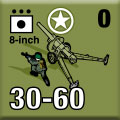 The Stoumont railway station lay at the bottom of the Amblève valley; the road descended from Stoumont through the woods, passed Targnon, and leveled out near the station. Mines laid by the retreating Americans did little to slow the German advance. West of the station, the 1st Battalion, 119th Infantry Regiment, held a strong position in the narrow valley, with reinforcements on the way. The Stoumont railway station lay at the bottom of the Amblève valley; the road descended from Stoumont through the woods, passed Targnon, and leveled out near the station. Mines laid by the retreating Americans did little to slow the German advance. West of the station, the 1st Battalion, 119th Infantry Regiment, held a strong position in the narrow valley, with reinforcements on the way.
The Germans reached Targnon with little difficulty, but as their leading vehicles emerged from the buildings, American artillery and a 90mm gun near the station opened fire. At 1045, the gun knocked out the leading Panther and badly damaged the second. German infantry then cleared the station buildings, but encountered a much stronger American position about a kilometer farther west.
After a brief lull, the Germans resumed their advance shortly after noon. Three Panthers rounded the road bend at about 1300, only for the leading tank to be destroyed. The accompanying infantry tried to outflank the American defenses through the woods, but failed with heavy losses. The Panthers attacked again through thick mist, but American artillery and panic among the German crews destroyed two more tanks. The attack stalled, marking the furthest point of Peiper’s advance toward the Meuse.
At about 1600, tanks from the 740th Tank Battalion arrived and counterattacked alongside the 1st Battalion, 119th Infantry. In the poor visibility, they apparently knocked out the remaining Panthers and blocked the road for the night. Peiper’s advance had finally come to an end.
Notes
We’re on a broad but thin battlefield, with a shaky bunch of American defenders. Even though the Nazis are not numerous, they will be hard to stop. The Americans do have their anti-aircraft guns, plus a Hellcat tank destroyer with its own 90mm Panther-slaying gun.
Scenario Twenty-Five
St-Edouard in Hell
20 December 1944
Targnon, Belgium
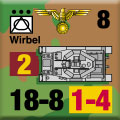 After the fighting at Stoumont station, the 119th Regimental Combat Team spent a relatively quiet night. The following morning, XVIII Airborne Corps ordered the reinforced 119th Infantry to secure the Amblève line from Stoumont to La Gleize. This required the regiment to attack Stoumont from the west and drive the Germans from the village. After the fighting at Stoumont station, the 119th Regimental Combat Team spent a relatively quiet night. The following morning, XVIII Airborne Corps ordered the reinforced 119th Infantry to secure the Amblève line from Stoumont to La Gleize. This required the regiment to attack Stoumont from the west and drive the Germans from the village.
Stoumont dominated the valley to the west, with steep cliffs descending toward the river and wooded terrain to the north. The Americans had little choice but to advance along the winding N33 road and capture the château-like St. Edouard Sanatorium on the western edge of the village. Built on a slope overlooking the valley, the building held considerable tactical importance.
Peiper had therefore organized a strong defensive position around Stoumont and the sanatorium. His situation remained precarious, with his force running short of fuel while the Americans closed in from several directions.
Conclusion
 In the morning, the Americans advanced toward Stoumont in drizzling rain. The tanks of the 740th Tank Battalion again failed to recognize the disabled Panther near the station and fired on it when they came into view. By noon, the Americans had reached Targnon with little resistance, but their advance then slowed under effective German delaying actions. The 1st Battalion, 119th Infantry, came under heavy fire from German infantry in the woods along the road, while five minefields blocked the N33. At 1300, the lead Sherman hit a mine and lost both tracks. Engineers eventually cleared the road, despite several further mine explosions. In the morning, the Americans advanced toward Stoumont in drizzling rain. The tanks of the 740th Tank Battalion again failed to recognize the disabled Panther near the station and fired on it when they came into view. By noon, the Americans had reached Targnon with little resistance, but their advance then slowed under effective German delaying actions. The 1st Battalion, 119th Infantry, came under heavy fire from German infantry in the woods along the road, while five minefields blocked the N33. At 1300, the lead Sherman hit a mine and lost both tracks. Engineers eventually cleared the road, despite several further mine explosions.
By 1530, the Americans had reached the outskirts of Stoumont. Their main obstacle was the St. Edouard Sanatorium, a large, fortress-like building on the western edge of the village. Steep ground limited movement around it, while the German garrison put up strong resistance. Around 1600, two American infantry companies attacked, knocking out an anti-aircraft vehicle positioned outside the building. Company B then entered the complex and, after fierce room-to-room fighting, forced the Germans out by about 1700. By nightfall, the American advance had stalled a few hundred yards short of Stoumont itself.
A second attack came from the north, where Task Force Jordan of the 3rd Armored Division had also been ordered to retake the village. Its leading tanks encountered a lightly defended minefield near Monthouet around noon, then reached a roadblock at the hairpin bend near La Rochette. Two Shermans were destroyed in the ensuing ambush, and the narrow road prevented the Americans from deploying around the obstacle. After heavy close-range fighting, Jordan withdrew.
No single commander controlled the two attacks on Stoumont, resulting in minimal communication between them. As a result, the Americans failed to achieve any of their main objectives that day.
Notes
The Americans are making a disjointed two-pronged attack; the second prong won’t show up for two hours. Meanwhile German reinforcements are dribbling in slowly, which makes a quick attack imperative for the good guys. This will be tough on the American side.
Scenario Twenty-Six
Prayers in the Dark
20 December 1944
Stoumont, Belgium
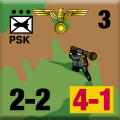 The loss of the St. Edouard Sanatorium, a key position overlooking the approaches to Stoumont, threatened the German defense of the village. Peiper therefore hastily assembled a counterattack force from combat engineers, paratroopers, and the tanks still available in Stoumont. He also summoned an Armed SS infantry company newly-arrived from Cheneux to reinforce the attack. The loss of the St. Edouard Sanatorium, a key position overlooking the approaches to Stoumont, threatened the German defense of the village. Peiper therefore hastily assembled a counterattack force from combat engineers, paratroopers, and the tanks still available in Stoumont. He also summoned an Armed SS infantry company newly-arrived from Cheneux to reinforce the attack.
At about 2230, Peiper’s men launched a sudden counterattack from the high ground behind the sanatorium, striking the American positions under cover of darkness.
Conclusion
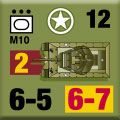 The Germans had assembled along the Route de Spa under the unsuspecting Americans’ noses before launching their attack down the slopes beside the main building. Accurate machine-gun fire and close-range anti-tank weapons suppressed the defenders, allowing German engineers to enter the building. The counterattack eventually drove the Americans out after fierce room-to-room fighting, with German tanks firing directly into the building to support the assault. The Germans had assembled along the Route de Spa under the unsuspecting Americans’ noses before launching their attack down the slopes beside the main building. Accurate machine-gun fire and close-range anti-tank weapons suppressed the defenders, allowing German engineers to enter the building. The counterattack eventually drove the Americans out after fierce room-to-room fighting, with German tanks firing directly into the building to support the assault.
The Germans’ aggressive attacks, accompanied by shouted cries of “Heil Hitler,” made a strong impression on the Americans, and more than 30 were eventually captured. By midnight, the Germans had restored their defenses around the sanatorium, although American troops remained only a few hundred meters away.
German counterattacks continued at 0200 and 0400, striking the American battalion in the woods north of the main road. By 0500, the Germans still pressed them along the entire front. They reached the roadblock near the sanatorium, where tanks from the 740th Tank Battalion stood behind a disabled Sherman. German flares illuminated the road, exposing the American tanks. Anti-tank weapons and direct tank fire destroyed three Shermans, blocking the road completely.
Meanwhile, the sanatorium caught fire, with people screaming from its basement. Tracer fire, gunfire, and burning tanks transformed the scene into one of Dante’s circles of Hell.
Notes
Here we have another small, but intense fight, with armor and infantry brawling in and around the town. The Americans have morale to match the Nazi swine, which is good, because no one has any artillery.
Scenario Twenty-Seven
Squeeze Play
21 December 1944
Stoumont, Belgium
 Brig. Gen. William K. Harrison Jr., the 30th Infantry Division’s assistant commander, drafted the American plan for the day, a three-pronged attack on Stoumont. Task Force Jordan and the remnants of the 3rd Battalion, 119th Infantry, would attack from the north, while the 1st Battalion, supported by Rubel’s tanks from the 740th Tank Battalion, would advance from the west against the sanatorium. Meanwhile, Major McCown’s 2nd Battalion would make a wide movement through the woods to cut the road between Stoumont and La Gleize. Brig. Gen. William K. Harrison Jr., the 30th Infantry Division’s assistant commander, drafted the American plan for the day, a three-pronged attack on Stoumont. Task Force Jordan and the remnants of the 3rd Battalion, 119th Infantry, would attack from the north, while the 1st Battalion, supported by Rubel’s tanks from the 740th Tank Battalion, would advance from the west against the sanatorium. Meanwhile, Major McCown’s 2nd Battalion would make a wide movement through the woods to cut the road between Stoumont and La Gleize.
Harrison had hoped to launch his attack at 0730, but the German night assault on the sanatorium badly disrupted the American front line. The 1st Battalion in particular had suffered heavy casualties: Companies B and C each had only about 60 men still fit for action. Harrison moved the starting time to 1245.
Conclusion
 Almost immediately, the American attack began to unravel. As on the previous day, Task Force Jordan failed to get beyond the bend at La Rochette (Hex 0411). After advancing about 300 yards, it came under German tank fire and withdrew north, leaving an outpost forward of its main position. Almost immediately, the American attack began to unravel. As on the previous day, Task Force Jordan failed to get beyond the bend at La Rochette (Hex 0411). After advancing about 300 yards, it came under German tank fire and withdrew north, leaving an outpost forward of its main position.
The attack from the north also stalled. Two understrength companies of the 3rd Battalion, 119th Infantry, encountered tank and machine-gun fire at the edge of the woods above Roua. Even after American tank destroyers knocked out the Panther defending La Rochette, German counterattacks from Roua drove the infantry back into the woods.
To the west, the depleted 1st Battalion, 119th Infantry, advanced only about 200 yards before heavy machine-gun and small-arms fire stopped it. German tanks meanwhile continued firing at point-blank range into the sanatorium, despite the presence of their own troops inside. Fighting there became particularly fierce.
At 1510, Harrison told the 119th Regimental Combat Team to withdraw to its starting positions under cover of a smoke screen. The most successful part of the attack had been Major McCown’s 2nd Battalion. At 1405, it reached the road above the Château de Froidcour (Hex 1004), where the Americans established a roadblock using felled trees and mines. German infantry eventually forced them back into the woods and captured McCown.
The unexpected penetration appears to have influenced Peiper’s assessment of the situation. He subsequently ordered his remaining forces to withdraw toward La Gleize.
Notes
It’s a complicated plan, with the Americans entering from different directions, but at least this time they’re all showing up at the same time, with numbers and artillery on their side. But the Nazis hold a strong position, backed by armor.
Scenario Twenty-Eight
Taking the Thing
21 December 1944
Stoumont, Belgium
 At 1500, Brig. Gen. William K. Harrison Jr., directing the American attack on Stoumont, acknowledged the lack of progress. “That place is very strong,” he told his division commander, Leland Hobbs. “I don’t think those troops we have no, without some improvement, can take the thing.” The day had been a costly failure for the 119th Infantry Regiment. None of its companies had made significant gains, and all had suffered heavy casualties. In the end, the Americans dug in roughly where they had been the previous day. At 1500, Brig. Gen. William K. Harrison Jr., directing the American attack on Stoumont, acknowledged the lack of progress. “That place is very strong,” he told his division commander, Leland Hobbs. “I don’t think those troops we have no, without some improvement, can take the thing.” The day had been a costly failure for the 119th Infantry Regiment. None of its companies had made significant gains, and all had suffered heavy casualties. In the end, the Americans dug in roughly where they had been the previous day.
With the advance suspended and the troops withdrawn to safer positions, American artillery resumed its bombardment of Stoumont.
Conclusion
 American artillery pounded Stoumont. Late in the afternoon, the 740th Tank Battalion built a rough corduroy road up the hillside, allowing its tanks to approach the sanatorium without using the N33, which remained blocked by wrecked vehicles. The battalion also removed the disabled Shermans. American artillery pounded Stoumont. Late in the afternoon, the 740th Tank Battalion built a rough corduroy road up the hillside, allowing its tanks to approach the sanatorium without using the N33, which remained blocked by wrecked vehicles. The battalion also removed the disabled Shermans.
To strengthen the attack, the 197th Field Artillery Battalion brought forward a borrowed M12 155mm gun and positioned it at Targnon around sunset, giving them enough time to fire 50 rounds before dark. Two tank destroyers also engaged the sanatorium with direct fire.
At dusk, a platoon of Sherman tanks from the 740th Tank Battalion arrived and began firing into the building at close range, even pulling up to the windows. German resistance gradually weakened. At 1800, the 740th reported destroying a German-held Sherman positioned behind the building. By 2005, the American tanks had reached effective firing positions and engaged the remaining German tanks. Artillery fire, including additional rounds from the M12, continued through the night.
By then, Peiper had already decided to abandon Stoumont. Only a small rearguard remained in the sanatorium. It withdrew at about 0400 the following morning, and the Germans escaped toward La Gleize without the Americans realizing it.
Notes
The American edge in artillery and firepower isn’t as great as the scenario description implies. They’re going to have to get right up and close with the Nazis, and kick them out of the Sanitorium and the town. All of that, with weakened morale.
Order Ardennes 1944 (full game) Here.
Please allow an extra six weeks for delivery.
Order Ardennes 1944 (Anarchy) Here.
No rules! You’ll need the Fourth Edition rules from another Panzer Grenadier game. Earlier edition rules will not work with this game.
Please allow an extra six weeks for delivery.
Sign up for our newsletter right here. Your info will never be sold or transferred; we'll just use it to update you on new games and new offers.
Mike Bennighof is president of Avalanche Press and holds a doctorate in history from Emory University. A Fulbright Scholar and NASA Journalist in Space finalist, he has published a great many books, games and articles on historical subjects; people are saying that some of them are actually good.
He lives in Birmingham, Alabama with his wife and three children.
Daily Content includes no AI-generated content or third-party ads. We work hard to keep it that way, and that’s a lot of work. You can help us keep things that way with your gift through this link right here.
|