| Ardennes 1944:
Scenario Preview, Part Six
By Mike Bennighof, Ph.D.
September 2026
 Over the last few years, I’ve re-envisioned Panzer Grenadier games as a storytelling device, using the scenarios to tell the story of the battle or campaign. It’s an unusual approach and, as far as I know, unique. Over the last few years, I’ve re-envisioned Panzer Grenadier games as a storytelling device, using the scenarios to tell the story of the battle or campaign. It’s an unusual approach and, as far as I know, unique.
Philippe Léonard, who designed Panzer Grenadier: Ardennes 1944, gets it. This particular chapter is a perfect example of what we call the story-arc format. It has four scenarios, taking place over just under 29 hours, all of them on the same piece of ground, with mostly the same forces.
As you play them, you see the battle develop, see the situation shift as the German defense is worn down and the American paratroopers continue their attack relentlessly. It’s not just four scenarios, it’s a story told in scenario format.
This is why we say that Ardennes 1944 isn’t just an exceptional game. It’s an experience. Now let’s look at those scenarios.
Chapter Six
All American
Joachim Peiper’s battle group already faced a long list of difficulties: some of these self-inflicted (a plan that ignored the realities terrain, logistics, and weather), some by the U.S. Army (American units putting up fierce resistance). And he also had a very short timetable, crafted by a delusional Supreme Leader pointing his shaky finger at a map of the Ardennes and demanding a breakthrough. So far, Peiper’s battle group had made some progress, but not enough to meet their goals.
And then the paratroopers arrived.
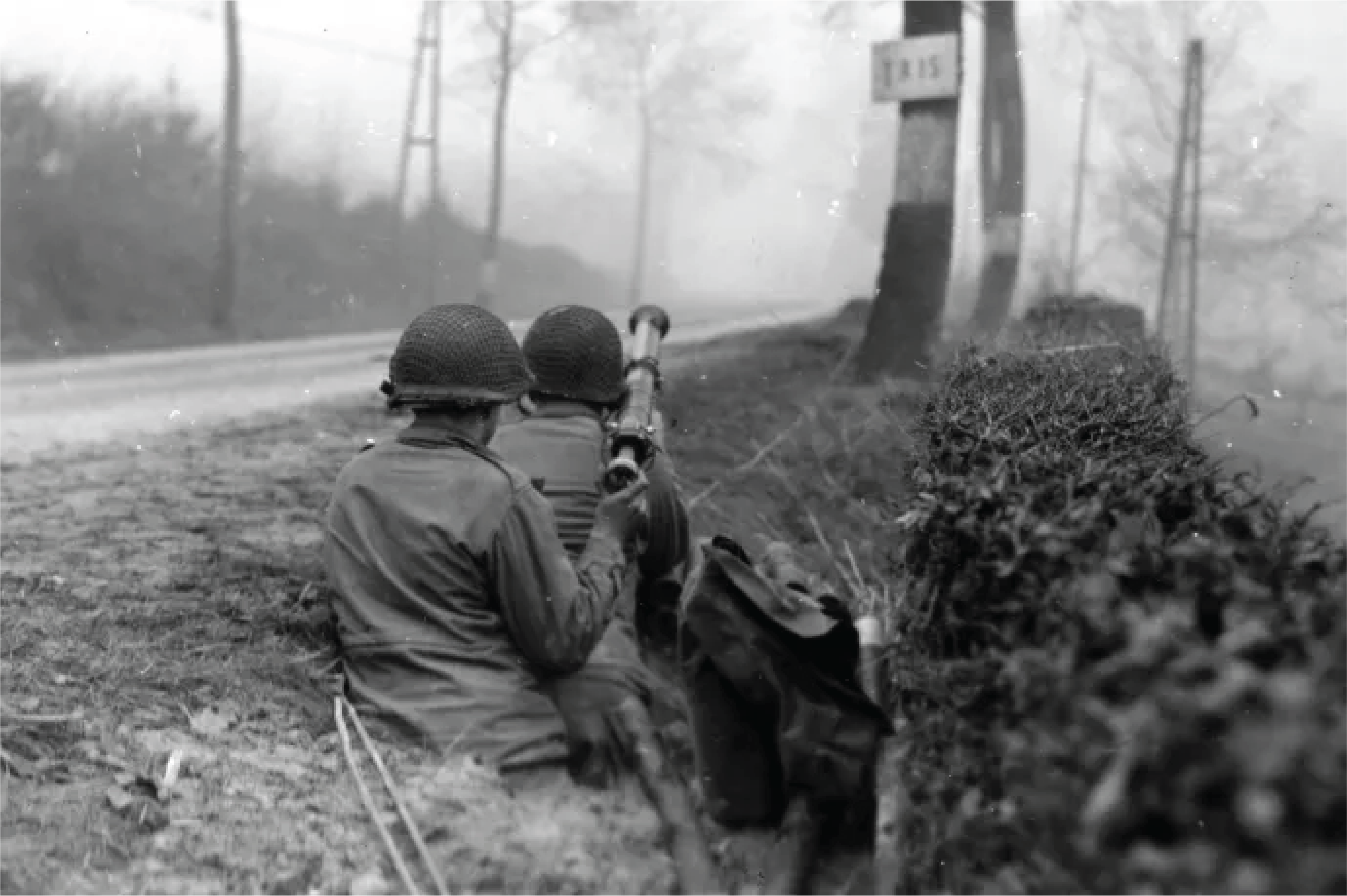
A bazooka team of the 504th Parachute Infantry outside Cheneux. 20 December 1944. The 82nd Airborne Division rushed to the Ardennes without winter clothing or camouflage.
The crack 82nd Airborne Division had fought in Operation Market Garden from mid-September through mid-November, and arrived in rest camps in France on 16 November. Over the next month they took in replacements, trained, and became familiar with the new, more capable C-46 transport.
In those two months of ground combat, the division had taken severe losses: 3,114 out of a combat strength of 11,700 committed to Market-Garden (the latter well above its authorized tables of organization). The losses had been especially heavy among senior NCO’s and junior officers, the type of combat leaders not easily replaced by new men.
But this was an emergency. Alerted on 17 December, the paratroopers hopped aboard trucks at their camps around Rheims the next day. Two days after that, they hopped off near Cheneux, Belgium, and immediately launched a counter-attack against Peiper’s SS militia.
An actual elite force had entered the game.
Scenario Twenty-Nine
Strike Hold
20 December 1944
Cheneux, Belgium.
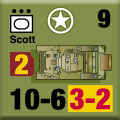 On 19 December 19 Peiper ordered the 84th Light Anti-Aircraft Battalion to hold Cheneux and its bridge at all costs until fuel could be brought forward, allowing the tanks to resume their advance. Meanwhile, the 504th “Strike Hold” Parachute Infantry Regiment of the 82nd Airborne Division relieved the 30th Infantry Division along the Lienne River at Neufmoulin and advanced toward Rahier, on the road to Cheneux. On 19 December 19 Peiper ordered the 84th Light Anti-Aircraft Battalion to hold Cheneux and its bridge at all costs until fuel could be brought forward, allowing the tanks to resume their advance. Meanwhile, the 504th “Strike Hold” Parachute Infantry Regiment of the 82nd Airborne Division relieved the 30th Infantry Division along the Lienne River at Neufmoulin and advanced toward Rahier, on the road to Cheneux.
The intense fire coming from the vicinity of Stoumont, only one or two kilometers to the north, impressed the paratroopers, although the village remained hidden by the mist. For the Americans, the broader situation in the area remained almost entirely unclear; they had little idea of the Germans’ strength or locations. The thick mist only deepened the uncertainty, obscuring the road and the surrounding wooded heights.
Division commander James M. Gavin ordered his men to seize Cheneux and the nearby bridge, then outflank Peiper's force from the south in an attempt to compel the Germans to withdraw toward La Gleize.
Conclusion
 Civilians who remained in their homes witnessed some of the fiercest fighting of the Battle of the Bulge. Several self-propelled anti-aircraft guns and the battered remnants of an Armed SS panzer grenadier company defended the village. The defenders received reinforcements that morning in the form of another Armed SS panzer grenadier company. Civilians who remained in their homes witnessed some of the fiercest fighting of the Battle of the Bulge. Several self-propelled anti-aircraft guns and the battered remnants of an Armed SS panzer grenadier company defended the village. The defenders received reinforcements that morning in the form of another Armed SS panzer grenadier company.
At 1410, a patrol from Company D, 2nd Battalion, 504th Parachute Infantry Regiment, advanced toward Cheneux. A German machine gun opened fire from the southern slope, south of the crossroads west of the village. The Americans then committed Company B to lead the attack, with Company C and Headquarters Company held in reserve. The paratroopers also received support from one of the captured German armored personnel carriers, an SPW 251/9, taken at Habiemont.
After clearing the German outposts along the wooded road, the leading elements of Company B encountered the main German defensive position, which centered on the two westernmost houses in Cheneux. Open fields stretched along both sides of the road, crossed by barbed-wire fences at intervals of roughly 50 yards. The terrain offered the defenders an ideal killing ground.
In the afternoon mist, the paratroopers came under intense, sustained machine-gun fire accompanied by devastating fire from 20mm flak guns. The captured German halftrack moved forward between the attacking platoons, but heavy fire soon forced its crew to withdraw. At 1700, the Americans pulled back. The poorly-conceived attack had failed to break through the German defenses.
Notes
The 82nd Airborne Division has arrived to take out the trash, but the SS militia are well-armed and in a strong position. The troopers will need that soaring morale to overcome them. It’s just a small scenario, but it’s airborne vs. Aryans.
Scenario Thirty
Red Devils
20 December 1944
Cheneux, Belgium
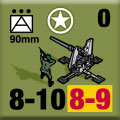 Repulsed in their first attempt, the paratroopers re-assembled and their regimental commander, Col. Reuben Tucker, ordered them to try again after dark. The attack would be carried out once again by B and C Companies of the 504th Parachute Infantry Regiment, the “Red Devils.” The same battalion had forced the Waal River in canvas boats, in the face of machine guns, artillery, and anti-aircraft guns. The SS militia in Cheneux held no terrors for them. Repulsed in their first attempt, the paratroopers re-assembled and their regimental commander, Col. Reuben Tucker, ordered them to try again after dark. The attack would be carried out once again by B and C Companies of the 504th Parachute Infantry Regiment, the “Red Devils.” The same battalion had forced the Waal River in canvas boats, in the face of machine guns, artillery, and anti-aircraft guns. The SS militia in Cheneux held no terrors for them.
Conclusion
From the outset, the paratroopers suffered heavy casualties. The terrain was flat for 400 yards giving the Germans perfect grazing fire with no cover for the attacking forces. The numerous barbed wire fences through the cattle meadows impeded movement and resulted in even more casualties.
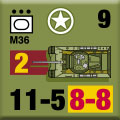 The crews of two M36’s from the 703rd Tank Destroyer Battalion, ordered to support the advance, instead remained 400 meters behind, hidden among brush. Their commander, Lt. Jim Roberts, told the Red Devils’ battalion commander, Lt. Col. Willard Harrison, that he would not advance as his vehicles had no chance against the German defenses. Harrison, watching his men die in the open fields, became utterly enraged and told Roberts that if he did not advance immediately, the paratroopers would shoot him and his crewmen and take the tank destroyers into the town themselves. Roberts advanced. The crews of two M36’s from the 703rd Tank Destroyer Battalion, ordered to support the advance, instead remained 400 meters behind, hidden among brush. Their commander, Lt. Jim Roberts, told the Red Devils’ battalion commander, Lt. Col. Willard Harrison, that he would not advance as his vehicles had no chance against the German defenses. Harrison, watching his men die in the open fields, became utterly enraged and told Roberts that if he did not advance immediately, the paratroopers would shoot him and his crewmen and take the tank destroyers into the town themselves. Roberts advanced.
Even with the tank destroyers (both of which survived), the paratroopers could only gain a foothold in the fringes of the village after brutal hand-to-hand combat. Company B had 28 men and no officers who had not been killed or wounded; Company C had three officers and 40 men.
Notes
It’s another small scenario, over the same ground as the previous encounter but this time at night. The Americans have that paratrooper morale, except for the tank destroyers, who do not. It’s one of the more dramatic moments in a campaign filled with drama.
Scenario Thirty-One
Blue Devils
21 December 1944
Cheneux, Belgium
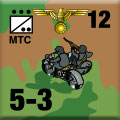 During the night, Colonel Tucker called for a company from his 3rd Battalion (the “Blue Devils”) to continue the attack on Cheneux. At 0300, Company G launched another assault against the village, but German resistance again proved too strong. The attack was repulsed with heavy American casualties, and Cheneux remained firmly in German hands. During the night, Colonel Tucker called for a company from his 3rd Battalion (the “Blue Devils”) to continue the attack on Cheneux. At 0300, Company G launched another assault against the village, but German resistance again proved too strong. The attack was repulsed with heavy American casualties, and Cheneux remained firmly in German hands.
At first light, the paratroopers began preparing yet another attack. This time, they planned to turn the German position from the south, with a thrust along the right flank aimed at the hamlet of Monceau. Capturing Monceau would threaten the German positions in Cheneux from the rear and cut their line of communication, potentially forcing the defenders to abandon the village. The new plan therefore sought to avoid another costly frontal assault and instead isolate the German force before striking at Cheneux once more.
Conclusion
Once again, the Germans anticipated the American flanking movement along the creek and prepared to meet it with machine-gun fire from the ridgeline. As the paratroopers advanced toward Monceau, concentrated fire brought the attack to an abrupt and costly halt.
At 0745, at least one company of German grenadiers, supported by several self-propelled anti-aircraft guns, launched a counterattack from Cheneux in an attempt to recover the ground lost during the previous night. The attack quickly broke down, and the Germans regained no more than two or three hundred yards of ground. With neither side able to make further progress, both forces regrouped and settled into a tense exchange of small-arms fire and sniping.
The fighting had taken a terrible toll. By this stage, casualties on both sides had been exceptionally heavy, and the opposing forces faced each other across a shattered and closely contested battlefield.
Notes
The Americans are not giving up. Well, at least not the paratroopers; the tank destroyers have made themselves scarce. The Germans still have plenty of support weapons, but their infantry is in short supply.
Scenario Thirty-Two
White Devils
21 December 1944
Cheneux, Belgium
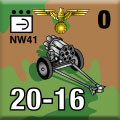 At 0900, division commander James Gavin visited the regimental command post at Rahier and ordered the 504th Parachute Infantry Regiment to eliminate the German forces holding Cheneux. By this point, all available units had been released to regimental control, including the fresh 2nd Battalion (the “White Devils”), giving the regiment the freedom to concentrate its forces for a full-scale attack. At 0900, division commander James Gavin visited the regimental command post at Rahier and ordered the 504th Parachute Infantry Regiment to eliminate the German forces holding Cheneux. By this point, all available units had been released to regimental control, including the fresh 2nd Battalion (the “White Devils”), giving the regiment the freedom to concentrate its forces for a full-scale attack.
Rather than repeat the costly frontal assaults of the previous day and night, the Americans once again planned to turn the German position from the south. The renewed plan called for the paratroopers to move through the forest south of Cheneux, advance toward Monceau, and then attack the village from the flank. By reaching Monceau, they hoped to threaten the German position from the rear and cut it off from the surrounding defensive positions. The maneuver would again test whether the Americans could work around the German defenses rather than attempting to break through them head-on.
Conclusion
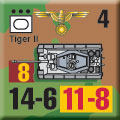 A Royal Tiger tank suddenly appeared in the village and moved within range of the Boutet house, hitting the American command post there several times. At the same time, German infiltrators wearing American uniforms and traveling in American jeeps attempted to penetrate the American positions, adding to the confusion behind the front line. A Royal Tiger tank suddenly appeared in the village and moved within range of the Boutet house, hitting the American command post there several times. At the same time, German infiltrators wearing American uniforms and traveling in American jeeps attempted to penetrate the American positions, adding to the confusion behind the front line.
Meanwhile, the Americans sent reconnaissance patrols around both flanks of Cheneux in an effort to reach the river and complete the encirclement of the German position. At 1630, Companies H and I of the 504th Parachute Infantry Regiment captured Monceau despite resistance from the German self-propelled anti-aircraft guns. The Americans then attempted to descend into the valley and close the gap between their forces, but as they moved into the open ground, they came under heavy fire from 20mm anti-aircraft guns. The intensity of the fire forced most of the advancing paratroopers back onto the surrounding high ground.
At 1700, the American tank destroyers finally moved into Cheneux along the main road. They advanced through the village, clearing the remaining German positions as they went, until they linked up with the forces approaching from the flank. By then, however, the German position had already begun to collapse. Peiper had ordered his forces to abandon the bridgehead, and most of the defenders withdrew toward La Gleize. The last German troops left Cheneux at dusk.
By 1945, the 504th held Monceau, Cheneux, and the bridge. The victory had come at a heavy cost. The regiment had suffered 23 men killed and 202 wounded. Company B had been reduced to just 18 men and had lost all of its officers, while Company C had only 38 men and three officers remaining. After several days of continuous fighting, the 504th had secured its objective, but its leading companies had been left severely depleted.
Notes
And we wrap up with the final American assault, another bloody affair in a very small place. The Nazis have brought in a Royal Tiger platoon, but those M36 tank destroyers are back. Even so, the Americans are going to need their reinforcements; the airborne division doesn’t have the same awesome artillery as its infantry counterparts, with three of its four battalions wielding the 75mm pack howitzer (and the fourth was not at Cheneux).
And that would be all for Chapter Six. Next time, we dive into Chapter Seven.
Order Ardennes 1944 (full game) Here.
Please allow an extra six weeks for delivery.
Order Ardennes 1944 (Anarchy) Here.
No rules! You’ll need the Fourth Edition rules from another Panzer Grenadier game. Earlier edition rules will not work with this game.
Please allow an extra six weeks for delivery.
Sign up for our newsletter right here. Your info will never be sold or transferred; we'll just use it to update you on new games and new offers.
Mike Bennighof is president of Avalanche Press and holds a doctorate in history from Emory University. A Fulbright Scholar and NASA Journalist in Space finalist, he has published a great many books, games and articles on historical subjects; people are saying that some of them are actually good.
He lives in Birmingham, Alabama with his wife and three children.
Daily Content includes no AI-generated content or third-party ads. We work hard to keep it that way, and that’s a lot of work. You can help us keep things that way with your gift through this link right here.
|