| Sea of Iron:
Design Notes, Chapter Two
By Mike Bennighof,
Ph.D.
August
2026
 As I mentioned (well, ranted about) in the design notes to Chapter One, the new Playbook Edition of Second World War at Sea: Sea of Iron presented an opportunity to re-make the scenario set into the historical narrative I want for all of our games. Chapter Two covers the 1939-40 Winter War between the Soviet Union and Finland. As I mentioned (well, ranted about) in the design notes to Chapter One, the new Playbook Edition of Second World War at Sea: Sea of Iron presented an opportunity to re-make the scenario set into the historical narrative I want for all of our games. Chapter Two covers the 1939-40 Winter War between the Soviet Union and Finland.
Centering Sea of Iron around the historical operations that took place on the small, narrow sea means bringing the naval side of the 1939-1940 Winter War into more prominence. The Winter War took place in winter, one of the nastiest winters in many years. That meant that the Baltic Sea iced over even earlier than usual, limiting naval operations to just a few weeks.
At first glance, there’s not a lot of naval action, and a deeper look pretty much confirms this. The Finnish Navy was small, built around a pair of coast-defense ships and a handful of submarines. The Finns controlled the narrative of this war as seen by the outside world (the parallels between the information war waged by 1939 Finland and 2022 Ukraine are very obvious). One of the legends that the Finns managed to push across well enough that it still lingers in the current historiography is that Finnish sailors showed the same skill and determination as Finnish soldiers and airmen. And that’s just not true. The Finnish Navy was not very good; luckily for them, the Soviets’ Red Banner Baltic Fleet was even worse.
The Finnish Army did boast well-drilled and very effective coast-defense artillery. The Finns built an integrated network of coast-defense forts including armored turrets and open battery positions, with weaponry ranging from light-weight anti-boat guns to repel amphibious landings through battleship-sized long-range guns.
The Finns built their network in cooperation with the Estonians across the Gulf of Finland. Admiral Johan Pitka, the first commander of the Estonian Navy, had championed this integrated bi-lateral artillery network. He also strongly supported the notion of Finnish-Estonian union, anywhere from a defense pact to outright political merger. In this sphere, at least, the two allies could close the Gulf of Finland to Soviet warships with their long-range guns (sited for overlapping fields of fire from either shore) and minefields.
The war did not work out that way. The Estonians yielded to Soviet pressure, while the Finns refused. When the Soviets invaded Finland, Estonia remained neutral; to do otherwise would have been an act of national suicide. The Finnish coastal artillery proved efficient, but the Soviets had the option to move out of range, something the integrated defense plan would not have allowed. Like the Finns, the Estonian coastal gunners considered themselves an elite, and Estonia poured a significant fraction of its limited defense budget into the sea-side fortresses.
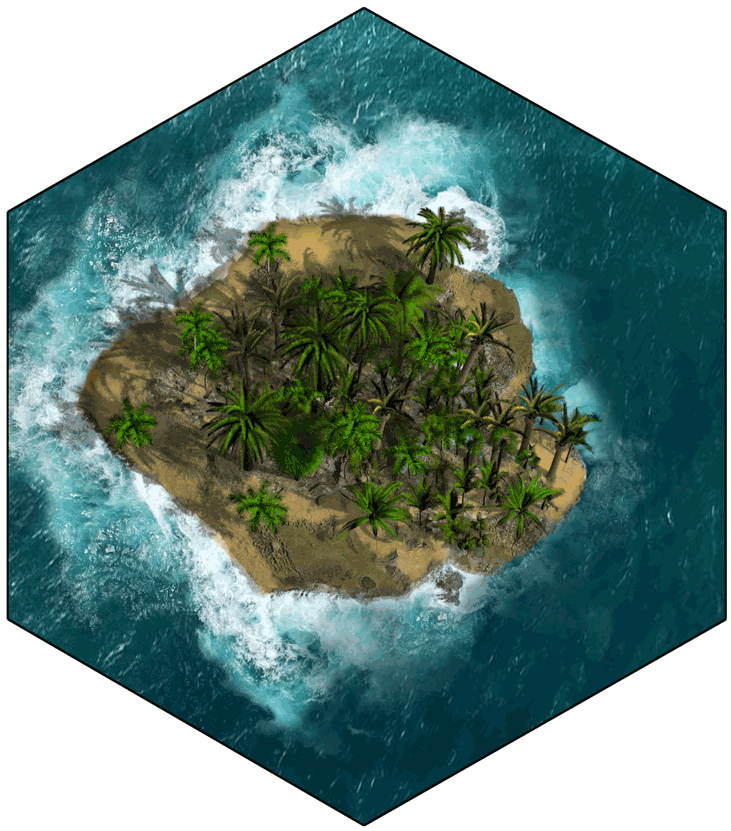
The Playbook edition makes a significant change from the earlier versions, by identifying every major Finnish, Estonian, and Soviet coastal-defense battery and adding them to the game’s scenarios. This changes the game significantly; the big guns can interfere with enemies passing through whether you want to stop and engage them or not. And the Gulf of Finland is very narrow.
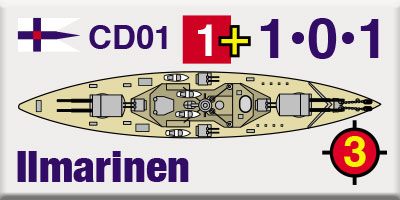
Finland also built a pair of coast-defense ships, really no more than armored gunboats with huge cannon (four 254mm, or 10-inch, guns in two twin turrets) for their rather diminutive size (3,900 tons). As high seas warships they were utterly useless, but that was not their purpose. They extended the coast-defense artillery system by acting as four-gun, somewhat mobile armored batteries that could hide among the thousands of rocks and islets lining the Finnish coast. That’s not how the Soviets saw them; the Red Banner Baltic Fleet’s command staff became obsessed with sinking them.
Even with the bigger role for coastal artillery, the Winter War doesn’t provide a whole lot of action: one operational and two battle scenarios. The rest of the chapter is given over to the possibility that the Soviets found concerning (it’s not accurate to say they feared it, due to their poor planning for any aspect of this war) and on which most Finns pinned their hopes of survival: Swedish intervention. But once again as in 2022 Ukraine, the friendly neighbors to the West would lend moral support and some arms, but would not involve themselves directly.
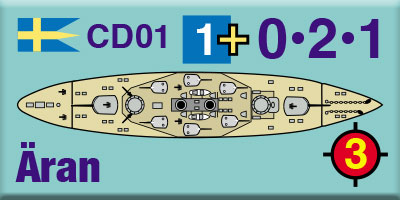
While the Swedish fleet of 1939 far out-gunned that of Finland, and had trained to a far higher standard, on paper at least it did not match Soviet power. The Swedes still operated ancient coast-defense ships laid down in the first years of the 20th Century and modernized in the 1930’s. In their new guise they looked like very modern warships, but they remained slow, poorly-protected and weakly-armed. Only the three newest of them had any place in modern naval warfare. But the Swedes did possess a modern destroyer force, including the best-named ship in all of Second World War at Sea, HSwMS Puke.

We let the Swedes intervene with the forces they had available in 1939. Severe cutbacks in the late 1920’s had only just started to be made good by 1939, and Sweden had only 36 operable fighter planes. In other scenarios, we give the Swedes the air and naval forces they could have had, if the Riksdag had been willing to give the same funding squandered on the expensive and ultimately useless program of re-building ancient vessels to a true naval re-armament instead.
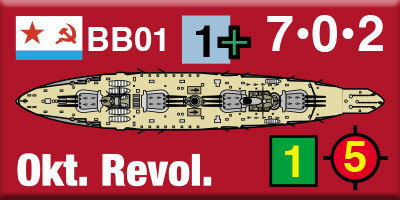
While it doesn’t look good for Sweden (or Finland) on paper, the Red Banner Baltic Fleet (it won the award in 1935 for supposed peacetime excellence) was simply awful: its staff caught by surprise when their government launched a war of choice, the crews scantily-trained, and the ships poorly maintained. Short version? It might look bad, but the Swedes can take these guys, especially with their modern fleet (and we only went with a reasonable re-armament program, based on the Swedish Navy’s actual requests).
I didn’t want the game to veer as far away from the historical narrative as did the earlier editions, but the Swedish Riksdag debated intervention in October 1939, with the ruling Social Democrats split on the issue, the Right fully in favor, and the Liberals and Farmers united in opposition. As it stood, the Swedes poured financial and military aid into the Finnish cause, with 15,000 Swedes volunteering to fight for Finland. Direct intervention is certainly a historical alternative worth exploring.
Order Sea of Iron (full game) Here.
Order Sea of Iron (Anarchy) Here.
No rules!
You’ll need the Second Edition rules from another Second World War at Sea game. Earlier edition rules will not work with this game.
Sign up for our newsletter right here. Your info will never be sold or transferred; we'll just use it to update you on new games and new offers.
Mike Bennighof is president of Avalanche Press and holds a doctorate in history from Emory University. A Fulbright Scholar and NASA Journalist in Space finalist, he has published a great many books, games and articles on historical subjects; people are saying that some of them are actually good.
He lives in Birmingham, Alabama with his wife and three children.
Daily Content includes no AI-generated content or third-party ads. We work hard to keep it that way, and that’s a lot of work. You can help us keep things that way with your gift through this link right here.
|