| Sea of Iron:
Design Notes, Chapter Three
By Mike Bennighof,
Ph.D.
September
2026
 The June 1941 Axis invasion of the Soviet Union has been the basis for hundreds of hex-and-counter wargames based on the campaigns on land. Second World War at Sea: Sea of Iron appears to be the only one to address Operation Barbarossa at sea. The only one! The June 1941 Axis invasion of the Soviet Union has been the basis for hundreds of hex-and-counter wargames based on the campaigns on land. Second World War at Sea: Sea of Iron appears to be the only one to address Operation Barbarossa at sea. The only one!
The Baltic campaigns of 1941 did not feature a lot of clashes between fleets of cruisers, destroyers, and battleships. The Soviets had a more powerful fleet in the Baltic, at least on paper (crew training was poor, and the most powerful surface units were also by far the oldest), but the Germans dominated in the air (when the Air Force could be convinced to cooperate).
The very narrow geography of the Baltic Sea dictated the flow of operations. Mines had dominated the theater during the First World War, and so they would during the Second. But mines, then as now, are not a “fire and forget” weapon. They float away, they sink, they explode under pressure from ice, or they just deteriorate. Minelaying is a constant need, and so is minesweeping. And both of those have to take place in the face of enemy action.
The Soviets had built up an enormous submarine fleet in the years before the war, which was good from their perspective, since only a small proportion could be kept operational. That still allowed them to conduct missions against enemy commerce and warships. The Finns, allied to Germany, had a small and not very good submarine flotilla. The Germans used the Baltic as a training ground for their own submarine crews, and could deploy the boats on missions their when they chose.
Ground operations had to be supported as well. The Germans conducted a large amphibious operation in September 1941, and both sides used warships to provide heavy artillery fire for their land forces.

The Baltic Sea (see the map right up above) extends north to south, with a large and narrow bay, the Gulf of Finland, on its eastern shore. At the head of the Gulf lay the major industrial and shipbuilding center of Leningrad, with the Soviet Baltic Fleet’s main base, Kronstadt, nearby. The Germans and Finns did not manage to capture Leningrad and eliminate the Soviet fleet, forcing them to seal the mouth of the Gulf of Finland with mines and powerful coastal artillery.
A breakout by the Soviets into the wider Baltic Sea, if sustained, could have been catastrophic for the Germans. German industry depended on high-grade iron ore shipped from Lulea in northern Sweden down the length of the Baltic (thus our game title, Sea of Iron). The Soviet base at Hanko in western Finland gave them the opportunity to attack this traffic; if they could break out of the Gulf, they could block it. Axis operations in the Baltic Sea in 1941 centered on preventing this from happening.
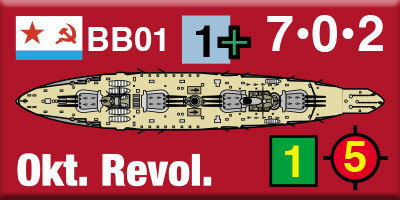
The Red Banner Baltic Fleet, unlike its compatriots on land, was not caught by surprise when the Germans struck. Even so, they did not manage to disrupt German and Finnish minelaying operations to any great degree, but the game covers their attempts to do so, and the surface battles that might have resulted had they made contact. The Germans also considered that the Soviets might follow the Polish example and make an immediate run for Britain; this was never a Soviet intent and the ships likely would have been lost to the minefields in the Danish Straits if they somehow made it that far. But the Germans through it could happen, so we study their planning (they did not have a very good plan).
Ever wonder what a Dunkirk evacuation gone wrong would have looked like? There’s no need to wonder, there’s a concrete example: the Soviet evacuation of Talinn in August 1941. Talinn isn’t that far from Kronstadt (about 200 kilometers by sea), but Baltic Fleet commander Vladimir Tributs hesitated to order Talinn abandoned until it was much too late. About 40,000 people boarded ships in Talinn, and of those, about 15,000 died along the way. The Soviets lost 15 warships and 42 non-combatant vessels, most of those to mines and aircraft.

With the fall of Talinn, the Germans and Finns could seal the mouth of the Gulf of Finland with minefields backed by coastal artillery – enacting the 1939 plans of Finland and Estonia. With the Soviet Baltic Fleet on the wrong side of the mine barrages, the Germans could then undertake their largest amphibious operation of World War II.
In September 1941, Operation Beowulf brought 24,000 men of the reinforced German 61st Infantry Division to the large island off Estonia’s western coast (Saaremaa, known as Ösel to the Germans. Slow-moving convoys of ferries, fishing boats, and motorized barges carried the troops and their equipment, fantastically vulnerable to enemy attack. The Soviets did not risk their surface units in the minefields to strike at the invaders, but you can make a different decision. A month later, Operation Siegfried carried the troops onward to the island just to the north and Hiiumaa, which the Germans called Dagö.

Just in case of a breakout by the Soviet Baltic Fleet’s major surface units to interfere with those operations, or to head for neutral Sweden, the Germans stationed their own Baltic Fleet in the central part of the inland sea. Initially the fleet had three light cruisers at its core, but over the following days the German naval command added the battleship Tirpitz and armored cruiser Admiral Scheer. The Soviets did not attempt a breakout, and Tirpitz eventually left the Baltic, but this was too good of a historically-based opportunity for some battleship action so we had to include it. The Soviet advantage looks immense on paper, but as mentioned above, their crews are not very good.
And that’s Chapter Three of Sea of Iron, the 1941 phase of the Great Patriotic War. Players will be challenged with many types of naval operations, from surface battles through convoys to minelaying and shore bombardment. You’ll come to appreciate those ugly little vessels that place and remove mines.
Again, this is the only game out there about World War II on the Baltic, and even better, it’s a Second World War at Sea game – a game you already know how to play.
Order Sea of Iron (full game) Here.
Order Sea of Iron (Anarchy) Here.
No rules!
You’ll need the Second Edition rules from another Second World War at Sea game. Earlier edition rules will not work with this game.
Sign up for our newsletter right here. Your info will never be sold or transferred; we'll just use it to update you on new games and new offers.
Mike Bennighof is president of Avalanche Press and holds a doctorate in history from Emory University. A Fulbright Scholar and NASA Journalist in Space finalist, he has published a great many books, games and articles on historical subjects; people are saying that some of them are actually good.
He lives in Birmingham, Alabama with his wife and three children.
Daily Content includes no AI-generated content or third-party ads. We work hard to keep it that way, and that’s a lot of work. You can help us keep things that way with your gift through this link right here.
|