South Pacific:
Second Guadalcanal, Part Two
by Mike Bennighof, Ph.D.
November 2025
 Air searches had been fruitful for both sides. The Japanese had located Enterprise and her task force, and Ching Lee’s battleship group. Two dozen land-based bombers sent from Rabaul failed to find the carrier, while the scout crews mis-identified the two American battleships as cruisers. Kondo, with a battleship and two heavy cruisers, did not fear a pair of American heavy cruisers. Air searches had been fruitful for both sides. The Japanese had located Enterprise and her task force, and Ching Lee’s battleship group. Two dozen land-based bombers sent from Rabaul failed to find the carrier, while the scout crews mis-identified the two American battleships as cruisers. Kondo, with a battleship and two heavy cruisers, did not fear a pair of American heavy cruisers.
Kondo flew his flag in the Second Fleet flagship, the heavy cruiser Atago. He also had Kirishima, the heavy cruiser Takao, the light cruisers Nagara and Sendai, and the destroyers Teruzuki, Kagero, Oyashio, Asagumo, Samidare, Inazuma, Hatsuyuki, Shirayuki, Shikinami, Uranami, and Ayanami. Only Kirishima and three of the destroyers had been part of Abe’s flotilla two nights before. They passed Tanaka’s convoy at about midnight, on their way to Ironbottom Sound.
Ching Lee’s Task Force 64 had the fast battleships Washington and South Dakota, and just four destroyers: Gwin, Walke, Benham, and Preston. None of the remnants of Task Force 67 joined them; all came from the Enterprise screen. Lee took his ships to a spot south-west of Guadalcanal at about noon and loitered there through the afternoon of the 14th, where Japanese search planes spotted the Americans.
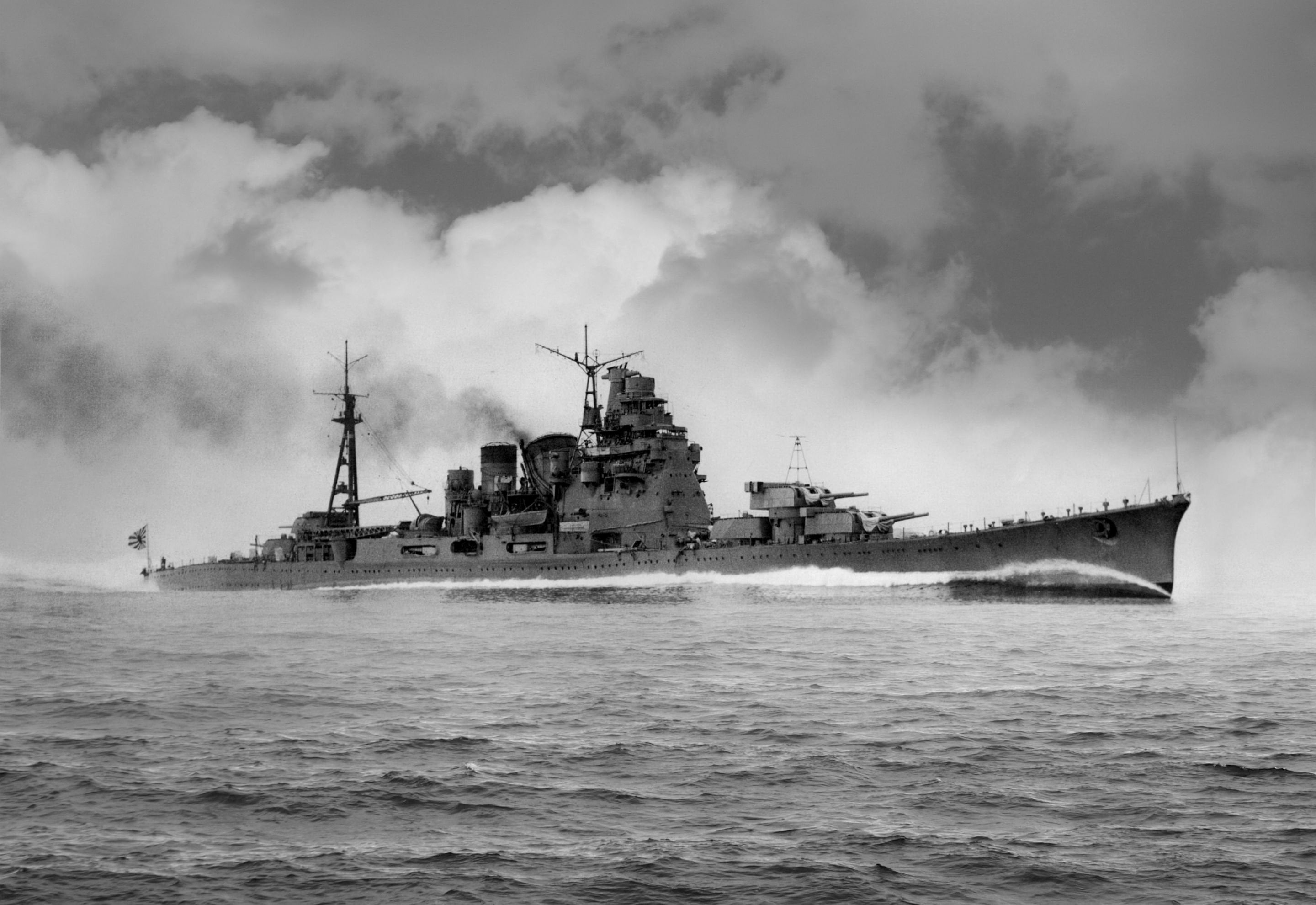
Heavy cruiser Takao survived the battle, and the war, to battle Godzilla years later.
Each side knew to expect the other. The Japanese believed they would out-gun their foes; the Americans knew they had an overwhelming firepower advantage, but only four destroyers to protect the big ships from Kondo’s eleven tin cans and their huge oxygen-fueled Type 93 torpedoes.
As night fell, Lee took his task force into Ironbottom Sound, steaming around the north side of Savo Island to enter from the western end; he did not dare to risk his battleships in a night passage through the reef-strewn entrance channels on the Sound’s east end. They turned around Savo and at 2249 took up a position south of Tulagi to await the Japanese, who weren’t long in coming; PT boats reported sighting Kondo’s force at 2317; Washington picked up the Japanese on radar at one minute past midnight.
The Japanese approached Ironbottom Sound from the north, through Indispensable Strait, rather than down the Slot. Kondo split his force into three groups: the Sweeping Unit, with the light cruiser Sendai and three destroyers, moved east of Savo Island. The Screening Unit, with the light cruiser Nagara and four destroyers, to the island’s west. The Bombardment Unit, in line ahead formation led by Kondo’s flagship Atago, had the two heavy cruisers, Kirishima and two destroyers.
Japanese lookouts spotted the Americans at 2313, identifying them as two cruisers and four destroyers. Lee steamed in line-ahead formation, with his four destroyers in the van and South Dakota bringing up the rear. Kondo ordered his Screening Unit to deal with them, while the Bombardment Unit veered away to the north of Savo Island at 2315 so as not to become entangled in the fight. The Americans opened fire one minute later. Washington fired both main and secondary batteries at the Sweeping Unit, with South Dakota joining in almost immediately. Rear Admiral Sentaro Hashimoto, commanding the Sweeping Unit, ordered his ships to make smoke and turn to the east; the Americans scored no hits.
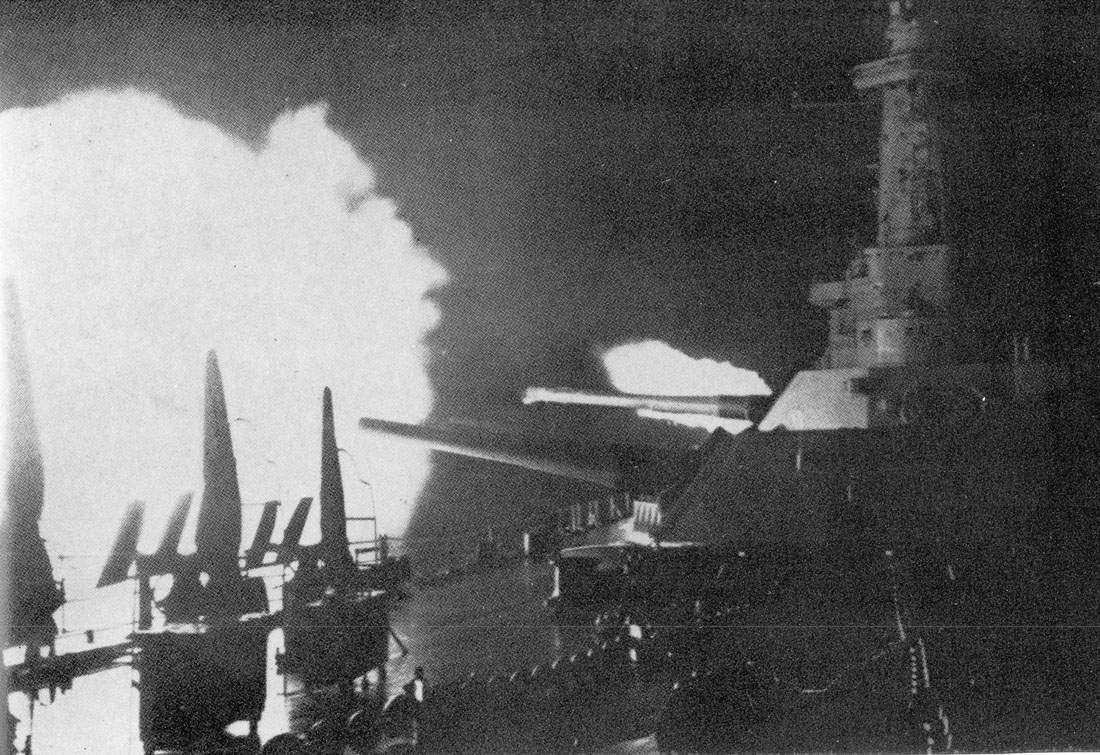
Washington fires her main battery, during the 15 November Battleship Action.
The American destroyers soon became entangled with those of the Screening Unit, and Ayanami, detached by Hashimoto. The American destroyer Walke shot up Ayanami, which had to be abandoned. Nagara in turn blasted the destroyer Preston, which may have also been hit by 5-inch shells from Washington; Preston’s after magazine exploded and she sank with 116 of her crew. Walke, hit by a Japanese torpedo and many shells from Nagara, sank soon afterwards. Benham, her bow blown off by a Japanese torpedo, limped away but sank on the 15th. Gwin, heavily damaged by gunfire, escorted her away but survived to be repaired.
That left the Americans with just the two battleships, and the Japanese heavy ships coming out from behind Savo Island to engage them. Kondo could not allow the Americans past him, lest they find and destroy Tanaka’s helpless convoy. Meanwhile, South Dakota’s chief engineer, Cdr. James R. Terwilliger, had put all of the ship’s electrical systems on a single circuit. When the aft turret fired, the shock knocked out power throughout the ship, for between three and eight minutes (sources vary on the exact length of the outage).
The darkened South Dakota drifted in front of the burning destroyer Benham, while Washington moved behind the wrecked boat. That silhouetted South Dakota against the flames, while at the same time hiding Washington from the eyes of Japanese spotters. Kondo’s turn brought the Japanese heavy ships on a parallel course to South Dakota, but neither side opened fire at first, fearing that the dark shapes were actually friendly ships. At 1201, Kondo told Atago’s captain, Baron Matsuji Ijuin, to light up the strange ship. A single searchlight revealed the unmistakable profile of an American fast battleship. Kirishima and both Japanese heavy cruisers immediately opened fire on South Dakota, followed by the big guns of the unseen Washington targeting Kirishima.
Kirishima’s Capt. Sanji Iwabuchi claimed ten 14-inch hits on South Dakota, but only one such shell hit the Shitty Dick, disabling her aft 16-inch turret. Both cruisers also targeted her, between them scoring seventeen 8-inch and five 6-inch hits, and one 5-inch hit. The lighter shells could not penetrate her thick hide (one did hole her below the waterline), but they blew away most of her electronics: radar, gunnery direction, and radio. Unable to contact Lee, South Dakota turned away from the battle.
“After this ship lost both SG and SC (radar) equipment,” South Dakota skipper Thomas Leigh Gatch wrote in his after-action report, “the psychological effect on the officers and crew was most depressing. The absence of this gear gave all hands a feeling of being blindfolded.”
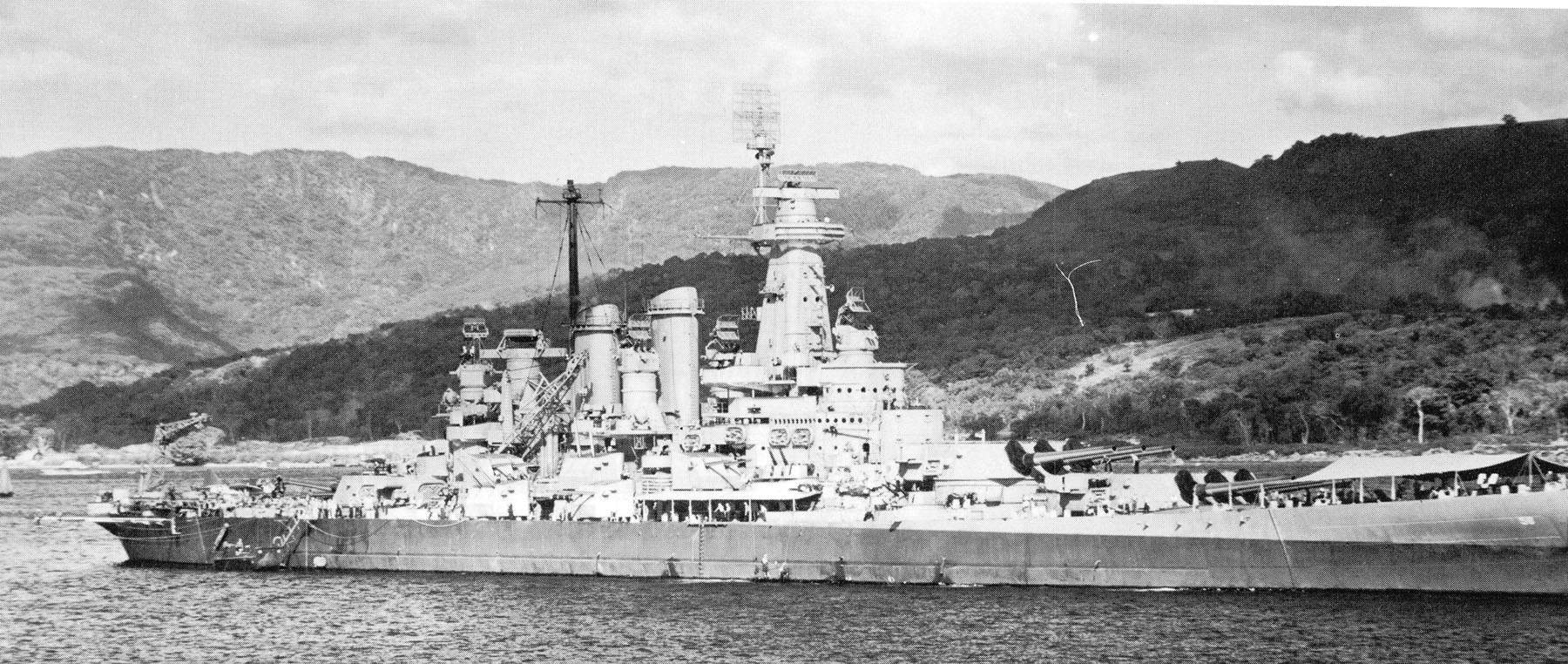
Washington after the battle.
Kirishima took enormous punishment that was not fully understood until her wreck was found in 1992. Washington hit her with at least twenty 16-inch shells and seventeen more from her 5-inch secondary battery. Kirishima became a flaming wreck, as she lost power, steering, and all weapons. She remained afloat until 0325, when she capsized and sank along with 212 of her crew. Atago suffered one 5-inch hit that destroyed her store of soybeans; Takao was undamaged.
After devastating Kirishima, Washington withdrew to cover the three remaining damaged American ships. Both Japanese heavy cruisers launched all of their torpedoes at Washington; at long range, all of them missed though Kondo would claim nine torpedo hits during this phase of the battle.
Kondo also decided to withdraw; though he had four undamaged cruisers and ten destroyers, he noted in his after-action report that very few torpedoes remained aboard any of his ships, and without them he could not damage the remaining American battleship (Kondo believed, or at least convinced himself to believe, that South Dakota and another battleship had been sunk).
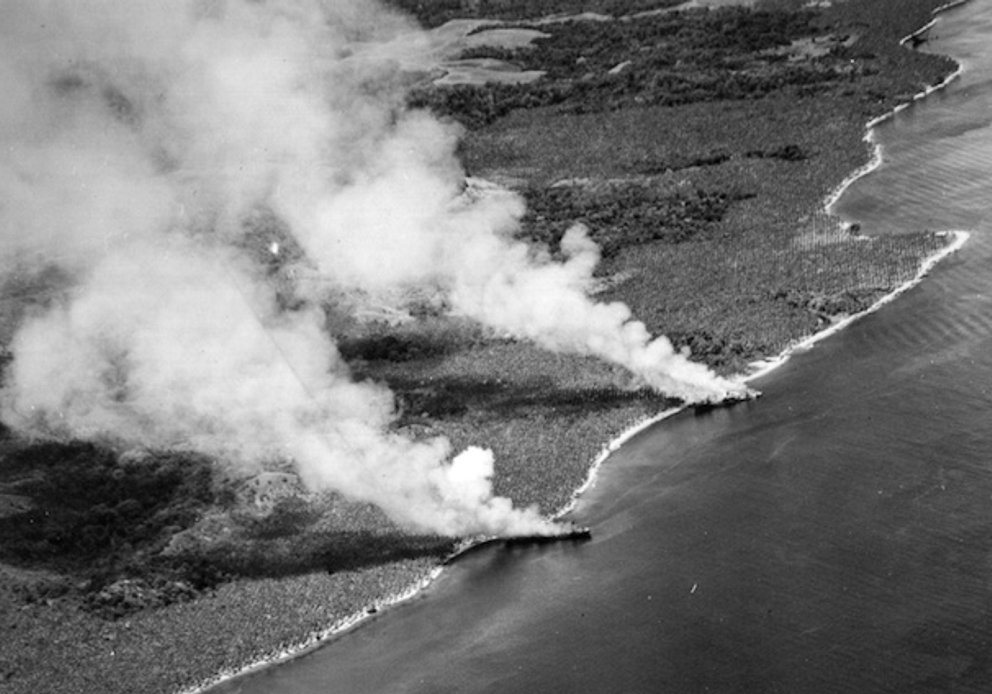
Japanese transports from the Tanaka convoy, run ashore and burning.
That still left Tanaka’s convoy, trundling along toward doom. Tanaka, counting on the battle’s confusion to give him cover, ordered the four remaining transports to beach themselves on Guadalcanal and unload their cargoes. They did so at 0400, disgorging 2,000 men, 260 crates of ammunition, and 1,600 sacks of rice. The men escaped into the jungle, along with most of those fished out of the sea by Tanaka’s destroyers. But American planes and artillery destroyed most of the supplies before they could be secured.
Once Willis Lee left Ironbottom Sound. Kondo had Henderson Field laid out before him. Atago and Takao still had their high-explosive ammunition loads, though neither had been intended to participate in the shelling of Henderson Field and they had no incendiary shells. In this desperate moment, with the Pacific War in the balance, he withdrew.
No consequences fell on Kondo. Abe was forcible retired, and Hiei’s captain Masao Nishida was banished to a port command in China. Iwabuchi never held another sea command, but did lead the Japanese defenders of Manila in 1945. Ordered to withdraw, he insisted on a final stand in atonement for the loss of Kirishima, directing his naval troops to slaughter all civilians in the city. Up to 100,000 people died; Iwabuchi then committed suicide.
Though it seemed inconclusive at the time, despite the loss of an old battleship, the Second Naval Battle of Guadalcanal (the “Battleship Action” in Japanese reports) spelled an end to Japan’s opportunity to secure the island and keep the initiative in the Pacific. The Empire’s future sank with Kirishima.
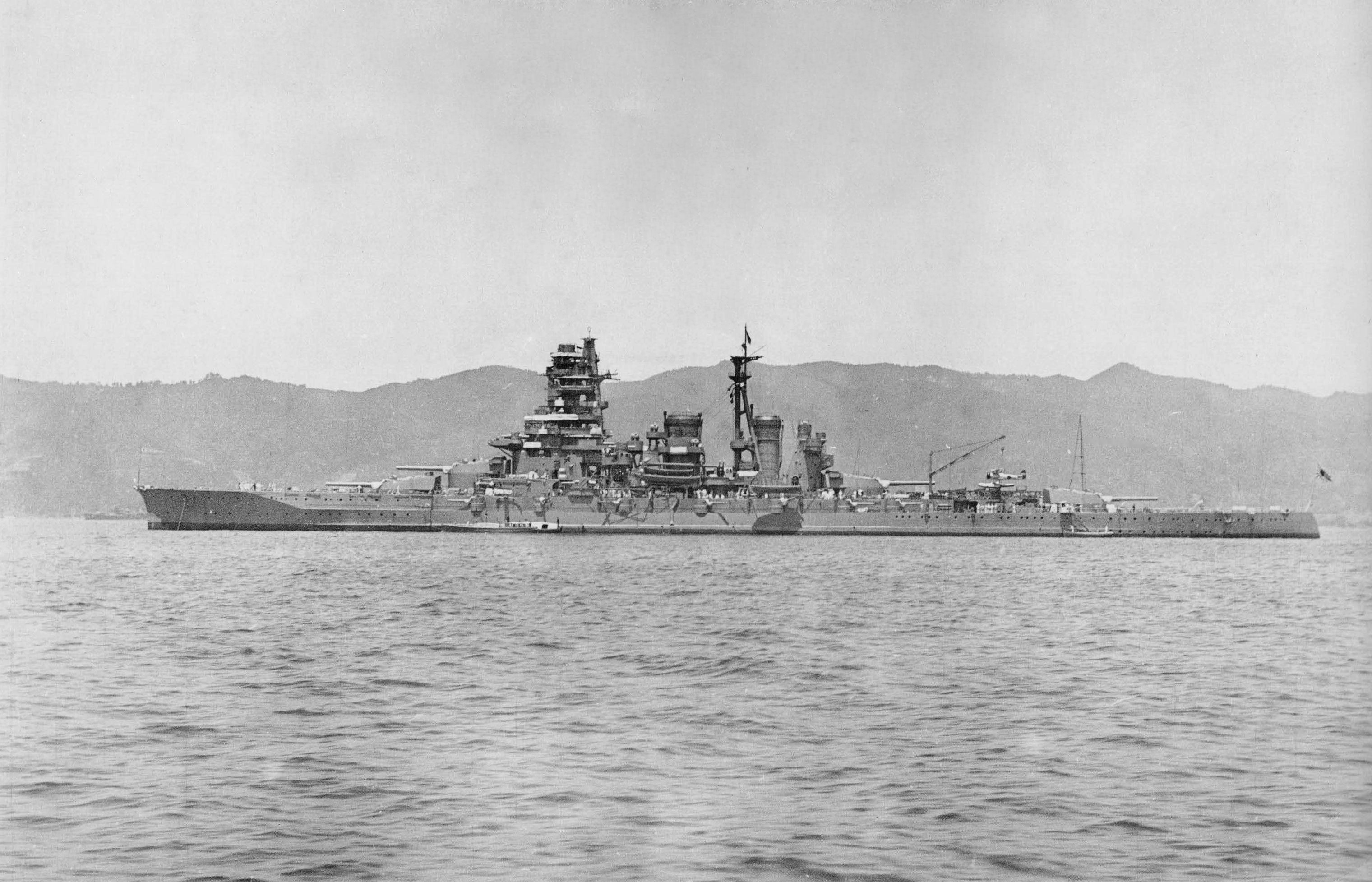
Battleship Kirishima, seen in 1937.
The Japanese had again suffered for their failure to use their local superiority, refusing to risk more than what they thought they needed. And as had happened multiple times already, they failed to press on to complete their mission after the initial contact with the enemy. Willis Lee had won a victory, but he also failed to follow it up, leaving Kondo with free reign in Ironbottom Sound after the sinking of Kirishima. The fear of losing a battleship caused Lee to prioritize protecting the damaged South Dakota (which had no radio to describe the extent of her damage) over securing a complete victory. That would have meant steaming into range of the Long Lance torpedoes still in the tubes aboard the two Japanese heavy cruisers. Battlefield decisions are never so easy as they appear in a work of history.
Order South Pacific Here.
Ironbottom Sound is a scenario book that expands Second World War at Sea: South Pacific. It comes with 36 new scenarios for South Pacific, extending the story through the Battle of Tassafaronga. All of the maps and pieces needed are included in South Pacific; the companion history book, Solomons Naval Campaign, comes bundled with Ironbottom Sound.
Order Ironbottom Sound Here.
Includes Solomons Naval Campaign book.
Order Solomons Naval Campaign Here.
Companion piece to Ironbottom Sound, or just read it separately.
Sign up for our newsletter right here. Your info will never be sold or transferred; we'll just use it to update you on new games and new offers.
Mike Bennighof is president of Avalanche Press and holds a doctorate in history from Emory University. A Fulbright Scholar and NASA Journalist in Space finalist, he has published a great many books, games and articles on historical subjects; people are saying that some of them are actually good.
He lives in Birmingham, Alabama with his wife, three children, and new puppy. He misses his lizard-hunting Iron Dog, Leopold.
Daily Content includes no AI-generated content or third-party ads. We work hard to keep it that way, and that’s a lot of work. You can help us keep things that way with your gift through this link right here.
|