South Pacific:
The Legend of Shitty Dick
by Mike Bennighof, Ph.D.
September 2025
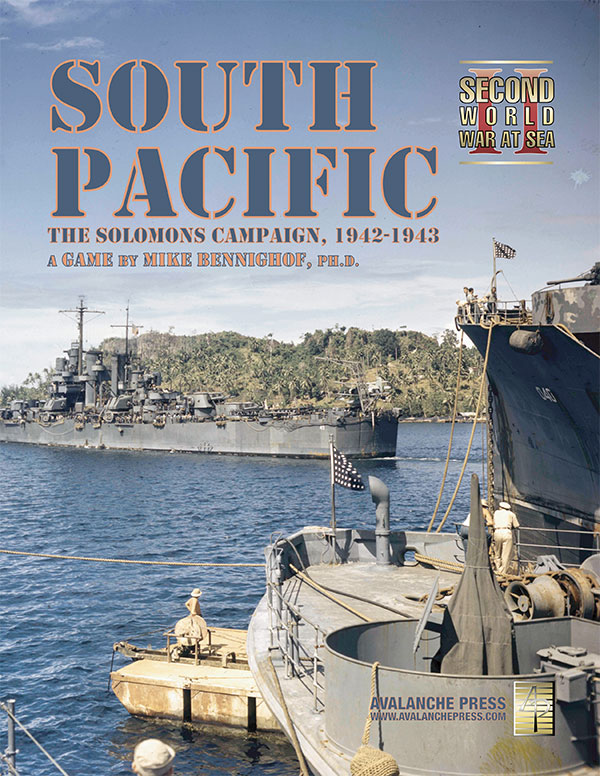 In the U.S. Navy, there’s a long history of ships thought to be cursed, or unlucky. “Jinx ships,” a legend stretching back to the 1778 frigate Alliance (a name never-re-used). Bad things happen aboard a jinx ship: mysterious deaths, accidents, mutinies, and poor combat performance. In the U.S. Navy, there’s a long history of ships thought to be cursed, or unlucky. “Jinx ships,” a legend stretching back to the 1778 frigate Alliance (a name never-re-used). Bad things happen aboard a jinx ship: mysterious deaths, accidents, mutinies, and poor combat performance.
By late 1942, many American sailors in the South Pacific believed the battleship South Dakota jinxed. While her own crew called her “SoDak,” sailors aboard the battleship Washington labelled her “Shitty Dick,” bowdlerized in most histories that mention it at all as “Shitty Duck” (which wipes away the intended, revolting imagery). From there, the use spread throughout the fleet, to the extent that the U.S. Navy would not re-use the name South Dakota again until 2019.
South Dakota, the lead ship of her class, displaced 35,000 tons and carried nine 16-inch guns, sixteen 5-inch guns and an ever-growing array of light anti-aircraft weapons. Congress would not authorize an increase in displacement, resulting in a class of four cramped and overcrowded battleships, limited to a top speed of 27 knots. She served for less than four years, commissioning in March 1942 and de-activating in January 1946, but that was plenty of time to amass a rather unwelcome legend.
South Dakota’s trouble began soon after her 20 March 1942 commissioning. All new and complicated ships endure a shakedown period, but South Dakota’s seemed more intense than most. On 19 July, she rammed a large whale, which sank beneath the waves. Afterwards, South Dakota went to Casco Bay, Maine, for gunnery drills alongside Washington, where she apparently shot poorly and the unpleasant rivalry with Washington began. The two battleships, along with the light anti-aircraft cruiser Juneau and six destroyers, set out for the Pacific theater on 14 August. South Dakota promptly suffered an engine breakdown, delaying the departure by a day.
South Dakota’s first captain, Thomas Leigh Gatch, had limited sea experience, and had never seen combat. Before taking command of South Dakota, he’d been the Navy’s Assistant Judge Advocate General, second-in-command of the Navy’s legal department. Gatch came late to the U.S. Naval Academy, having already put in three years at Oregon Agricultural College (now Oregon State University), where his father was president. He graduated in 1912 and served in destroyers during the First World War; afterwards, he worked in the JAG office in Washington while attending law school at George Washington University. His service afterwards was split between sea billets, a stint teaching at the Academy, and work as a JAG.
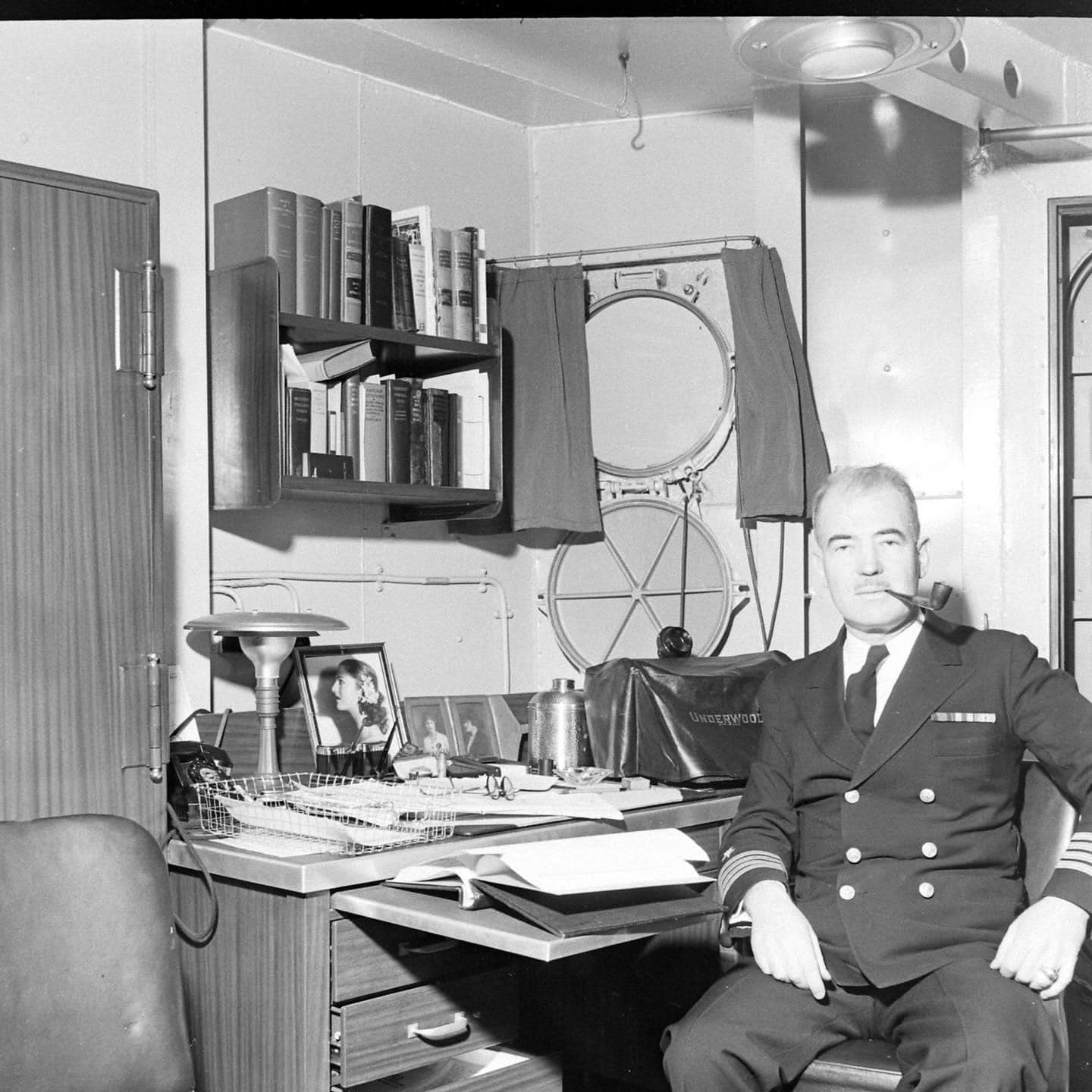
Captain Thomas Leigh Gatch, aboard South Dakota.
To move from the JAG hierarchy to one of the Navy’s most prestigious commands was unusual, but his post had given him prominence beyond his rank and a wide range of political connections. South Dakota would be Gatch’s first, and last, sea command.
A Civil War buff, Gatch had a love for Shakespeare and for scripture. He took personal pleasure in reading Bible passages during church services held aboard his ship. Determined to make his mark after the poor performance in Casco Bay, he became fanatically devoted to gunnery excellence. All crew members would learn to serve the guns, whatever their assigned role aboard, and gunnery training would take prominence over all other duties. Gatch told his crew that he did not care what they wore, and he did not care if they kept the ship clean, as long as they shot well.
By the time the two battleships reached the Panama Canal, the brand-new South Dakota was already a noticeably dirty ship. This is apparently where Washington’s sailors started calling her “Shitty Dick.” As the weather grew hot, crewmen shucked their dungarees and went about half-clothed or even naked.
South Dakota arrived at Tonga on 4 September, and departed two days later along with Juneau. She hit a coral reef, suffering extensive hull damage that required a return to Pearl Harbor. She remained there until mid-October, receiving an upgrade to her anti-aircraft weaponry as well. The ineffective 1.1-inch “Chicago Piano” quad mounts gave way to far more effective 40mm Bofors.
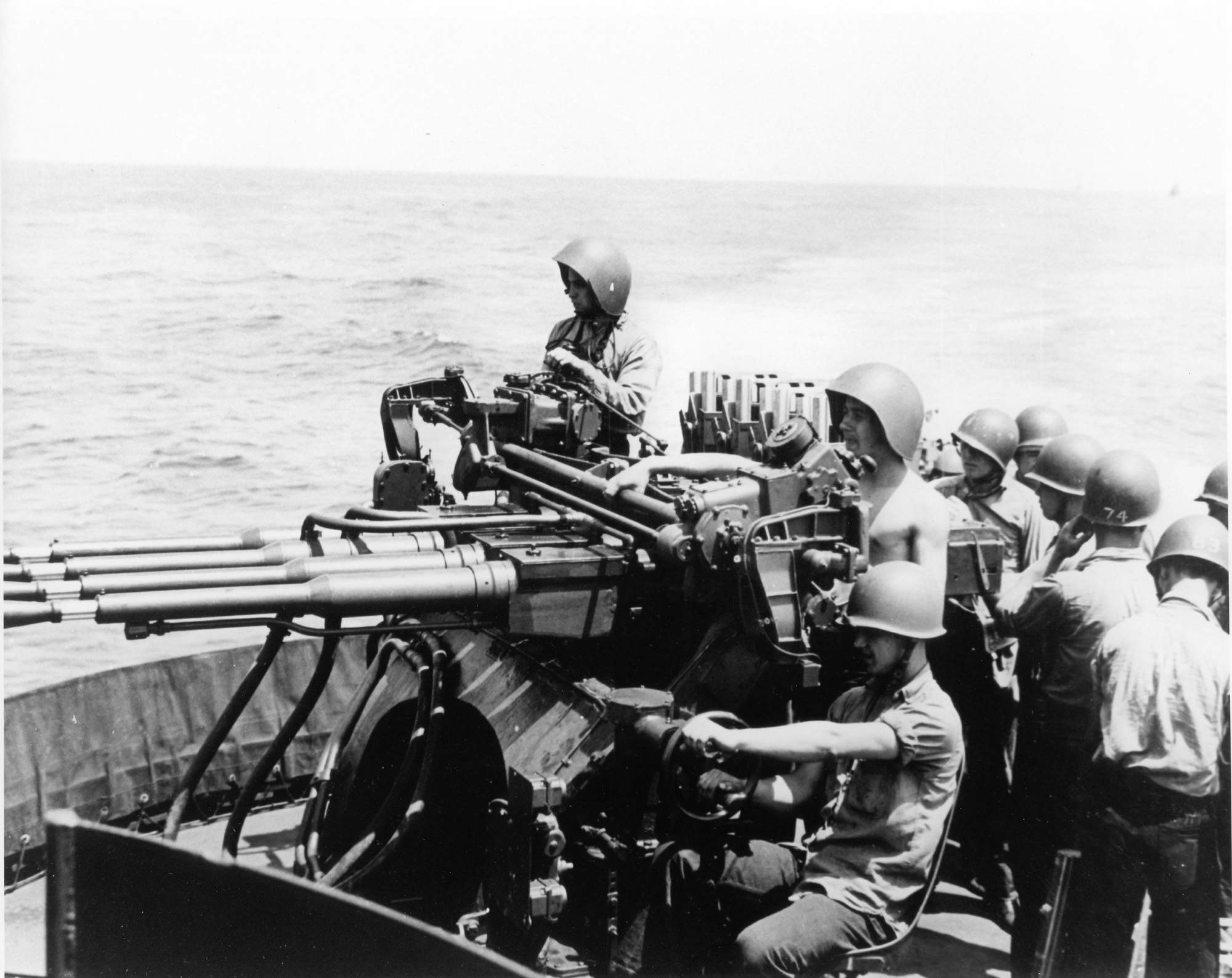
A 1.1-inch “Chicago Piano” quad mount aboard South Dakota.
At the Battle of the Santa Cruz Islands on 26 October 1942, South Dakota put up an enormous amount of anti-aircraft fire. As the carrier Enterprise wove frantically in an attempt to dodge Japanese attacks, Gatch ordered his helmsman to follow closely behind. When the captain grew unhappy with the effort, he ordered control shifted to his executive officer Cdr. Archibald Uehlinger, then in the aft secondary control.
As he did so, Gatch stepped out onto the open bridge to judge the distance to Enterprise more closely. While he was there, a Japanese bomb struck South Dakota’s forward turret, spraying the bridge with fragments, slicing Gatch’s jugular vein and smashing him into an armored bulkhead, knocking him unconscious. While two quartermasters struggled to save their captain’s life, in the confusion no one had control of the helm as the battleship raced directly toward the center of Enterprise’s open flank at 27 knots. The carrier managed to dodge the oncoming battleship and Uehlinger corrected course, but the Shitty Dick legend gained more kindling.
Gatch did little to help his ship’s cause in his after-action report. South Dakota’s impressive volume of fire resulted in very slim results. Gatch claimed 26 kills for his ship, even though the entire task force had only downed 13 Japanese planes with anti-aircraft fire. South Dakota also opened fire on a flight of six SBD Dauntless dive bombers returning to Enterprise; the carrier had to radio South Dakota to get her to cease fire. Navy pilots had a rule regarding South Dakota, recalled Lt. Cdr. Donald E. Young, one of the founders of the Navy’s Underwater Demolition Teams:
“Don’t fly anywhere near that big son-of-a-bitch. She’ll shoot you down.”
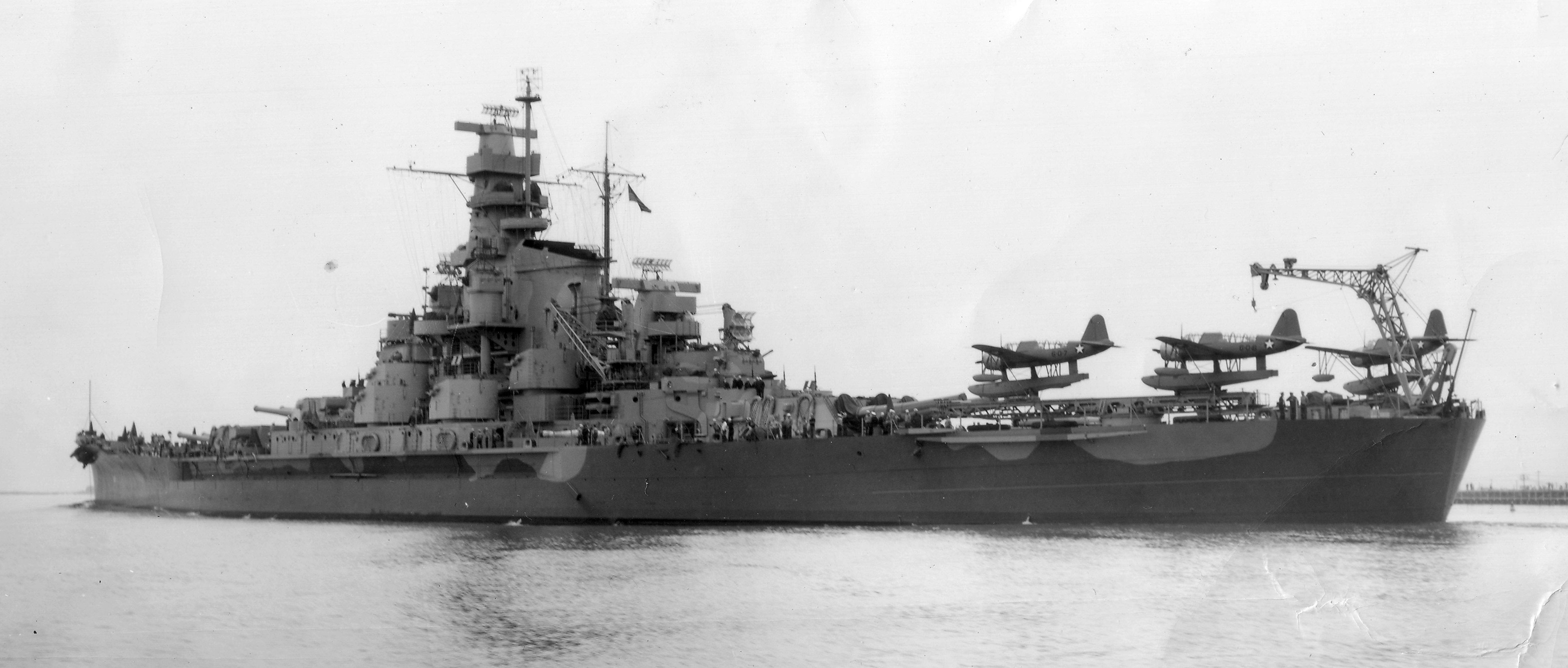
South Dakota in the Delaware River, during her shakedown period. 5 June 1942.
Returning to Nouméa, New Caledonia, South Dakota ran down one of her escorts, the destroyer Mahan, smashing Mahan’s bow and damaging South Dakota’s hull plating. More fuel for the legend. At Nouméa, crews from the repair ship Vestal fixed the hull plating and inspected the forward 16-inch gun turret. The forward turret had been hit by the bomb but suffered no internal damage, but Turret No. 2 had a jammed turret race and two of its gun barrels had been gouged by bomb fragments. The turret could not be used, and was still out of action when South Dakota faced the Japanese on the night of 14 November.
Gatch returned to duty on 5 November, and Vestal’s men finished their work the next day. South Dakota remained in port waiting for Enterprise to finish her own repairs, and accompanied her to sea on the 11th. Two days later, theater commander William Halsey detached South Dakota and Washington to seek out the Japanese in Ironbottom Sound.
South Dakota performed poorly in the Second Battle of Guadalcanal. Much of the blame went to the chief engineer, James R. Terwilliger, for scrambling the electrical controls just as the ship entered battle. Terwilliger is almost never mentioned by name in histories of the battle; I had to dig his name out of South Dakota’s personnel roster. The Navy had a narrative, and it did not include individual blame. Bad luck and enemy fire would be the official culprits.
South Dakota and Washington returned again to Nouméa on 17 November, where South Dakota again underwent temporary repairs, this time from the repair ship Prometheus. Crews of both battleships received shore leave. And large quantities of canned beer. And there the trouble began.
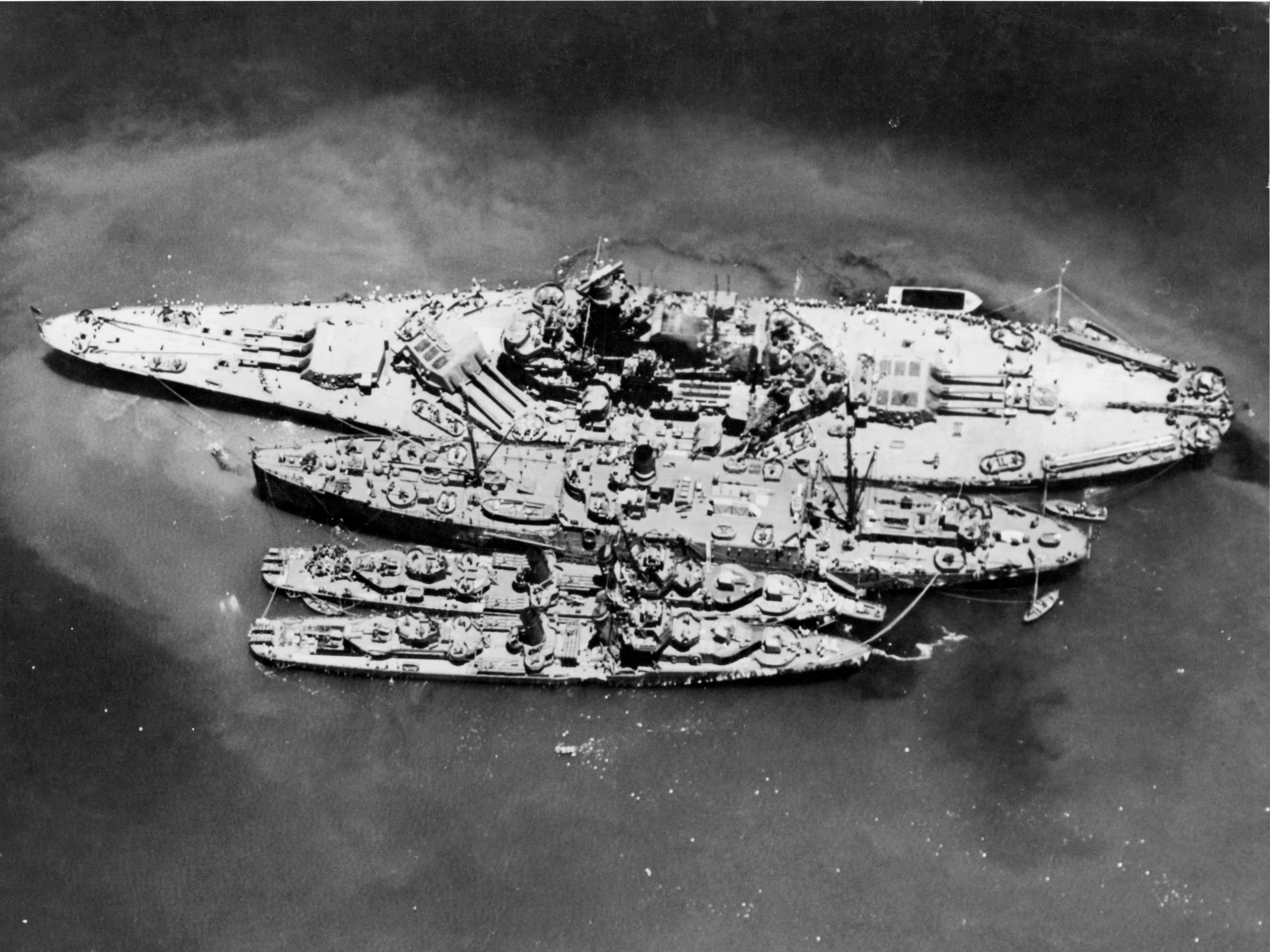
South Dakota (top) under repair at
Nouméa. Repair ship Prometheus at center, tied up to Prometheus is the destroyer Mahan, her damaged bow (from her collision with South Dakota) still evident.
There are several versions of what followed, but it appears that a group of Washington sailors spotted a knot of South Dakota crewmen sitting on the beach drinking beer. They shouted “Shitty Dick!” The South Dakota men, having endured a brutal pounding of their ship while they continued to fight, and buried forty of their shipmates at sea during the voyage back to Nouméa, were having none of it. Punches were thrown, and the fighting soon spread. Sailors punched, bit, kicked, and grappled on the beaches, in the streets of Nouméa, in the town’s lone bar and, somehow, even on the deck of the stricken South Dakota herself.
The brawl would take on mythical proportions among Navy sailors, though official sources make no mention of it and no discipline seems to have been handed down. Admiral Lee issued an order of the day stating that “One war at a time is enough!” He also ordered that shore leave for the two ships not occur on the same days.
The legend only grew.
South Dakota passed through the Panama Canal on 11 December and arrived at Brooklyn Navy Yard a week later for a lengthy period of repairs and re-fitting. That gave Seaman First Class Calvin Graham a chance to jump ship and take a train to Texas for his grandmother’s funeral, arriving a day late. When Navy Shore Police arrived to arrest Graham for being absent without leave, his mother objected, on the grounds that he was only 12 years old. He did three months in a brig anyway.
The resulting press furor again made South Dakota a laughing stock. Somehow Gatch and his officers, including Graham’s direct superior, 40mm battery commander Lt. (jg) Sargent Shriver (who would run for vice-president of the United States on the 1972 Democratic ticket), never noticed that they had a 12-year-old child loading shells into an anti-aircraft gun. Graham would be dishonorably discharged, stripped of his Purple Heart and Bronze Star, despite the eloquent efforts of his lawyer-commander Shriver.
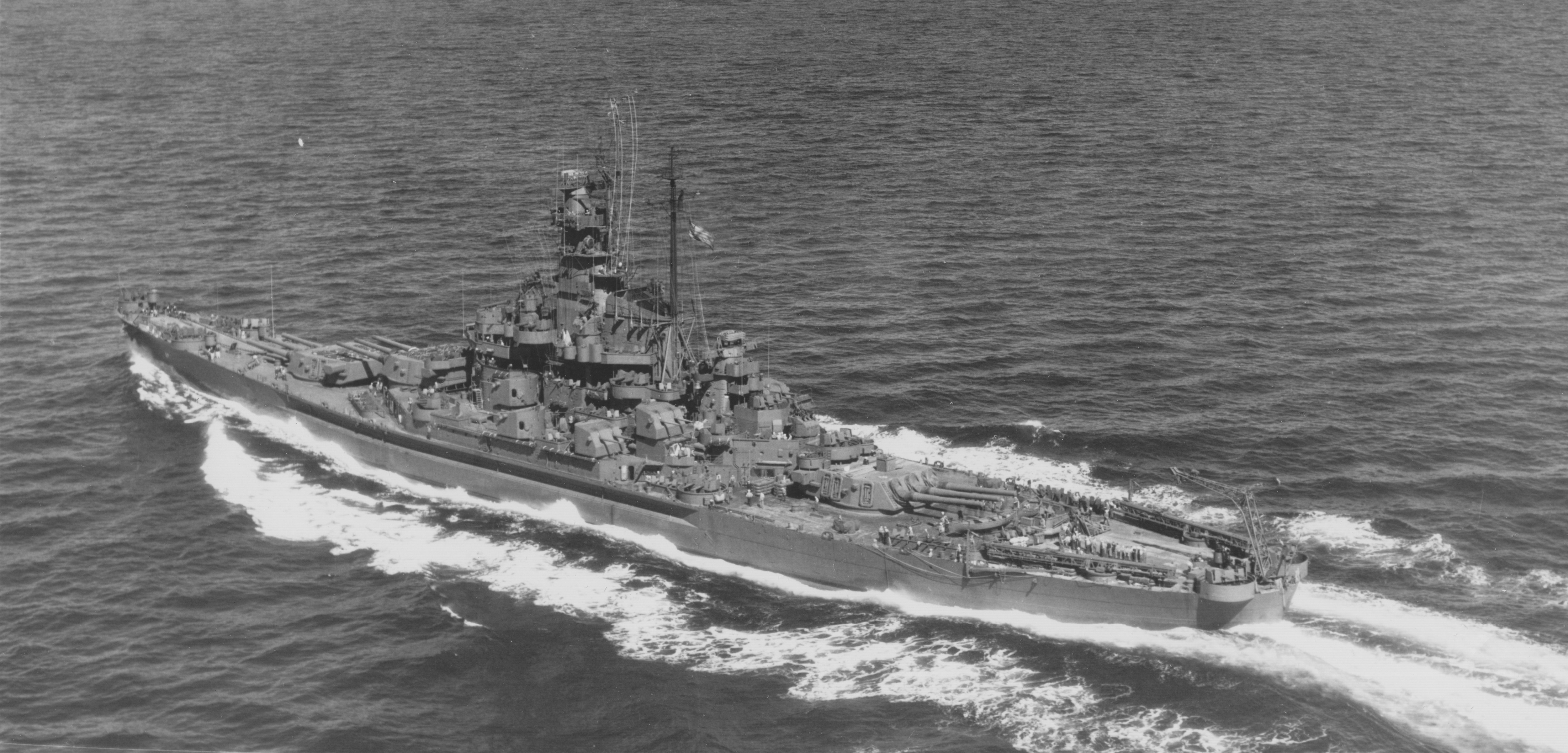
South Dakota under way in Puget Sound. 21 August 1944.
The Navy concocted a tale that claimed Graham had stowed away aboard South Dakota and been adopted as a sort of mascot. All of that, of course, to cover up that he had enlisted with false papers, gone through six weeks of boot camp, and joined South Dakota during her October 1942 visit to Pearl Harbor for repairs from her grounding incident. He’d seen combat during the Battles of the Santa Cruz Islands and Guadalcanal, and been wounded at the latter. Ricky Schroeder played him in a 1988 movie, leading President Ronald Reagan to restore his back pay and disability benefits. Graham’s Purple Heart was restored in 1994, after his death, but he never got the Bronze Star back.
The Navy handled Gatch’s poor performance in action in its time-tested manner: he was granted a second Navy Cross (having garnered the first for Santa Cruz), promoted to rear admiral, and named the Navy’s Judge Advocate General. He would never hold another sea command, but he wasn’t finished building South Dakota’s “Shitty Dick” reputation. In May 1943, the Saturday Evening Post published his first-hand account, bylined with his real name, titled, “The Battle Wagon Fights Back.” Censors insisted that South Dakota be referred to as “Battleship X,” but by leaving the byline intact, they assured that every sailor in the Pacific Fleet knew that the story referred to South Dakota. And perhaps this was a good thing, since otherwise, no one would have recognized the feats accomplished by Battleship X as those of South Dakota.
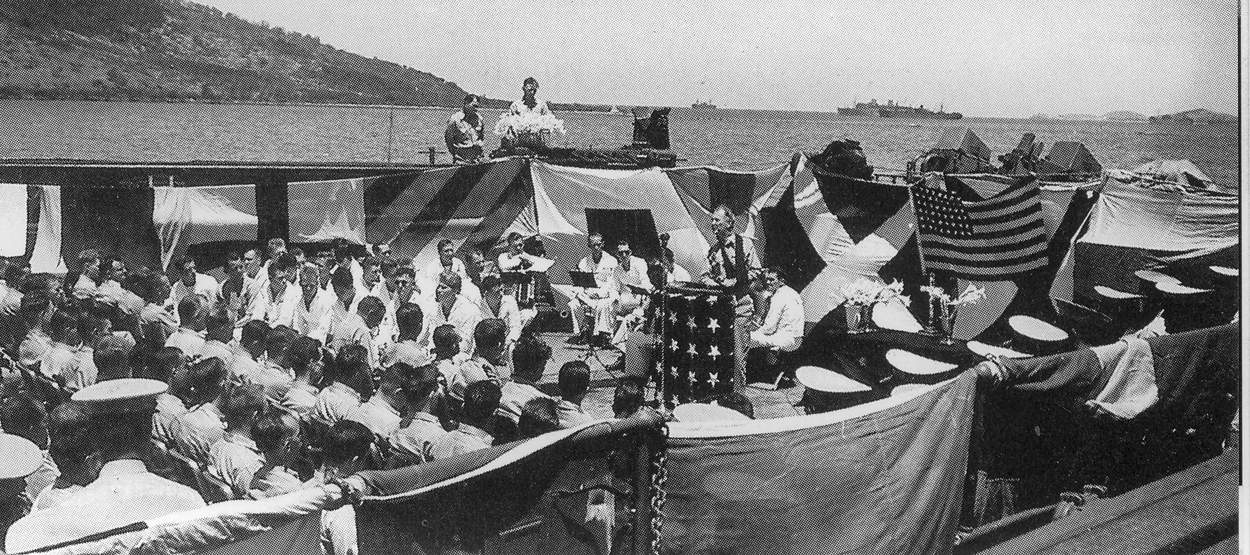
South Dakota buries her dead, 17 November 1942. Gatch presides, his arm in a sling.
Gatch gave his ship (and by extension, himself) credit for single-handedly winning the Battle of the Santa Cruz Islands (by shooting down 38 planes all by herself; Gatch had imagined a dozen more since filing his already-inflated aft-action report) and the Second Naval Battle of Guadalcanal (by sinking Kirishima, also single-handedly). No mention was made of another battleship’s presence, let alone that Washington actually destroyed the Japanese battleship. As the Navy’s JAG, Gatch was surely well aware that Washington’s officers and her captain, Glenn Davis, could do absolutely nothing to gainsay him under wartime secrecy rules.
South Dakota returned to action in March 1943, and after a deployment on the Murmansk Run she returned to the Pacific that November. She had a new captain, Lynde McCormick, who kept the ship and her reputation clean for the last 22 months of the war. But she never shook the name Shitty Dick.
Order South Pacific Here.
Ironbottom Sound is a scenario book that expands Second World War at Sea: South Pacific. It comes with 36 new scenarios for South Pacific, extending the story through August 1943 and the campaign for New Georgia. All of the maps and pieces needed are included in South Pacific; the companion history book, Solomons Naval Campaign, comes bundled with Ironbottom Sound.
Order Ironbottom Sound Here.
Includes Solomons Naval Campaign book.
Order Solomons Naval Campaign Here.
Companion piece to Ironbottom Sound, or just read it separately.
Sign up for our newsletter right here. Your info will never be sold or transferred; we'll just use it to update you on new games and new offers.
Mike Bennighof is president of Avalanche Press and holds a doctorate in history from Emory University. A Fulbright Scholar and NASA Journalist in Space finalist, he has published a great many books, games and articles on historical subjects; people are saying that some of them are actually good.
He lives in Birmingham, Alabama with his wife, three children, and new puppy. He misses his lizard-hunting Iron Dog, Leopold.
Daily Content includes no AI-generated content or third-party ads. We work hard to keep it that way, and that’s a lot of work. You can help us keep things that way with your gift through this link right here.
|