| Second World War at Sea: Java Sea
Publisher’s Preview
By Mike Bennighof, Ph.D.
May 2023
 A long time ago, we published a game called Second World War at Sea: Strike South. It covered the Japanese invasions of the Philippines, Malaya and the Dutch East Indies in late 1941 and early 1942, with fifteen scenarios. It had two sheets of pieces, and two large maps. A long time ago, we published a game called Second World War at Sea: Strike South. It covered the Japanese invasions of the Philippines, Malaya and the Dutch East Indies in late 1941 and early 1942, with fifteen scenarios. It had two sheets of pieces, and two large maps.
I loved those maps from the first time I saw Brian Knipple’s hand-drawn (and very precise) sketches: a huge and wonderful vista opened up. From the Chinese coast on south: the South China Sea, Borneo, Malaya, West New Guinea, Java, Sumatra and on down across the Timor Sea to Australia. Looking from north to south, the islands looked very different. Alien. Inviting.
That island archipelago stretching from Sumatra in the southwest to Formosa in the north east, with China on one edge and Australia on the other, is just filled with isolated inland seas connected by narrow straits. It’s a unique overlap of land and sea, and I very much wanted to move my fleets across the interlacing blue and green of the map. Just looking at it makes clear the audacity of the Japanese war plans in late 1941. That area adds up to two large maps, each 22x34 inches in size with a narrow overlap. You have a lot of blue ocean, yet you’re never far from the jungle-green land.
Strike South fell out of print some years back, and I left it there as the Second World War at Sea series received a series of radical improvements. A new set of series rules with new play aids, and a new philosophy of scenario construction, the story arc format, highlighted these changes. The latter just means that we let the scenarios help tell the story, letting you play out either all of the action, or key moments in the campaign. The important battles usually have additional scenarios letting you pick up the action at turning points.
Second World War at Sea: Java Sea replaces the old Strike South. It likewise covers the Japanese campaigns in the East Indies and surrounding waters, and it uses the maps and the pieces from the old Strike South that we had in storage. It adds an additional set of pieces, the new Second Edition rules, and a completely new set of forty scenarios in our story-arc format.

As with any Avalanche Press game, those scenarios are the heart of Java Sea. Operational scenarios take place on those big, beautiful maps of Indonesian and surrounding waters. That’s where task forces of ships move and try to find one another, or conduct other operations (invasions, convoys, minelaying and so forth). The scenario set covers every action of the campaign, plus a few that could have taken place but did not for some reason. Battle scenarios take place on the Tactical Map, and that’s where ships move and shoot at each other with guns and torpedoes.
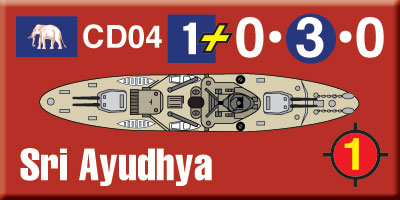
Each operational scenario is accompanied by at least one battle scenario, highlighting the combat that arose, or could have arisen, from that operation. The major actions from the campaign, like the sortie of Force Z in December 1941 to intercept the Japanese invasion of Malaya or the Battle of the Java Sea in February 1942, are represented by several scenarios each, with a long scenario covering the entire operation and shorter ones covering just a segment. Second World War at Sea: Java Sea also includes the January 1941 Franco-Thai War, and the Battle of Koh Chang Roads that saw the French Indochina Squadron thoroughly humble the King of Siam’s fleet.
In the East Indies scenarios, the Japanese have overwhelming force at sea and in the air, but they also have an extremely ambitious schedule to meet and a huge expanse of water and islands to cross. All of those narrow straits between the islands create plenty of choke points for the American-British-Dutch-Australian allies to force a battle, if they can muster sufficient force to tackle the widely-dispersed Japanese. Given the many Japanese objectives and their tight timetable, they really don’t have the option of massing their forces and taking out each objective one by one. The Japanese can capture anything on the map – but can they do it fast?
The Allies do have the most powerful surface warship in the game (the British fast battleship Prince of Wales), but she was lost very early along with the only other capital ship on their side, the old battle cruiser Repulse. That leaves the Allied side with a single American heavy cruiser, an undersized British heavy cruiser, and a gaggle of light cruisers and destroyers. All of that against a powerful Japanese surface fleet, backed by aircraft carriers and land-based bombers.
Like most other Second World War at Sea games, air forces are selected semi-randomly. You have an idea of what the other guy might have, in terms of types of aircraft, how many of them and where they might be based. What you don’t know is exactly what the enemy’s air deployment looks like. You don’t have the option of using your perfect hindsight to fly over and bomb them on the ground on the first turn (you can try that, but you don’t have a guarantee that they’ll be there).
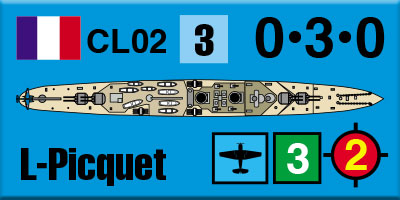
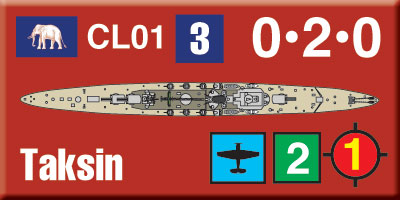
In the Franco-Thai segment of the game, the French forces are built around a single light cruiser and some colonial gunboats. The Thais have a much more powerful force, with a pair of modern coast-defense ships and two more armored gunboats, plus some tiny torpedo boats. But the French had superior leadership and daring, enabling them to score France’s only naval victory of World War II.
I never thought the old Strike South game fully lived up to its potential. It wasn’t a bad game, and its fifteen scenarios included some good fun. But I wanted much more, and I believe that Java Sea delivers that. The new scenario set gives a much fuller picture of the campaign, and many more opportunities for game play. We tell a story, and that means that the individual scenarios are placed in their historical context in a way that most wargames don’t provide.
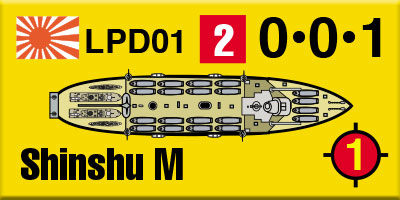
And the chance to add more pieces allowed me to get the Franco-Thai War included, with those Siamese coast-defense ships. And to add some more fun to the pieces; Java Sea include “long” ship pieces with full artwork for ships like the American seaplane tender Langley and the older American and Japanese destroyers that were relegated to the smaller, square pieces in the old Strike South. Plus the world’s first “gator freighter,” the unique Japanese amphibious landing dock ship Shinshu Maru.
Java Sea is the game I wanted to see on those beautiful maps, all those years ago. It’s packed with history, good game play and gonzo stuff like Royal Thai armored gunboats. This is no “re-hash,” but a completely new game that re-uses a few parts from an older game. Java Sea is exactly the sort of history-rich game experience that I want to publish, and I believe that you’ll like it very much.
Click here to join the Gold Club.
See your Gold Club Insider newsletter for ordering information.
Sign up for our newsletter right here. Your info will never be sold or transferred; we'll just use it to update you on new games and new offers.
Mike Bennighof is president of Avalanche Press and holds a doctorate in history from Emory University. A Fulbright Scholar and NASA Journalist in Space finalist, he has published a great many books, games and articles on historical subjects; people are saying that some of them are actually good.
He lives in Birmingham, Alabama with his wife, three children, and new puppy. He misses his lizard-hunting Iron Dog, Leopold.
Want to keep Daily Content free of third-party ads? You can send us some love (and cash) through this link right here. |