| Hyderabad 1948:
Scenario Preview, Part Two
By Mike Bennighof, Ph.D.
June 2026
I do like designing games about topics with which few Americans are familiar. Unfortunately, that also makes them less likely to buy them, so in the future I’m not likely to get the chance to design this type of thing very often if at all.
Panzer Grenadier: Hyderabad 1948 covers Operation Polo, the Indian Army’s assault on the princely state of Hyderabad in 1948. It was a short conflict, lasting but 100 hours, though at times the fighting grew very fierce as the Nizam of Hyderabad’s troops fought hard to protect the kingdom’s independence (or at least some of them did) and the Razakar militia fought with fanatic determination. It’s exactly the sort of topic that makes me enjoy game design; the chance to research something in depth and tell others about it in game form.
Hyderabad 1948 came out really well, and tells its story to my deep satisfaction, it’s a great product and I’m very proud to have created it. Here’s a look at the second half of its scenarios; a review of the first half is found here.
Let’s finish our look at the scenarios:
Scenario Six
Tuljapur Ridge
13 September 1948
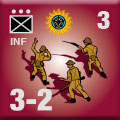 Pulling back from Naldurg Fort, the Hyderabadi regulars took up positions on a ridge blocking the road to Tuljapur. Ninth Brigade sent forward a combined arms task force built around a battalion of Gurkhas supported by a squadron of Sherman tanks to break the position in a frontal assault. As word spread of the Indian invasion, Razakar fanatics hastened to reinforce the Nizam's regular forces. Pulling back from Naldurg Fort, the Hyderabadi regulars took up positions on a ridge blocking the road to Tuljapur. Ninth Brigade sent forward a combined arms task force built around a battalion of Gurkhas supported by a squadron of Sherman tanks to break the position in a frontal assault. As word spread of the Indian invasion, Razakar fanatics hastened to reinforce the Nizam's regular forces.
Conclusion
For once, the Hyderabadis put up stubborn resistance, holding off the Gurkhas for over two hours despite the Nepalese reputation as close-quarters fighters. While the Indians had tanks, the Hyderabadis had anti-tank guns and enough wartime experience to know how to use them. Yet by late afternoon the Indians had resumed their advance.
Notes
.jpg) The Hyderabadis have a strong force in good defensive terrain, helped by some Razakar fanatics but more importantly backed by some of the Nizam’s few potent weapons: 17-pounder anti-tank guns and 25-pounder artillery. The Indians have Gurkhas. They have a company of tanks, too, but it’s the Nepalese killing machines who will determine the outcome of this one. The Hyderabadis have a strong force in good defensive terrain, helped by some Razakar fanatics but more importantly backed by some of the Nizam’s few potent weapons: 17-pounder anti-tank guns and 25-pounder artillery. The Indians have Gurkhas. They have a company of tanks, too, but it’s the Nepalese killing machines who will determine the outcome of this one.
Scenario Seven
The Ditch at Kodad
14 September 1948
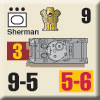 Indian accounts describe a victory on the 13th at Kodad, driving off the Hyderabadi regulars and Razakars, yet the next morning the official history has them fighting for the town again. Overnight the Hyderabadis had dug an anti-tank ditch to offer some protection against the Indian Shermans, called up reinforcements and dug in behind the ditch to block the highway to the capital. Indian accounts describe a victory on the 13th at Kodad, driving off the Hyderabadi regulars and Razakars, yet the next morning the official history has them fighting for the town again. Overnight the Hyderabadis had dug an anti-tank ditch to offer some protection against the Indian Shermans, called up reinforcements and dug in behind the ditch to block the highway to the capital.
Conclusion
Dug in and ready for the attack, the Hyderabadis held off the Indians for hours, as the Shermans could not get over the ditch and the infantry could not get through the Nizam's lines without their support. Finally, crazed Gurkha sappers dared the heavy automatic weapons fire to fill in the ditch enough to allow the tanks to cross. Backed by tanks, the Gurkha infantry surged into the Hyderabadi trenches. After fierce close-quarters fighting, the kukri-wielding Gurkhas drove the Hyderabadis out of their positions, but they pulled back in good order.
Notes
 Hyderabad sends out a very strong force to hold the ditch: two full battalions of regulars, almost as many Razakars, plus anti-tank guns and artillery pieces and strong armored support. Well, strong by Hyderabadi standards: nine platoons of armored cars. Unfortunately, the Indians have real tanks, so the Hyderabadis will have to protect the anti-tank ditch from Indian and Gurkha sappers to hold off an armored advance. It’s a fairly large scenario, and one that promotes active defense so both players have a lot to keep them busy. Hyderabad sends out a very strong force to hold the ditch: two full battalions of regulars, almost as many Razakars, plus anti-tank guns and artillery pieces and strong armored support. Well, strong by Hyderabadi standards: nine platoons of armored cars. Unfortunately, the Indians have real tanks, so the Hyderabadis will have to protect the anti-tank ditch from Indian and Gurkha sappers to hold off an armored advance. It’s a fairly large scenario, and one that promotes active defense so both players have a lot to keep them busy.
Scenario Eight
Night Action at Jalna
14 - 15 September 1948
.jpg) While the major city of Aurangabad fell with only token resistance, the Hyderabadis dispatched regulars and Razakars to hold the nearby town of Jalna, an important road junction. Elated at their easy conquest of the big city, the Indians did not expect the fierce resistance they encountered as they moved eastward. While the major city of Aurangabad fell with only token resistance, the Hyderabadis dispatched regulars and Razakars to hold the nearby town of Jalna, an important road junction. Elated at their easy conquest of the big city, the Indians did not expect the fierce resistance they encountered as they moved eastward.
Conclusion
The Hyderabadis fought furiously through the night, engaging the Sikhs in hand-to-hand combat. In the darkness, Razakar fanaticism could help offset superior Indian firepower and the town remained in the hands of the royal troops. But as the sun rose, the Indian tanks no longer had to close with the enemy and Indian mobility could make itself felt. By mid-morning the town had fallen, and Hyderabad's defenses were crumbling on all fronts.
Notes
 Once again, it’s Indian firepower against Razakar fanaticism. But it takes place at night, negating some of the usual Indian advantages. Neither side has artillery, and this time the Indian tanks are the much less capable Stuarts instead of Shermans. The Indians have a high standard of victory, and will have to root the Hyderabadis out of both hills and town hexes. Once again, it’s Indian firepower against Razakar fanaticism. But it takes place at night, negating some of the usual Indian advantages. Neither side has artillery, and this time the Indian tanks are the much less capable Stuarts instead of Shermans. The Indians have a high standard of victory, and will have to root the Hyderabadis out of both hills and town hexes.
Scenario Nine
Last of the Golconda Lancers
15 September 1948
 As the royal army fell back, the fanatic Muslim Razakar militia became even more determined to resist the invaders. Seeing little hope of foreign intervention or military victory, the Nizam released the tough mercenaries of his royal bodyguard to reinforce the troops at the front. Near the town of Suriapet the Nizam’s guard cavalry regiment, most of its troops African-Indian descendants of soldiers of fortune, moved up to stop the Indian column approaching the city of Hyderabad from the east. As the royal army fell back, the fanatic Muslim Razakar militia became even more determined to resist the invaders. Seeing little hope of foreign intervention or military victory, the Nizam released the tough mercenaries of his royal bodyguard to reinforce the troops at the front. Near the town of Suriapet the Nizam’s guard cavalry regiment, most of its troops African-Indian descendants of soldiers of fortune, moved up to stop the Indian column approaching the city of Hyderabad from the east.
Conclusion
Razakar roadblocks allowed the “Somali” horsemen (people in South India called all African-Indians “Somali”) to take up strong positions blocking the Indian advance. Then the planes came. Indian Air Force Tempests blasted the cavalry and militia with pinpoint strikes, killing many men and horses and throwing the rest into disorder. Seeing their enemies' plight, the Gurkhas swarmed forward with kukris swinging, completing the rout of the Nizam's finest.
Notes
 Horsed cavalry against fighter-bombers; I knew I had to include this scenario. Plus there are Gurkhas involved. It’s actually a pretty good one if the Hyderabadi player manages to avoid seeing the cavalry blown away from the air; for once he has troops able to match the elite Gurkha morale and some mobility on his side. Horsed cavalry against fighter-bombers; I knew I had to include this scenario. Plus there are Gurkhas involved. It’s actually a pretty good one if the Hyderabadi player manages to avoid seeing the cavalry blown away from the air; for once he has troops able to match the elite Gurkha morale and some mobility on his side.
Scenario Ten
The Nizam’s Armor
September 1948
 In the months before the Indian invasion, Osman Ali Kham, last Nizam of Hyderabad and reputedly the richest man in the world, desperately tried to obtain modern arms to defend his kingdom. He engaged the Australian spy and aviator Sidney Cotton, one of the models for Ian Fleming's James Bond, to obtain the weapons and smuggle them through Indian territory. In the months before the Indian invasion, Osman Ali Kham, last Nizam of Hyderabad and reputedly the richest man in the world, desperately tried to obtain modern arms to defend his kingdom. He engaged the Australian spy and aviator Sidney Cotton, one of the models for Ian Fleming's James Bond, to obtain the weapons and smuggle them through Indian territory.
Conclusion
The Nizam desperately wanted tanks (and aircraft) for his armed forces, and thanks to Hyderabad's heavy commitment to the Allied cause in the Second World War he had plenty of experienced officers and crew to man them. But Cotton, despite his undoubted skills and commitment to his famous Eleventh Commandment ("Thou shalt not be found out"), could not manage to bring heavy equipment across Indian territory. He did manage to import tens of thousands of rifles and other light arms by air, allowing 50,000 Razakars to take the field with modern weapons. But despite a world awash in surplus arms, the importation of tanks proved beyond even Cotton's abilities, and this tank battle never took place.
Notes
 This is the only scenario not based on an actual battle; I wanted a tank battle in the set because Panzer Grenadier players love tank battles and since the Nizam of Hyderabad was so set on acquiring some it seemed that this scenario just had to be included. The Hyderabadis wield the awesome Centurion, but the Indians counter with the Sherman Firefly. This is the only scenario not based on an actual battle; I wanted a tank battle in the set because Panzer Grenadier players love tank battles and since the Nizam of Hyderabad was so set on acquiring some it seemed that this scenario just had to be included. The Hyderabadis wield the awesome Centurion, but the Indians counter with the Sherman Firefly.
Download Hyderabad 1948 Here.
It’s $25.99, but if you’re a Gold Club member, you can download for $18.19 using your Gold Club link (That’s the only way to claim your Gold Club discount).
You can order the set of eight maps here:. These are hardcopy maps on rigid cardstock, just like those in Panzer Grenadier games
Order Hyderabad Maps Here.
Sign up for our newsletter right here. Your info will never be sold or transferred; we'll just use it to update you on new games and new offers.
Mike Bennighof is president of Avalanche Press and holds a doctorate in history from Emory University. A Fulbright Scholar and NASA Journalist in Space finalist, he has published an unknowable number of books, games and articles on historical subjects.
He lives in Birmingham, Alabama with his wife and three children.
Want to keep Daily Content free of third-party ads? You can send us some love (and cash) through this link right here.
|