| Bismarck Playbook Edition:
French Battle Cruisers
By Mike Bennighof, Ph.D.
May 2023
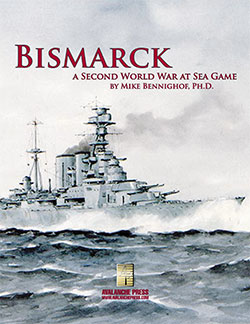 France did rather well at the Washington naval limitations talks, gaining the right to build an additional 70,000 tons’ worth of new capital ships starting in 1927. That would allow the Marine Nationale to construct two battleships to the agreement’s limit of 35,000 tons’ displacement for a new battleship. But it would also allow three smaller ships at 23,300 tons, or four of them at 17,500 tons. France did rather well at the Washington naval limitations talks, gaining the right to build an additional 70,000 tons’ worth of new capital ships starting in 1927. That would allow the Marine Nationale to construct two battleships to the agreement’s limit of 35,000 tons’ displacement for a new battleship. But it would also allow three smaller ships at 23,300 tons, or four of them at 17,500 tons.
The new German armored cruiser Deutschland’s appearance, and the Italian construction of Treaty cruisers (those with 203mm guns and 10,000 tons’ displacement) pushed French leaders toward the option of building smaller but more numerous ships. Both the German and Italian vessels clearly had not been designed as part of a battle fleet, but to undertake independent missions against enemy sea lanes.
These small capital ships would have the speed and firepower to overwhelm a Treaty cruiser, and many nations drafted plans for such ships (though only a few of these actually came to fruition). The Marine Nationale ordered sketches for ships of various sizes, ranging from 17,500 to 37,000 tons, all of them emphasizing speed and firepower and labelled “battle cruisers.”
The German ship’s 280mm (11-inch) guns would overwhelm the armor of the 17,500-ton and 23,300-ton options; the new French ship would have to be larger. The Marine Nationale settled on a 26,000-ton ship, with armor that could defeat both the 280mm guns of the German armored cruisers and the 305mm guns of the old Italian battleships. The increase in size also allowed an increase in armament from eight 305mm (12-inch) guns to the same number of 330mm (13-inch) weapons. But soon enough the Italians announced that they would build 35,000-ton fast battleships with 380mm guns. By then it was too late to re-design the French ships.

Battle cruiser Dunkerque.
The new ship, named Dunkerque, was laid down at the Brest Arsenal in late 1932. Her slightly-improved sister, Strasbourg, followed at the Penhoët yard in St. Nazaire two years later. Some in the upper tiers of the Marine Nationale had wished to cancel her and build a full-sized battleship, but no complete plans as yet existed for the larger ship and rather than wait, the un-satisfactory design was laid down instead. Strasbourg had improved armor compared to her near-sister, but was no match for a true fast battleship like the Italian Littorio. The third ship in the class, implicitly included in the tonnage allotment but never formally ordered or even projected, would never be built. The next French capital ship would be a true battleship.
The design drew heavily from the British Nelson class battleships, concentrating all of the main armament forward in a pair of quadruple turrets. The turrets themselves were modified versions of those drawn up for the Normandie-class battleships, which would have carried 340mm guns. They were not true quadruple turrets; two separate fighting compartments each served a pair of guns mounted very close together, and these two compartments then shared their outer armored shell, turntable and magazine in the armored barbette below.
The 330mm/52 Model 1931 would only be carried by these two ships. In theory, they had an astounding range of 40,000 meters at maximum elevation and could be loaded at any angle, greatly increasing their rate of fire. In practice, they frequently jammed when loaded at the higher elevations and had to be lowered anyway. The tight fitting of the two guns in each pair, despite their separate cradles, also caused wide dispersion of their shots (if the two barrels fired at once, the slipstream of one shell was close enough to interfere with the flight of the other).

Main armament of Strasbourg.
Sixteen dual-purpose 130mm/45 Model 1932 guns made up the secondary armament, in three quadruple and two twin gunhouses. These would be the first dual-purpose weapons fitted on a capital ship, and they proved a dismal failure. They frequently jammed and fired a single-piece manually-loaded 53-kilogram (117-pound) round. Though the round was loaded hydraulically, it had to be passed out of the magazine and onto the hoist by hand, which quickly wore out the ammunition handlers and slowed the gun’s rate of fire.
Rounding out the anti-aircraft array were eight 37mm automatic guns and 32 13.2mm machine guns, the latter turning out to be practically useless against modern high-performance aircraft. They did not carry torpedoes, but did have two Loire 130 seaplanes (with a double-decked hangar to stow them in) and a single rotating catapult on the fantail to launch them.
While the main armament had good protection for its turrets, even Strasbourg’s thickened belt armor fell short of battleship-level protection. Outside of the armor belt they had a uniquely French protection against torpedoes, a series of compartments filled with a rubber-based compound that would absorb the shock of a torpedo hit and prevent water from filling the compartments. Inside of the armor belt, they had a very modern “sandwich” protection scheme also designed to absorb the shock of a torpedo hit.
After extensive testing, Dunkerque entered service in September 1938; with war clearly approaching, Strasbourg had an abbreviated shakedown period and joined the fleet in April 1939. The two ships exercised together over the following months, and on 2 September 1939 they sortied in search of a German armored cruiser thought to be in the Atlantic. They spent the rest of the year on similar duties before moving to the big new naval base at Mers el-Kebir in Algeria in April 1940 in case Italy entered the war.
They were there in June when France signed an armistice with Germany, and less than a month later when the British attacked the French fleet anchored there. Dunkerque was badly damaged, and unable to move to Toulon in southern France for repairs until February 1942. Both ships were scuttled there in November to prevent their seizure by the Germans; further damage from Italian vandalism and American bombing rendered both beyond repair despite French post-war hopes. They would be scrapped in the 1950’s.

Wreck of Dunkerque.
France had seemingly made a bad bargain, building a pair of expensive ships that were ridiculously over-powered for the cruiser mission, and much too weak to fight enemy battleships. Their only real purpose was to hunt and destroy German armored cruisers, but the true German threat against France came by land.
At first glance, French interests might have been better served by using the money to buy more tanks and aircraft. Robert Forczyk certainly argues this rather vehemently in his Case Red. But the two battle cruisers make much more sense in the political climate of the time: France took steps to build up her land forces, but Britain did not. France enacted economic sanctions against Hitler’s Germany, but Britain refused to join, thereby undermining any effect. French leaders could not be completely sure that they would not be left to face Germany without their putative allies across the Channel, and in that case, their own sea lanes would be deeply vulnerable to those long-range German armored cruisers. In that eventuality, an independent capability to track down and destroy the German raiders might be vital to French security.
Note: Both French battle cruisers appear in Second World War at Sea: Bismarck, and the mythical third ship shows up in the alternative-history expansion The Cruel Sea. You can get much more use out of Dunkerque and Strasbourg in the Campaign Study, Force de Raid.
You can order Bismarck Playbook Edition right here.
You can order Bismarck: Force de Raid right here.
Triple Bismarck
Bismarck (Playbook edition)
Bismarck: Force de Raid
Journal No. 31: Deluxe Bismarck
Retail Price: $112.97
Package Price: $90
Gold Club Price: $72
You can order Triple Bismarck right here.
Sign up for our newsletter right here. Your info will never be sold or transferred; we'll just use it to update you on new games and new offers.
Mike Bennighof is president of Avalanche Press and holds a doctorate in history from Emory University. A Fulbright Scholar and NASA Journalist in Space finalist, he has published a great many books, games and articles on historical subjects; people are saying that some of them are actually good.
He lives in Birmingham, Alabama with his wife, three children, and new puppy. He misses his lizard-hunting Iron Dog, Leopold.
Want to keep Daily Content free of third-party ads? You can send us some love (and cash) through this link right here.
.
|