South Seas Mandate
The Story
by Mike Bennighof, Ph.D.
June 2025
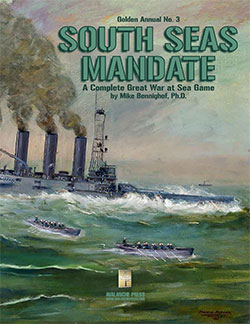 Note: Great War at Sea: South Seas Mandate is part of our Red-Orange Naval War alternative history story arc, positing a world-wide naval war in the early 1920’s between the United States on one side, and Britain and Japan on the other. Note: Great War at Sea: South Seas Mandate is part of our Red-Orange Naval War alternative history story arc, positing a world-wide naval war in the early 1920’s between the United States on one side, and Britain and Japan on the other.
It’s an alternate version of our Second Great War alternative history. In that story arc, the United States and Britain come close to an open naval war, but both sides back away (after committing to large-scale naval building programs). South Seas Mandate is the story of the opening moves of that war that never happened; the story continues in our much larger Great War at Sea: War Plan Orange game.
Even before the United States acquired colonies in Hawaii, Guam and the Philippines, U.S. Navy planners suspected that the Japanese coveted them. The State Department had less interest in forecasting a coming war with Japan, but the Navy first crafted a formal plan for such a conflict in October 1906, when President Theodore Roosevelt requested it of Admiral George Dewey, president of the Navy’s General Board.
The First World War would bring some of the islands under Japanese control. The formerly German colonies in the Caroline, Marshall, and Marianas islands would be Japanese “mandates,” a League of Nations status that in practice simply lay a veneer of international legitimacy over raw colonial acquisition. The Japanese had shown an interest in the region since 1875, and now they had their long-desired foothold in the Central Pacific, what they termed the “South Seas.”
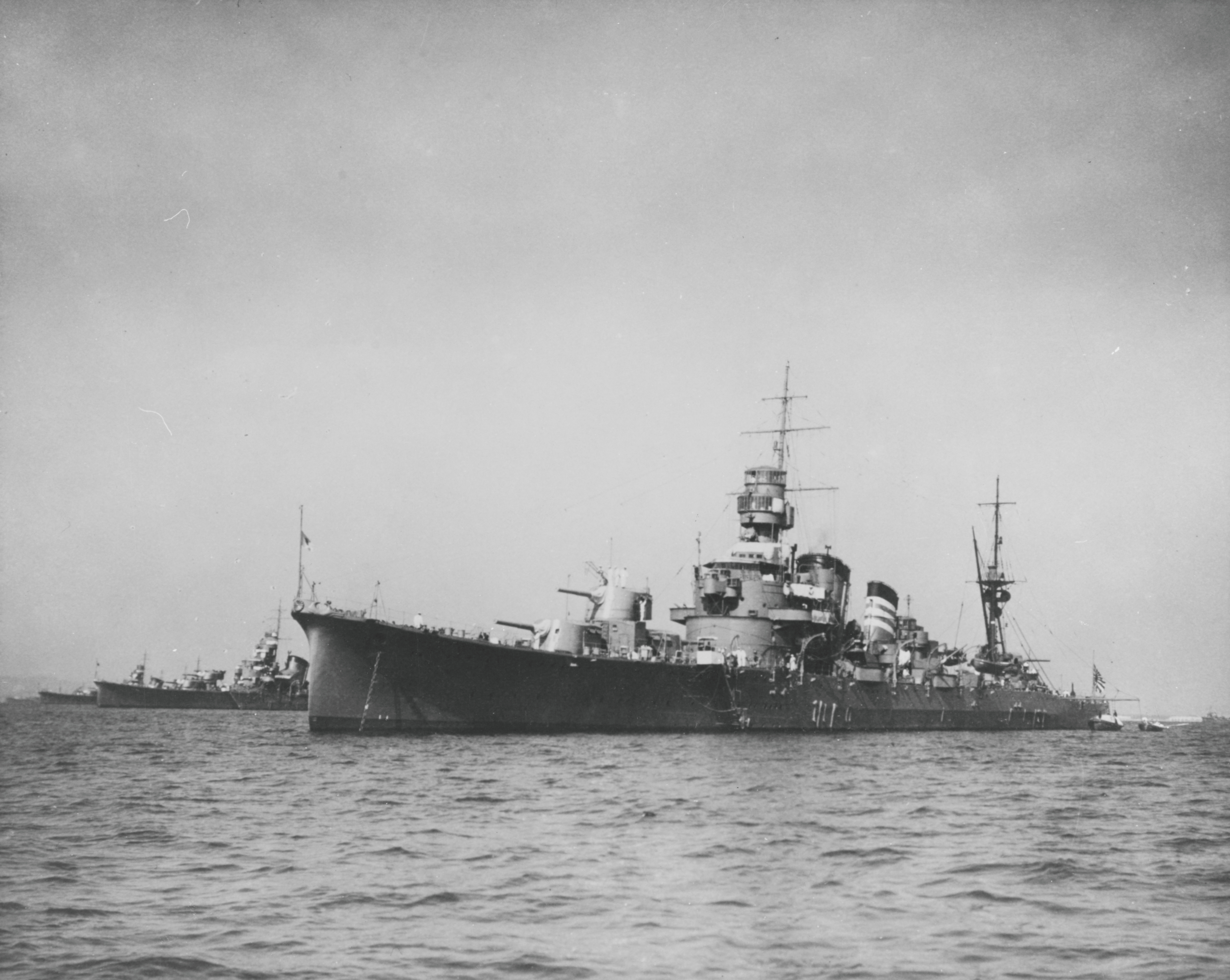
Japanese cruiser Furutaka, as first built.
That, at least, is what happened in our actual history. In our alternative history, the Japanese occupy these German-held islands in 1914, as they did in our own history. When the First Great War came to its close in late 1916, the Japanese occupiers remained. Japan had been promised the islands as a condition for joining the Allied war effort, and intended to keep them. Unwilling to wage a naval war on the far side of the world, Imperial Germany for the moment lodged diplomatic protests but took no direct action.
In our actual histories, tensions between the United States and Japan rose steadily between the World Wars, fueled in no small part by American racism. In 1907 the Japanese accepted the so-called Gentleman’s Agreement, in which they agreed to issue no passports for emigrants headed for the United States, but would continue to do so for those embarking for the Territory of Hawaii, which already had a sizeable Japanese community. From there, Japanese migrants could move on to the continental United States: a sizeable and often-used back door. By 1920, over 70,000 people of Japanese descent lived in California, accounting for two percent of the total population. Japanese saw the Immigration Act of 1924, which banned all immigrants from Asia, as a calculated insult. Was Japan not a colonial power herself? Did she not stand in the same first rank as the United States?
In our own history, Japan’s ability to strike at the United States would be limited by the 1922 Washington Naval Agreement. The Japanese demanded equality with Britain and the United States, and ended up accepting a fleet size 60 percent of what the two Anglo-Saxon nations would be allowed. The agreement also banned the fortification of Mandated islands, and ended the Anglo-Japanese Alliance with Britain.
In our alternative history, the one in which South Seas Mandate is set, the First World War ends in late 1916; the United States is never involved. The Immigration Act is passed in 1918 rather than 1924, and there is no agreement reached at Washington regarding the size, combat power and number of warships each major power may construct. Japan is free to fortify the Pacific islands and to complete her fleet program, and retains her alliance with Britain (the actual Washington agreement banned such fortifications, and ended the alliance).
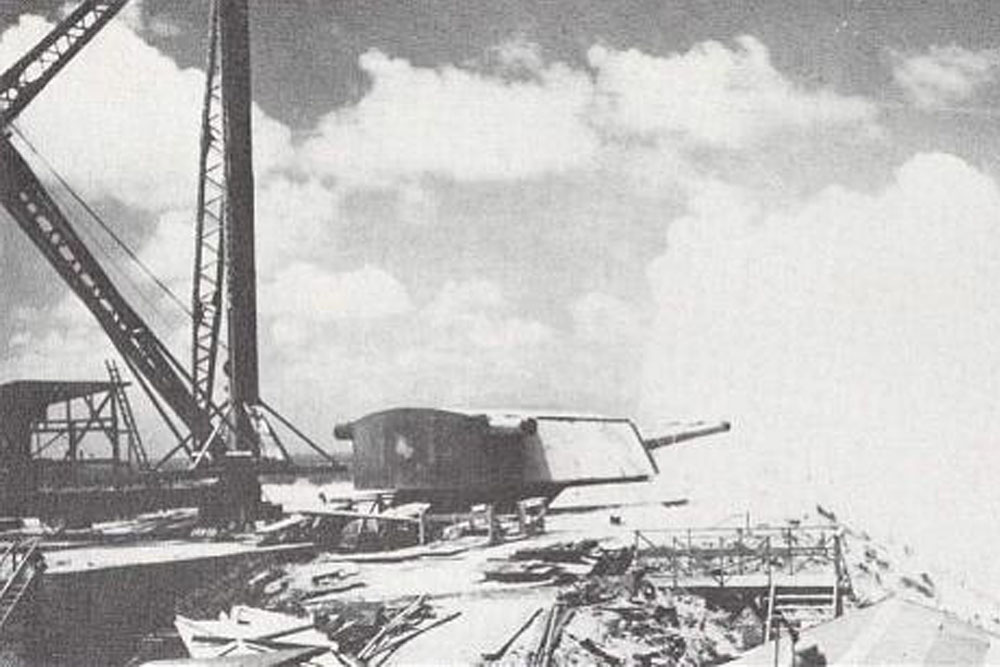
The 14-inch coast-defense guns of Fortress Guam.
For the next three years, a naval arms race takes off between the United States (her people and economy untouched by the ravages of war), Japan (likewise having seen few losses, only participating in the brief Pacific colonial campaign of 1914) and the nearly-bankrupt Britain (mustering the resources for a fresh round of naval war; the British Empire did not suffer such grievous losses in one war only to lose the next). Other participants commence less-ambitious programs, as much to give their returning soldiers work in shipyards and steel mills as to build up their navies.
Note: The Second Great War alternative history has its own, less restrictive version of the Washington naval accord. This does not occur in our background story for South Seas Mandate; everyone is free to build as many battleships as they can afford. And in the case of the Japanese, a few more beyond that.
When American intervention in Ireland provokes a war between the United States and the United Kingdom in December 1919, the Empire of Japan is ready and eager to answer the call of their allies.
The Empire mobilizes both Army and Navy in the spring of 1920; this delay allows the Americans to rush a large reinforcement convoy to the Philippines, but does assure that when Japan is ready to strike, she can do so with her full capabilities. The American reinforcements dispatched to the Philippines do little to delay Japanese occupation. By May 1920, over 100,000 Japanese troops have landed in the Philippines and the American defenders have been forced back to their prepared fortifications on the Bataan Peninsula, there to await the American relief fleet.
That relief fleet gathers in San Diego and San Francisco, California. The Battle Fleet will escort a massive convoy bearing troops and supplies. Once the Philippines are secured, the Americans can act against British and Japanese possessions to the north and south of the archipelago.

Apra Harbor, Guam. A 1912 map, before the improvements.
In the Central Pacific, the Japanese face the potent redoubt of Fortress Guam, built up over the previous two decades in case of just such a conflict. The American War Plan Orange is not an island-hopping campaign; the Americans have no intention of capturing the Japanese-held islands of the Marianas. Guam instead serves as a forward base for the re-capture of the Philippines. Once that has been accomplished, then the Americans can address Japanese-held islands like Saipan.
Note: Some American planners recommended the “Fortress Guam” strategy, building up the island with improvements to Apra Harbor, heavy coast-defense guns, and a substantial garrison. Their chiefs scotched the idea, based on both the costs involved and the likelihood of provoking a Japanese attack before the island could be made ready to withstand it.
The initial action involves the cruiser screens of both fleets, as the Americans probe Japanese defenses and seek to reinforce Guam. The Japanese in turn wish to keep Guam isolated from relief until they can turn the full power of their battle fleet to reducing its formidable defenses. And in the early days of this Pacific naval war, both sides seek the sort of naval victory that sets the tone for the war to come (and, not coincidentally, builds careers).
None of the ships involved in these battles actually existed in our reality (except for the four Japanese Furutaka-class cruisers, which would be re-built from the form seen here). But all of them were planned and designed, just not actually funded and built. That’s part of the fun of alternative-history wargames: battles that never happened, waged by ships that never existed.
You can order South Seas Mandate right here.
Gold Club members can use their max discount.
Sign up for our newsletter right here. Your info will never be sold or transferred; we'll just use it to update you on new games and new offers.
Mike Bennighof is president of Avalanche Press and holds a doctorate in history from Emory University. A Fulbright Scholar and NASA Journalist in Space finalist, he has published a great many books, games and articles on historical subjects; people are saying that some of them are actually good.
He lives in Birmingham, Alabama with his wife and three children. He misses his lizard-hunting Iron Dog, Leopold.
Daily Content includes no AI-generated content or third-party ads. We work hard to keep it that way, and that’s a lot of work. You can help us keep things that way with your gift through this link right here.
|