| Soldier Emperor
Publisher’s Preview
By Mike Bennighof, Ph.D.
September 2024
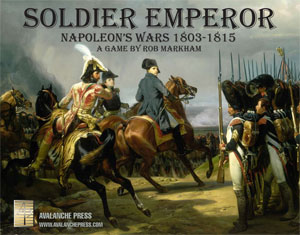 Soldier Emperor has never been a best-seller among hard-core wargamers; it always did best through distribution where it reached a broader audience. Even though we were ejected from distribution a while back for writing about uncomfortable history, we’ve brought back Soldier Emperor in a Playbook edition, with everything you need to play in a couple of books. Soldier Emperor has never been a best-seller among hard-core wargamers; it always did best through distribution where it reached a broader audience. Even though we were ejected from distribution a while back for writing about uncomfortable history, we’ve brought back Soldier Emperor in a Playbook edition, with everything you need to play in a couple of books.
Soldier Emperor is one of my favorites among our games, and the reasons, to me at least, are pretty obvious. First off, there’s the sweep of it. The entire breadth of Europe (and some nearby parts of North Africa and the Middle East) laid out on your gaming table. You control an empire at one of history’s most unpredictable moments, and it’s up to you to not only survive, but find some way to thrive. And you do that by managing every aspect of the conflict: military, economic and most of all diplomatic.
 It's a game that fosters player interaction; while its cards are at the center of the action, there is no sedate turn or phase in which they’re played. The game plays fine with two players, but really shines with the full seven. It's a game that fosters player interaction; while its cards are at the center of the action, there is no sedate turn or phase in which they’re played. The game plays fine with two players, but really shines with the full seven.
Card play drives the game. You can slap down a card at any time, interrupting an opponent’s move (there are turns for moving your armies and fleets, and attacking with them) to induce some chaos into his or her plans: an outbreak of disease, a minor ally switching sides, the weather goes bad, troops decide they need to be paid. Of course, they can do it to you, too, or play a card that makes things better for their cause. There’s a countdown at the start to make sure everyone has a chance to look at their hand first; otherwise, the situation can change very quickly.
Soldier Emperor’s map of Europe is divided into provinces, and surrounded by seas divided into areas. That regulates the movement of armies and fleets, but also provides the economic underpinnings of the game. Each province is rated for the Money and Manpower is produces; Manpower represents not only recruits for your forces, but also the province’s ability to manufacture things (weapons, uniforms and such) that equip those recruits.
Daily Content includes no AI-generated content or third-party ads. We work hard to keep it that way, and that’s a lot of work. You can help us keep things that way with your gift through this link right here.
Capturing enemy-held provinces not only moves you closer to victory, it also increases your own ability to wage war and degrades that of the enemy. These resources are the currency of the game: you’ll need them not just to build your forces but to maintain them. They are the literal blood and treasure that fuel your war machine, and they are so vital that their trade also helps fuel diplomacy.
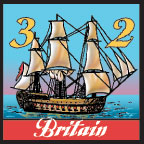 You’ll need to talk a good game to win at Soldier Emperor; even mighty France can succumb to a coalition of enough enemies. No one can take on the French alone, and so the table dynamic will see the French player trying to keep the rest of Europe divided through both threats and inducements, and the British player working to thwart that ambition, tossing gold to the cash-starved continental powers to get them to bleed. You’ll need to talk a good game to win at Soldier Emperor; even mighty France can succumb to a coalition of enough enemies. No one can take on the French alone, and so the table dynamic will see the French player trying to keep the rest of Europe divided through both threats and inducements, and the British player working to thwart that ambition, tossing gold to the cash-starved continental powers to get them to bleed.
There are no neutral powers: there are only enemies you have not yet attacked or who have not yet attacked you. Your allies are staunch friends … until they’re not.
Mechanically, Soldier Emperor is not at all difficult to play. You move your armies and fleets between provinces and sea areas, respectively. Leaders can move them faster. If the province or sea area includes enemy armies or fleets, then you can fight them there. Leaders help with that, too – some leaders more than others (Napoleon has special powers, as does Davout).
Armies and fleets have varying strengths; when they’re raised (purchased with Money and Manpower) they’re selected randomly. Once they’re on the board, you also have to pay to keep them there. And then if you want to attack somebody, you have to pay for that, too. War is expensive!
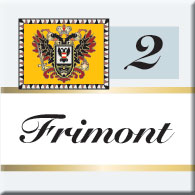 Once you enter battle, the procedure’s pretty simple; you roll dice equal to your attack strength, and if you get enough hits to overwhelm an enemy army or fleet’s defense strength (it’s all straightforward “roll a 6 to hit” combat), then it’s flipped over to its reduced-strength side. If it’s already there, then it’s all over for that unit. Your armies and fleets fight better with a leader, and better still with a good leader. Once you enter battle, the procedure’s pretty simple; you roll dice equal to your attack strength, and if you get enough hits to overwhelm an enemy army or fleet’s defense strength (it’s all straightforward “roll a 6 to hit” combat), then it’s flipped over to its reduced-strength side. If it’s already there, then it’s all over for that unit. Your armies and fleets fight better with a leader, and better still with a good leader.
Defeating enemy armies (or fleets) is just the first step toward capturing an enemy-held province. Next, you have to lay siege to it – these defenders are separate from the armies, and they don’t go away easily. And, once again, you’ll have to pay out more Money to lay siege – war is expensive! The procedure’s similar, rolling a 6 to get a hit, but those little castles on the map get to shoot back at you. A siege can last through multiple turns, costing you money each turn and leaving your besieging force stuck in place where a relieving army might come by to smack them.
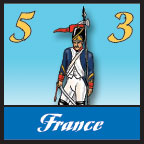
From the start, we wanted Soldier Emperor to be a beautiful game. Each fleet or army tile sports an original painting by Terry Strickland. They’re thick tiles, fun just to handle and play with. The map is also an original painting, and each player has a Player Display featuring period artwork. The cards are full-sized poker-style playing cards.
 What all that gives you is a strategic game of the Napoleonic Wars that can be played to completion in a reasonable length of time (probably eight hours for the full 1803-1815 campaign game, but realistically that’s going to vary wildly based on a group’s level of diplomacy and table talk – this is a game that generates a great deal of chatter). What all that gives you is a strategic game of the Napoleonic Wars that can be played to completion in a reasonable length of time (probably eight hours for the full 1803-1815 campaign game, but realistically that’s going to vary wildly based on a group’s level of diplomacy and table talk – this is a game that generates a great deal of chatter).
Soldier Emperor has twelve scenarios, covering all of the Napoleonic Wars from the Corsican’s coronation in 1803 to his last hurrah at Waterloo in 1815. Ten of them are relatively short, usually lasting from eight to twelve turns (the Hundred Days scenario lasts only four). The other two are campaign scenarios, with one starting in 1803 and lasting through 1815 (unless someone wins the game before then) and the other running from 1812 through 1815.
Soldier Emperor is a grand game of the Grand Empire’s short existence, a beautiful game that you can actually play. Our Campaign Study Great Powers adds additional rules giving each of the seven Great Powers in the game their own unique qualities and special powers; it’s more fun and doesn’t add much to complexity or playing time.
Click here to order Soldier Emperor right now.
Global Empires
Soldier Emperor
Soldier Emperor: Indian Empires
Journal No. 40: Byzantium Eternal
Retail Price: $149.97
Package Price: $120
Gold Club Price: $96
You can experience the Global Empires Package right here.
Sign up for our newsletter right here. Your info will never be sold or transferred; we'll just use it to update you on new games and new offers.
Mike Bennighof is president of Avalanche Press and holds a doctorate in history from Emory University. A Fulbright Scholar and NASA Journalist in Space finalist, he has published a great many books, games and articles on historical subjects; people are saying that some of them are actually good.
He lives in Birmingham, Alabama with his wife, three children, and new puppy. He misses his lizard-hunting Iron Dog, Leopold.
Daily Content includes no AI-generated content or third-party ads. We work hard to keep it that way, and that’s a lot of work. You can help us keep things that way with your gift through this link right here.
|