| 1967: Sword of Israel
The Return
By Mike Bennighof, Ph.D.
January 2022
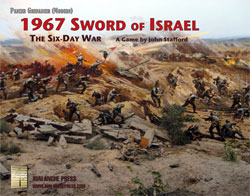 Currently the largest game in our catalog, we’re bringing back Panzer Grenadier (Modern): 1967 Sword of Israel in a new Playbook edition. It will include everything that was in the boxed version: 869 die-cut and silky-smooth playing pieces, eight heavy cardstock maps and 50 scenarios. Currently the largest game in our catalog, we’re bringing back Panzer Grenadier (Modern): 1967 Sword of Israel in a new Playbook edition. It will include everything that was in the boxed version: 869 die-cut and silky-smooth playing pieces, eight heavy cardstock maps and 50 scenarios.
1967: Sword of Israel takes a modified version of our Panzer Grenadier game system to the Six-Day War. The Israel Defense Forces face the armies of Egypt, Jordan and Syria, which sounds kind of daunting except that the Israelis actually had a slight edge in numbers, a significant edge in firepower, and an incalculable edge in training, morale and leadership. On top of that, except for a handful of Egyptian commando battalions that made it to the West Bank in time to fight alongside the Royal Jordanian Army, the three putative Arab allies did nothing to aid one another’s war efforts.
 The Israelis are at their peak in this conflict, and top to bottom are easily the best army we’ve shown in any of our tactical games. The Jordanians are actually reasonably good, except for their leadership, but they have the bad luck to face the Israelis. The Egyptians aren’t very good, but the Syrian Arab Army is awful by design – Defense Minister Hafez al-Assad (father of Syria’s current president) deliberately identified the army’s 400 most intelligent and capable officers and then had them all executed to assure that no one would be left with the ability to organize a coup against the Ba’ath regime. The Israelis are at their peak in this conflict, and top to bottom are easily the best army we’ve shown in any of our tactical games. The Jordanians are actually reasonably good, except for their leadership, but they have the bad luck to face the Israelis. The Egyptians aren’t very good, but the Syrian Arab Army is awful by design – Defense Minister Hafez al-Assad (father of Syria’s current president) deliberately identified the army’s 400 most intelligent and capable officers and then had them all executed to assure that no one would be left with the ability to organize a coup against the Ba’ath regime.
 While the Israelis have all of those advantages, the one thing they don’t have is time. The Soviet Union and United States tacitly agreed that they would like to see the Arabs – in particular, Egypt’s President Gamel Abdel Nasser – severely chastised, but not destroyed. The Americans did not want to see the Arab states grow powerful enough to threaten American interests, while the Soviets considered that a serious but not total defeat would make the Arab states dependent on Moscow. Thus, the war would not be allowed to continue for long before the superpowers would demand an end to it. Whatever the Israelis hoped to accomplish, they would have to accomplish it quickly. While the Israelis have all of those advantages, the one thing they don’t have is time. The Soviet Union and United States tacitly agreed that they would like to see the Arabs – in particular, Egypt’s President Gamel Abdel Nasser – severely chastised, but not destroyed. The Americans did not want to see the Arab states grow powerful enough to threaten American interests, while the Soviets considered that a serious but not total defeat would make the Arab states dependent on Moscow. Thus, the war would not be allowed to continue for long before the superpowers would demand an end to it. Whatever the Israelis hoped to accomplish, they would have to accomplish it quickly.
 That’s reflected in the scenarios, where the Israelis usually come to the battlefield with enormous advantages, but they’re going to need them all in order to beat the clock. The Arab armies actually fought well in prepared positions, for the most part, and the game shows why. The Arabs don’t usually have to defeat the Israelis in open battle; if they can hamper their advance and slow them up, the operational/strategic result is as good as a win. That’s reflected in the scenarios, where the Israelis usually come to the battlefield with enormous advantages, but they’re going to need them all in order to beat the clock. The Arab armies actually fought well in prepared positions, for the most part, and the game shows why. The Arabs don’t usually have to defeat the Israelis in open battle; if they can hamper their advance and slow them up, the operational/strategic result is as good as a win.
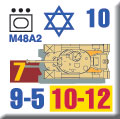 The Egyptians might have had a chance to do that in the actual war, but the commander of Egyptian troops in the Sinai, Abdel Hakim Amer, suffered a severe panic attack on the first day of the war and ordered a general retreat. His Israeli counterpart, Defense Minister Moshe Dayan, went through the same ordeal but unlike the Egyptians, the Israelis had other leaders ready to step up and take command. So after the war’s first day, the Egyptians are usually trying to extricate their forces from the onrushing Israeli juggernaut. The Egyptians might have had a chance to do that in the actual war, but the commander of Egyptian troops in the Sinai, Abdel Hakim Amer, suffered a severe panic attack on the first day of the war and ordered a general retreat. His Israeli counterpart, Defense Minister Moshe Dayan, went through the same ordeal but unlike the Egyptians, the Israelis had other leaders ready to step up and take command. So after the war’s first day, the Egyptians are usually trying to extricate their forces from the onrushing Israeli juggernaut.
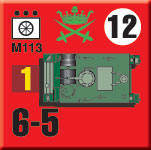 The scenarios in 1967: Sword of Israel are usually larger than the typical Panzer Grenadier battle: Israeli success in 1967 in large part depended on getting there first with the most. They crammed a lot of tanks into a little area, and the Arabs tried (unsuccessfully, for the most part) to counter them the same way. That makes for battle with dozens of tank platoons on each side – in other words, exactly what you’ve always wanted. The scenarios in 1967: Sword of Israel are usually larger than the typical Panzer Grenadier battle: Israeli success in 1967 in large part depended on getting there first with the most. They crammed a lot of tanks into a little area, and the Arabs tried (unsuccessfully, for the most part) to counter them the same way. That makes for battle with dozens of tank platoons on each side – in other words, exactly what you’ve always wanted.
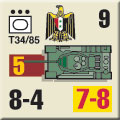 Since the Playbook has a rigid page-count (multiples of 16), the scenarios rise from 52 to 64 pages, and that’s an opportunity to rebuild 1967: Sword of Israel on the model of the other games in its series. For some time now we’ve been crafting scenario-based games on what we call our story-arc format, which intermingles historical background with the scenarios, using the scenario text to help move the narrative forward. The action is divided into chapters, and each chapter has a “battle game” to tie the scenarios together so you can play them in a sequence that shows, in game form, the larger stakes at play. Since the Playbook has a rigid page-count (multiples of 16), the scenarios rise from 52 to 64 pages, and that’s an opportunity to rebuild 1967: Sword of Israel on the model of the other games in its series. For some time now we’ve been crafting scenario-based games on what we call our story-arc format, which intermingles historical background with the scenarios, using the scenario text to help move the narrative forward. The action is divided into chapters, and each chapter has a “battle game” to tie the scenarios together so you can play them in a sequence that shows, in game form, the larger stakes at play.
1967: Sword of Israel pre-dated this format, so the re-issue seemed a fine opportunity to re-cast the game. It’s not a bad game at all for its era (it’s now nine years old), we’ve just raised the bar since.
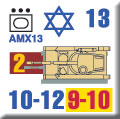 The Playbook edition still has the same 50 scenarios, which were broken between the three fronts of the Six-Day War (Sinai, West Bank and Golan Heights) but otherwise simply presented in chronological order – as scenario-based wargames have done for the past 50 years or more. The package will include the standard, separate rulebook, so you don’t have to deal with a fat, unwieldy single book. To help keep its price below the magical $100 barrier, the game now comes in Playbook format rather than in a box. The Playbook edition still has the same 50 scenarios, which were broken between the three fronts of the Six-Day War (Sinai, West Bank and Golan Heights) but otherwise simply presented in chronological order – as scenario-based wargames have done for the past 50 years or more. The package will include the standard, separate rulebook, so you don’t have to deal with a fat, unwieldy single book. To help keep its price below the magical $100 barrier, the game now comes in Playbook format rather than in a box.
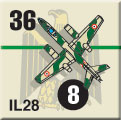 The pieces are our beautiful die-cut, silky-smooth little works of art. We call them that because first, the material takes ink really well – we can’t use most of our older artwork because the sharp reproduction exposes flaws once invisible to the eye (that’s the beauty part). The silkiness comes from a coating applied to them that feels like silk (it isn’t actual silk). The smoothness comes from the method by which they are cut: ultra-sharp blades that require far less force than traditional die-cutting, which smashes its blades into the cardboard with enormous power that cuts through but also leaves deep indentations on the front of the sheet (the side that gamers and game artists treat as the back, a source of confusion between printer and publisher since the dawn of hex-and-counter games). Both sides of these pieces are smooth, or nearly so. Enough that we have to place a little stripe across the back, else it would be hard to tell just by feel. The pieces are our beautiful die-cut, silky-smooth little works of art. We call them that because first, the material takes ink really well – we can’t use most of our older artwork because the sharp reproduction exposes flaws once invisible to the eye (that’s the beauty part). The silkiness comes from a coating applied to them that feels like silk (it isn’t actual silk). The smoothness comes from the method by which they are cut: ultra-sharp blades that require far less force than traditional die-cutting, which smashes its blades into the cardboard with enormous power that cuts through but also leaves deep indentations on the front of the sheet (the side that gamers and game artists treat as the back, a source of confusion between printer and publisher since the dawn of hex-and-counter games). Both sides of these pieces are smooth, or nearly so. Enough that we have to place a little stripe across the back, else it would be hard to tell just by feel.
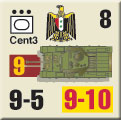
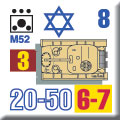
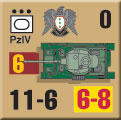
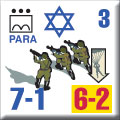 The Panzer Grenadier (Modern) pieces are designed like those of Panzer Grenadier, with the same values in the same places, but since this is Panzer Grenadier (Modern) there are a few new values (like anti-aircraft fire, or amphibious capability) and many more units have anti-tank strengths including almost all infantry-type units (which have man-portable anti-tank rockets of various types). The Panzer Grenadier (Modern) pieces are designed like those of Panzer Grenadier, with the same values in the same places, but since this is Panzer Grenadier (Modern) there are a few new values (like anti-aircraft fire, or amphibious capability) and many more units have anti-tank strengths including almost all infantry-type units (which have man-portable anti-tank rockets of various types).
Panzer Grenadier (Modern) plays very much like Panzer Grenadier, with some more modern stuff added. If you know how to play one of them, you can adapt to the other very quickly. It’s a fun game, and the new version comes at a very sweet price for a game of this size.
You can order 1967: Sword of Israel (Playbook edition) right here.
Please allow an extra three weeks for delivery.
1967 Package
1967: Sword of Israel (Playbook)
IDF: Israel Defense Forces
Retail Price: $134.98
Package Price: $110
Gold Club Price: $88
You can experience the 1967 Package right here.
Please allow an extra three weeks for delivery.
Sign up for our newsletter right here. Your info will never be sold or transferred; we'll just use it to update you on new games and new offers.
Mike Bennighof is president of Avalanche Press and holds a doctorate in history from Emory University. A Fulbright Scholar and NASA Journalist in Space finalist, he has published a great many books, games and articles on historical subjects; people are saying that some of them are actually good.
He lives in Birmingham, Alabama with his wife, three children, and his Iron Dog, Leopold.
Want to keep Daily Content free of third-party ads? You can send us some love (and cash) through this link right here.
|