| Devil Dogs:
Battle of Belleau Wood, Part One
By Mike Bennighof, Ph.D.
August 2026
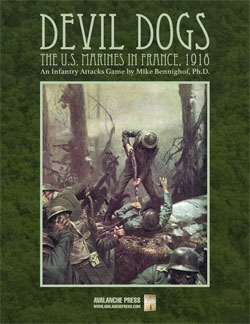 The general got the Croix de Guerre The general got the Croix de Guerre
The son of a bitch was never there
Hinky Dinky Parlez-Vous
After almost exactly a year of organization and training, the 4th Marine Brigade would get its first true test in combat in early June 1918. The German great spring offensive had opened in March, making steady gains thanks to new artillery and infiltration tactics, plus the arrival of additional troops from the Eastern Front released by Russia’s withdrawal from the war. The offensive proceeded slowly, costing the Germans almost exactly as many casualties as they inflicted on the Allies, but it ground forward relentlessly in distinct phases: a well-planned artillery barrage, followed by an infiltration attack, and then consolidating the gains once the storm troops’ momentum ran out. Then applying the same method to the same or another sector.
In May 1918, the attack moved to the Aisne sector, north-east of Paris. Operation Blücher, as this phase was called, fell on four worn-down British divisions that had been shuttled to a supposedly “quiet” sector to recover. Their French army commander refused to allow them to keep large reserves, and so the German barrage-infiltration combination crushed them. The advance proceeded directly toward Paris, inducing panic as rumor claimed that the government would decamp for Bordeaux (as the National Assembly had done in 1870) at any moment. At 1700 on 30 May, a French staff officer brought written orders to Maj. Gen. Omar Bundy of the American 2nd Infantry Division. The Americans would mount French trucks and move directly into the path of the German onslaught. Their lines would form just south of a forest called the Bois de Belleau, Belleau Wood to the Americans.
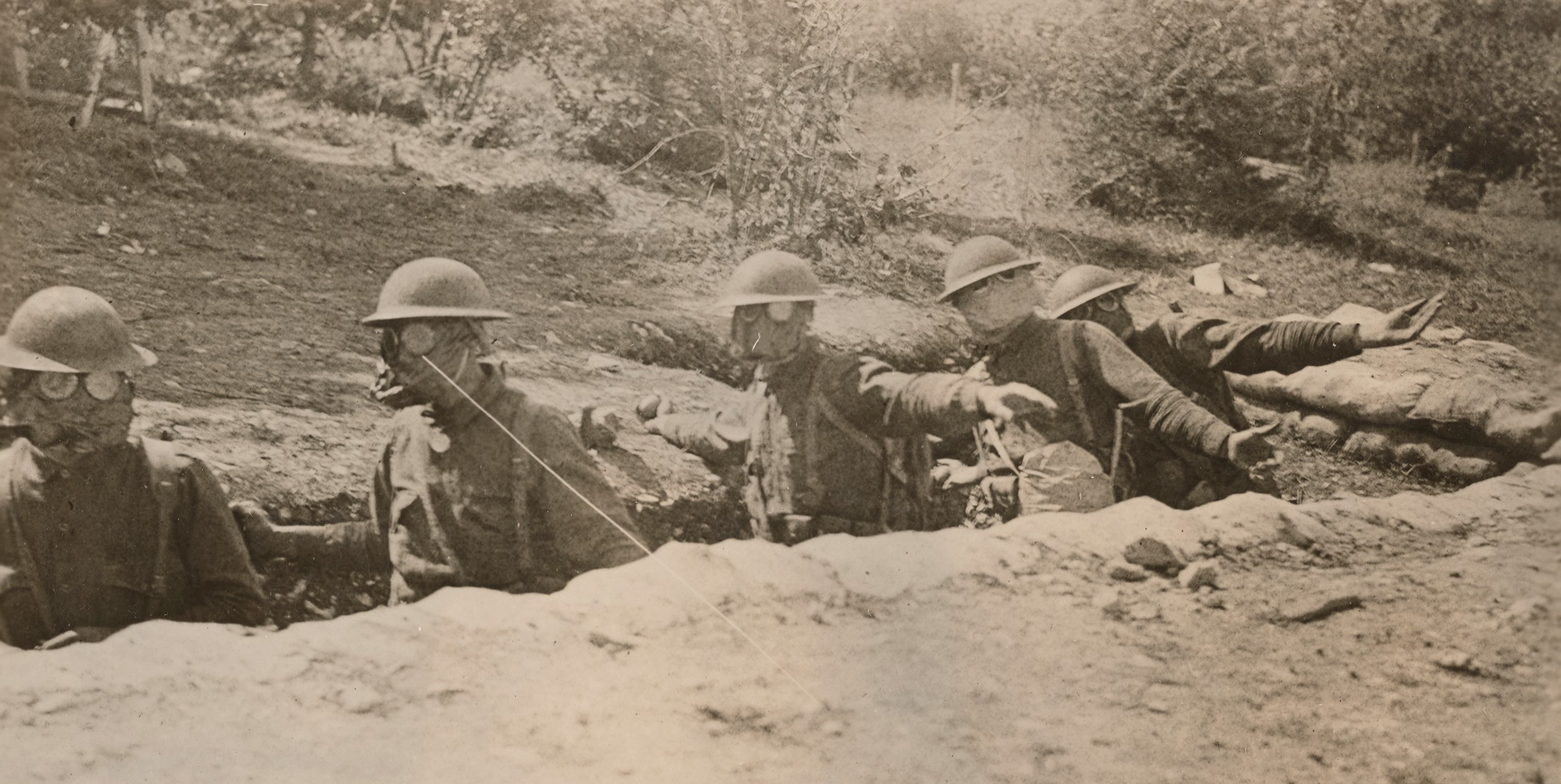
Marines training with gas masks. France, 1918.
The brigade had received a new commander on 1 May: Army Brig. Gen. James Harbord, formerly the AEF chief of staff and a favorite of Black Jack Pershing. Harbord yearned for a combat posting, and after a dispute between Harbord and British staff officers, Pershing needed to shuffle him off elsewhere. Harbord seems to have gotten along well with the senior Marine officers of the brigade; his brigadier’s star was a temporary rank, a boost from his permanent grade of lieutenant colonel. That made him junior to the colonels of both Marine regiments, but they all seem to have adjusted.
On 1 June, bellowing their newly-learned “Parlay-Voo Song,” the Marines filed into positions in the second line, behind the French 158th and 43rd Infantry Divisions (the American division was more than twice the size of its French counterparts). The Allied plan called for the Marines to dig in and the shattered forces in front of them to retreat through their lines. But from the start, one Marine battalion found no one between them and the Germans.
On 2 June, the Marines came under German artillery shelling and exchanged some long-range machine-gun fire with the Germans. By the next day, the French had withdrawn through the Marine lines; the Marines acquired many of the retreating poilus’ Chauchat automatic rifles to bolster their own firepower. A French Chasseur major handed a written order to the Marine 51st Company. “Retreat, the Germans are coming!” The French officer wrote. “Retreat, Hell!” company commander Capt. Lloyd Williams exploded. “We have orders to stay and hold at any cost, and that’s what we’ll do.” Marine lore would shorten this to “Retreat, Hell! We just got here!”
On 3 June, the Germans made their first attacks against the lines held by the Marines. The German 197th Infantry Division attacked the Marines on Hill 169, with the 26th Jäger Battalion and a battalion from the 273rd Infantry Regiment. The 2nd Battalion, 5th Marines held the line here, with the 55th Company (including Lt. Lemuel Shepherd, future Marine Corps commandant) at the point of the enemy’s attack.
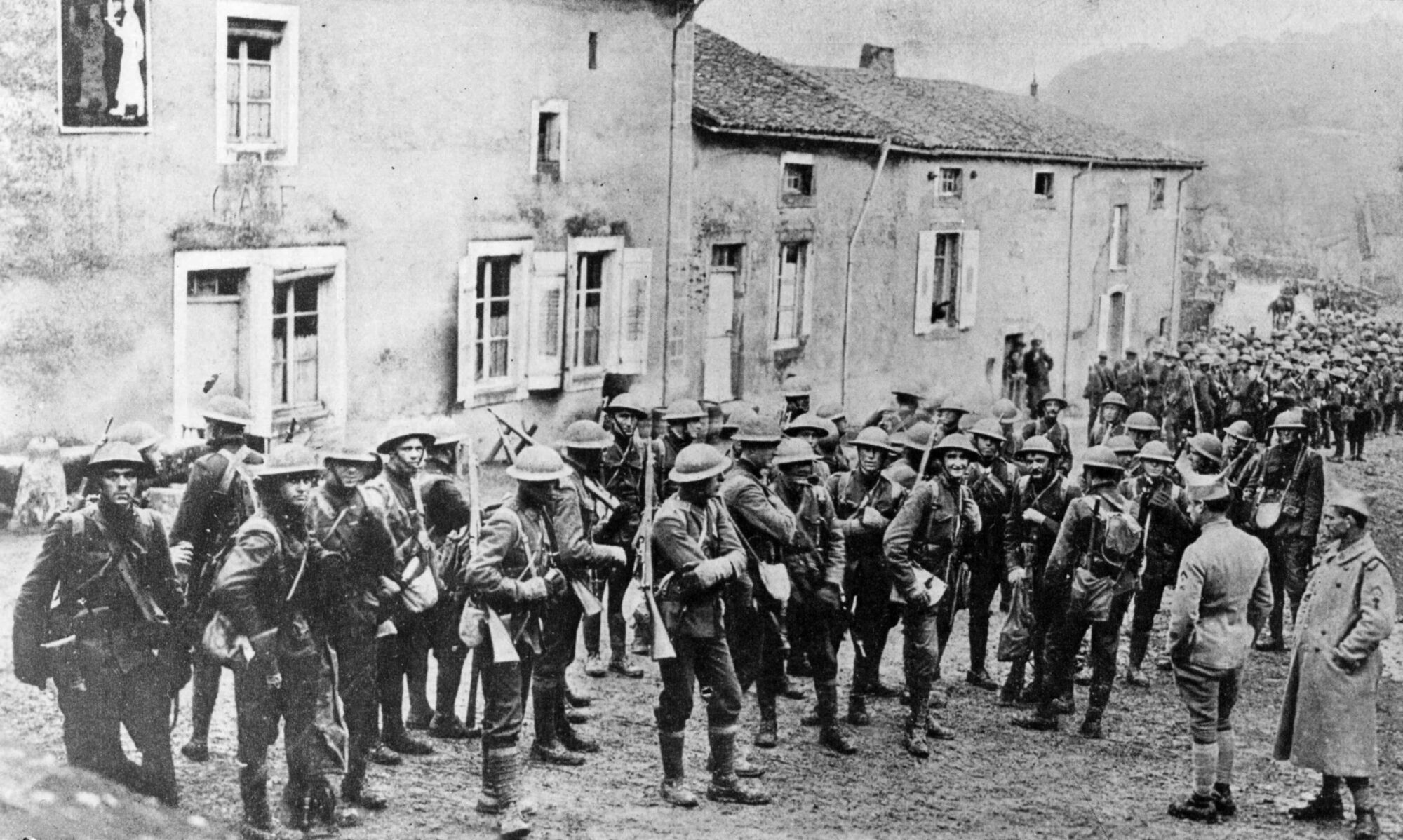
Marines on their way to the front, May 1918. Note the crisp uniforms and clean shaves.
The 197th Infantry Division was a third-line unit, considered suitable only for holding the ground won by better units during the offensive. Its men were older and less fit than those of the storm divisions. But those storm divisions had been worn down by weeks of combat, leaving Lt. Gen. Richard von Conta of IV Reserve Corps to continue the offensive with his leftovers. The Marines’ obsession with marksmanship paid immediate dividends, as the German assault waves came under accurate rifle fire at a much greater range than they expected. No German got within 50 yards of the American foxholes.
In the woods just beyond the lines held by Williams’ Marines, the French 1st Chasseur Battalion – the same outfit that had passed on withdrawal orders to Williams’ Marines – suffered a minor mutiny. The officers directed their men to pull back through the Marine lines, but the chasseurs refused to leave the forest, engaging the Germans in a furious close-quarters fight with bare hands and bayonets.
In the early morning hours of 4 June 1918, a fresh French infantry division arrived to take over the scattered positions held by the Marines, and the Marine brigade brought its battalions together to hold a line directly opposite the Bois de Belleau, what the Marines and soon the American press called Belleau Woods (after the war it became “Belleau Wood”). The rest of the brigade moved into their new positions on the next night. From here, the Marines blocked the road to Paris, and the German IV Reserve Corps lined up two divisions across from them.
The Germans made a number of patrol-sized raids, and in the afternoon of the 4th, a much larger probe. The Marines repelled them all; in contrast to most trench battles of the time, they did so with aimed rifle fire (plus some timely artillery support).
Pershing visited the Marine lines on the same day, before moving on to the French Sixth Army’s headquarters where he agreed that the German offensive had over-extended the enemy lines. It was time to attack, and drive back the Germans. The Germans don’t seem to have thought themselves spent; the German 28th Infantry Division had an attack of their own scheduled for 6 June, but the Marines struck first.
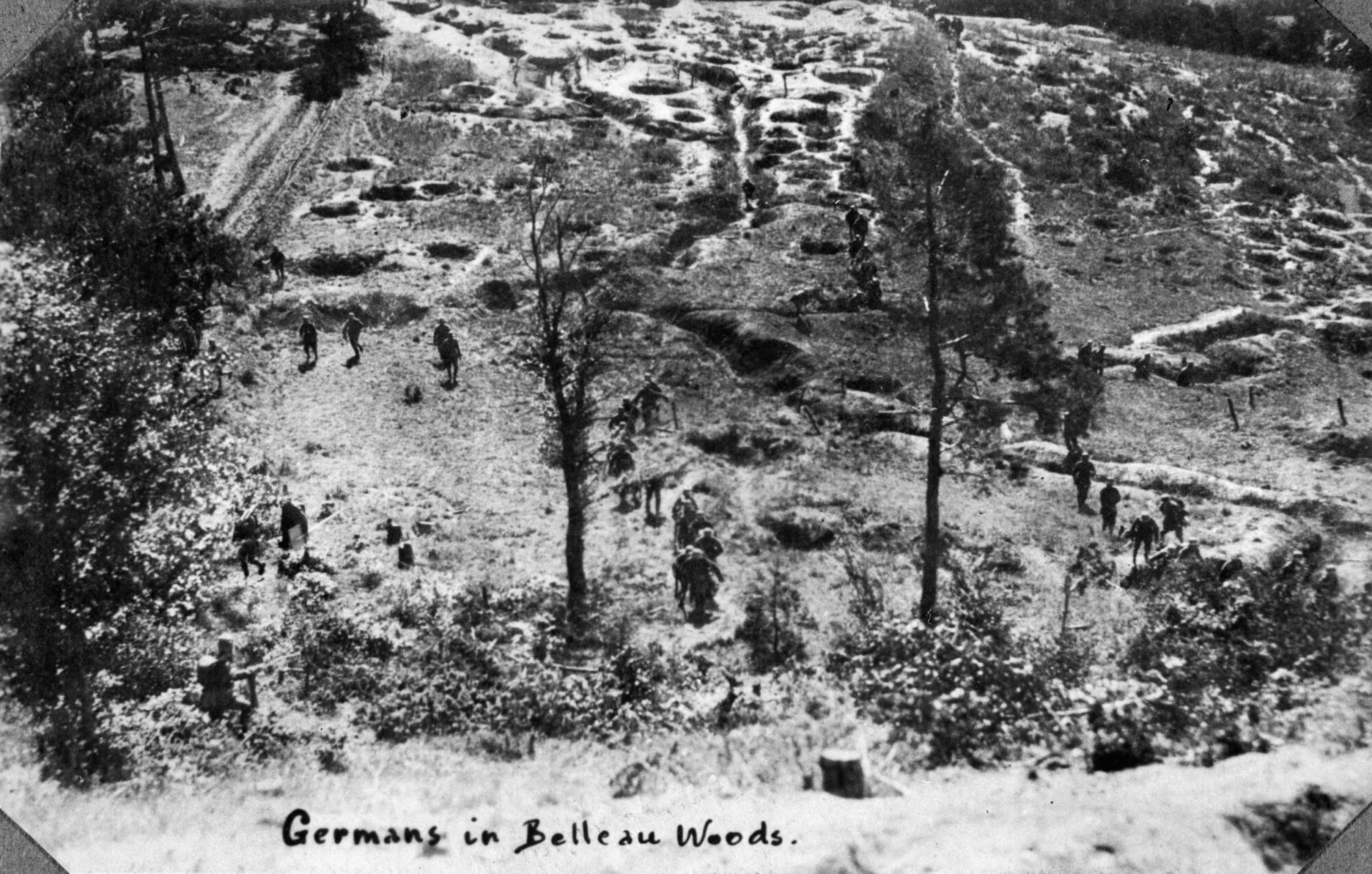
German troops advance into Belleau Wood.
The plan called for the French 167th Infantry Division to lead the attack, with the 4th Marine Brigade on its right. Sixth Army ordered them to clear Belleau Wood of Germans, giving the Allies firm control of high ground to block further German advances. The attack would go forward at 0345 on 6 June, thirty minutes after a brief but intense artillery barrage. Harbord insisted that the Marines would use infiltration tactics and not move forward in waves; something easier said in the decrepit wine cellar serving as brigade headquarters than carried out in the field.
The American artillery barrage, including long-range machine-gun fire, went off as scheduled, and the Marines went over the top. Harbord’s directive to use infiltration tactics either never arrived or was ignored; the Marines went forward in compact waves following the tactical directives set forth by the 2nd Infantry Division’s commander, Maj. Gen. Omar Bundy, some weeks earlier, to “ensure the highest degree of control by subordinate commanders.”
The attack had modest objectives, to capture Hill 142 and straighten the Allied lines, but even so, it went poorly. Two rifle companies, previously detached from the 1st/5th Marines that led the attack, failed to re-join their battalion in time. A promised machine-gun company also did not arrive. The Marines struck at the boundary line between two German divisions, and while that often led to success, in this case it meant that the artillery fire of both enemy formations fell on the attackers. The guns of the 197th Infantry Division held back the advance of the French 167th Infantry Division on the left of the Marine battalion, while that of the 237th Infantry Division stalled the 3rd/5th Marines to their right.
The Marines captured the crest of Hill 142, despite relatively massive casualties: ten officers and 400 men killed or wounded. The surviving Marines soon ran low on ammunition and water, with no one left to send back to bring these supplies forward. The Germans strengthened their own new line, but did not immediately counterattack.
At brigade headquarters, Harbord received the initial reports of an easy success (something almost inevitable from units relatively new to combat) and, tragically, believed them. He reported the attack as an unreserved success. Jean-Marie Degoutte, commanding the French XXI Corps that included the American 2nd Infantry Division, took Harbord’s account as a sound reason to order more intense attacks for the afternoon.
Order Devil Dogs Here.
Please allow an extra six weeks for delivery.
Sign up for our newsletter right here. Your info will never be sold or transferred; we'll just use it to update you on new games and new offers.
Mike Bennighof is president of Avalanche Press and holds a doctorate in history from Emory University. A Fulbright Scholar and NASA Journalist in Space finalist, he has published a great many books, games and articles on historical subjects; people are saying that some of them are actually good.
He lives in Birmingham, Alabama with his wife andthree children.
Daily Content includes no AI-generated content or third-party ads. We work hard to keep it that way, and that’s a lot of work. You can help us keep things that way with your gift through this link right here.
|