Montenegro 1915:
Publisher’s Preview
by Mike Bennighof, Ph.D.
March 2026
 The last decades of the 19th century and first of the 20th saw rapid growth of heavy industry and the railroads and steamships to move those goods. That allowed the great powers to arm, train and feed far greater armies than ever before, numbering millions rather than thousands of men. In August 1914, those armies mobilized and went to war. In Flanders, Galicia and East Prussia, the opening campaigns saw millions of men marching, fighting and dying. And then there was the Montenegrin campaign. The last decades of the 19th century and first of the 20th saw rapid growth of heavy industry and the railroads and steamships to move those goods. That allowed the great powers to arm, train and feed far greater armies than ever before, numbering millions rather than thousands of men. In August 1914, those armies mobilized and went to war. In Flanders, Galicia and East Prussia, the opening campaigns saw millions of men marching, fighting and dying. And then there was the Montenegrin campaign.
Montenegro, the tiny ethnically-Slavic kingdom on the Adriatic, had fought the Turks during the Balkan Wars and greatly expanded her territory. That conflict also brought a great deal of military experience to her population. Austria-Hungary declared war on Serbia on 28 July 1914, and the tiny, belligerent kingdom of Montenegro retaliated by declaring war on her huge neighbor on 5 August and threw in a declaration against Germany three days later.
The Austrians had taken care to avoid provoking Montenegro, to no avail. The Montenegrin border pressed close to the important naval base at Cattaro, and most of Mount Lovcen (the Black Mountain herself) lay within Montenegrin territory. From the Black Mountain, Montenegro’s artillery, soon supplemented by French guns and gunners, could rain down shells on ships and facilities in the base below. The Austrians had moved most of their important facilities out of range in the years before the war and built modern fortifications around Cattaro supplemented by a line of blockhouses and firing emplacements all along the border with Montenegro.
Austria-Hungary waged a campaign against Montenegro in August and September 1914, even fending off a Montenegrin invasion of Bosnia. The Austrian semi-dreadnought Radetzky steamed into Cattaro’s winding harbor and blasted the Montenegrin and French artillery on Mount Lovcen into fragments. With the Austrian campaign against Serbia going poorly, the Imperial and Royal Army contended itself with containing the pugnacious Montenegrins.
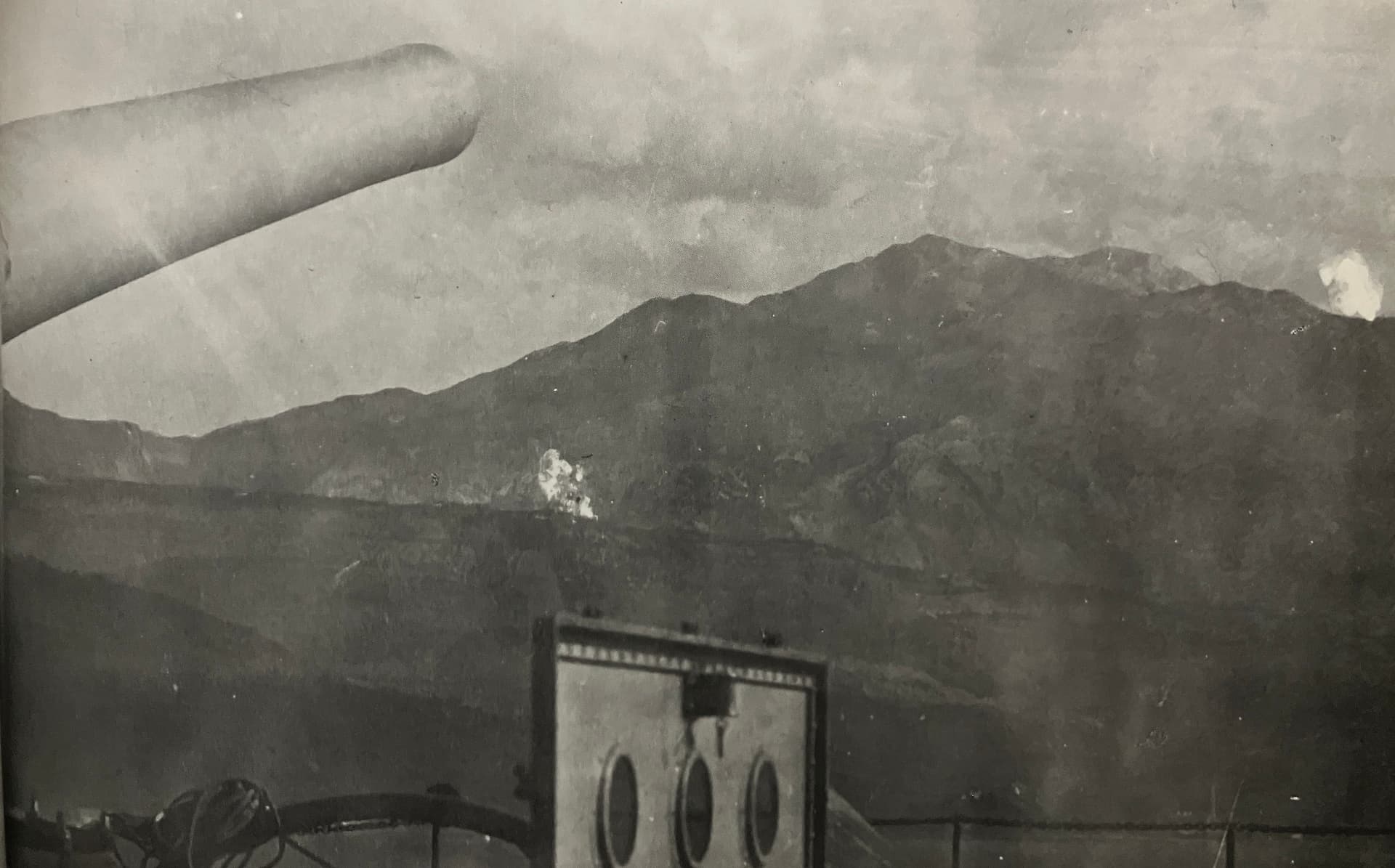
SMS Radetzky fires on Mount Lovcen, 1914.
In November 1915, Austria-Hungary, Germany, and Bulgaria conducted a well-planned and multi-pronged offensive aimed at knocking Serbia out of the war. This time, the Central Powers met near-total success, sending the remnants of Serbia’s army stumbling across the frozen mountains of Montenegro and Albania toward the Adriatic coast and the waiting French and British fleets. Over German objections, the Austrians then turned their attention to the defiant Montenegrins. In a two-month campaign, the Austrians crushed Montenegro’s small army and occupied the entire kingdom. Austria-Hungary carried out its war with Montenegro alone; the final offensive took place over strident German objections (the German general staff thought it a foolish diversion of resources).
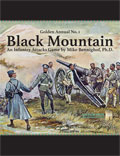
We covered the initial campaign in our Infantry Attacks: Black Mountain game. It’s a small but complete game, with ten scenarios drawn from the August 1914 campaign, and two maps and 104 pieces you’ll use to play them. That was all that I could fit into the format. I like Black Mountain very much; it came out better than I’d hoped. There is a lot of history, and a lot of play value, in that package.
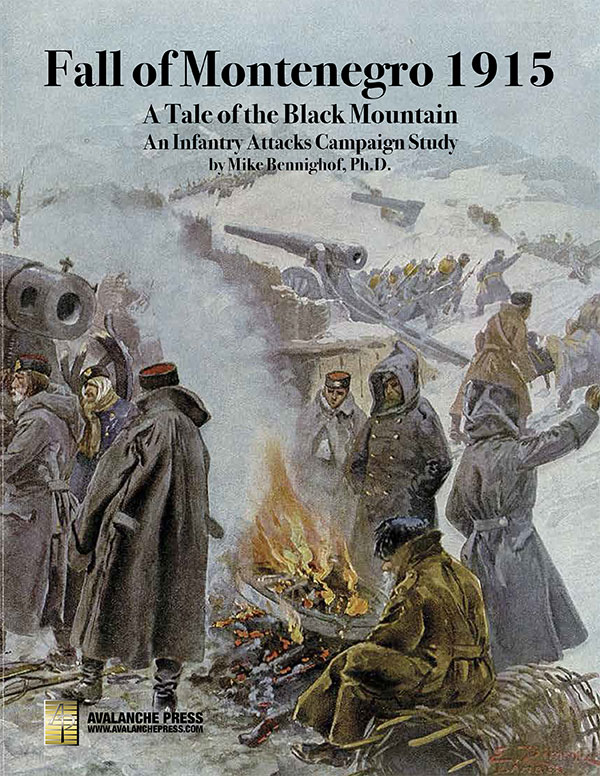
Black Mountain: Montenegro 1915 actually picks up the story in 1914 and carries it on into 1916. There’s actually not a whole lot of action in the middle of that period; it’s concentrated in September 1914, before the front quieted here, and December 1915, when the Austrians decided to settle the Montenegrins permanently. It carries the story through early February 1916, when Montenegro surrendered.
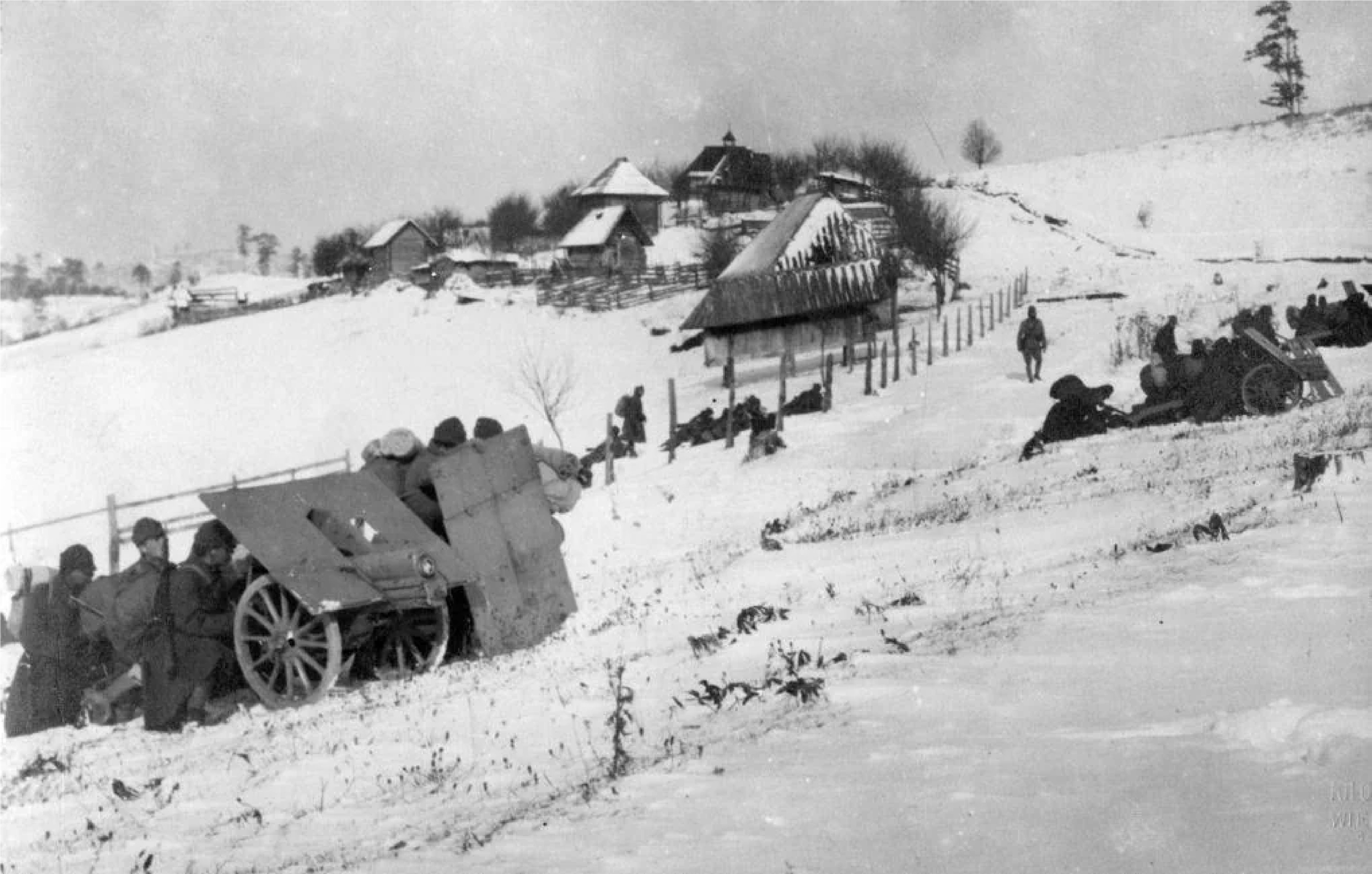
Imperial and Royal mountain artillery on the Montenegrin border, January 1916.
Montenegro 1915 is a double-sized Campaign Study, so we can wrap up the story in one volume. a I’ve wanted to do this (and had the scenarios sketched out) since I designed Black Mountain, but I don’t think the market will be there to allow us to re-visit Montenegro twice. Montenegro 1915 has 20 new scenarios for Black Mountain; you’ll also need Fall of Empires (for some K.u.K. regular infantry and more artillery) to play all of them.
By this point in the war, the Austrians have been kicked around by the Serbs, Russians, and Italians. The Imperial & Royal Army has been rebuilt almost from the ground up, and it has a great deal of hard-won combat experience, while war-weariness has yet to set in. The Montenegrins have been contained in the hall of the mountain king, and their supposed allies have interpreted this to mean that they don’t need much in the way of support in terms of troops or arms (they have gotten some cash so they can meet payroll).
When the Serbs start their Great Retreat through the snow-swept mountains, it’s the Montenegrin Army that covers them, while the Austrians are hell-bent on blocking their enemies’ escape: they have not forgotten the chants of Alle Serben Müssen Sterben that echoed through the Dual Monarchy’s city squares in June 1914. But the Montenegrins are fierce; they know they will not be evacuated, and it’s a foregone conclusion that the Austrians will overrun the kingdom. Yet they fought on and made their enemies occupy every square meter of the kingdom before they gave up the fight. As a result of Montenegrin valor, 120,000 Serbs would make it to the Greek island of Corfu (where, without Montenegrin input, they honored the Montenegrins’ sacrifice by declaring the unification of the two kingdoms, in effect annexing their ally).
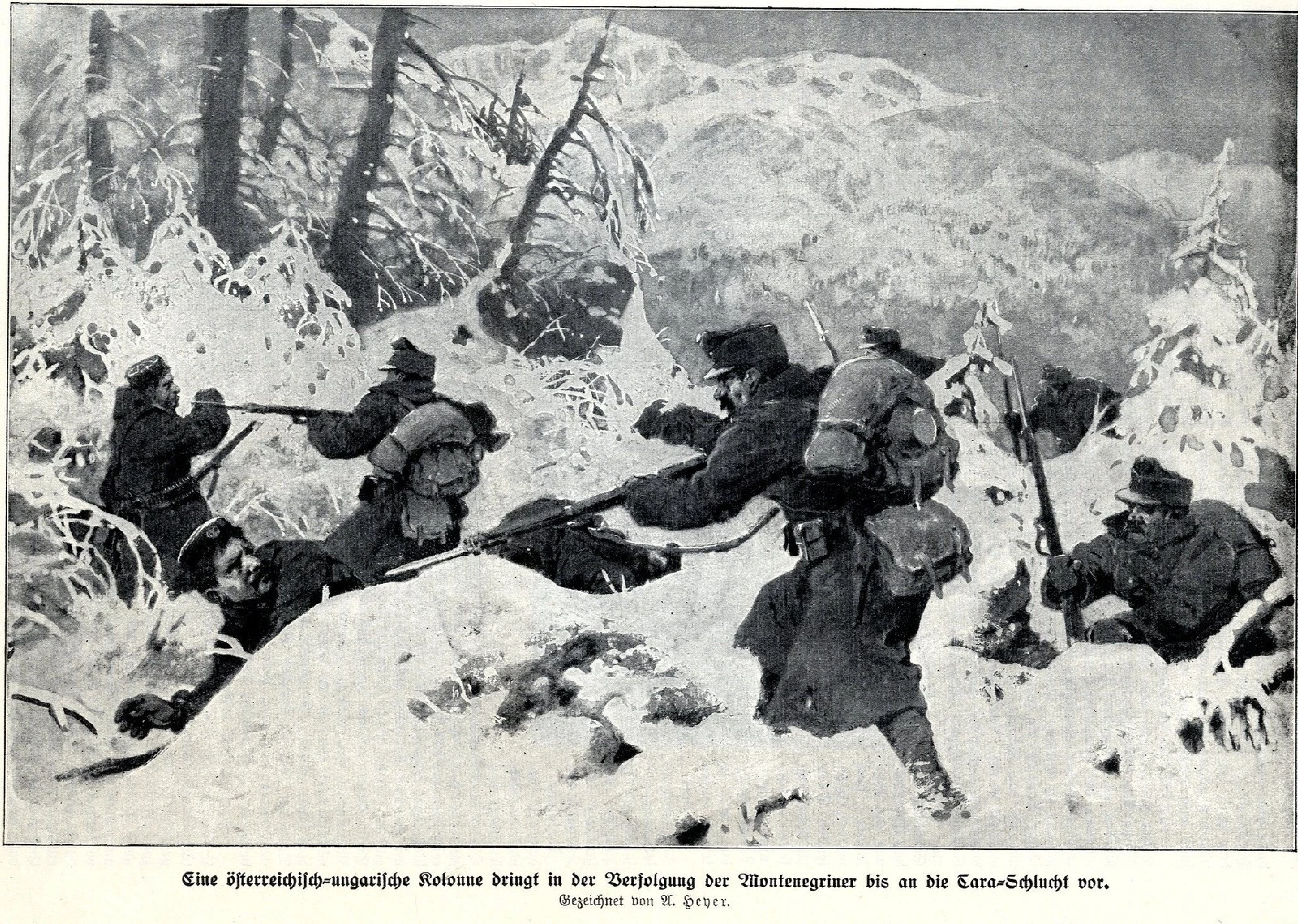
Imperial and Royal infantry storm a Montenegrin trench. 6 January 1916.
So the Montenegrins are out-matched, but they are much too stubborn to admit this – they won some of the actual battles. They can most definitely do so in the book’s scenarios as well; they may be out-gunned, but they are not out-toughed. They are in trouble, though, when the Austrians can bring up their artillery, as the Montenegrin guns are few and feeble.
Montenegro 1915 triples the Austro-Montenegrin action begun in Black Mountain, turning Black Mountain into a much deeper game experience. And it completes the story of Montenegro’s ill-considered war against its much larger and more powerful neighbor. The battles are fought in rough terrain, where the opposing forces are rarely entrenched and depending on maneuver. It’s a low-cost option to make a game already on your shelf into something new.
Order Montenegro 1915 Here.
Use coupon code DANA for 20-off
Order Black Mountain Here.
Gold Club members can use their max discount.
Order Fall of Empires Here.
Order Fall of Empires (Anarchy Edition) Here.
This edition has no rules! Only order if you already have a set of the 2nd edition rules and markers.
Sign up for our newsletter right here. Your info will never be sold or transferred; we'll just use it to update you on new games and new offers.
Mike Bennighof is president of Avalanche Press and holds a doctorate in history from Emory University. A Fulbright Scholar and NASA Journalist in Space finalist, he has published a great many books, games and articles on historical subjects; people are saying that some of them are actually good.
He lives in Birmingham, Alabama with his wife and three children.
Daily Content includes no AI-generated content or third-party ads. We work hard to keep it that way, and that’s a lot of work. You can help us keep things that way with your gift through this link right here.
|